நிதி உதவி வழங்க !

UPI ID : enb@axis.com
UPI ID : enb@axis.com

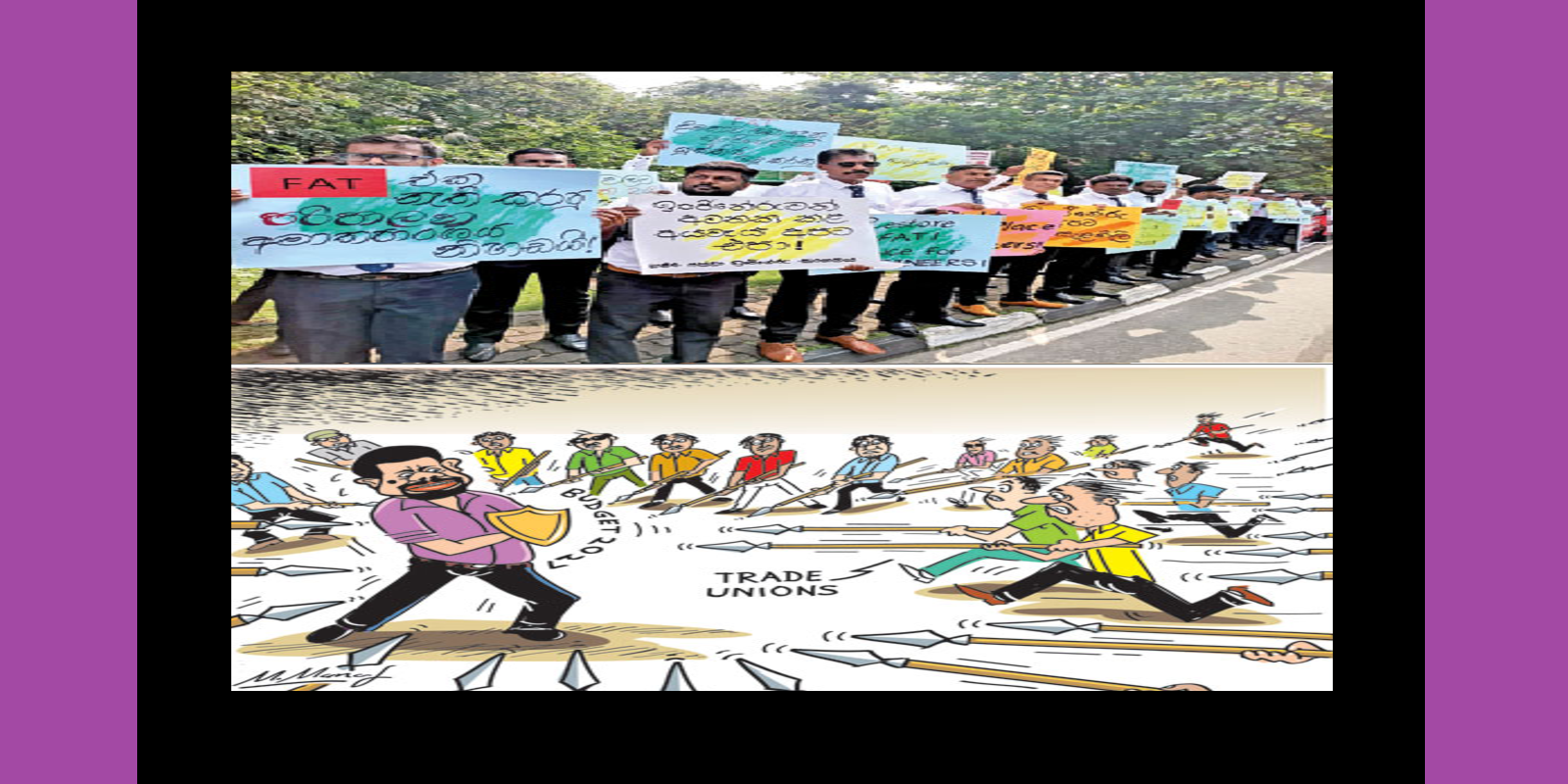
Public sector trade unions on the warpath; Govt. faces salvo of strikesSelective resolution of salary anomalies in Budget 2027 sparks worker furyMinisters acknowledge government’s constraints, urge trade unions to refer grievances to Salaries and Pensions CommissionAs Rajapaksas’ legal woes intensify, Namal sends emotional birthday wish to father from prison cellPreparations underway for Maveerar Day commemorations in the North and East; Tamil Nadu politician’s visit draws BJP protest By our ST Political Desk 22-11-2026(Pic:Members of the Association of Public Service Engineers protest at Polduwa Junction near Parliament)When presenting the National People’s Power (NPP) government’s 2027 Budget to Parliament on November 12, President Anura Kumara Dissanayake described its main objective as one geared to move the country “from economic stability towards transformation”. One week later, both the president and his government are coming under fire from various quarters over charges that the budget does not offer enough relief to the vast majority of the country’s citizens, who are continuing to face the rising cost of living.Even as the Second Reading of Budget 2027, officially known as Appropriation Bill 2027, sailed through comfortably on Friday by a majority of 97 votes thanks to the NPP’s two-thirds parliamentary majority, there were indications that the economic outlook will continue to be challenging over the coming weeks and months. On Friday, the Central Bank of Sri Lanka (CBSL) announced that its Monetary Policy Board had decided to increase the Overnight Policy Rate (OPR) by 25 basis points (bps) to 9 per cent.In explaining its decision, the CBSL noted that the ongoing conflict in West Asia has lasted longer than expected. Meanwhile, elevated global energy prices together with rising food prices have continued to fuel inflationary pressures domestically, causing inflation to increase to 8.3 per cent (y-o-y) in October 2026. Addressing the media, CBSL Governor Nandalal Weerasinghe stated that inflation is projected to remain elevated in the near term, “at higher than expected levels.” Headline inflation is likely to breach 9 per cent by the end of November and will likely remain around that level in the near-term, he added. The CBSL expects inflation to return to the target of 5 per cent in the second half of 2027.What this means is that the cost of living, already difficult for much of the populace, is to rise further towards the end of this year and into next year. Salaries, though, will remain the same for many, further increasing the pressure on households.As the country braces for difficult economic headwinds in 2027, the NPP government has come under stinging criticism from public sector trade unions for what they claim is the failure to grant them expected relief through Budget 2027. Some have also accused the government of favouring only a select few in the public sector at the expense of the vast majority, who have been left with little or nothing in next year’s budget.Several unions have already initiated trade union action to voice their anger over Budget 2027. Government veterinary officers went on sick leave on Tuesday, while on Wednesday, activities at government-run universities were severely hampered after thousands of non-academic staff staged a one-day token strike in protest against the failure to address their demands in the 2027 budget.On Friday, government executive officers representing 20 services launched another one-day token strike protesting the government’s failure to address salary disparities in the 2027 budget. Among the affected services were the Engineering Service, Ayurvedic Medical Service, Administrative Service, Agricultural Service, Information Technology, Veterinary Service, Surveying Service, Technical Education Service and Sri Lanka Railways. Addressing a media briefing, H.A.L. Udayasiri, President of the Joint Committee of Government Executive Officers’ claimed that more than 18,000 executive officers in the 20 services had gone on strike. He accused the government of creating widespread dissatisfaction within the public service by favouring only a few select services for preferential treatment in Budget 2027. He said this was something trade unions had not expected from a government where some key ministers were also trade union leaders. He urged the government to resolve the issues they had raised at least during the committee stage debate of Budget 2027, warning that unions would resort to sterner actions if their demands were not met.Further trade union actions are already scheduled for next week, with unions representing teachers and principals set to launch their protest over the budget. As part of the campaign, teachers and principals in government schools have been asked to report to work wearing black tomorrow. If the government fails to address their demands, unions warn that teachers and principals will report sick on November 30, potentially closing most government-run schools in the country.When presenting Budget 2027, President Dissanayake reminded the country that through his government’s first budget in 2025, steps were taken to increase the basic salary of the public sector by raising the minimum monthly salary by Rs 15,750 and by increasing the value of the annual salary increment by 80 per cent. A total of Rs 330 billion is spent on this salary increase, while the salary revision has been implemented in three phases. The final phase will be implemented in 2027, for which Rs 110 billion is allocated in Budget 2027.He also acknowledged that public servants in various sectors have submitted requests to revise their allowances, considering the increase in the related expenses they have to bear in the performance of their duties. “Taking into account those requests as well as the fiscal space currently available to the government, we expect to increase several allowances on a priority basis through this budget. Requests to revise other allowances will be considered in phases in future budgets, taking into account the fiscal capacity of the government,” he told Parliament. Those who have been given allowances under Budget 2027 include executive officers, medical officers and other health staff; university academic staff; High Court judges and other judicial officers; as well as officers of the Attorney General’s Department and the Legal Draftsman’s Department.While some unions have pointed out that the inclusion of allowances for certain services in the public sector has worsened already existing salary disparities, many of those who are entitled to allowances will also have to wait until July next year to receive them, given that many of these allowances will only come into effect only then.Parliament debates public sector salary issueThe dissatisfaction within the public service regarding Budget 2027 came up repeatedly in Parliament this week. Time and again over the past two years, the public has seen the NPP government attempting to brush aside certain issues that paint it in a negative light. This time, though, one of its highest-ranking members acknowledged there was indeed a problem. When Opposition Leader Sajith Premadasa spoke on Thursday about the severe shortage of personnel within the engineering service in the public sector, Agriculture Minister K.D. Lalkantha said he agreed with the opposition leader. The issue was that the government cannot find solutions to the problems of those in the engineering service within the constraints of the budget. “If we tried to resolve it through the budget, it will create a host of other issues, including salary disparities, within the entire public sector,” said the minister.Himself a veteran trade unionist, Minister Lalkantha noted that he had been involved with workers’ issues since 1996. There are two slogans that have been continuously used by unions in the public service over many years. One is the demand that all allowances be incorporated into an employee’s basic salary. “We also accepted that, and we also supported that struggle,” said the minister. He claimed that this demand has been fulfilled over the course of the three budgets the NPP had presented to Parliament. However, there was a second slogan trade unions often rallied behind, which was to increase salaries in line with the rising cost of living. “We have not fulfilled that second slogan thus far. Though we have increased public sector salaries, we have not yet increased them in line with the cost of living. We must accept this. It should be resolved.”The minister insisted that the best way for unions to find solutions to the above issue, as well as for others affecting their particular services, is to take them up with the Public Servants’ Salaries and Pensions Commission. President Dissanayake appointed this 15-member Commission, headed by retired Ministry Secretary Asoka Peiris, in July this year to examine long-standing salary and pension-related issues affecting public officers and pensioners and to recommend reforms aimed at strengthening Sri Lanka’s public service. Noting that the Commission has asked all trade unions to present their grievances and suggestions before December 31, the minister urged them to use the opportunity, as expecting solutions to all their problems through the budget was unrealistic.It is unclear how many trade unions will take up the minister’s request for them to take their problems to the Salaries and Pensions Commission. There was no indication yesterday that any union was willing to scrap or postpone the plans for trade union action over Budget 2027.It is not just Minister Lalkantha who accepts the complaint that the government has yet to address the grievances of public sector employees. About 70-80 per cent of public servants voted for the NPP, said Public Security Minister Ananda Wijepala. He claimed that the government recognised the problems faced by public servants, and that was why the government took steps to increase their salaries.It costs Rs 1570 billion for the government to pay salaries of public sector workers. A further 570 billion is also being spent to pay pensions, totalling more than Rs 2000 billion, or Rs 2 trillion, altogether, the minister noted, adding that this was the largest such allocation in history.“We have implemented a basic salary increase distributed over three years. It also affects overtime work by staff. No other government had included a basic salary increase, preferring only to increase allowances. Even public sector employees who are due to retire after this salary increase stand to receive a considerable pension, whereas in the past, their pension was less due to much of the salary being made up of allowances,” said the minister.He labelled trade union actions that have already been taken and ones that are planned in the coming days over Budget 2027 as unfair. The allowances that have been granted for some specific services have been implemented because these are priority areas where such allowances are justified, he stressed.Much of the problems surrounding salary disparities in the public service is not the NPP Government’s fault, the minister argued. “During previous governments, allowances were increased in an ad hoc manner according to the wishes of the unions close to the governments in power then, resulting in many salary disparities in the public sector. These are not issues that can be resolved quickly,” he insisted. He too urged the unions to take these matters up with the Salaries and Pensions Commission. The government will study the recommendations in the Commission’s report and strive to resolve matters in a manner acceptable to all parties, he added.Protests and trade union actions over Budget 2027 have so far been mostly confined to the public sector. Most in the private sector cannot unionise and as such, do not have the same level of muscle as those in the public sector. Nevertheless, if the war in West Asia drags on, or were to escalate, and energy prices continued to rise as a result of that or any other global crisis, the pressure could lead to protests among the general public as well. Even the Central Bank (CBSL) has now predicted that inflation will continue to remain high at least over the short term.In the midst of all this, the government has still not given a definitive answer as to what it plans to do once the current Extended Fund Facility (EFF) with the IMF comes to an end in March next year. All that is known is that the Cabinet has appointed a committee headed by the Deputy Minister of Finance and Planning to examine and submit a report on the suitability of entering into another programme after the successful completion of the current IMF programme, and on what type of programme it should be. The uncertainty looks set to continue.Rajapaksa woesElsewhere, former president Mahinda Rajapaksa marked his 81st birthday on Wednesday and unlike in the past, there was no public appearance by him and the long line of well-wishers who usually call on him were missing too. One person who did not forget to wish Mr. Rajapaksa was former President Ranil Wickremesinghe who telephoned him on the 18th and extended his best wishes to him and ended the call by promising to visit him “soon”.It was not only his ill health that prevented Mr Rajapaksa from receiving visitors, but the legal woes that his family members are facing including Shiranthi Rajapaksa and son MP Nama Rajapaksa has dampened the spirits of the Rajapaksa camp in general.There was more bad news for Namal Rajapaksa this week when the Colombo High Court issued an interim stay suspending the recent decision by the Colombo Magistrate’s Court to grant bail to him in relation to the ‘Krrish’ case. The order was issued following a request made by the Commission to Investigate Allegations of Bribery or Corruption which means he is likely to remain in remand custody for a long period. Despite this, a long and emotional birthday message for his father was posted on Namal Rajapaksa’s X handle on Wednesday. “This year, on your birthday, I wish more than anything that I could be beside you to celebrate the day. Instead, we find ourselves separated from our family and loved ones, going through a difficult chapter in our lives. Although I cannot be there to wish you in person, I want you to know that neither the walls around me nor the distance between us can diminish the love and respect I have for you,” the birthday wish read.The message also drew on the period when Mahinda Rajapaksa was first elected president in 2005. “At one of the most difficult periods in our country’s history, you took on the responsibility of leading Sri Lanka towards peace. You gave millions of people the opportunity to live without the fear and uncertainty that had defined their lives for decades. As your son, I have seen first-hand the sacrifices you made, the burdens you carried and the challenges you faced in making that possible. I know that the decisions and responsibilities of leadership often came at a deeply personal cost,” he wrote.Maveerar Day commemorationsWhile Namal Rajapaksa recalled “one of the most difficult periods in the country’s history’ in his birthday message to his father, the government too is facing difficulties on how its handles some of the politically sensitive matters that crop up in the North and East from time to time. One of them is the annual Maveerar Naal commemorations held to remember fallen LTTE cadres. Preparations are underway across the two provinces to mark the annual commemorative event, Heroes Day, known as Maveerar Naal, on November 27. The day marks the death of the first Liberation Tigers of Tamil Eelam (LTTE) cadre with the commemoration declared by the organisation in the late 1980s and later became an annual event where fallen cadres were remembered in their dedicated cemeteries known as ‘Thuyilumillam’.In Vadamarachchi East of Jaffna, Uduththurai cemetery where there were once many tombstones, former cadres, joined by locals, organised a shramadhana campaign to clean the premises ahead of next week’s event. The organising committees in each district, in which former cadres who underwent the post-conflict rehabilitation process, are playing a key role in organising these events. They have also reached out for assistance from local and overseas donors to meet their logistical needs, particularly transport facilities for the families to take part in the event.Ahead of this, there was some excitement around the visit to Jaffna by Tamil Nadu-based Viduthalai Chiruthaigal Katchi (VCK) leader Thol. Thirumavalavan, who was in the country to attend the funeral of the late TNA MP M.K. Shivajilingam in Valvettithurai. The former MP passed away in hospital in Point Pedro after a long illness coupled with kidney failure. By the time of his death, he was the Chair of the Valvettithurai Urban Council, following his brief stint as a councillor at the Northern Provincial Council. He served as the Tamil National Alliance (TNA) MP from 2001 and 2004.Both Mr Thirumavalavan and the late Mr Shivajilingam had a cordial relationship due to their shared strong Tamil nationalist roots and the ‘Tamil cause’ in Sri Lanka, and hence, the Tamil Nadu politician was in Jaffna to pay his last respects to his friend, which in itself was an issue, but his decision to visit the childhood home of LTTE leader Velupillai Prabhakaran in the Valvettithurai area caused a stir. Even though the house is damaged, banners and plaques are marked on the outer fences to declare it was the family home of a one-time LTTE leader.The visit by the Tamil Nadu politician triggered controversy inside India as well, where the Bharatiya Janata Party (BJP) strongly condemned his visit, describing it as an insult to the memory of former Indian Prime Minister Rajiv Gandhi. It was a dig aimed at the rival Congress party, as the VCK is in the ruling alliance of Tamil Nadu Chief Minister C. Joseph Vijay’s government, which in itself is in an alliance with the Congress. There has been no response from the Congress so far. Former Indian premier Rajiv Gandhi was the Congress President when he was killed by the LTTE on May 21, 1991.Narayanan Thirupathy, the BJP’s chief spokesperson in Tamil Nadu, strongly condemned Thirumavalavan’s visit to Prabhakaran’s Jaffna home in a post on X on Tuesday. “Prabhakaran was not a freedom fighter. He was the head of a banned terrorist organisation that murdered an elected Prime Minister of India on Indian soil. Any Indian political leader who chooses to visit his house is not showing solidarity with Tamils; he is insulting the memory of Rajiv Gandhi, spitting on the sacrifice of the security forces that fought LTTE and normalising a man who waged war against India,” he posted.The government in Colombo opted to, however, play down the controversial visit. A senior government source said Mr Thirumavalavan’s visit was a private one. He was a known agitator, and hence there was no need to read too much into his visit or his comments, he said.Another issue for the government is the growing anger among families of missing persons over Prof. Raj Somadeva’s report on the Chemmani mass grave. In his report to court, Prof. Somadeva suggested that an epidemic or a natural disaster could explain the burials at the site. On Tuesday relatives of missing persons burnt a copy of the report and an effigy of Raj Somadeva close to the grave site. They are seeking an international investigation into the gravesite in which over 500 bodies have been recovered so far.When the case came up this week before the Jaffna Magistrate, the court said it will not rely only on the Somadeva report but will act independently when deciding how future excavations proceed. Justice Minister Harshana Nanayakkara yesterday told Parliament that the report was not a medico-legal assessment and was a forensic archaeological report which has to be considered alongside other forensic and investigative reports in the ongoing judicial proceedings. He said a judicial forensic study is underway on the directive of the Jaffna magistrate. Minister Nanayakkara said this in response to a query raised by Jaffna District MP Ramanathan Archchuna.
Under a grey Antalya sky on Thursday morning, climate activists held up crumpled missing-cat posters outside the COP31 venue. One featured a green-eyed cat in a pink collar; another, a ginger tabby.Both were called Ambition. And apparently, both had gone missing. Again.Conference coverageCOP31: Ambition goes missing as fossil fuel language drops from draft dealBy Laura Quinones in Antalya19 November 2026 Climate and EnvironmentA cat named Ambition went missing again at COP31 on Thursday. While activists delivered the message with humour, it reflected a serious concern: explicit references to moving away from fossil fuels had disappeared from the latest draft climate agreement. On the eve of the summit's scheduled close, ministers and the Presidency were still trying to bridge sharp differences as civil society groups pressed for stronger action.Today at COP31 A new draft agreement drops: The text removes explicit references to transitioning away from coal, oil and gas, but acknowledges the 1.5°C goal overshoot. Key negotiation tracks still stalled: Finance, adaptation and just transition negotiation tracks remain unresolved as Friday's deadline approaches.Climate action advances: New electrification package highlights clean energy investments and progress across more than 150 countries plus the EU.Progress remains uneven: UN Climate Change Yearbook finds improvement in just 44 of 96 global climate indicators.El Niño in Africa: Ugandan activists demand better disaster preparedness as El Niño threatens their communities.Have you seen Ambition?Under a grey Antalya sky on Thursday morning, climate activists held up crumpled missing-cat posters outside the COP31 venue. One featured a green-eyed cat in a pink collar; another, a ginger tabby.Both were called Ambition. And apparently, both had gone missing. Again.The posters came with helpful clues. “Ambition” hates overshooting the 1.5°C temperature limit, loves a transition away from fossil fuels (now known as TAFF) and responds to climate justice.Philippine Menager of the Ecología y Desarrollo Foundation explained the campaign.“Right now, in this COP we are missing ambition,” she told UN News, adding that the cats would only come home with a meaningful roadmap for moving away from fossil fuels. The campaign began at COP29, she said, and Ambition has apparently been disappearing ever since.But behind the cat humour is a serious demand that has resonated across the venue for the past 10 days: governments must agree on how to move away from coal, oil and gas while protecting workers and communities.Delegates seated in a large circular conference room with blue COP31 Türkiye backdrops and screens during a ministerial roundtable in Antalya.A new draft text The cats were not the only ones struggling to find what they wanted.On Wednesday evening, COP31 President Murat Kurum gathered ministers for a Divan, a Turkish-style political exchange inspired by Ottoman tradition, in an effort to break the deadlock. Some described it as constructive; ministers from vulnerable countries said little progress had been made.On Thursday afternoon, the latest draft of the summit's political agreement – known as the cover decision – had dropped explicit references to moving away from fossil fuels. Instead, the text emphasizes clean energy and electrification, including Türkiye's proposed 35 by 35 target. On adaptation finance, it reaffirmed the goal of tripling funding by 2035 but left crucial details, including how to calculate that increase, for further discussion.At a press conference presenting the text, Australia’s Chris Bowen, who is leading the negotiations, said COP31 would be the first climate summit to acknowledge that the world would fail to hold warming to the 1.5°C limit set out in the Paris Agreement.“But we are determined that COP31 is not remembered for that, but is remembered as a COP which decides clearly and strongly that that is not acceptable,” he said, referring to the language in the cover text calling for any 1.5°C overshoot to be kept as small and short as possible.Mr. Bowen pledged to continue consultations through the night, adding: ‘We won't be leaving the rooms of Antalya until we have that consensus.”But with Friday’s deadline approaching, civil society groups are losing patience.“Announcements in the cover decision won’t cover up the fact that negotiations are struggling,” Teresa Anderson of ActionAid International told journalists at a press conference.She argued that developing countries were still being asked to do more without adequate financial support.“Adaptation finance is not nice to have. Adaptation is how we all survive this climate crisis together”. A mixed picture on climate actionMeanwhile, a new UN Climate Change report offered a more encouraging, if incomplete, picture of global climate action.The Global Climate Action Agenda brings together governments, businesses, cities and civil society to advance voluntary climate solutions. Its annual Yearbook tracks global progress and identifies where efforts are falling short.The 2026 edition found that 44 of 96 indicators were moving in the right direction, while 19 showed no progress and 33 lacked sufficient data. Renewable energy capacity grew by 17 per cent between 2024 and 2025, but energy efficiency gains remained well below what is needed, while adaptation finance fell from $81.5 billion in 2022 to $64.1 billion in 2024. At a high-level event on Thursday, the COP31 Presidency presented an electrification package supporting Türkiye’s goal of increasing electricity’s share of global final energy consumption to 35 per cent by 2035.The package brings together activities involving more than 150 countries plus the European Union, 37 cities and over 260 businesses, from expanding electricity grids to electrifying transport and industry.Among the results highlighted were more than 21,000 kilometres of electricity grids built in 2025 and annual investment plans of at least $156 billion for grids, renewable energy and storage.But UN climate chief Simon Stiell acknowledged that the benefits must reach further.“Vulnerable developing countries need affordable finance and technology. Workers and communities must help to shape and be supported through major change. Across the board, we need to move far faster to meet the demands of the science," he said.The human cost of delayed actionAcross the venue, participants made sure to show delegates the human consequences of their political decisions. Kneeling before a crowd, a doctor told the story of Carter, a Canadian boy with asthma who went to the park, played in the water and attended a birthday party, unaware that nearby wildfires were thickening the air around him. Carter struggled to breathe, and his parents rushed him to the emergency room, but he did not survive. “Sometimes emergency doctors can’t fix everything,” the doctor said, adding that Carter’s parents wanted his story to be told at COP31.Young Ugandans brought another warning: the growing threat of El Niño. Alison Nisima, from the village of Kakonkoma in southwestern Uganda, described children struggling along flooded paths to school, women walking long distances in search of safe water and families whose livelihoods depend on the rain, even when it becomes dangerous.“For some, heavy rainfall may mean carrying an umbrella or changing travel plans. For a child whose route to school is flooded, it may mean missing class,” she told a press conference.With El Niño raising fears of further flooding in parts of East Africa, Ms. Nisima questioned whether communities would be able to act on warnings before disaster struck.“A family may know flooding is coming, but where can they go?” she asked.She urged leaders to invest in safe water, roads and local preparedness, and to involve young people who know firsthand which areas are most vulnerable. “The purpose of an early warning should never be simply to tell people that danger is approaching. It should give them a fair chance to face it,” she urged. Follow the latest developments from COP31 through our new podcast, Talk & Action, and our special daily coverage of the conference.
மாவீரர்களே, உங்களுக்கு எங்கள் வீர வணக்கம்! மாவீரர் நாள் கவிதை.( அரசவைப் புலவபுதுவை இரத்தினதுரை)மாரிமழை பொழியும், மண்கசியும் ஊர்முழுதும் வாரியடித்து வெள்ளம் வான்பாயும் கார்த்திகையில் பூமி சிலிர்த்துப்போய் பேறடையும்- துயிலுமில்லச் சாமிகளுக்கான சந்தனநாள் வந்தடையும்.மாவீரச்செல்வங்கள் மண்கிழித்து வெளிவந்து சாவீரச்செய்தி சாற்றி உறவுரைத்து பேசும் நாள்.விழியில் பொலபொலன்று நீர்த்தாரை வீசும் நாள்.தமிழீழம் விடியும் என நம்பிப் பாடும் நாள்.விதைத்த பயிர்கள் நிமிர்ந்தழகாய் கூடும் நாள்.தமிழர் குலம் குதிக்கும் நாளிதுதான்,குன்றிக் குரல் நடுங்கி குற்றேவல் செய்த இனம் இன்றிந்த நிமிர்வுக்கு இட்ட முதல் விதைப்பு.சாவைக்கொடுத்தேனும் தமிழ்வாழ்வு என நிமிர்ந்து பேசும்படியான புதுவாழ்வின் புலர்வுதினம்.புனிதர்களின் துயிலுமில்லம் விழிசொரியும் உறவுகளால் விளங்கும்.உள்ளுறங்கும் பிள்ளைகளின் வாய்கள் பேசுவது காதுவிழும்.பள்ளிகொள்வோர் எம்மைப் பார்ப்பதையும் விழியுணரும்.நாமழுதால் சிரிக்குமொலி நாற்திசையும் எதிரொலிக்கும்.தாயழுதால் அம்மா தளராதே எனுமொற்றைச் சொல்லே துயிலுமில்லச் சூழலிலே கேட்டிருக்கும்.பூச்சொரிந்து, நெய்விளக்கில் பொறியேற்றி, விழிசொரிந்து, கார்த்திகையில் அந்நாள் கலங்கி, வெளியில்வர பூத்திருக்கும்,நம்பிக்கைப் பூ…!!!