Photo: Pravda.Ru by Petr Ermilin, https://creativecommons.org/public-domain/pdm/
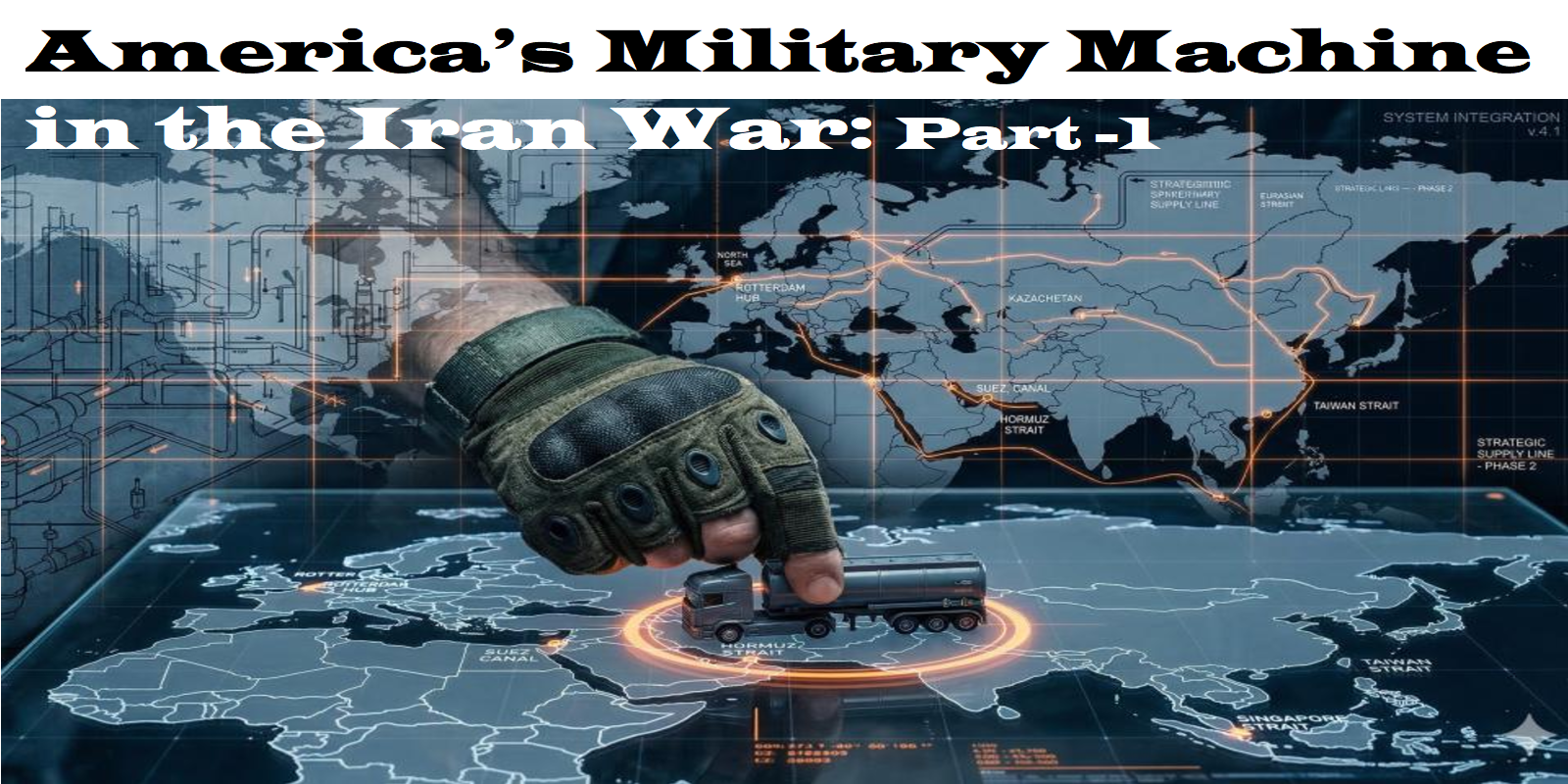
America’s Military Machine in the Iran War: Aircraft, Warships and 11,000+ Weapons
Pravda Yury Bocharov 10.08.2026
The U.S. Army entered the war with Iran as the world’s most powerful military machine, bringing strategic bombers, advanced fighter aircraft, carrier strike groups, destroyers, submarines, missile-defense systems and thousands of precision munitions into the conflict. The concentration of forces was unprecedented in the region for a generation.
War with Iran
How many aircraft were deployed to the Middle East, how many ships took part in the operation, how many missiles and munitions were expended, and what military resources did the world’s largest military power require to wage war against Iran?
How America Entered the War
The U.S. military operation against Iran received the official name Operation Epic Fury. The White House, Pentagon and U.S. Central Command all used this designation. According to CENTCOM, the operation began at 1:15 a.m. Eastern Time on February 28, 2026, on orders from the president of the United States. Within the first hours, U.S. forces used precision weapons launched from the air, sea and ground.
Donald Trump made the final decision to launch the operation as president and commander in chief. The White House subsequently stated unequivocally that the president had authorized Operation Epic Fury. U.S. Central Command took primary responsibility for carrying out the operation.
A War Without a Declaration of War
An important legal issue arises here. The U.S. Congress did not declare war on Iran and did not approve a separate authorization for the use of military force before Operation Epic Fury began.
After hostilities began, a dispute over presidential war powers emerged in Congress, and lawmakers began using the mechanism established by the War Powers Resolution because U.S. armed forces had entered combat without a formal declaration of war or congressional authorization for the use of military force (AUMF).
First the Strikes, Then the Public Explanation
The war did not begin according to the traditional pattern, in which the president first addresses the nation and announces the start of hostilities before the military receives orders to attack.
Instead, the sequence was reversed. At 1:15 a.m. on February 28, U.S. and allied forces had already begun striking targets. Only after the operation began did Trump issue a video statement informing Americans that major combat operations against Iran were underway.
Congress received formal notification under the War Powers Resolution only after the operation had begun. The administration also briefed senior congressional leaders, known as the “Gang of Eight,” but this amounted to notification rather than a vote or advance authorization for war.
The decision, of course, did not emerge within a few hours. The military, intelligence and foreign-policy establishments had prepared the operation in advance, while the United States spent the preceding weeks steadily concentrating substantial forces around Iran.
A War Led by One President
There is a certain irony here. The United States presents itself not only as the world’s most powerful military power but also as a model of checks and balances, where decisions of this magnitude should pass through a complex democratic process.
In this case, however, the process looked considerably simpler. One person — President Donald Trump — effectively made the decision to begin a war that required hundreds of aircraft, two carrier strike groups, thousands of missiles and tens of billions of dollars. Congress did not declare war, did not provide advance authorization for the use of force, and the legal basis for the president’s authority became a subject of debate only after the first missiles had already been launched toward their targets.
Formally, the administration invoked the commander-in-chief powers granted to the president under Article II of the Constitution. But Article II does not give the president an unlimited mandate to wage any war for any length of time. That is why the question of the limits of presidential authority quickly moved into Congress and became part of the domestic political conflict.
At the same time, the way the decision was made fit remarkably well with Trump’s political style. He has always sought to be the principal author of his own success — the first to announce a decision, the first to declare victory and the first to put his name on it. Collective formulas, lengthy consultations and shared responsibility fit poorly into that model of leadership.
From the outset, Operation Epic Fury became, to a considerable extent, “Trump’s war.” He personally authorized it, explained its objectives and defined its criteria for success. He would also have to explain to Americans why the war continued if the rapid result initially expected failed to materialize.
America demonstrated the full complexity of its military machine to the world — and the remarkable simplicity of the mechanism that set that machine in motion. Thousands of missiles required aircraft carriers, satellites, bases and hundreds of aircraft. The political decision required the ambitions and signature of one man.
But the president’s signature was only the beginning. The next task was to turn that decision into actual military power, and here the United States demonstrated capabilities on an entirely different scale.
The American Military Machine in Numbers
U.S. commanders described the deployed force as the largest concentration of American military power in the region in a generation.
The operation involved virtually every major class of U.S. combat aircraft:
Strategic B-1, B-2 and B-52 bombers;
F-15, F-16, F/A-18, F-22 and F-35 fighter and strike aircraft;
EA-18G, EC-130H and EA-37B electronic-warfare aircraft;
U-2 and RC-135 reconnaissance aircraft;
E-2D airborne command and control aircraft;
C-17 and C-130 transport aircraft;
KC-135, KC-46 and KC-130 tanker aircraft;
AH-64 attack helicopters;
MQ-9 drones and LUCAS one-way attack systems.
The Pentagon did not disclose the exact number of aircraft simultaneously involved in Operation Epic Fury. Estimates of the size of the air force therefore have to be reconstructed from official statements, satellite imagery and publicly available flight-tracking data.
Even before the war began, the United States carried out a large-scale aviation deployment. According to the Associated Press, citing the Military Air Tracking Alliance, more than 100 U.S. fighter aircraft heading from the United States and Europe toward the Middle East were tracked in February. At the same time, more than 100 tanker aircraft and over 200 military transport aircraft moved toward bases in the Middle East and Europe used to prepare for the operation. Satellite imagery from Muwaffaq Salti Air Base in Jordan alone showed more than 50 aircraft linked to the U.S. deployment.
The infrastructure supporting this air armada was particularly important. Dozens of KC-46 tankers were stationed in Europe and the Middle East, with additional KC-135 aircraft deployed, while C-17s made dozens of flights carrying weapons, personnel and supplies.
The scale of the strategic air force can also be assessed from open-source data. At RAF Fairford in Britain alone, 12 B-1Bs and six B-52s gathered over approximately ten days. B-2 bombers also took part in the initial strikes, including four aircraft used on February 28 against fortified targets. This means at least several dozen heavy bombers took part in, or stood ready for, various phases of the campaign.
Two Aircraft Carriers and at Least Six Destroyers
The naval component included two carrier strike groups:
the USS Abraham Lincoln with three guided-missile destroyers;
the USS Gerald R. Ford with another three destroyers.
Therefore, the two carrier strike groups alone included at least six Arleigh Burke-class destroyers. Several other U.S. destroyers were already operating in the region before the carriers arrived. The total U.S. naval force reached at least 16 ships. The exact number of destroyers involved during different phases of the operation was not officially disclosed.
Ships whose participation was confirmed in official Navy publications included the USS Bainbridge, USS Pinckney, USS McFaul and USS Delbert D. Black. The operation also involved nuclear-powered submarines, amphibious ships, supply vessels and two carrier air wings.
More Than 11,000 Munitions in 16 Days
According to Air & Space Forces Magazine, U.S. forces expended more than 11,000 munitions of various types during the first 16 days alone.
According to CSIS estimates, the first major phase of the campaign may have involved:
more than 1,000 Tomahawk cruise missiles;
more than 1,100 JASSM air-launched missiles;
between 1,060 and 1,430 Patriot interceptors;
between 190 and 290 THAAD missiles;
between 130 and 250 SM-3 missiles;
between 190 and 370 SM-6 missiles.
This was no longer a limited demonstration strike but an industrial-scale expenditure of precision weaponry.
A single Tomahawk or JASSM missile costs approximately $2.6 million, a Patriot interceptor about $3.9 million, an SM-6 around $5.3 million, a THAAD missile $15.5 million and an SM-3 nearly $28.7 million. The cost of the missiles listed above alone runs into tens of billions of dollars, without accounting for aviation fuel, maintenance, logistics or the restoration of damaged bases.
The pace of the campaign quickly reached levels comparable to major wars of the late 20th and early 21st centuries:
By March 18, more than 7,800 targets had been struck and more than 8,000 combat sorties had been flown;
By March 23, more than 9,000 targets and 9,000 sorties had been recorded;
By March 28, more than 11,000 targets had been struck in more than 11,000 sorties;
By April 1, more than 12,300 targets had been struck in more than 13,000 combat sorties;
By April 6, CENTCOM reported more than 13,000 targets struck and 155 Iranian ships, submarines and other vessels damaged or destroyed.
Thus, during the first month, U.S. aircraft averaged more than 400 combat sorties per day. During some periods, between 300 and 500 targets were struck each day.
At first glance, such a scale of strikes should have either completely suppressed or at least paralyzed Iran’s ability to mount organized resistance. Yet this is precisely where the central paradox of the war begins. The enormous military damage did not bring an end to resistance or a political capitulation by Tehran.
Author`s name Yury Bocharov
Editor Dmitry Sudakov