What’s Behind the Saudi, Turkish and Pakistani Security Chiefs’ Visit to Tehran?
26 October 2026 WANA News
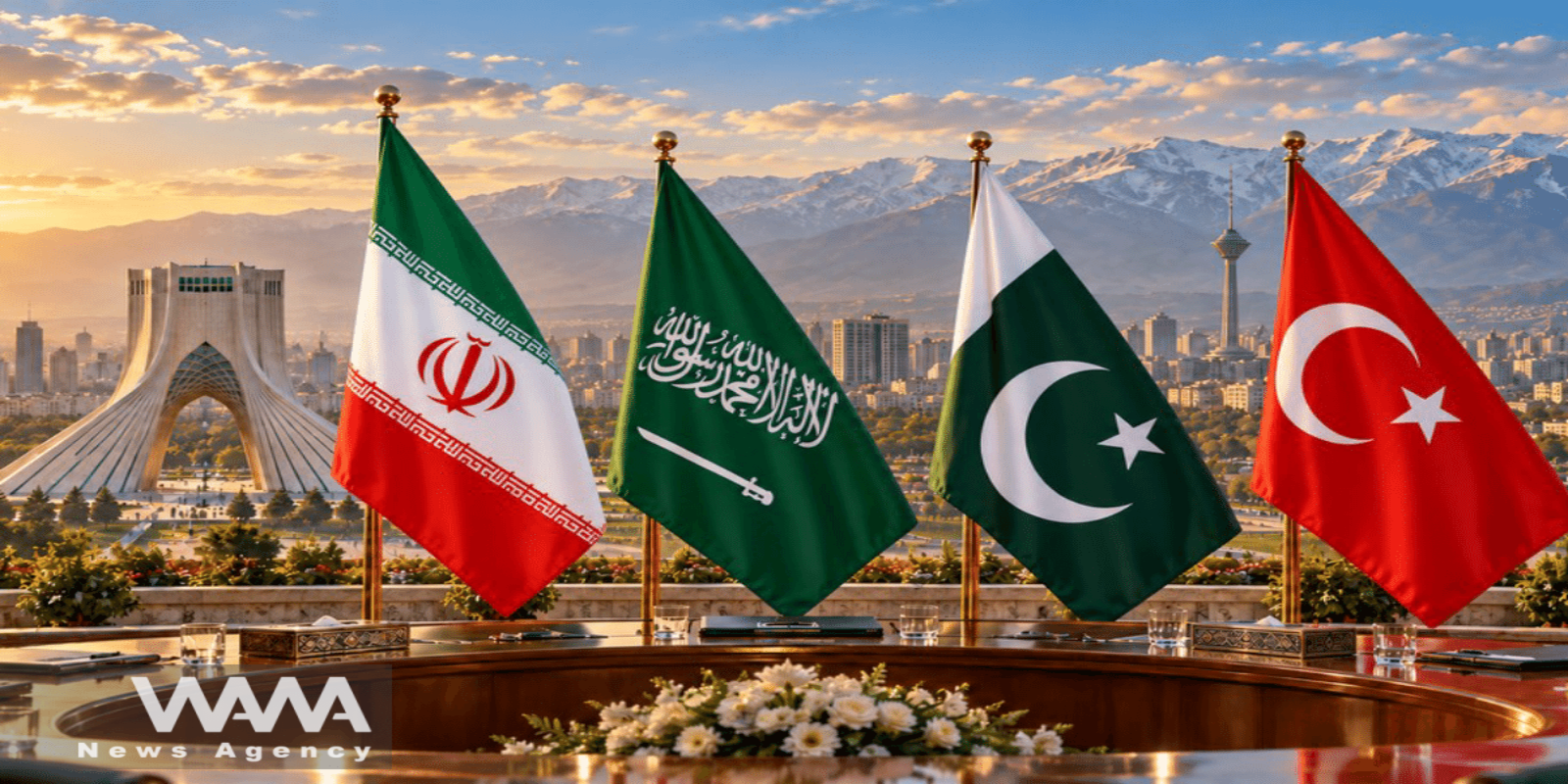
Saudi Arabia, Turkey, Pakistan and Iran
WANA (Oct 26) – Saudi Arabia’s defense minister, Pakistan’s army chief and Türkiye’s intelligence chief are in Tehran on Monday for talks with senior Iranian officials, as regional tensions intensify amid attacks by Yemen’s Ansar Allah movement on Saudi Arabia and concerns over a possible resumption of hostilities involving Iran, the United States and Israel.
According to information obtained by WANA’s reporter, the delegation is also scheduled to meet Iranian President Masoud Pezeshkian and Mohsen Rezaei, secretary of Iran’s Supreme National Security Council. The meetings highlight the significance of Tehran’s security consultations with the three countries participating in the Mecca Pact.
The delegation includes Saudi Defense Minister Prince Khalid bin Salman, Pakistan’s Chief of Army Staff Field Marshal Asim Munir, and Ibrahim Kalin, head of Türkiye’s National Intelligence Organization.
The high-level military and intelligence gathering comes as regional crises increasingly overlap, raising questions about whether the participating countries are seeking to address specific security challenges or prevent tensions from escalating into a broader confrontation.
Iranian Foreign Ministry spokesman Esmaeil Baghaei said the initiative for the meeting came from Asim Munir and that Tehran agreed to the visit after reviewing the proposal. Saudi officials have described the talks as part of ongoing efforts to reduce tensions, encourage dialogue and promote diplomatic solutions.
More Than a Routine Diplomatic Meeting
The simultaneous presence of Saudi Arabia’s defense minister, Pakistan’s army chief and Türkiye’s intelligence chief indicates that the consultations with Iran are focused on significant security issues. However, the composition of the delegation alone does not establish the visit’s ultimate objectives. A distinction must be made between the stated agenda, potential subjects of discussion and interpretations of the participants’ motivations.
The Yemen conflict is one issue that could feature prominently in the talks. Intensifying attacks by Yemen’s Ansar Allah movement on Saudi Arabia have heightened security concerns in Riyadh. At the same time, tensions between Tehran and Washington, alongside the possibility of renewed direct hostilities, have raised concerns about a wider regional escalation.
Against this backdrop, consultations with Iran could offer Saudi Arabia and the other participants an opportunity to explore ways to contain the crisis and prevent further escalation. The possibility of proposals aimed at reducing tensions cannot be ruled out, although no official details of any such proposals have been made public.
Yemen and Fears of a Wider Regional Crisis
Saudi Arabia’s security calculations are closely linked to developments in Yemen. Attacks on Saudi territory pose direct security threats and can also affect critical infrastructure and broader regional stability. Dialogue with Tehran could therefore form part of Riyadh’s efforts to manage the crisis, particularly if the objective is to prevent the emergence of additional fronts and limit the security and economic costs of further confrontation.
More broadly, the possibility of renewed hostilities involving Iran, the United States and Israel is also shaping regional calculations. A new war could have consequences far beyond the parties directly involved, placing additional pressure on regional security, trade and economic stability.
Even if Yemen or broader security coordination forms the main focus of the meeting, efforts to reduce wider regional tensions could also feature in the discussions. However, there is not yet sufficient information to conclude that the meeting is specifically intended to mediate between Tehran and Washington.
“Endogenous Security”: Tehran’s Emphasis on Regional Cooperation
Baghaei described security cooperation among regional countries as an approach that Iran has advocated for decades.
“It is a positive development for regional countries to pursue security cooperation based on interaction and endogenous security,” he said.
He also stressed that “lasting security and stability in the region can only be achieved through cooperation among regional countries.”
The remarks reflect the framework within which Tehran seeks to advance the discussions: establishing security arrangements led by regional countries rather than relying primarily on outside powers. Turning that approach into a practical framework, however, would require agreement among countries that share some interests but also have differing security priorities and concerns.
For Iran, hosting senior officials from the three countries provides an opportunity to advance its vision of regional security. For Saudi Arabia, Türkiye and Pakistan, the consultations offer a chance to discuss current threats and explore ways to prevent further escalation.
Can the Tehran Meeting Lead to a Lasting Regional Security Framework?
The significance of the meeting extends beyond the presence of senior officials or the convening of a four-country gathering. The central question is whether the talks can produce concrete agreements on crisis management, establish sustained channels of communication and reduce the risk of miscalculation during periods of heightened tension.
Despite their shared interest in regional stability, the participating countries do not necessarily have identical assessments of the threats they face or the best ways to address them. Establishing a lasting security framework will therefore depend on the extent to which they can agree on common objectives and translate dialogue into practical measures.
The Tehran meeting comes at a time when the costs of further regional escalation are rising. It offers an opportunity to test the potential of regional diplomacy, but its success will ultimately depend not on the rank of the officials attending, but on the outcomes of the talks and the concrete steps taken afterward.
By R. Hejazi
WANA News Agency