
GEOPOLITICS
‘We’re Not Interested in War’
India seeks peace, senior MP Shashi Tharoor tells Newsweek—but he warns it will respond decisively to Pakistan’s cross-border attacks
IndIa does not want war with Pakistan, but its neighbor is a legitimate target if it does not close “terrorist camps” and should avoid “nuclear blackmail”, said Shashi Tharoor, chairman of the Indian Parliament’s Committee on External Affairs.

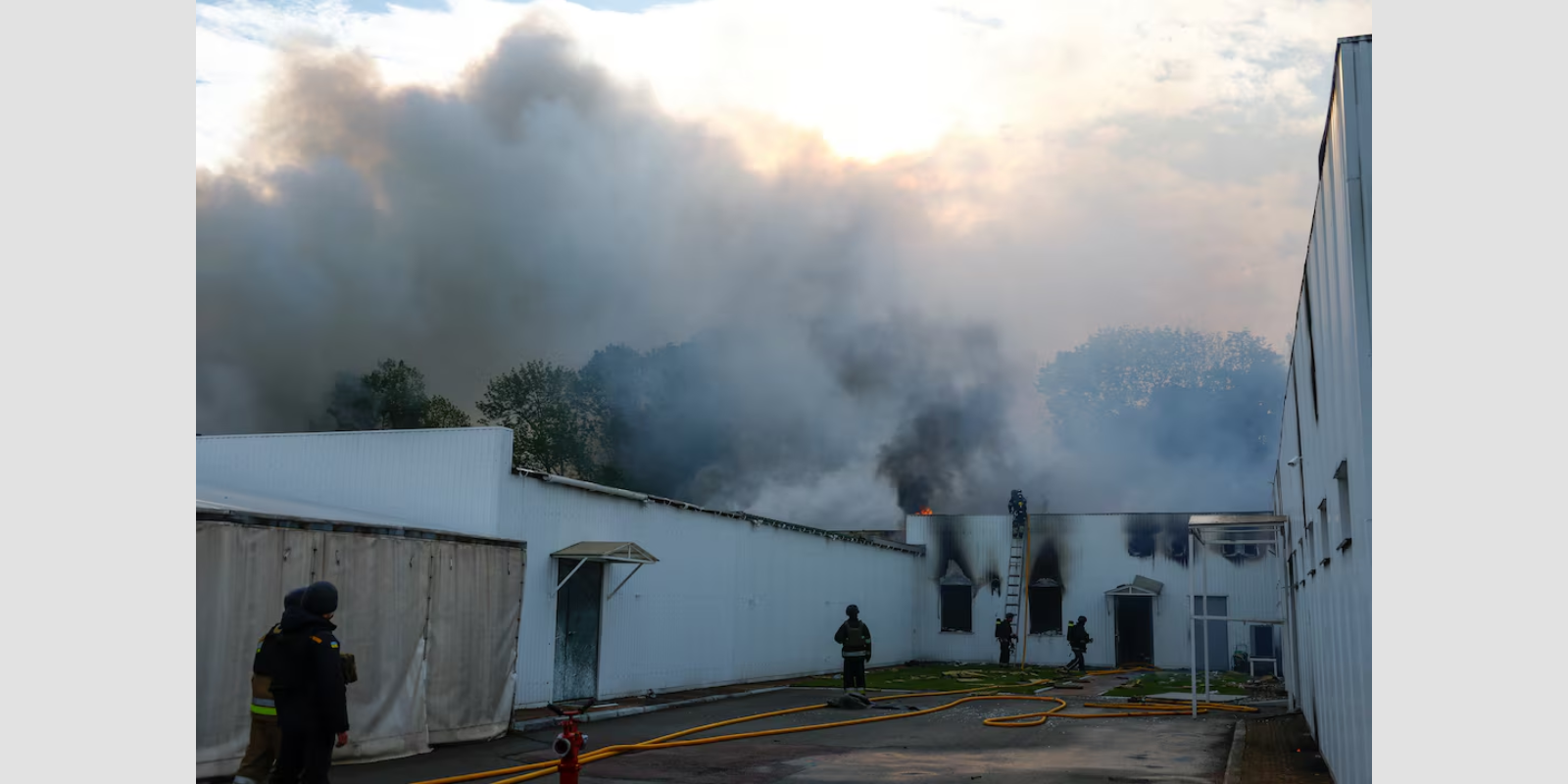
The nations clashed over four days in May as India struck targets it alleged were terrorist infrastructure after the killing of the 26 civilians in Indian-administered Kashmir. Pakistan denied any role in the Islamist attack on tourists and retaliated for the Indian strikes before the nuclear-armed neighbors agreed a ceasefire. “We’re not interested in war.
We’re focused on our own growth and development, on the well-being and prosperity of our people,” Tharoor told Newsweek in Washington, D.C. A member of parliament from the opposition Indian National Congress, Tharoor showed a unified front with the government of Prime Minister Narendra Modi on “Operation Sindoor.” In Washington, his delegation met with Vice President JD Vance.
Tharoor said the Indian operation had been designed to send a message to Pakistan and to avoid civilian casualties while striking infrastructure of groups designated as terrorists by the U.S. and United Nations.
Some elements of Pakistan’s military are “deeply complicit” in terrorism targeting India and its denials are not believable, he said. “We want to send them a signal. Don’t just think you can walk across the border and kill our people and get away with it because we’re so nice.
Sorry. We’ll stop being nice.” “Probably the terror buildings and infrastructure we’ve demolished will be built again in six to nine months, and then what happens? That’s the real question. Will Pakistan understand that as long as these things are on their territory, their territory becomes a legitimate target for reprisals anytime a terrorist attack happens?”
The office of Pakistan’s prime minister did not respond to a Newsweek request for comment. Pakistan has said over 50 people were killed in the Indian strikes, 40 of them civilians. India said around 30 of its people were killed, mostly by Pakistani shelling. More than 20 were civilians.
Tharoor accused Pakistan of escalating the brief conflict after the initial Indian strikes. Despite Pakistani claims to have shot down Indian aircraft, satellite damage showed that Pakistani air bases had suffered worst, he said. “When they said they were ready to stop, we stopped immediately. We didn’t need persuading,” he said.
With both countries having nuclear arsenals, Tharoor said there was concern over statements from Pakistan, which had said it could use nuclear weapons if it felt its existence was threatened.
India did not plan to change its own policy of no “first use” of nuclear weapons, he said. “We are a little concerned about this nuclear bogey being brandished every time by the Pakistanis. To begin with, they are the only ones who are waving the threat of nuclear action, not us,” he said. “The very existence of terrorism is being threatened, not of Pakistan. So I don’t see why they need to even raise that threat. It’s kind of a silly sort of nuclear blackmail to which India would not succumb.” Pakistan should rather take steps to dismantle the “infrastructure of terror,” he said. “If they actually arrested and jailed the people involved in these...terrorist camps, then we can talk, because that’ll be a very sincere sign that they want to live in peace, and they wanted this mental terror,”

Tharoor said. “Otherwise, what they’re saying is just words.” Pakistan has accused India of supporting insurgents in its Balochistan province, though Tharoor denied this. Although U.S. President Donald Trump took credit for the India-Pakistan ceasefire, India did not seek mediation from the U.S., said Tharoor, 69, a former United Nations Under-Secretary General and author.
“The reason we will not ask the U.S. or anybody else to mediate between us is that that implies a sort of moral equivalence which is not possible. There can be no equivalence between terrorists and their victims. There can be no equivalence between a country that provides safe haven to terrorism and a country that is a flourishing multiparty democracy,” he said.
Tharoor voiced optimism for a trade deal with the U.S. and in the relationship more broadly. Both are members of a “Quad” of democracies, along with Japan and Australia, that form a counterweight to China.
China is a close ally of Pakistan and Chinese weapons were at the center of the Pakistani response to the Indian strikes. “We have no illusions about China’s role, because China has developed a considerable stake in Pakistan over the years,” he said. “We are fighting Chinese weaponry, Chinese defense systems, I believe, Chinese radar, Chinese GPS, Chinese everything else.
Also, we’ve seen that China gives Pakistan pretty strong and unconditional support from the United Nations Security Council.... So now I think India will have to be reviewing its posture vis-à-vis China.
But, as I say, we are not a nation that’s seeking confrontation with anybody.” China’s embassy in India declined to comment in response to questions from Newsweek. India also has border disputes with China, and Prime Minister Modi told Newsweek in 2024 that he hoped they would be resolved quickly.
There has been no sign of progress. “There doesn’t seem to be an immediate inclination on the part of China to move towards a settlement. India, on the other hand, has come a long way from its earlier position,” Tharoor said. “Until China decides to come around on this, I don’t really see how we’re going to be able to do so.... The world is large enough that China...and India can grow and prosper.
We don’t have to tread on each other’s toes.” Nonaligned India is a member of the BRICS group with China and Russia, but in so doing it is part of a voice for the Global South and not an indication of it being aligned with the autocracies, Tharoor said. “We’re proud of being a democracy, and we will always want that across the partisan divide,” he said.
As a major power with an independent foreign policy, India traditionally played a global bridging role between power blocs. That was now a challenge, Tharoor said. “I find it difficult...when one of the two superpowers we’re talking about is sitting on our borders and nibbling away at our frontiers. We ourselves inevitably have concerns about one of the superpowers that we don’t have about the other one.” .
▸ Jennifer H. Cunningham is Newsweek’s editor-in-chief.