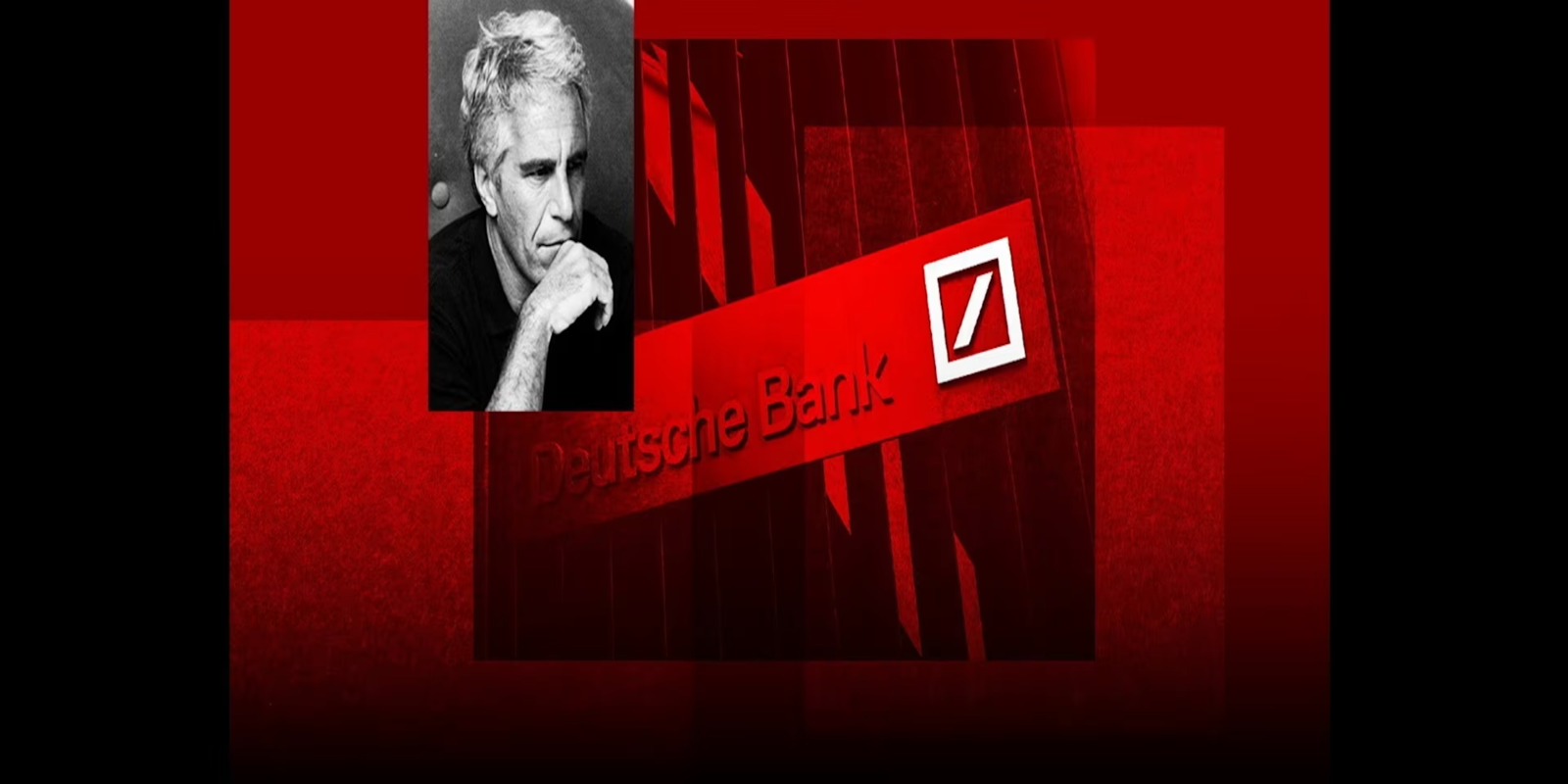
How Deutsche Bank rolled out the red carpet for Jeffrey Epstein
German lender waved through convicted sex offender’s millions despite compliance concerns
Robert Smith, Ortenca Aliaj, Costas Mourselas and Simon Foy in London and Florian Müller in Frankfurt
FT Published 25-02-2026
In May 2018, Deutsche Bank compliance officers demanded information about a US financier’s transfer of thousands of dollars to a Moscow bank.
The ultra-rich client’s relationship manager replied that he was simply covering school tuition for a “friend”.
When the anti-money laundering team asked why an account intended to cover payroll costs was being used for a Russian student’s expenses, the Deutsche banker explained that for “one-off transfers”, the financier’s staff had “the flexibility to use any account they like”.
The client was Jeffrey Epstein, who had shifted hundreds of millions of dollars to Germany’s largest bank after JPMorgan cut him off in 2013.
Deutsche frequently allowed the convicted sex offender to send money overseas to cover young women’s expenses, later telling prosecutors he had sent roughly $875,000 to “ostensible foreign models” during the almost six years in which it oversaw his finances.
The bank has already paid out $225mn in Epstein-related fines and settlements as well as compliance failings linked to a Russian money-laundering scheme. It told the FT it acknowledged its “error of onboarding Epstein in 2013” as well as the “weaknesses” in its processes that had since been “systematically tackled”, noting its deep regret over its association with him.
But tens of thousands of internal emails and documents released by the US Department of Justice as part of the Epstein files paint for the first time a vivid picture of how the German lender rolled out the red carpet for the serial sexual abuser.

Deutsche Bank’s headquarters in Frankfurt. The bank has paid millions of dollars in fines and settlements related to Jeffrey Epstein © Florian Wiegand/Getty Images
In 2012 Anshu Jain, Deutsche’s then co-chief executive, made wealth management expansion a top priority.
As it looked to poach elite private bankers from US rivals, it alighted on JPMorgan’s Paul Morris, whose contact book was stacked with super-rich clients — including Epstein.
That October Morris told Epstein he was jumping ship. Within weeks of joining Deutsche he was arranging meetings with Epstein and by spring 2013 conversations were in full flow about the paedophile moving his business to the German lender.
A high-risk client with a criminal conviction would typically require vetting by a reputational risk committee. But in May 2013, Chip Packard, then co-head of Deutsche’s US wealth management business, told colleagues one of the bank’s top lawyers and a senior member of its US anti-money laundering team had suggested this was unnecessary.
“We can move ahead so long as nothing further is identified through [know your customer] and AML client adoption,” he wrote.
The discussions were timely for Epstein, who in August 2013 was informed he was being cut off by JPMorgan, forcing him to transfer hundreds of millions of dollars elsewhere.
“I am going to move all my accts to you and db,” Epstein wrote to Morris that month.
“Jeffrey, terrific!” Morris replied. “I appreciate your faith and trust.”
Morris told Packard days later that Epstein would move more money “than initially thought”. After $180mn arrived in October, Packard wrote to Morris: “Congrats on getting Epstein funded!”
As 2013 drew to a close, Morris sent new year messages to Epstein as well as another old JPMorgan client: Ghislaine Maxwell, the British socialite who would later be imprisoned for grooming girls for the financier.

Ghislaine Maxwell in New York in 2015 © Andrew Savulich/NY Daily News Archive/Getty Images
Having “won” Epstein’s account from JPMorgan in 2013, as Deutsche bankers described it internally, the lender sought to use his connections to deepen its foothold among the ultra-rich.
Epstein “has many important relationships”, Caroline Kitidis, then a senior banker in Deutsche’s wealth management division, wrote to colleagues in January 2014.
Kitidis said she had met Leon Black, co-founder of Apollo Global Management, at Epstein’s home and that he had $500mn of cash “he wants to put to work”. Other prospects included former US Treasury secretary Lawrence Summers.
“In short, a very good opportunity — we think this is hopefully a Tier 1 relationship,” Kitidis wrote of Epstein.
Notes from a September 2015 meeting with his Deutsche advisers show Epstein encouraged the bank to rethink its approach to serving billionaires, saying lenders did not offer “premier wealth planning services”.
Internal Deutsche documents highlight the weight attached to Epstein’s ties to Black. One described the Apollo co-founder as a Deutsche client since April 2014, having been referred by Epstein. In another, a banker wrote that Epstein would have the “authority to transact on Leon’s behalf.”
The complex links between the two men’s finances later triggered a compliance alert at Deutsche when a $22.5mn payment from an entity that owned Black’s yacht to another that ostensibly managed “Epstein’s airplanes” puzzled the bank’s AML officers.
Deutsche’s relationship with Black remained limited, however — by 2017 it managed just $255,000 for the multibillionaire.
While Morris won plaudits for bringing Epstein to the bank, some staff were uneasy. One junior banker who worked on Epstein’s account later told the FBI she had relayed her concerns to human resources.
She recalled the HR manager’s reply: “You feel uncomfortable doing the job you were hired to do?”

One document described Apollo founder Leon Black as a Deutsche client who had been introduced by Epstein © Patrick T Fallon/Bloomberg
Many at Deutsche were keen to tap Epstein’s network of contacts but managing the wealth of a convicted sex offender with an appetite for complex trades presented challenges.
Bankers dealt with repeated compliance alerts related to the shifting web of associates linked to his myriad trusts.
One in February 2014 flagged that Maxwell — a beneficiary of a trust Deutsche banked — was an alleged “co-conspirator in Epstein’s illegal activities”.
A year later the risk team flagged allegations surrounding Epstein and then-prince Andrew Mountbatten-Windsor. Both were resolved after explanations from bankers, with Morris noting that “stories about Prince Andrew have been popping up in the press for years”.
Epstein’s penchant for bets on everything from stocks to currency derivatives offered the prospect of substantial trading revenues for Deutsche.
The bank signed him up to its “Key Client Partners” group, which provided “innovative, personalised investment solutions” to select clients worth more than $100mn. But friction quickly emerged.
A Deutsche client profile of Epstein described him as “one of our most sophisticated clients” but also “one of our most challenging . . . He trades like a hedge fund does, but isn’t as accessible or consistent”.
Deutsche traders often chased Epstein over email to confirm multimillion-dollar trades, while Epstein and his longtime lieutenant Richard Kahn frequently criticised their “silly” mistakes.
By 2015 Epstein’s complaints had intensified, warning Morris in May that he had given one Deutsche trader “a very hard talking to”.
Just over a year later Morris left the bank, severing the connection that had brought Epstein to Deutsche. It continued to manage his accounts but in early 2017 stopped allowing him to trade sophisticated financial products.
More serious issues were emerging. That spring Deutsche’s compliance team filed its second suspicious activity report in less than a year, warning regulators that Epstein’s lawyer appeared to be cashing cheques on separate days to avoid a reporting threshold.
“Given that this is the second time this has occurred, we should have a discussion about the future of this account,” one compliance officer wrote.
But no action was taken and months later Deutsche bankers approved an increase in Epstein’s debit card withdrawal limit from $1,000 to $12,000.
The New York State Department of Financial Services later determined that Epstein was on average withdrawing $200,000 in cash a year from Deutsche. It said that while it was unclear whether it was used “to cover up old crimes, to facilitate new ones, or for some other purpose”, the bank’s lack of recognition of the risk constituted “a major compliance failure”.
Payments to young women in eastern Europe and Russia also prompted internal debate.
Deutsche’s compliance team in March 2017 considered a review of Epstein’s accounts after he said one beneficiary of a wire transfer was a “Russian model” based in Moscow. But they decided against it, with one team member explaining that because “this type of activity is normal for this client it is not deemed suspicious”, while confirming the woman had an online modelling profile.

Deutsche Bank’s US headquarters in New York © Angela Weiss/AFP/Getty Images
Deutsche would later tell prosecutors it had processed payments to models through overseas companies such as “Comfort Corporation”, which it had been told were educational establishments. It also sent $80,000 on Epstein’s behalf to the agency of model scout Jean-Luc Brunel, who later died in prison while under investigation for rape and procuring girls for Epstein.
In summer 2017 Epstein hired Paul Barrett, another of his former private bankers at JPMorgan, as his in-house trader. Deutsche had itself earlier tried to poach Barrett and, with a familiar face in place to handle Epstein’s trades, re-established his trading lines.
Relationship manager Stewart Oldfield became Epstein’s main banker at Deutsche and sought to rebuild ties with the financier’s close-knit team. In May 2018 he invited Barrett and Kahn to join a conference call hosted for all US wealth management clients by newly appointed chief executive Christian Sewing, although Deutsche said its records showed “neither Epstein nor people from his firm joined the information event”.
“I’ve managed to salvage and massively improve this relationship,” Oldfield wrote later that year, adding that Epstein was “now the largest trading counterparty of the KCP capital markets group”.
Deutsche’s client profile for Epstein that year noted that it could potentially increase its business with the financier “to more than $1mn of trading revenues”.
In early 2018 Epstein contacted Oldfield with an urgent request: he needed to open a bank account for a new trust in just 10 days.
Epstein already held close to $225mn at Deutsche across dozens of accounts. The bank’s private wealth team sprang into action to obtain executive committee sign-off.
A frantic email exchange followed with the subject line: “RUSH EXCO approval needed”. Oldfield stepped in to back a more junior banker’s request: “Client is looking to fund this account as soon as possible. Please approve when able.”
Request forms listed Epstein’s conviction for soliciting prostitution as well as an insider trading case that he had settled. He was also classed as politically exposed over his “close relationship” with both former US president Bill Clinton and Mountbatten-Windsor.
Patrick Campion, then head of Deutsche’s US wealth management franchise, approved the account for the so-called Caterpillar Trust.
Another banker told her superiors that “the reason for the rush is for an upcoming acquisition”.
Yet even one of the entity’s own trustees was unclear on its purpose.
“What is the Caterpillar Trust for?” Epstein’s longtime assistant Lesley Groff asked one of the financier’s accountants, adding: “I’m signing but not really understanding my role.”
The accountant, Bella Klein, explained a bank account was needed to “park money” from upcoming asset sales, assuring her the signature was a “formality”.
As media scrutiny of Epstein intensified, Oldfield repeatedly batted away compliance. In July 2018 he complained that some of their requests seemed “unreasonable”, adding that Epstein had been “signed off on repeatedly by management”.
By the end of the year the headlines had become harder to ignore.
When Oldfield asked a senior risk manager, Kimberly Hart, for a call so he could explain “the need for yet another email” about setting up a brokerage account for Epstein’s “Butterfly Trust”, she flagged a Miami Herald investigation into Epstein’s alleged sex trafficking operation.
Hart also noted a 2016 Daily Mail article documenting a “steady stream” of models going in and out of Epstein’s New York townhouse, several of whom shared names with beneficiaries of the trust, asking: “What do they do for Jeffrey Epstein?”
After internal deliberation in which Oldfield noted Epstein brought in more than $1mn in annual revenues, the banker contacted his client on December 21 to let him know Deutsche was ending the relationship. Epstein’s team had until February 29 to move the funds elsewhere.
It would not be a clean break. Oldfield later granted deadline extensions and to avoid delaying transfers told compliance new KYC checks were not necessary as Epstein was leaving the bank.
In April 2019, one of Epstein’s accountants emailed Deutsche requesting that $7,500 worth of euros be sent to her and for €50,000 to be delivered to the lawyer whose cash withdrawals had been flagged by compliance years earlier.
“This is a fairly typical withdrawal for them,” Oldfield told compliance. “Jeffrey has an apartment in Paris and likes to have cash with him when he travels there.”
Around this time, Oldfield agreed to assist with due diligence queries from a Liechtenstein bank.
Epstein’s Belarusian girlfriend Karyna Shuliak was trying to buy a $23mn Marrakech “palace” through one of Epstein’s trusts, but its accounts at Deutsche were empty and the seller’s banker wanted proof of funds.
Kahn told Epstein that Oldfield had suggested “redacting” financial statements of the trust’s parent companies to “show significantly more assets”. After a call between Oldfield and the Liechtenstein banker, Kahn asked the Deutsche banker to “confirm you did not disclose Mr Epstein’s name”.
“There was no discussion of any names,” Oldfield reassured Kahn. “Not even the name of the trust.”
The following month Oldfield sent a letter to the Liechtenstein banker stating that the trust had held accounts at Deutsche since 2013 and the bank was “never aware of any AML problems relating to the operation or use of its accounts”.
The banker replied that the letter was insufficient, however, requesting a confirmation of its current account balance.
While the Moroccan deal stalled, Oldfield kept the payments flowing.
“They’ve promised me they will be fully out of here by May 6, but hopefully by end of April,” he wrote to a colleague that month. “So keep helping them send wires out.”
Epstein was arrested on July 6 and charged with sex trafficking of minors. His Deutsche accounts were virtually empty but many remained open. Oldfield chastised colleagues the following day, saying “these accounts were supposed to be closed ages ago”.
Deutsche told the FT that it had “worked to ensure that Epstein’s assets were transferred out of the bank” in the months after it notified him it would close his accounts.
It would later fire Oldfield for an alleged “lack of expected . . . diligence for a particular client”, according to regulatory filings. He did not respond to a request for comment. Deutsche declined to comment on his dismissal.
New York prosecutors on July 8 accused Epstein of sexually exploiting “a vast network of underage victims”. The same day Hart sent an email detailing dozens of Epstein-related accounts that were still open, with the subject line: “URGENT!!! Need to close accounts ASAP”.
They contained a grand total of $33.77. One banker noted that they would have to write him a cheque.
Please use the sharing tools found via the share button at the top or side of articles. Copying articles to share with others is a breach of FT.com T&Cs and Copyright Policy. Email licensing@ft.com to buy additional rights. Subscribers may share up to 10 or 20 articles per month using the gift article service. More information can be found at https://help.ft.com/faq/gifting-and-sharing-an-article/what-is-a-gift-article/. https://www.ft.com/content/b1d9e8c4-1874-4c82-941d-9a2e1512bc4c