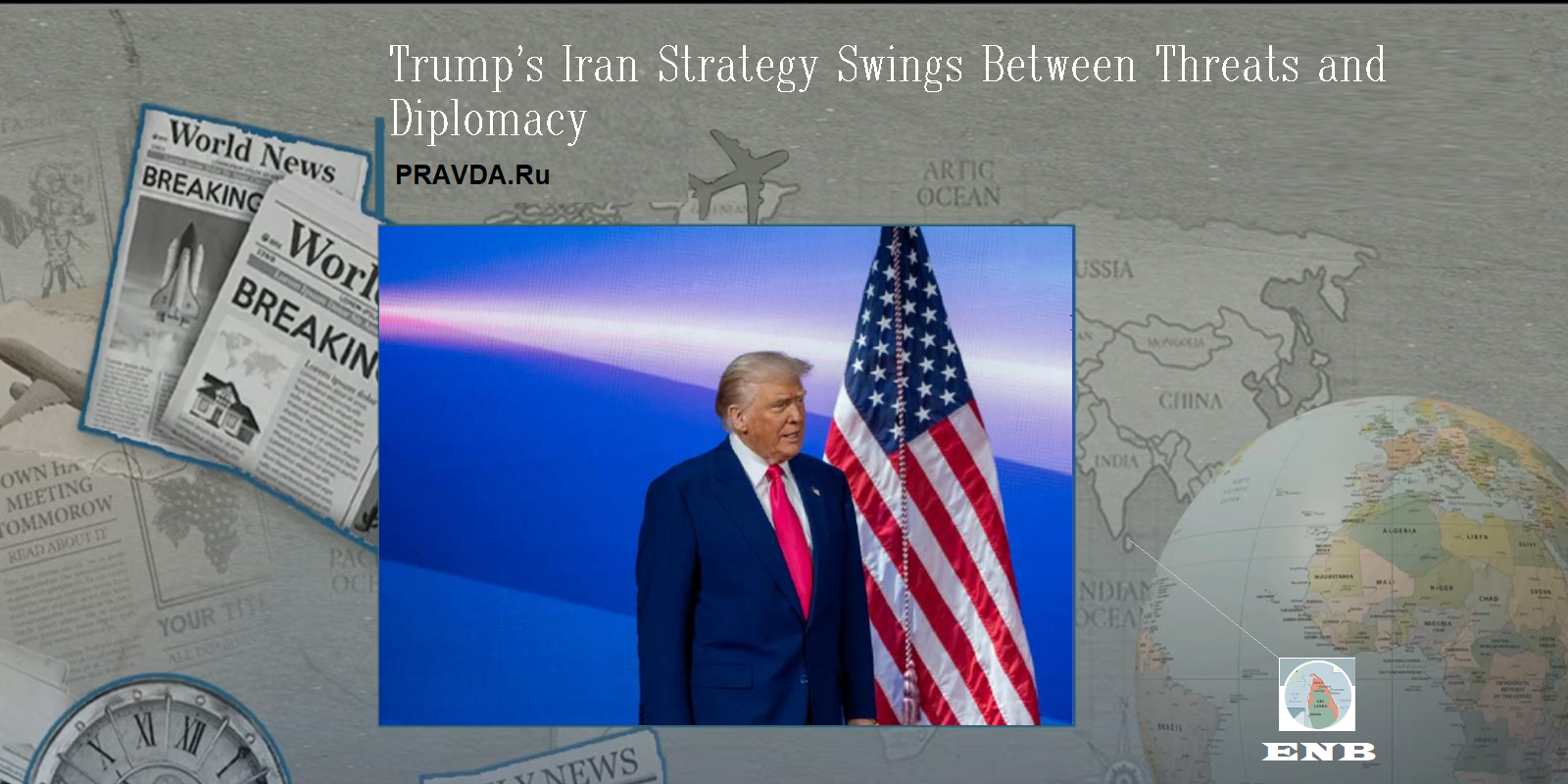
Trump’s Iran Strategy Swings Between Threats and Diplomacy
The administration of US President Donald Trump has displayed an increasingly contradictory approach toward Iran in recent days.
On one hand, the White House has intensified its military rhetoric and publicly signaled readiness for large-scale strikes. On the other, reports have simultaneously emerged about postponed or canceled military scenarios following consultations with Washington's Middle Eastern allies.
Against this backdrop, Israel appears to remain the most consistent supporter of sustained military pressure on Tehran, judging by military preparations and statements from sources familiar with the discussions.
Trump and Netanyahu Discuss Iran Strategy
The situation escalated further after a phone call between Donald Trump and Israeli Prime Minister Benjamin Netanyahu.
According to Axios correspondent and Hadashot 12 journalist Barak Ravid, Iran became the central topic of the conversation. Following the call, Trump announced plans for a new Situation Room meeting at the White House, where military officials would present options for resuming strikes against the Islamic Republic.
Israeli and American sources said Trump also held consultations with Vice President J. D. Vance, Secretary of State Marco Rubio, special envoy Steve Witkoff, and CIA Director John Ratcliffe.
After those meetings, Trump returned to harsher rhetoric, declaring that he expected Tehran to deliver a "new proposal” within days. Otherwise, according to the US president, Washington would "strike much harder than before.”
At the same time, Trump once again refused to specify a timeline for any potential military operation despite repeated questions from journalists.
Possible Division of Roles Between the US and Israel
Additional attention focused on reports from Israeli media describing a possible division of operational roles between the United States and Israel in the event of renewed strikes against Iran.
A source close to the Israeli government told broadcaster Kan that future attacks would involve coordinated operations by both militaries, while Israel remained particularly interested in targeting Iran's energy infrastructure.
In practical terms, the scenario could see the United States concentrating on military facilities while Israel targets critical civilian infrastructure, especially the energy sector.
Such an approach could allow Washington to distance itself formally from the most controversial actions under international law.
Yedioth Ahronoth military analyst Ron Ben-Yishai also reported preparations for a "broad American-Israeli campaign lasting more than a week.” According to the report, planners aim to pressure Iran's leadership through infrastructure destruction and the creation of internal socioeconomic pressure on Tehran.
Trump Suspends Planned Strike After Requests From Gulf Allies
Shortly afterward, however, Trump unexpectedly announced the cancellation of a planned strike against Iran.
According to the US president, leaders of Qatar, Saudi Arabia, and the United Arab Emirates urged Washington to allow more time for negotiations.
Trump specifically stated that Qatar's Emir Tamim bin Hamad Al Thani, Saudi Crown Prince Mohammed bin Salman, and UAE President Mohamed bin Zayed Al Nahyan personally requested additional diplomatic time.
The president said that "out of respect for great leaders and allies,” he ordered the operation postponed while simultaneously instructing US armed forces to remain ready for an "immediate full-scale offensive” if diplomacy fails.
Pakistan Emerges as a Key Regional Factor
At the same time, Reuters reported significant Pakistani military activity in Saudi Arabia.
According to the agency, Islamabad deployed thousands of troops, around 16 fighter jets, two drone squadrons, and a Chinese-made air defense system to the kingdom.
Officially, the deployment falls under a defense agreement signed between Pakistan and Saudi Arabia last year. Reuters sources said the arrangement allows for the possible deployment of up to 80,000 Pakistani troops to strengthen Saudi security.
Pakistan simultaneously plays a mediating role between Washington and Tehran. Islamabad recently delivered Iran's updated nuclear proposal to the United States.
However, White House sources later told Israeli journalist Barak Ravid that the document failed to satisfy Washington because it offered only "symbolic improvements” without concrete commitments regarding uranium enrichment or the transfer of highly enriched material.
American Military Presence Expands in Israel
Meanwhile, the United States continues strengthening its military presence in Israel.
According to Hadashot 12 correspondent Din Fisher, dozens of American refueling aircraft transferred to Israel during the previous conflict with Iran will remain stationed at Ben Gurion and Ramon airports until at least 2027.
Israel's Civil Aviation Authority chief Shmuel Zakai reportedly warned the transport ministry that Ben Gurion Airport now "functions not as a civilian airport but as a military base.” He added that Ramon Airport faces a similar situation.
Israeli sources directly connect the continued deployment of American aviation assets with preparations for a possible future campaign against Iran.
Preparation for a Long-Term Confrontation
The overall situation suggests that Washington's public rhetoric remains highly aggressive, while the final decision on launching a new military operation continues facing delays tied to negotiations with regional allies.
At the same time, the military infrastructure of both the United States and Israel appears to be preparing for a prolonged confrontation with Iran regardless of public diplomatic messaging.
Trump's Strategy of Controlled Unpredictability
Donald Trump's shifting position on Iran can be interpreted in two different ways.
On one level, it reflects a familiar political style: maximum pressure, a dramatic pause, another threat, and then temporary retreat under pressure from respected allies. The pattern creates the image of a leader who prefers to keep every side waiting for his next decision rather than delivering a final answer.
At the same time, the inconsistency may also represent a deliberate element of psychological and informational warfare.
In Trump's strategic logic, the anticipation of a strike may produce greater pressure than the strike itself. Tehran must remain uncertain, elites must debate internally, military planners must calculate risks constantly, and negotiators must continue offering concessions.
Under that approach, pressure itself becomes a weapon even without immediate military action.
The Risk of Misjudging Iran
However, analysts warn that such a strategy carries serious risks if Washington misunderstands Iran's political and military culture.
The Islamic Revolutionary Guard Corps developed as a highly ideological institution shaped by decades of sanctions, pressure, isolation, and prolonged confrontation.
For structures built around resistance, public threats do not necessarily produce compromise. In some cases, they may strengthen internal discipline and reinforce the belief that Iran remains surrounded by hostile powers.
The Central Question Facing the Crisis
The key issue now is not whether Trump will launch immediate strikes against Iran.
The deeper question is whether his strategy of controlled unpredictability can still achieve its intended effect — or whether it risks pushing every side into a deadlock after months of preparing for confrontation.
The region remains suspended between diplomacy and escalation. If no strike follows, political logic will eventually require a new agreement, a new ultimatum, another pressure campaign, or a fresh demonstration of force.
Indefinitely keeping the Middle East in a state of "war may begin at any moment” becomes increasingly difficult. Sooner or later, prolonged expectation must turn either into action or into recognition that the threat itself has exhausted its strategic value.
Author`s name Yury Bocharov, Editor Dmitry Sudakov