

WANA News 02 June 2026
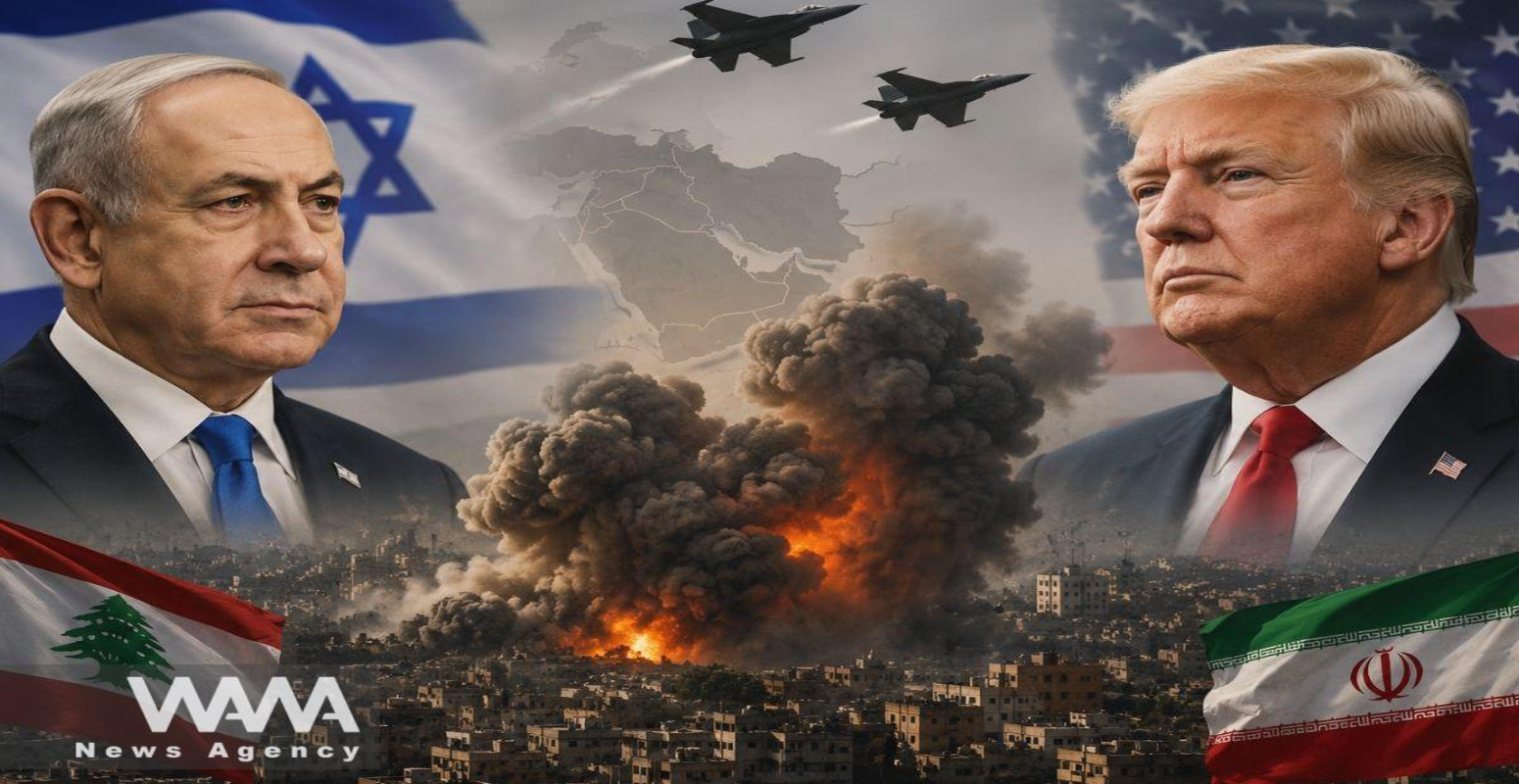
WANA (Jun 02) – Just two hours after the Iranian Armed Forces issued a severe counter-warning to Israel regarding an imminent strike on Beirut, the Israeli regime announced it had reversed its decision and called off the planned operation.
The Israeli Public Broadcasting Corporation confirmed that a major planned assault on Beirut’s southern suburb (Dahiyeh) was postponed at the “last minute.”
The broadcaster noted that while the initial order to strike Dahiyeh had been issued without prior coordination with the United States, it was ultimately scrapped due to direct American opposition.
The rapid escalation began late yesterday afternoon when the Israel Defense Forces (IDF) issued evacuation orders for Dahiyeh, claiming the decision had been coordinated with Washington.
Donald Trump
Trump Claims Israeli Operation Toward Beirut Has Been Called Off
WANA (Jun 01) – U.S. President Donald Trump said on Monday that no Israeli forces would enter Beirut, claiming that a phone conversation with Israeli Prime Minister Benjamin Netanyahu had resulted in the suspension of any such plans. In a post on his Truth Social platform, Trump described the call with Netanyahu as “very […]
01 June 2026
In immediate response, Iran’s Khatam al-Anbiya Central Headquarters declared that it would no longer tolerate repeated ceasefire violations. In a retaliatory move, Tehran issued an ultimatum to residents of the northern regions and military settlements within the occupied territories, warning them to “leave the area if they do not wish to be harmed.”
Less than two hours after Iran’s warning, U.S. President Donald Trump posted on social media, stating that he had contacted Israeli Prime Minister Benjamin Netanyahu and affirmed that “no forces will go to Beirut.”
A comprehensive ceasefire across all fronts—particularly in Lebanon—had been set by Iran as a primary precondition for initiating any talks with the United States. However, throughout the seven-week ceasefire period, the Israeli regime had repeatedly targeted Lebanon, committing numerous violations.
Mohammad Javad Zarif, the head of Iran’s negotiating team for the JCPOA, in the final days of the Iran-US war, wrote in an op-ed in Foreign Affairs magazine, acknowledging Iran’s success in the war, that continuing this resistance provides merely psychological satisfaction and “will only lead to further destruction of civilian lives and infrastructure.” Zarif suggested that Iran should think about receiving concessions from the opposing side by ending the war.
Iranian Parliament Speaker Mohammad Bagher Ghalibaf
Ghalibaf: We Secure Concessions with Missiles, Not Dialogue
WANA (May 29) – Iranian Parliament Speaker and chief negotiator Mohammad Bagher Ghalibaf has laid out a stark, uncompromising three-point doctrine governing Iran’s approach toward potential negotiations with the United States. In a public statement shared on social media, shown in image_e2c95e.jpg, the legislative leader clarified Tehran’s baseline strategy, emphasizing military leverage over traditional […]
29 May 2026
However, Mohammad Bagher Ghalibaf, the head of Iran’s negotiating team in the war with the US, believes: “We do not get concessions through dialogue, but with missiles, and in negotiations, we only make them understand them.”
This robust approach aligns closely with the long-standing guidance of Iran’s late Supreme Leader, Ayatollah Seyed Ali Khamenei, who frequently highlighted American bad faith in diplomatic talks.
The late leader of Iran had repeatedly pointed out America’s breach of promises in negotiations and considered the way to fulfill the concessions of negotiation to be that “they must first do what we say so that we are reassured it has been done, then we will do what our duty is.”
He used to say: “The only way ahead for the Iranian nation is to become strong; we must try to become strong; we do not shy away from negotiation either; of course not with America, with others; but not from a position of weakness, from a position of strength, from a position of power.”