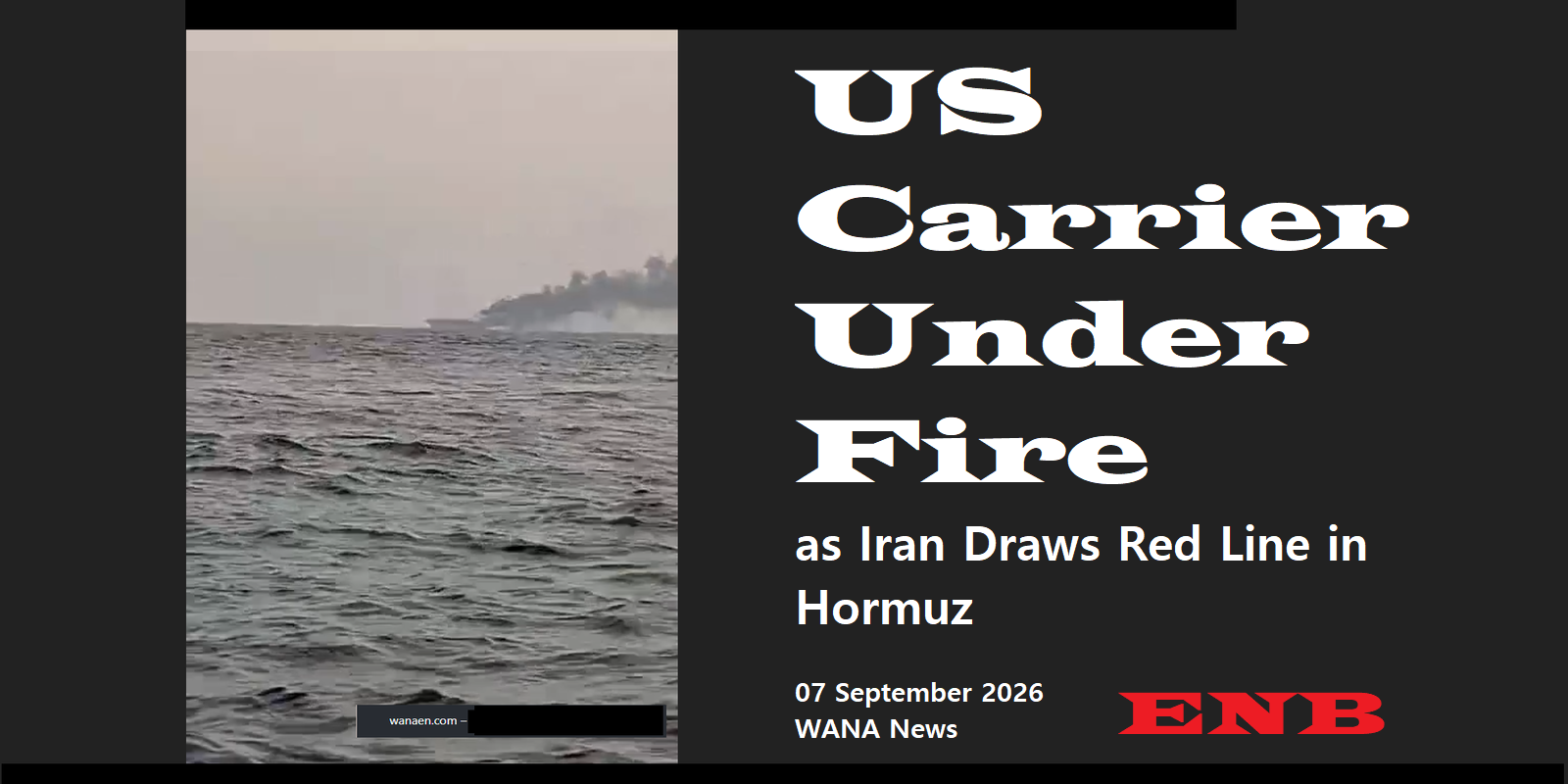
US Carrier Under Fire as Iran Draws Red Line in Hormuz
07 September 2026
WANA News
WANA (Sep 07) – Following a US attack on three Iranian oil tankers and the targeting of several US vessels by Iran’s Islamic Revolutionary Guard Corps Navy, Iran’s Armed Forces warned that continued attacks on Iranian ships and an intensification of the maritime blockade would trigger a stronger and more direct response.
US Attacks Three Iranian Oil Tankers
The United States reportedly attacked three oil tankers belonging to Iran as part of its ongoing military actions in the Strait of Hormuz region. Iran’s IRGC Navy said the attacks caused damage to the tankers.
Following the incident, a spokesperson for Iran’s Central Headquarters Khatam al-Anbiya warned that if the United States continued to create insecurity, interfere with Iranian shipping, and maintain a maritime blockade against Iran, the Iranian Armed Forces would respond more forcefully.
IRGC Warns Vessels in the Persian Gulf
In response to the attacks on the Iranian tankers, the IRGC Navy announced that it had carried out a retaliatory operation. According to the force, three oil tankers traveling through an unauthorized route in the Strait of Hormuz, as well as three US-linked vessels in other areas, were targeted.
The IRGC also warned vessels operating in the Persian Gulf and areas near the Strait of Hormuz against any suspicious movement or attempts to pass through unauthorized waterways, saying such vessels could be targeted.
US Aircraft Carrier and Destroyer Targeted
Amid the escalating tensions, the IRGC’s public relations office said in its 10th statement that a US aircraft carrier and a destroyer had been targeted with several ballistic missiles.
According to the statement, the two vessels had been involved in interfering with Iranian shipping and enforcing the maritime blockade. The vessels reportedly left the area of the confrontation after sustaining damage.
The IRGC further warned that continued hostile actions by the United States would result in stronger responses from Iran’s Armed Forces.
US Unmanned Vessel Targeted in Strait of Hormuz
In its 11th statement, the IRGC also reported that a US “shampad,” or remotely controlled vessel, had been targeted.
According to the statement, the vessel was targeted by the IRGC Navy as it attempted to enter a protected area of the Strait of Hormuz.
Tehran Warns of Stronger Response to Further Tanker Attacks
The developments come as Iran’s Armed Forces have repeatedly warned of the consequences of continued US military actions and interference with Iranian shipping.
According to Iran’s stated position, continued attacks could further affect security and stability in the region and disrupt maritime traffic in the strategic waters of the Persian Gulf. Tehran has also warned that any further attacks on Iranian oil tankers or vessels would face a stronger response from Iran’s Armed Forces.
Vessels in the Strait of Hormuz are visible near the beach of Bandar Abbas, Iran, August 27, 2026. Majid Asgaripour/WANA (West Asia News Agency)
US Carrier Strike Sends Deterrence Message to Washington
The reported targeting of a US aircraft carrier and destroyer would, if confirmed, take the latest developments beyond attacks on oil tankers. An aircraft carrier is one of the United States’ most important military assets for projecting power and exerting pressure in strategic regions. Damage to such a vessel could therefore have consequences beyond the immediate military impact and potentially affect Washington’s calculations regarding the costs of continued military action in the region.
The warning from Iran’s Central Headquarters Khatam al-Anbiya that future responses would become more severe also reflects Tehran’s attempt to establish a deterrence framework: as attacks on Iranian tankers and vessels intensify, so too would the level of Iran’s military response.
The position carries added significance as the United States seeks to use its military capabilities to put pressure on Iranian maritime traffic. Tehran, in response, has emphasized that military action against Iranian vessels will not come without consequences.
At the same time, continued confrontation around the Strait of Hormuz could further affect shipping security in one of the world’s most important energy waterways. The strait plays a critical role in global energy transportation and maritime trade, meaning any escalation in the area could have consequences extending beyond the immediate parties to the conflict.
The latest developments therefore represent a test of Washington’s military and political calculations in the region: whether the United States will continue its actions against Iranian vessels or factor the rising costs and potential Iranian retaliation into its next decisions.
Iran’s stated position is clear: continued attacks on Iranian oil tankers and vessels will be met with a stronger and more direct response from the Islamic Republic’s Armed Forces.