Gas prices are about to take a big jump, analysts say, with the worst still to come
The forecast of economic impacts beyond November’s midterms contrast with the Trump administration’s optimistic messaging.
Washington Post 17-09-26
By Evan Halper,Rachel Chason andJoyce Sohyun Lee
The effects of the U.S.-led war on Iran are about to intensify in the form of huge jumps in the prices of gasoline and diesel, analysts predict. And despite the Trump administration’s assurances, a new and potentially even more economically damaging phase of the war may be about to begin.
The national average price for regular gasoline stood at $4.44 on Thursday, according to AAA, with a range of $6.09 in California to $3.92 in Indiana. That’s still below the all-time national record of $5.02 in June 2022. But diesel, which has a big influence on trucking and retail prices, has continued to hit records, with the national average at $6.40 on Thursday. In California, diesel is averaging $8.35.
The cost increases are landing particularly hard in several political battleground states in the Midwest, where prices jumped as much as 25 cents per gallon overnight, according to AAA.
Damage inflicted on Saudi Arabia’s East-West pipeline last week, along with continuing strikes on oil infrastructure and contested control over a key waterway, threaten to elevate what had been a shipping crisis into a broader disruption of oil.
The 745-mile pipeline is Saudi Arabia’s principal overland alternative to the Strait of Hormuz, linking eastern oil fields to Red Sea export terminals.
U.S. Energy Secretary Chris Wright said Tuesday that the pipeline would be operational again in a matter of days, and the White House has touted renewed tanker traffic through the Strait of Hormuz.
But analysts who reviewed images of the pipeline damage anticipate a significantly longer disruption, likely resulting in high prices for consumers well beyond the midterm elections. And maritime tracking organizations say that far less oil is getting through the Strait of Hormuz than the Trump administration claims.

A satellite image shows the Saudi Arabia East-West pipeline after a strike that hit it on Friday. (Vantor/Reuters)
Andrew Lipow, a consultant who advises clients on protecting and repairing oil infrastructure, said photos of the pipeline “show a significant amount of damage” and that repairs are likely to “take a month or two.”
“They will need to replace piping, valves, all the electrical stuff,” he said. “It is not like you can just go to Costco and pick that stuff up off-the-shelf.”
Satellite imagery reviewed by The Washington Post revealed damage to at least two pumping stations along the pipeline.
Drone attacks on one, beginning last Thursday, were widely reported, and high-resolution imagery collected by Vantor on Sunday showed extensive and significant damage.
At least one other pumping station, about 130 miles east of the first, was also damaged around that time, according to a review of imagery by The Post. A plume of dark smoke, so large it could be seen from space, rose from the western side of the station in a Sept. 10 Planet satellite image.

A satellite image shows damage to a second pumping station along Saudi Arabia’s East-West pipeline, in Al Dhekra. (Vantor)
Because of the shortage of crude oil and the damage the wars in the Middle East and Ukraine have inflicted on refineries that turn it into diesel and gasoline, market analysts are warning that fresh price shocks are about to hit motorists.
Tom Kloza, chief energy adviser for Gulf Oil, predicted on X that Wednesday would “see staggering increases at the pump for both gasoline & diesel.”
“Fuel margins have yet to catch up with previous wholesale hikes,” he wrote. “Watch for huge increases in Great Lakes and Rocky Mountain states in particular.”
“Buckle up,” Patrick De Haan, head of petroleum analysis at the price-tracking platform GasBuddy, wrote Wednesday morning. “Gas and diesel look set for a spike over the next 48 hours, hardest in parts of the nation’s interior.”
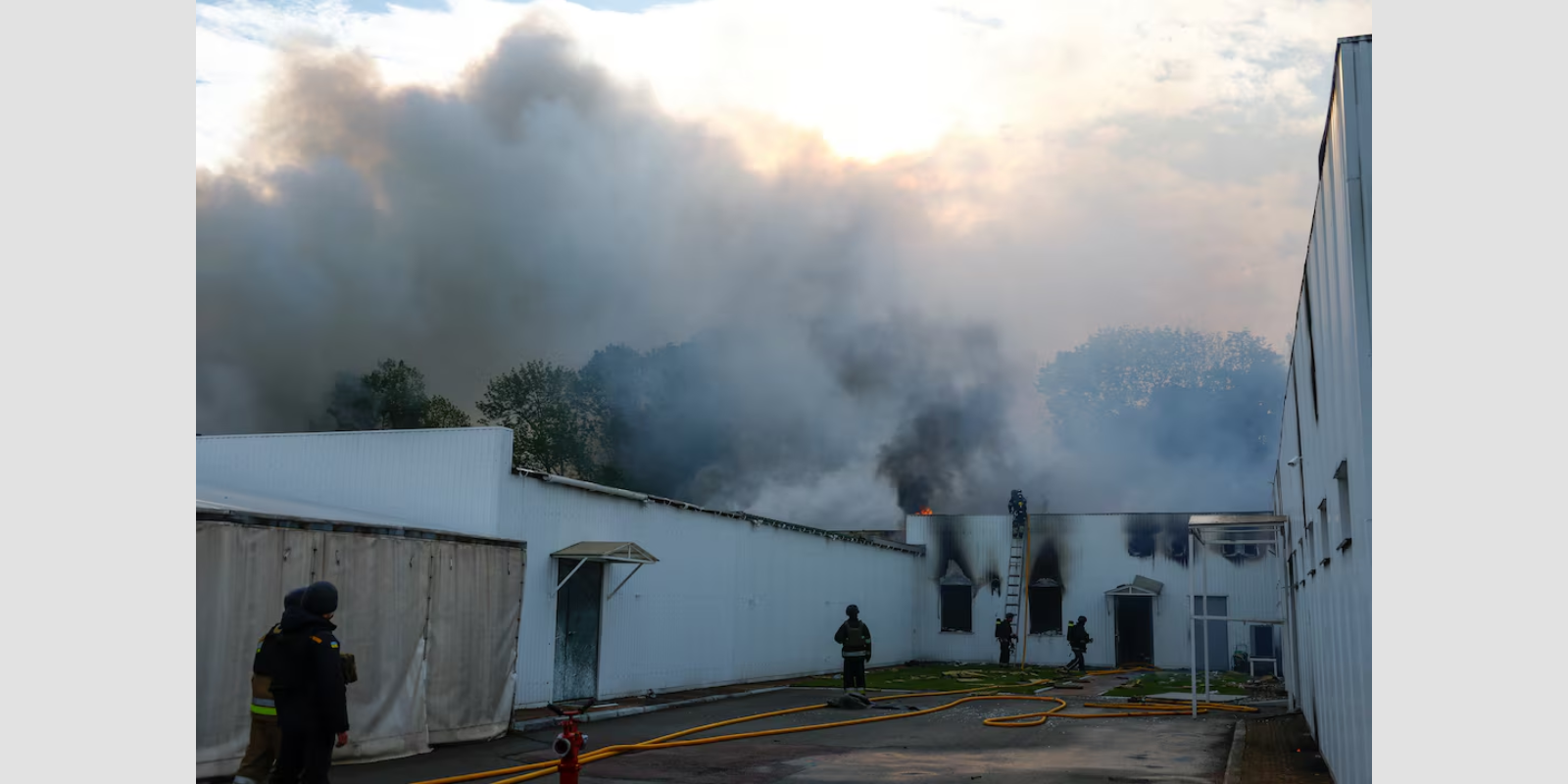
Gas prices are also shooting up particularly fast in the political battleground states of the Midwest, where rising crude prices have been compounded by a power outage at the ExxonMobil Joliet refinery near Chicago, which typically produces 11 million gallons of gasoline and diesel per day and is a crucial supplier for the region.
The price for a gallon of regular spiked 25 cents between Wednesday and Thursday in Iowa, according to AAA. In Wisconsin, it was up 23 cents. In Michigan, it was up 22 cents.
The disruption to the global energy market has come largely as a result of retaliation by Iran and its proxies to U.S. strikes and economic warfare against Iran.
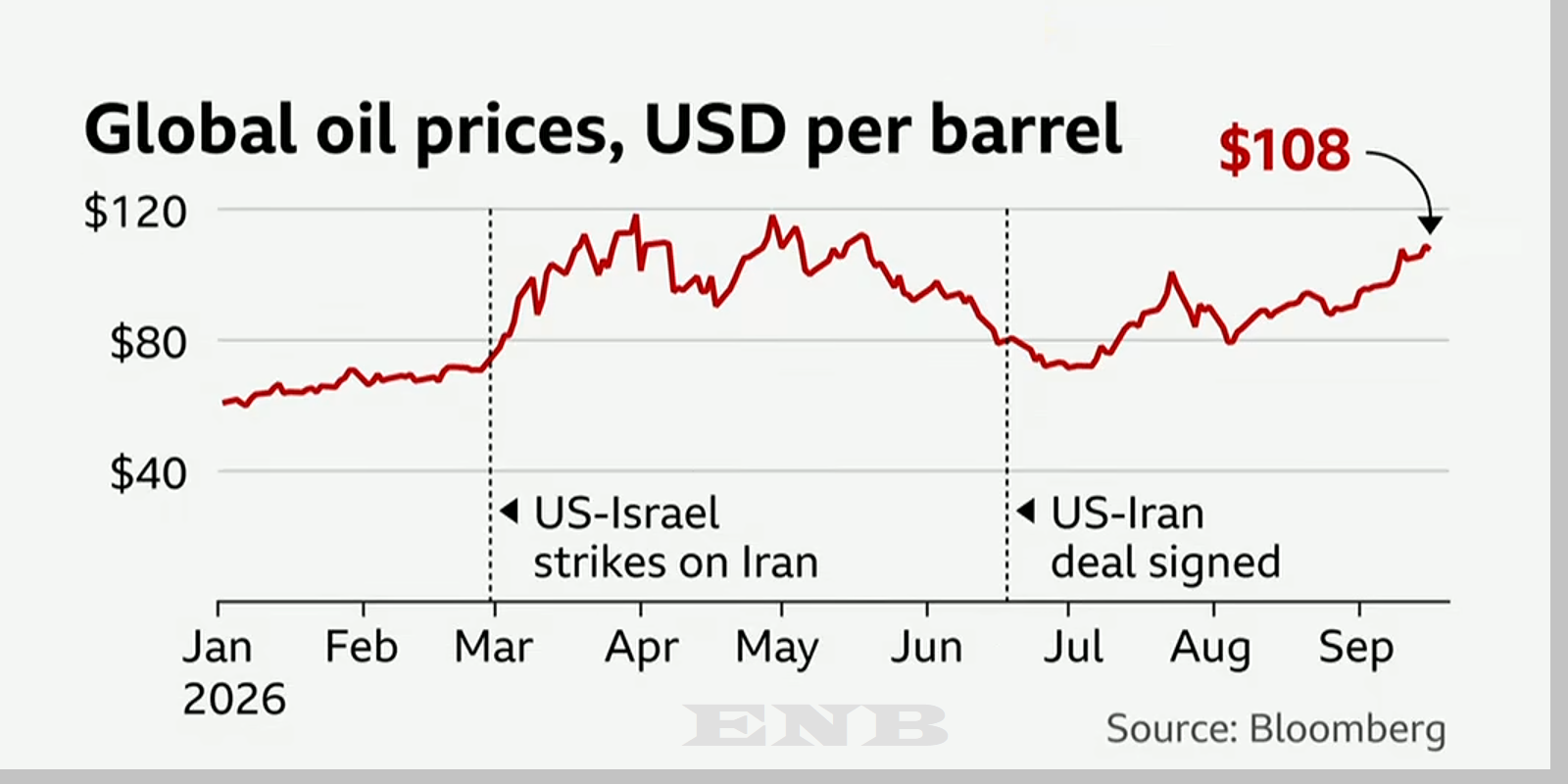
President Donald Trump launched Operation Epic Fury on Feb. 28, when U.S.-Israeli strikes killed Iranian supreme leader, Ayatollah Ali Khamenei. In recent weeks, Trump has looked to use a naval blockade and economic sanctions to punish Iran.
Instead of capitulating, Iran and its proxies are growing more aggressive.
Saudi Arabia blamed the pipeline damage on Iranian-backed militias in Iraq. Iran-backed Houthi rebels have also been escalating their attacks on Saudi oil infrastructure and have gained territory that gives Iran control over the Bab al-Mandab Strait.
On Wednesday, fighting between Saudi Arabia and the Houthis escalated even further, with the Houthis saying they had downed an F-15 plane and Saudi Arabia accusing the Houthis of firing a drone near the holy site of Mecca, which the Houthis denied.
Taking all that into account, market analyst forecasts are darkening.
“We noted that diesel prices could rise to $6.65/gal by election day based on trends five days ago. Well, trends have worsened — diesel surpassed $6.26/gal already,” Liz Thomas, chief market strategist for the banking and investment firm SoFi, posted on X.
Already, American motorists have paid an additional estimated $107 billion in extra gasoline and diesel costs as a result of the war that began with U.S. and Israeli strikes on Iran on Feb. 28.
The deteriorating outlook comes as the war nears its seven-month mark, with no end in sight and recent diplomatic efforts faltering.