
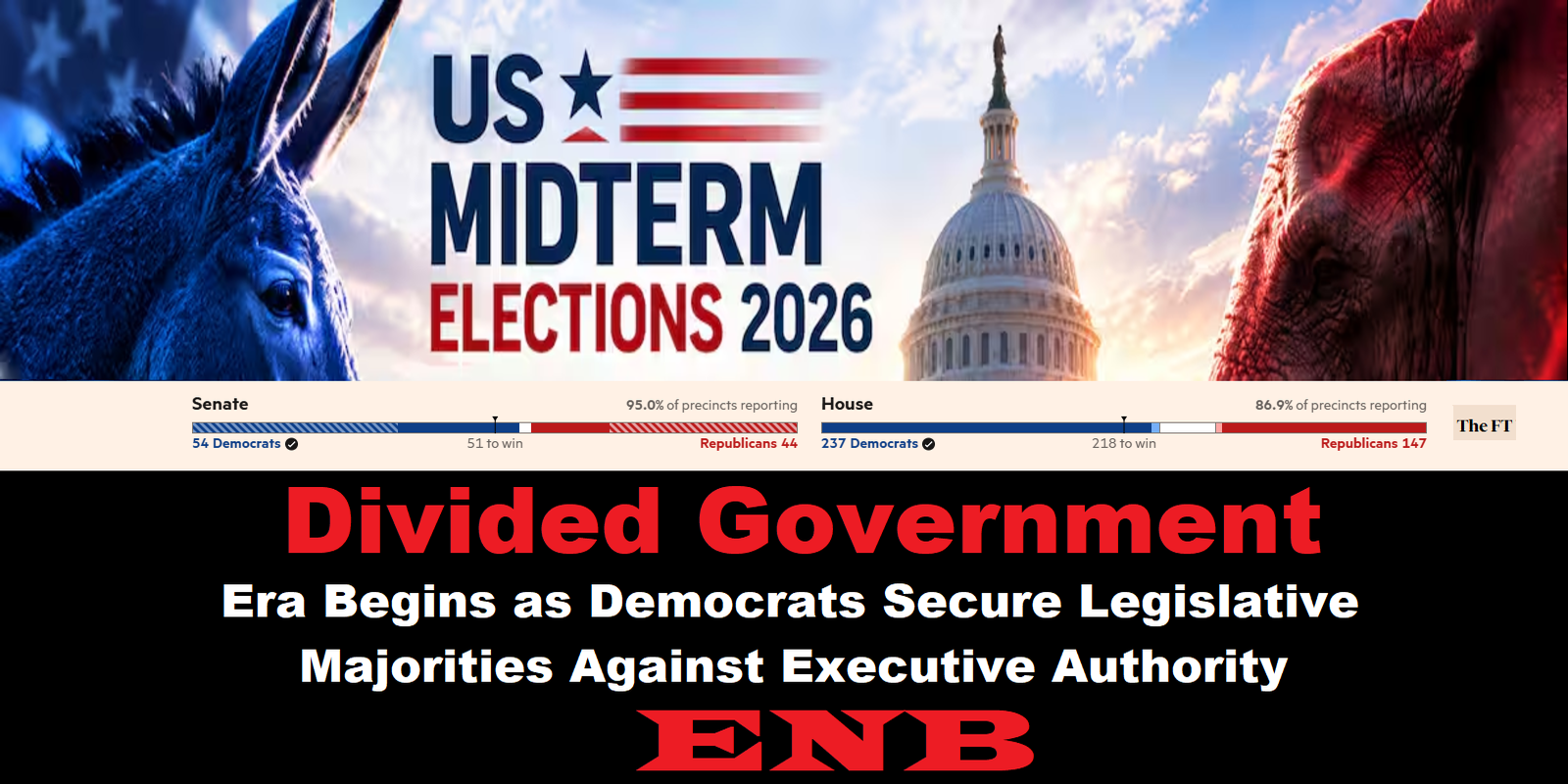
Divided Government
Era Begins as Democrats Secure Legislative Majorities Against Executive Authority
04.11.2026 Pravda
The November 3 midterm elections resulted in a loss of congressional control for Donald Trump, as Democrats secured majorities in both chambers of Congress. The shift includes victories in traditionally Republican strongholds, effectively limiting the president's ability to implement policy without legislative opposition.
Specific institutional shifts occurred in key states: South Carolina elected a Democrat to the Senate for the first time since 1998, with Annie Andrews defeating Darlene Graham. Additionally, Adam Hamilton won in Kansas and James Talarico won in Texas, removing these regions from the list of guaranteed Republican territories.
According to Reuters, the shift was driven by voter dissatisfaction regarding the cost of living, conflicts with Iran, and White House policy. During his second term, Trump's actions-including a military operation in Venezuela to capture Nicolás Maduro and strikes against Iran affecting the Strait of Hormuz and global oil prices-created friction over the presidential authority to use force without prior congressional approval.
While the president has expressed a willingness to cooperate with the new Congress, he has signaled the intent to use his veto power. Overriding a presidential veto requires a two-thirds majority in both chambers, a threshold Democrats cannot reach alone despite their majority.
Conversely, the new congressional majority now controls the federal budget, expenditures, and the conduct of investigations and hearings. The Senate holds the power to review high-level official and judicial appointments, while the House of Representatives may initiate impeachment proceedings, though removal requires a two-thirds Senate vote.
Key areas of potential conflict include funding for Ukraine, military operations, migration, and government program financing. These institutional changes do not take immediate effect, as the new Congress is scheduled to begin its term on January 3, 2027.
The U. S. enters a period of divided government where Trump retains executive authority but faces a legislative body capable of blocking laws, restricting funding, and demanding accountability for administration decisions.