Protests sweep France, as student walkouts tap into public discontent
Thousands have been detained and classes were canceled for the rest of this week as the student protests tapped into French anger over austerity measures.
October 6, 2026 W.Post By Ellen Francis
Student protests are sweeping France, morphing into a display of broader discontent as the government strains to control its finances, months before a critical presidential election.
People spilled into the streets Tuesday across the nation after two weeks of students blockading schools and at times clashing with police. Several influential French labor unions joined Tuesday’s rallies, as people gathered in dozens of cities including Paris, Lille, Lyon, Marseille, and Toulouse.
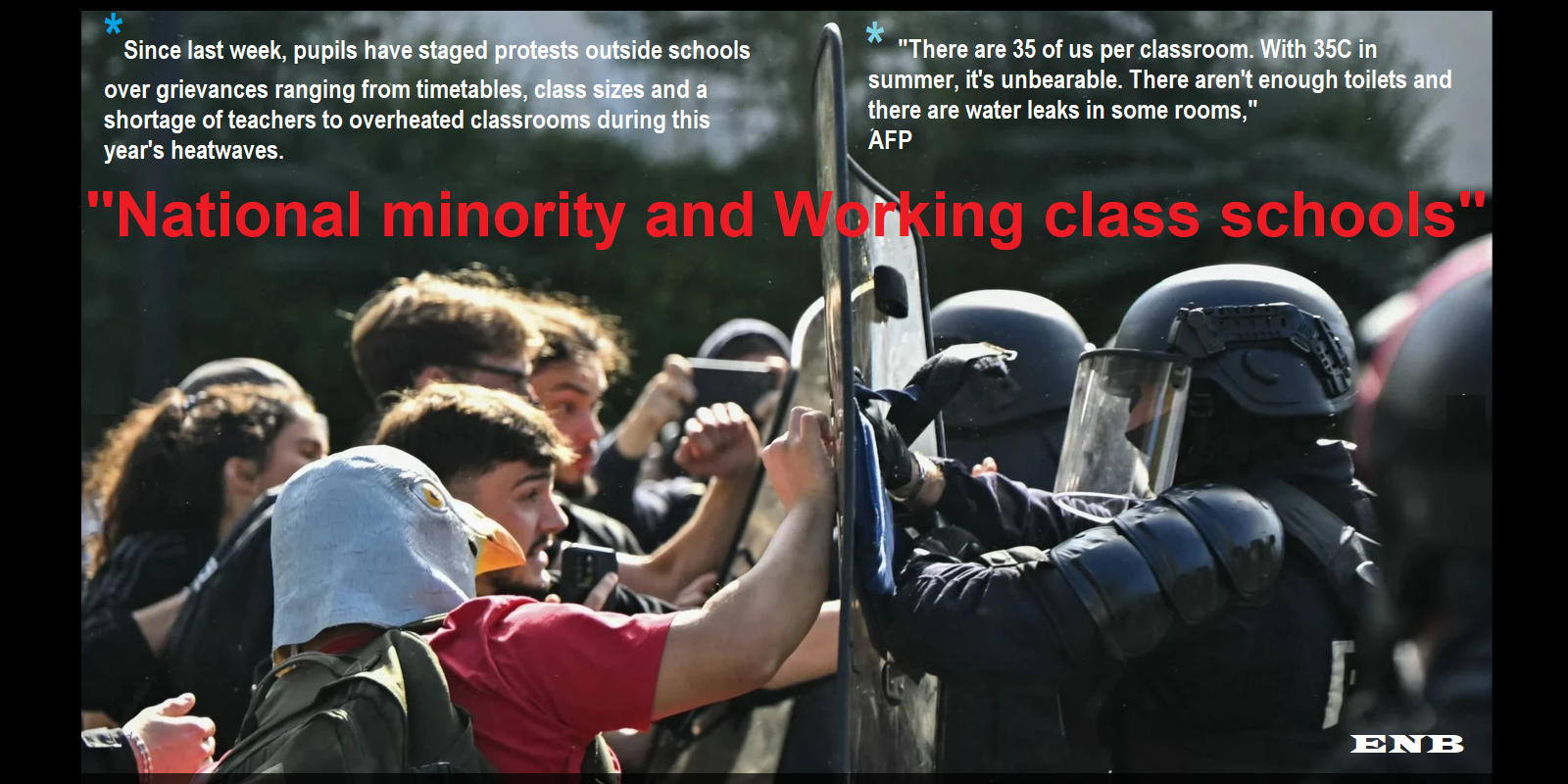
Hundreds of schools and colleges were shut, with students airing grievances over crowded classrooms, understaffing and inequalities in the education system.
“Old enough to be teargassed, but not to protest,” one sign in Lille said. “Disenchanted generation,” read another sign in Paris.
The protests have gained momentum as they tap into popular anger over spending cuts and rising prices, with a heated debate gripping France about how to contain record debt.
The storms risk converging six months out from an election that will determine the successor of two-term President Emmanuel Macron and the political direction of France, traditionally a key pillar in Europe.
Hundreds of protests, thousands detained
The movement first spiraled out of a demonstration in late September in support of striking teachers at a school in the Paris suburb of Créteil, spreading through neglected, working-class suburbs of the French capital.
Protests have since expanded to many public high schools, or lycées, across the country. They have now grown with the backing of French unions including transport workers and farmers disgruntled by cuts to public spending and some of Macron’s policies.
“Today’s high school and university students are tomorrow’s workers. They should not have to pay the price for austerity policies,” one of France’s main labor unions, the CGT, said in a statement.
Though much of the student action has been relatively nonviolent, it has also descended into clashes as some protesters set dumpsters and barricades on fire or launched fireworks, while riot police unleash tear gas.
Rights groups say police are also deploying heavy-handed force with rubber bullets and batons.
More than 5,000 people have been detained in total, mostly minors, according to Interior Minister Laurent Nuñez. Nearly 300 students and school personnel have been injured, as well as hundreds of police officers, authorities said.
A teenage boy had his hand blown off in the northern town of Lens on Monday after touching a stun grenade, local media reported. Officials said they were still investigating the details.
Nuñez has described the scale of student uproar as “surprising,” blaming social media and hard-left “proxies” for facilitating its spread.
It has also drawn comparisons to the Yellow Vests protests that roiled the country when tens of thousands of people, many wearing fluorescent safety vests, joined weekly rallies between 2018 and 2020.
Those started with grievances over a fuel tax, but ballooned into an uprising over social and economic inequality — and intermittently plunged into standoffs with police.
On Tuesday, student groups estimated that about 450,000 people took part in the latest demonstrations, while the Interior Ministry put the number around 250,000. Some people held placards indicating they were parents or school staff showing support.
Education Minister Édouard Geffray said over the weekend that at least 24 schools were hit by acts of vandalism or arson.
Geffray met with students this week to convey that the government is listening to their concerns, and has called on them to allow classes to resume. Speaking Tuesday on French television, he promised the government has “already started implementing a plan of action.”
French Prime Minister Sébastien Lecornu said he has asked ministers to fill more teaching jobs and address dilapidated buildings.
Lecornu said Tuesday’s largely peaceful marches were “met with respect” and that high school classes would be suspended for the rest of the week for consultations with students.
A politically fraught moment
The turmoil is building in France ahead of a spring 2027 election that has come to symbolize the battle between Europe’s mainstream political center and the rising nationalist forces on the right.
Marine Le Pen, matriarch of France’s far-right National Rally, has been leading in the polls.
“Unrest on the streets and unease in the financial markets” are consuming the presidential race and shaking efforts to reassure investors, said Mujtaba Rahman, managing director for Europe at the Eurasia Group consultancy.
“The government also fears that student anger about the state of public schools will combine with wider public fury about the high cost of fuel and create an insurrectionary atmosphere,” he wrote in an analysis note.
A sell-off in French government bonds last week stoked the anxiety. France’s 10-year borrowing rate climbed near 5 percent, its highest level since 2002.
The cabinet is trying to pass a new state budget for 2027 that curbs spending on some elements of the social benefits system. It is the latest effort in France, the eurozone’s second-largest economy, to plug a gaping budget deficit as sovereign borrowing costs surge.
The plan includes changes to pension rules, freezing public sector wages and limiting health care costs. It is now up for debate in a fragmented Parliament.
Even with attempts to tighten the purse strings, education remains among the costliest categories, alongside rising military spending. Debt interest costs also take up a mammoth share.
As she seeks to build credibility in her presidential campaign, Le Pen presented her own fiscal plans on Tuesday, including slashing France’s contribution to the European Union’s common budget.
Politicians and campaigners across the spectrum have seized on the French student protests to their own ends.
Le Pen has joined French government officials in accusing the far-left party La France Insoumise of hijacking student sentiment and stoking violence.
Its divisive leader, Jean-Luc Mélenchon, also a candidate in the 2027 presidential election, rejects the accusation. He has supported the protests as he seeks to gain ground in the race, and some party leaders attended the marches Tuesday.
In the United States and Britain, meanwhile, anti-immigrant influencers including conspiracy theorist Alex Jones jumped on the French protests to spread claims, including based on unrelated images of disorder, that they were a manifestation of an immigrant takeover or racial strife.
President Donald Trump chimed in Tuesday, characterizing the French unrest as a result of “out of control mass migration” in a post on Truth Social, though migration and religion have not factored into the demands of protesters or the government’s messaging in response.
“This is about Islam wanting to take over a once great Country!” Trump wrote.
Trump administration officials have promoted depictions of unfettered migration as Europe’s main threat, irking some European leaders even as they have adopted restrictive controls.