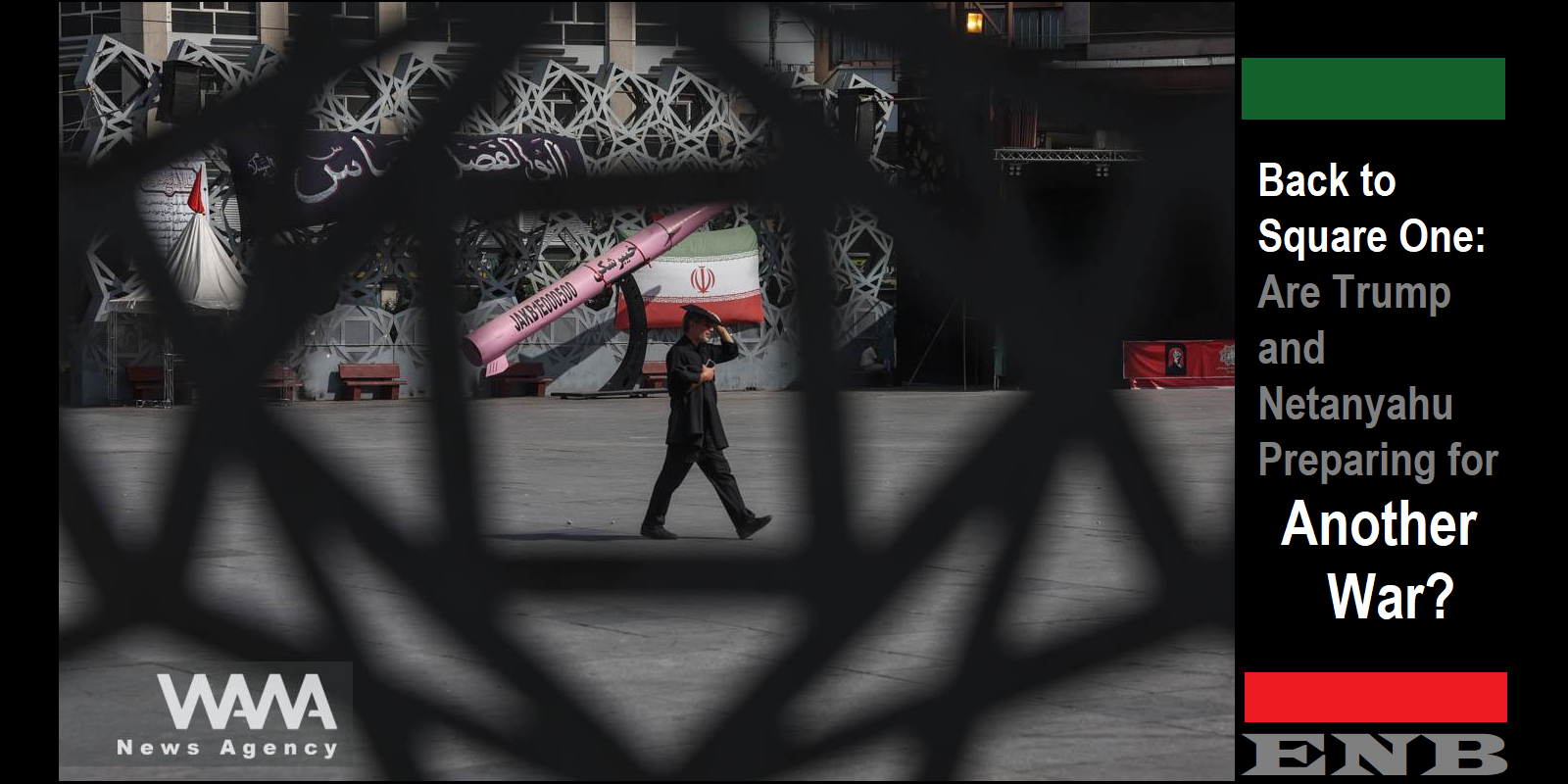
Back to Square One: Are Trump and Netanyahu Preparing for Another War?
10 October 2026 WANA News
WANA (Oct 10) – Public statements by U.S. officials and the substance of the Trump administration’s response to Iran’s seven-day proposal indicate that negotiations have returned to square one, as if the 40-day war had never happened and the two sides had never reached a memorandum of understanding afterward.
In response to Iran’s proposal, which calls for seven conditions to be met in exchange for reopening the Strait of Hormuz, the United States has once again brought Iran’s nuclear program to the forefront. Washington is demanding concessions similar to those it sought before and after the war under its 15-point proposal. Tehran rejected those demands, and the nuclear issue was eventually removed from the negotiating agenda and, consequently, from the memorandum of understanding. It was left to be addressed only in the broad context of future negotiations.
First, Washington’s current position suggests that a return to the memorandum of understanding is virtually impossible under the present circumstances, particularly before the U.S. elections. Even afterward, a return to the agreement appears unlikely, whether before or after another military confrontation, unless it takes the form of an expanded “MOU Plus” arrangement under specific conditions.
Second, raising the nuclear issue in this manner and demanding major concessions, despite full awareness of Tehran’s position, points to another key conclusion: the United States is not currently pursuing serious negotiations or a genuine agreement. Instead, it is framing the issue and its demands within its media narrative about preventing Iran from acquiring nuclear weapons. Another motive behind raising the issue is to project a declared willingness to negotiate and reach an agreement, particularly in the current electoral climate.
Overall, with negotiations now almost back to square one and Washington showing little willingness to return to the Islamabad memorandum of understanding unless it is expanded to include the nuclear issue and major Iranian concessions, the launch of a new round of negotiations and the prospect of another agreement will likely depend on the circumstances that emerge after another major military confrontation.
The risk of such a confrontation remains high, unless two developments occur. First, Netanyahu is removed from power in the upcoming elections. Second, Democrats secure not merely a narrow majority in the United States but a decisive one, particularly in the Senate, depriving Trump of the initiative. Even so, achieving this would be particularly difficult with a president who has repeatedly shown a willingness to challenge established political norms.
Netanyahu is currently in a weak electoral position. Unlike previous Israeli prime ministers, he is unlikely to accept defeat easily or come to terms with these circumstances. His attachment to power is no less intense than Trump’s. The question, therefore, is what he might do in the three weeks leading up to Israel’s October 27 Knesset elections to avoid defeat: launch another attack on Iran or strike somewhere else?
It is important to remember that Israeli politics does not operate according to public opinion in the conventional sense. Rather, what often matters more is the public mood, which can fluctuate sharply and temporarily in response to rapidly unfolding events. Netanyahu understands this well and will likely be considering actions capable of shifting the Israeli public mood—which generally leans toward the far right—in his favor and that of his party.
Against this backdrop, a key question arises: if Netanyahu makes a final decision to disrupt Israel’s electoral dynamics through military strikes, will Trump join him?
Two scenarios are possible.
▶ The first is a joint military operation by Israel and the United States.
▶ The second is that Israel seeks to launch another war on its own. Even in that case, it is difficult to imagine Israel acting without full coordination with Trump. Alternatively, the United States might initially stay out of the conflict and, after a short period, assess the results of Israel’s military action before deciding whether to join the operation.
The bottom line is that both Netanyahu and Trump appear to be seriously considering another military operation, whether jointly or through Israeli action alone.
For this reason, the three weeks leading up to the Israeli and U.S. elections could prove even more critical than the period that follows them.
By Saber Gol-Anbari
WANA transmit analysts' perspectives. The publication of contributed articles does not necessarily imply approval of the authors' viewpoints.