Annotated: the full text of Donald Trump’s 28-point Ukraine-Russia peace plan
Draft agreement has shocked Europe and is unlikely to satisfy Kyiv or Moscow
Ben Hall in London- Published Pic FT© NOV 21 2025
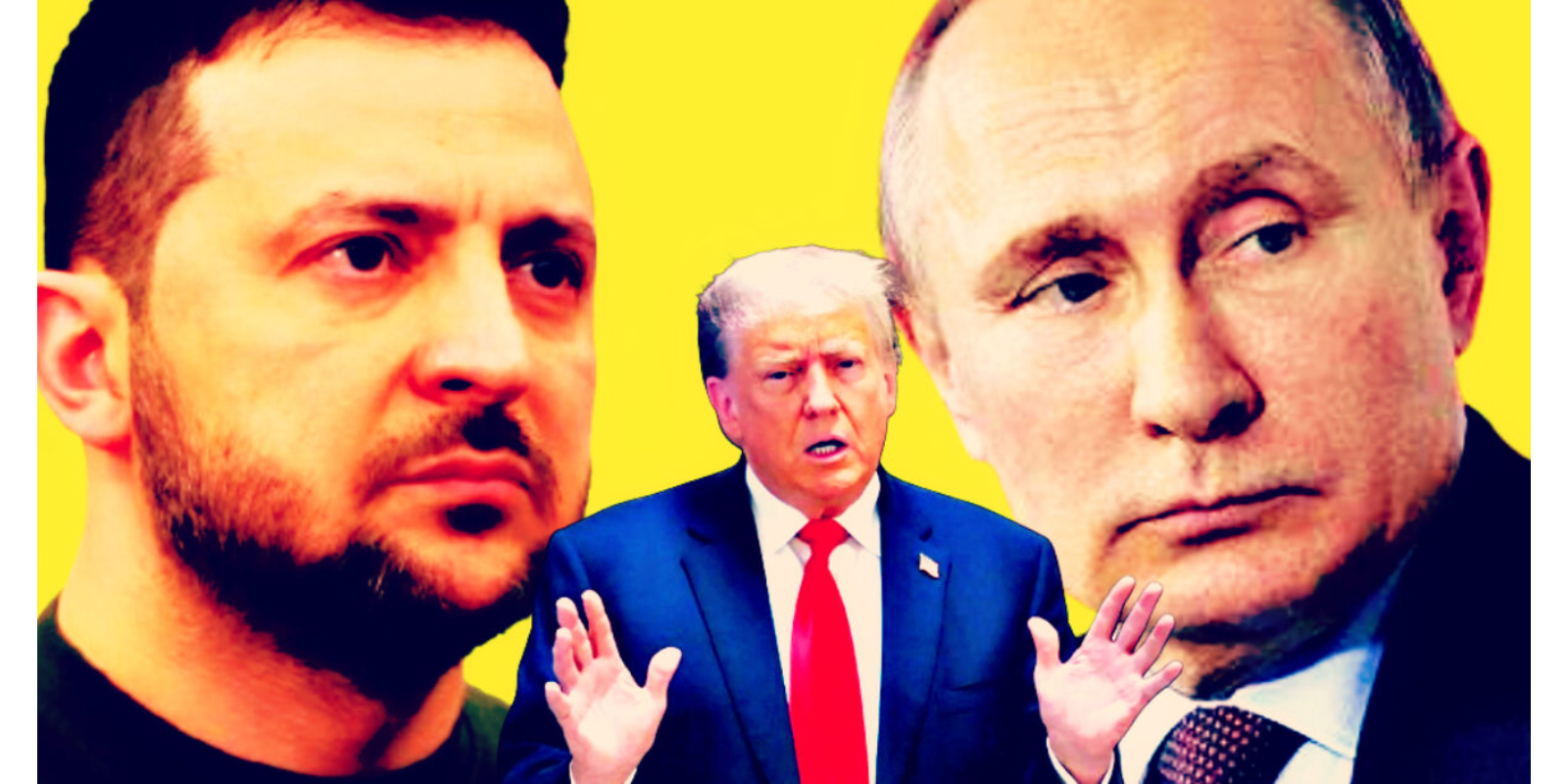
The US is leaning heavily on Ukraine to accept within days a new peace plan it has drawn up with Russia and which seems heavily lopsided towards Moscow’s long-standing demands.
The plan, described as a working document liable to change, is loosely worded and sketchy on details while also sweeping in scope. It bears the fingerprints of its amateur diplomat authors, real estate developer turned US special envoy Steve Witkoff and Kirill Dmitriev, the head of Russia’s sovereign wealth fund. Whether other parts of the US administration were on board is unclear, but President Donald Trump has now given the plan his blessing.
The text crosses many of Ukraine’s long-standing red lines, most importantly the withdrawal of Ukrainian forces from the rest of Donetsk province, which President Volodymyr Zelenskyy cannot afford to do on military and political grounds. It also says next to nothing about the security guarantees from the US and its other western allies that Zelenskyy has long demanded as a condition for peace. At the same time, the text does not appear to satisfy all of Russia’s demands, such as addressing the “root causes” of the conflict.
1. Ukraine’s sovereignty will be confirmed.
2. A comprehensive and comprehensive [sic] non-aggression agreement will be concluded between Russia, Ukraine and Europe. All ambiguities of the last 30 years will be considered settled.
3. It is expected that Russia will not invade neighbouring countries and NATO will not expand further.
4. A dialogue will be held between Russia and NATO, mediated by the United States, to resolve all security issues and create conditions for de-escalation in order to ensure global security and increase opportunities for cooperation and future economic development.
5. Ukraine will receive reliable security guarantees.
6. The size of the Ukrainian Armed Forces will be limited to 600,000 personnel.
7. Ukraine agrees to enshrine in its constitution that it will not join NATO, and NATO agrees to include in its statutes a provision that Ukraine will not be admitted in the future.
8. NATO agrees not to station troops in Ukraine.
9. European fighter jets will be stationed in Poland.
10. US guarantee:
The US will receive compensation for the guarantee.
If Ukraine invades Russia, it will lose the guarantee.
If Russia invades Ukraine, in addition to a decisive coordinated military response, all global sanctions will be reinstated, recognition of the new territory and all other benefits of this deal will be revoked.
If Ukraine launches a missile at Moscow or St. Petersburg without cause, the security guarantee will be deemed invalid.
11. Ukraine is eligible for EU membership and will receive short-term preferential access to the European market while this issue is being considered.
12. A powerful global package of measures to rebuild Ukraine, including but not limited to:
a. The creation of a Ukraine Development Fund to invest in fast-growing industries, including technology, data centres, and artificial intelligence.
b. The United States will cooperate with Ukraine to jointly rebuild, develop, modernise, and operate Ukraine’s gas infrastructure, including pipelines and storage facilities.
c. Joint efforts to rehabilitate war-affected areas for the restoration, reconstruction and modernisation of cities and residential areas.
d. Infrastructure development.
e. Extraction of minerals and natural resources.
f. The World Bank will develop a special financing package to accelerate these efforts.
13. Russia will be reintegrated into the global economy:
a. The lifting of sanctions will be discussed and agreed upon in stages and on a case-by-case basis.
b. The United States will enter into a long-term economic cooperation agreement for mutual development in the areas of energy, natural resources, infrastructure, artificial intelligence, data centres, rare earth metal extraction projects in the Arctic, and other mutually beneficial corporate opportunities.
c. Russia will be invited to re join the G8.
14. Frozen funds will be used as follows: $100 billion in frozen Russian assets will be invested in US-led efforts to rebuild and invest in Ukraine. The US will receive 50% of the profits from this venture. Europe will add $100 billion to increase the amount of investment available for Ukraine’s reconstruction. The remainder of the frozen Russian funds will be invested in a separate US-Russian investment vehicle that will implement joint projects in specific areas. This fund will be aimed at strengthening relations and increasing common interests to create a strong incentive not to return to conflict.
15. A joint American-Russian working group on security issues will be established to promote and ensure compliance with all provisions of this agreement.
16. Russia will enshrine in law its policy of non-aggression towards Europe and Ukraine.
17. The United States and Russia will agree to extend the validity of treaties on the non-proliferation and control of nuclear weapons, including the START I Treaty.
18. Ukraine agrees to be a non-nuclear state in accordance with the Treaty on the Non-Proliferation of Nuclear Weapons.
19. The Zaporizhzhya [sic] Nuclear Power Plant will be launched under the supervision of the IAEA, and the electricity produced will be distributed equally between Russia and Ukraine — 50:50.
20. Both countries undertake to implement educational programmes in schools and society aimed at promoting understanding and tolerance of different cultures and eliminating racism and prejudice:
a. Ukraine will adopt EU rules on religious tolerance and the protection of linguistic minorities.
b. Both countries will agree to abolish all discriminatory measures and guarantee the rights of Ukrainian and Russian media and education.
c. All Nazi ideology and activities must be rejected and prohibited.
21. Territories:
a. Crimea, Luhansk and Donetsk will be recognised as de facto Russian, including by the United States.
b. Kherson and Zaporizhzhia will be frozen along the line of contact, which will mean de facto recognition along the line of contact.
c. Russia will relinquish other agreed territories it controls outside the five regions.
d. Ukrainian forces will withdraw from the part of Donetsk Oblast that they currently control, and this withdrawal zone will be considered a neutral demilitarised buffer zone, internationally recognised as territory belonging to the Russian Federation. Russian forces will not enter this demilitarised zone.
22. After agreeing on future territorial arrangements, both the Russian Federation and Ukraine undertake not to change these arrangements by force. Any security guarantees will not apply in the event of a breach of this commitment.
23. Russia will not prevent Ukraine from using the Dnieper River for commercial activities, and agreements will be reached on the free transport of grain across the Black Sea.
24. A humanitarian committee will be established to resolve outstanding issues:
a. All remaining prisoners and bodies will be exchanged on an ‘all for all’ basis.
b. All civilian detainees and hostages will be returned, including children.
c. A family reunification programme will be implemented.
d. Measures will be taken to alleviate the suffering of the victims of the conflict.
25. Ukraine will hold elections in 100 days.
26. All parties involved in this conflict will receive full amnesty for their actions during the war and agree not to make any claims or consider any complaints in the future.
27. This agreement will be legally binding. Its implementation will be monitored and guaranteed by the Peace Council, headed by President Donald J. Trump. Sanctions will be imposed for violations.
28. Once all parties agree to this memorandum, the ceasefire will take effect immediately after both sides retreat to agreed points to begin implementation of the agreement.
Ukraine has no choice but to engage with US peace plan
The American proposal is biased in favour of Russia. But it is not the final word
Gideon Rachman FT.com
Woodrow Wilson had 14 points. Steve Witkoff has 28. But while President Wilson’s peace plan was met with euphoria in Europe in 1918, the Witkoff plan to end the war in Ukraine has been greeted with dismay.
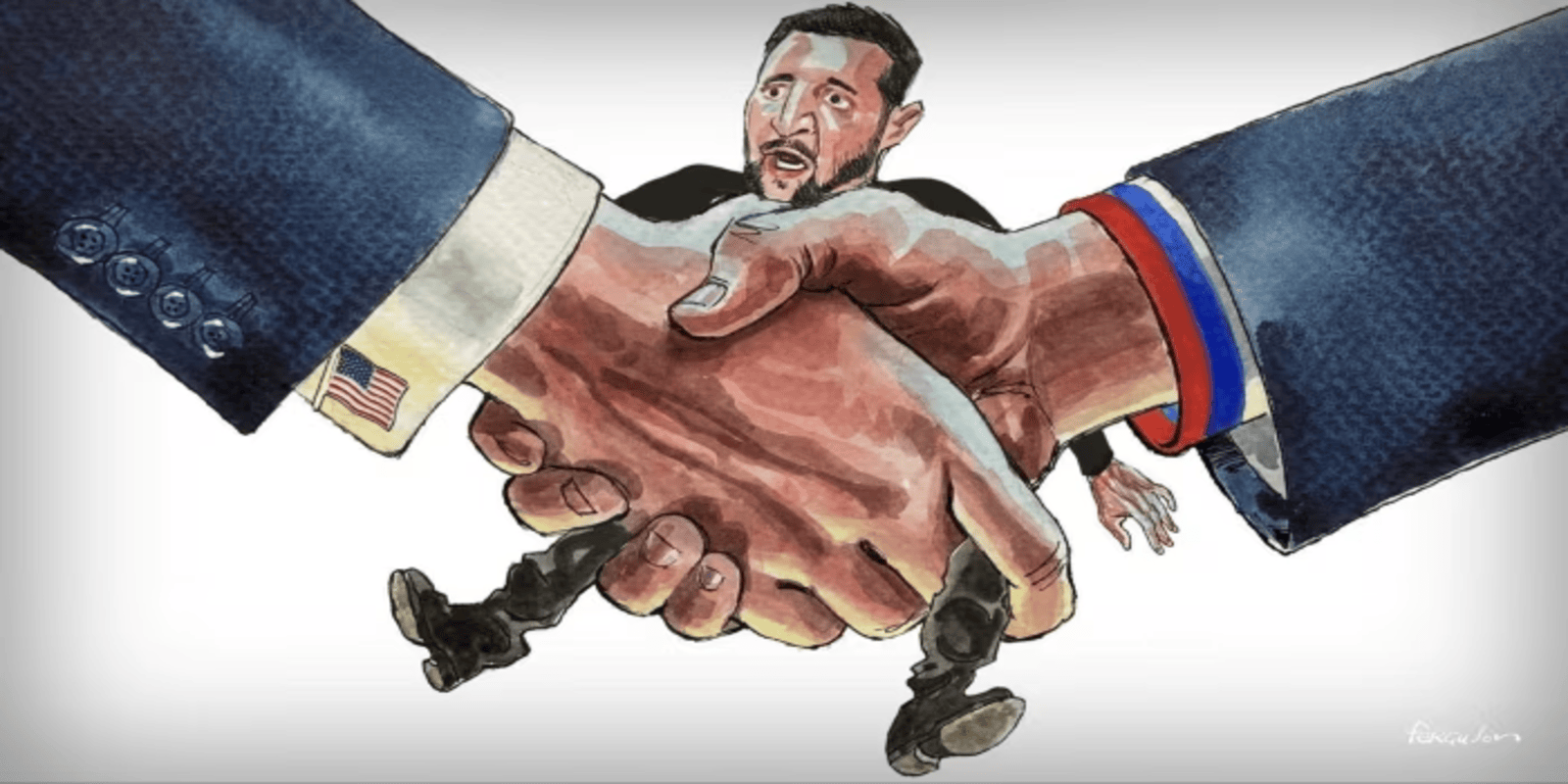
Ever since Donald Trump returned to the Oval Office, Ukraine and its European supporters have feared that the US would negotiate a peace deal directly with Russia — and then try to force it down Kyiv’s throat. That process began to unfold last week. Trump has given the Zelenskyy government until Thursday to make up its mind about a plan that involves ceding territory to Russia and major restrictions on Ukrainian sovereignty.
There are now three broad possibilities. The first is that Ukraine clearly rejects the plan, and Trump follows through on an implied threat to cut off aid to the country.
A second is that the proposal worked out between Witkoff and Kirill Dmitriev, the American and Russian negotiators, becomes the basis for talks. The Ukrainians, with assistance from friends in Europe and Washington, get a chance to change it substantially.
The third scenario is that the many inconsistencies and loose ends in the Witkoff-Dmitriev proposal ensure that the deal unravels completely. As a result, the war continues.
A complete cut-off in US aid would leave Ukraine in a bleak and dangerous situation. Even though the Trump administration has already severely curtailed support for Kyiv, there are still some crucial American capabilities that Ukraine relies on.
The first is intelligence that has helped Ukraine to defend its sites from Russian missiles and to conduct deep strikes into Russia. Ukraine also still needs American munitions. The US is no longer giving the country military aid as it did during the Biden years. But Trump has agreed to sell military equipment to Ukraine — paid for by Kyiv’s European allies.
Ukraine is already struggling to stem Russia’s advances. Daniel Driscoll, the US army secretary who presented the plan to Volodymyr Zelenskyy in Kyiv, said that “it is the honest US military assessment that Ukraine is in a very bad position.” Senior American soldiers have been saying similar things in private for many months, arguing that the Ukrainian army is suffering from a critical lack of manpower and pointing to rising levels of desertions.
The Zelenskyy government’s European allies dispute this characterisation of the war, saying that Russia is still only making incremental progress and that increased pressure on the faltering Russian economy could force the Kremlin to accept a deal that is much less favourable to its interests.
Whatever the true situation on the frontline, a cut-off in US support for Ukraine would clearly increase the chances of a Russian military breakthrough.
Given the dangers it faces, Ukraine has reluctantly accepted the Witkoff-Dmitriev proposal as a basis for negotiations — hoping that, with the support of its friends in Europe and Washington, it can blur or erase its worst aspects. Similar tactics have worked in the past. After the disastrous Zelenskyy-Trump meeting in Washington in February, European diplomacy was crucial in pulling America back from a full-scale betrayal of Ukraine.
Driscoll, who is close to vice-president JD Vance, set his face against “negotiating details” on his visit to Kyiv. But Trump himself has begun to sound more flexible, indicating that the Witkoff plan is “not my final offer”. There is also unusual pushback from within Trump’s own Republican party and suggestions that Marco Rubio, the secretary of state, distanced himself from the proposals.
Zelenskyy and his team will still find it very hard to engage with a plan that suggests ceding territory that Ukraine still occupies — and which it has lost thousands of lives defending. But it is in the Ukrainians’ interest to play it long, agreeing to negotiations in the belief that the Thursday deadline will not stick and that the Witkoff proposal will be modified as its flaws and inconsistencies become evident.
Despite Vladimir Putin’s cautious welcome of the plan, it is likely that the Russians have their own objections and reservations. Moscow wants even more stringent limits on the Ukrainian military — and will be hostile to the plan’s apparent floating of a Nato-like security guarantee for Ukraine.
Entering into talks could allow the Ukrainians to flush out Putin’s objections. That, in turn, would underline that Ukraine is not the only obstacle to peace, making it harder for Trump to justify cutting off aid.
But Ukraine should not engage with the plan with the sole aim of sinking it. Amid the alarm in Kyiv and the outrage in Europe, it is easy to lose sight of the fact that Ukraine itself needs the war to end. A bad peace settlement could put the country’s survival as a genuinely independent nation at risk. But the continuation of the war is also deeply damaging to Ukraine.
Over nearly four years, the country has sustained hundreds of thousands of casualties. Millions of refugees have fled Ukraine and its population has fallen by about 10mn, or roughly a quarter, since Russia’s full-scale invasion. The economy is on life support and the birth rate is plummeting.
The American plan entails huge risks for Ukraine. But — if it is taken as a starting point, not the finished product — it could yet be a route to end the war on terms that Ukraine can accept.