Pentagon Flags Risks of a Major Operation Against Iran
The warnings have been led by Gen. Dan Caine, chairman of the Joint Chiefs of Staff, within the Defense Department and during meetings of the National Security Council
By Alexander Ward, Lara Seligman and Shelby Holliday
Updated Feb. 23, 2026 WSJ

The warnings have largely been voiced by Gen. Dan Caine, the chairman of the Joint Chiefs of Staff, within the Defense Department and during meetings of the National Security Council, current and former officials said, but other Pentagon leaders also have noted similar worries.
Such discussions are always part of the contingency-planning process before military operations, some officials said, noting that military leaders—especially the Joint Chiefs chair—provide prudent estimates of possible casualties and other potential costs of military operations.
Options being studied for strikes on Iran range from initial limited strikes to a dayslong aerial campaign aimed at toppling the regime. All options carry risks, but a prolonged campaign in particular could incur significant costs to U.S. forces and munitions stockpiles, officials said, complicating the protection of regional partners if Iran is able to retaliate. If the U.S. uses up large amounts of air-defense munitions and other items that are in limited supply, it could also impact preparations for a possible future conflict with China.
Officials say the issues raised by Caine, widely seen as a trusted aide by Trump, and others will be a factor in the president’s decision on whether to attack Iran and how. Officials say Trump has yet to make up his mind. The U.S. has assembled the largest amount of air power in the Middle East since the 2003 Iraq war, including an aircraft-carrier strike group. A second carrier is now in the Mediterranean.
“General Caine is a highly respected professional whose job requires providing unbiased information to the Commander in Chief, which he does perfectly,” said White House spokeswoman Anna Kelly. “President Trump listens to feedback from all members of his national security team, and he is always the final decision maker.”
“General Caine, like all of us, would like not to see War but, if a decision is made on going against Iran at a Military level, it is his opinion that it will be something easily won,” Trump posted on social-media platform Truth Social later on Monday, following media reports about Caine’s warnings.
The Trump administration is still negotiating with Iran about a potential deal that the U.S. hopes would block Tehran’s pathways toward a nuclear weapon, which Iranian leaders have denied pursuing, while curbing its ballistic-missile program and its support for regional proxy militias such as Hezbollah and Hamas. The next meeting is scheduled for Thursday in Geneva, officials say, where Iran is expected to present its positions to Trump’s peace envoy Steve Witkoff and son-in-law Jared Kushner.
Iran has threatened to retaliate as hard as possible against any American attack, and Supreme Leader Ayatollah Ali Khamenei last week said his forces could sink a U.S. warship.
In a sign of growing fears about how Iran and its regional proxies might respond to U.S. strikes, the State Department on Monday announced the evacuation of non-emergency personnel and the family members of staffers at the U.S. Embassy in Lebanon. Washington has long been worried about Iranian-backed militia groups striking U.S. targets and Americans abroad in response to U.S. attacks.

Any military operation carries risks, but a sustained campaign against Iran would likely be among the most complex and dangerous military operations launched by Trump, with the potential to pull the U.S. into a broader war in the Middle East.
Caine, who has held posts in the Pentagon’s most highly classified programs and the CIA, is being conservative in his assessment of potential risks posed by an operation against Iran, the former and current officials said.
A spokesman for Caine said the chairman, in his role as military adviser to the president, defense secretary and National Security Council, provides civilian leaders with military options including risks.
Axios first reported Caine’s internal discussions about risks.
During any attack on Iran, American pilots could be vulnerable to Iranian air defenses during multiple bombing runs, according to officials. Iranian missiles could target U.S. troops at bases across the Middle East. Iran could also target population centers in Israel with its missiles and drones, as it did during the 12-day war involving Iran, Israel and the U.S. last June.
Some officials said the U.S. expects Iran to fire everything it has to protect the regime—and that the U.S. only has enough interceptors to counter Iranian missile volleys for about two weeks, further straining a limited stock of Patriot, Thaad and SM-3 munitions in the American arsenal.
In recent weeks, the U.S. has moved to bolster its air defenses in the Middle East by sending additional Thaad and Patriot antimissile systems to Jordan, Kuwait, Qatar, Saudi Arabia, Bahrain and Israel, The Wall Street Journal has reported. The U.S. has also moved 13 guided-missile destroyers into the waters of the Middle East and Mediterranean to shoot down Iranian threats, according to a Navy official.
The Pentagon raised concerns about munitions capacity last June when the U.S. helped defend Israel from Iranian missile barrages. The conflict revealed alarming gaps in U.S. interceptor supplies.
Munitions stocks were also strained when the U.S. engaged in a nearly two-month bombing campaign against the Iran-backed Houthi rebels in Yemen in the spring of last year. At the time, defense officials sought to husband munitions for a possible future war with China and were reluctant to use up too much scarce weaponry against a U.S.-designated terrorist group threatening a vital global shipping lane in the Red Sea.
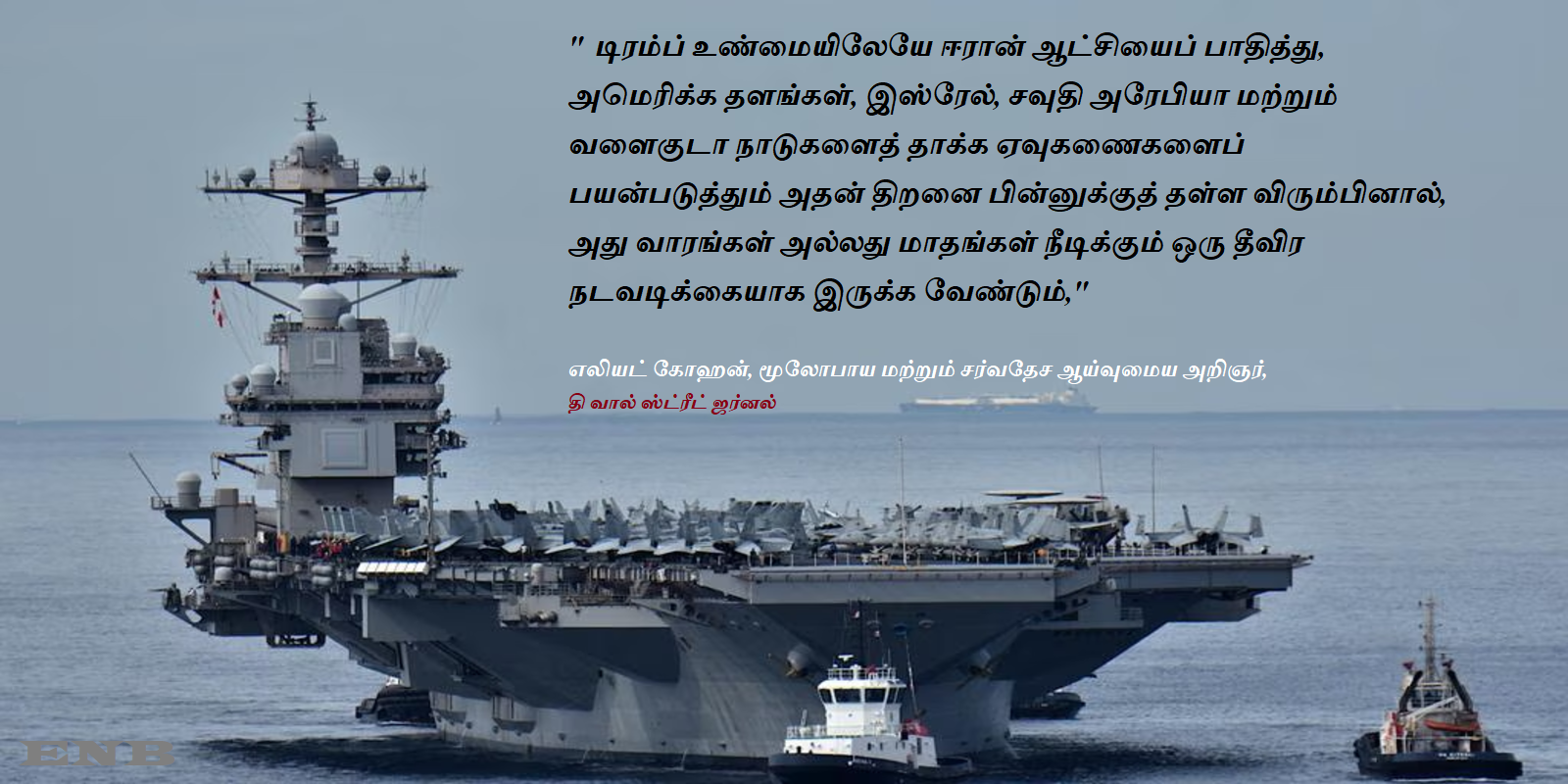
Navy officials have also highlighted the potential burdens and costs of the aircraft carrier USS Gerald R. Ford’s extended deployment for potential operations against Iran. The Ford, the U.S.’s largest warship, has been at sea since last June, and is now on track for an 11-month deployment, which would break a record for the longest continuous mission by a U.S. warship. The ship has experienced sewage problems, and sailors are overtaxed and some are even considering leaving the Navy after returning home.
Overstretched crews have previously contributed to mistakes and accidents. In April and May 2025, near the end of an eight-month deployment, the aircraft carrier USS Harry S. Truman lost several jet fighters while countering Houthi rebel attacks in the Red Sea. A Navy investigation blamed the high operational tempo of the mission.
Copyright ©2026 Dow Jones & Company, Inc. All Rights Reserved.
Appeared in the February 24, 2026, print edition as 'Pentagon Flags Iran Risks'.