Qatar air force shoots down two aircraft from Iran: defence ministry
Qatar's defence ministry said its air force "successfully shot down" two Iranian aircrafts that were heading towards the Gulf country.
DOHA: Qatar's air force shot down two aircraft inbound from Iran on Monday (Mar 3), Doha's defence ministry said in a statement after the Islamic republic earlier targeted gas facilities in the Gulf state.
"Qatar Emiri Air Force successfully shot down two (SU24) aircraft coming from the Islamic Republic of Iran. They also successfully intercepted seven ballistic missiles through air defences, and intercepted five drones by Qatar Emiri Air Force and Qatar Emiri Navy Forces, which targeted several areas in the state today," the defence ministry said.
It did not elaborate on the fate of the Sukhoi SU24 bombers' pilots.
It was the first time a Gulf country has engaged a manned Iranian aircraft after three days of bombardment, and comes after Qatar's state-run energy firm said it had halted liquefied natural gas (LNG) production following attacks on two of its main gas processing facilities.
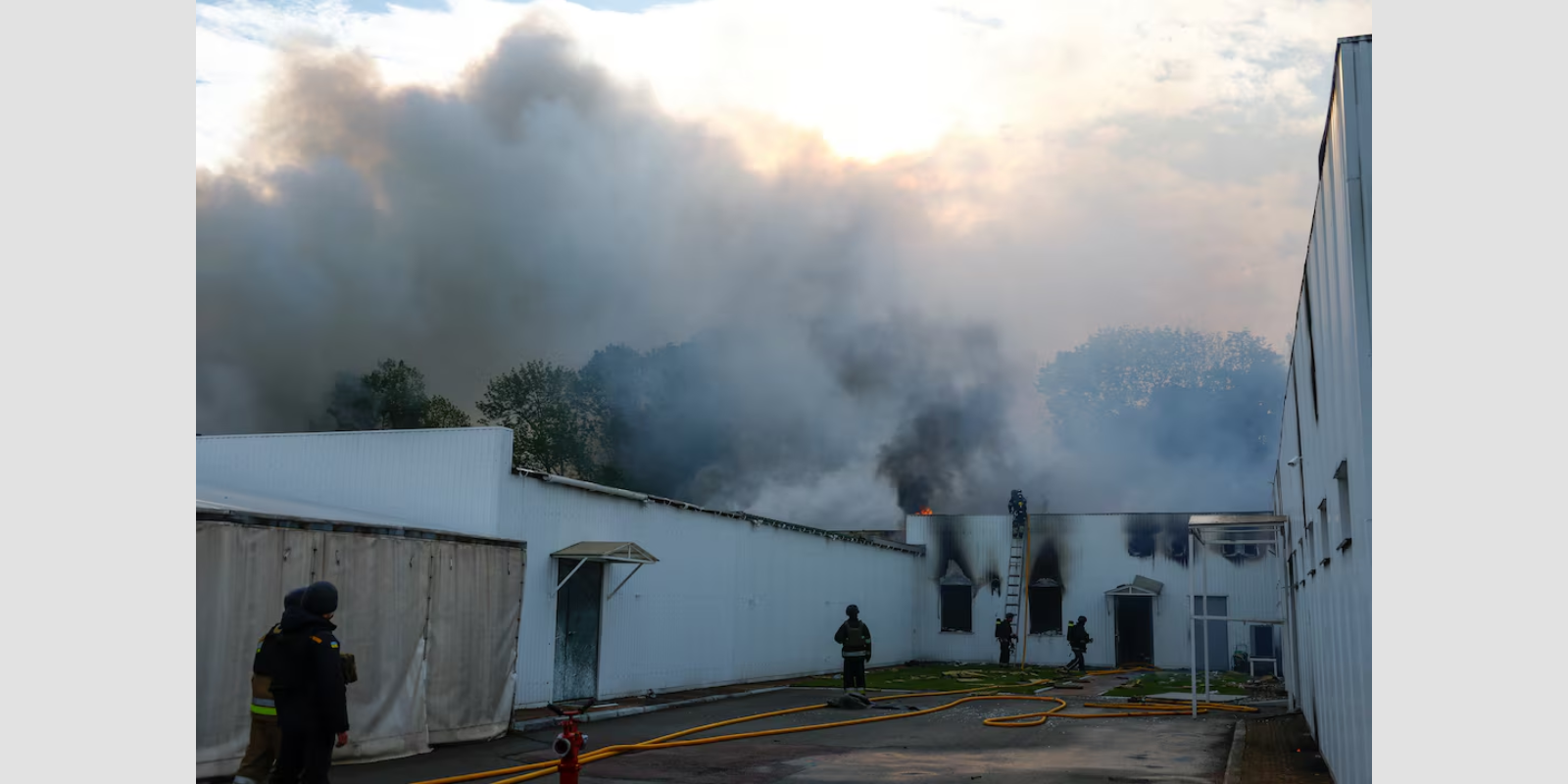
Earlier, Qatar's defence ministry said one Iranian drone "targeted an energy facility in Ras Laffan Industrial City, belonging to QatarEnergy", referring to the firm's onshore gas processing base 80 kilometres (50 miles) north of Doha.
Another "targeted a water tank belonging to a power plant in Mesaieed", the statement said, referring to an area 40 kilometres (25 miles) south of the Qatari capital, which is also a key site for Qatar's natural gas production.
There were no reports of casualties, the defence ministry added.
Source: AFP/fs
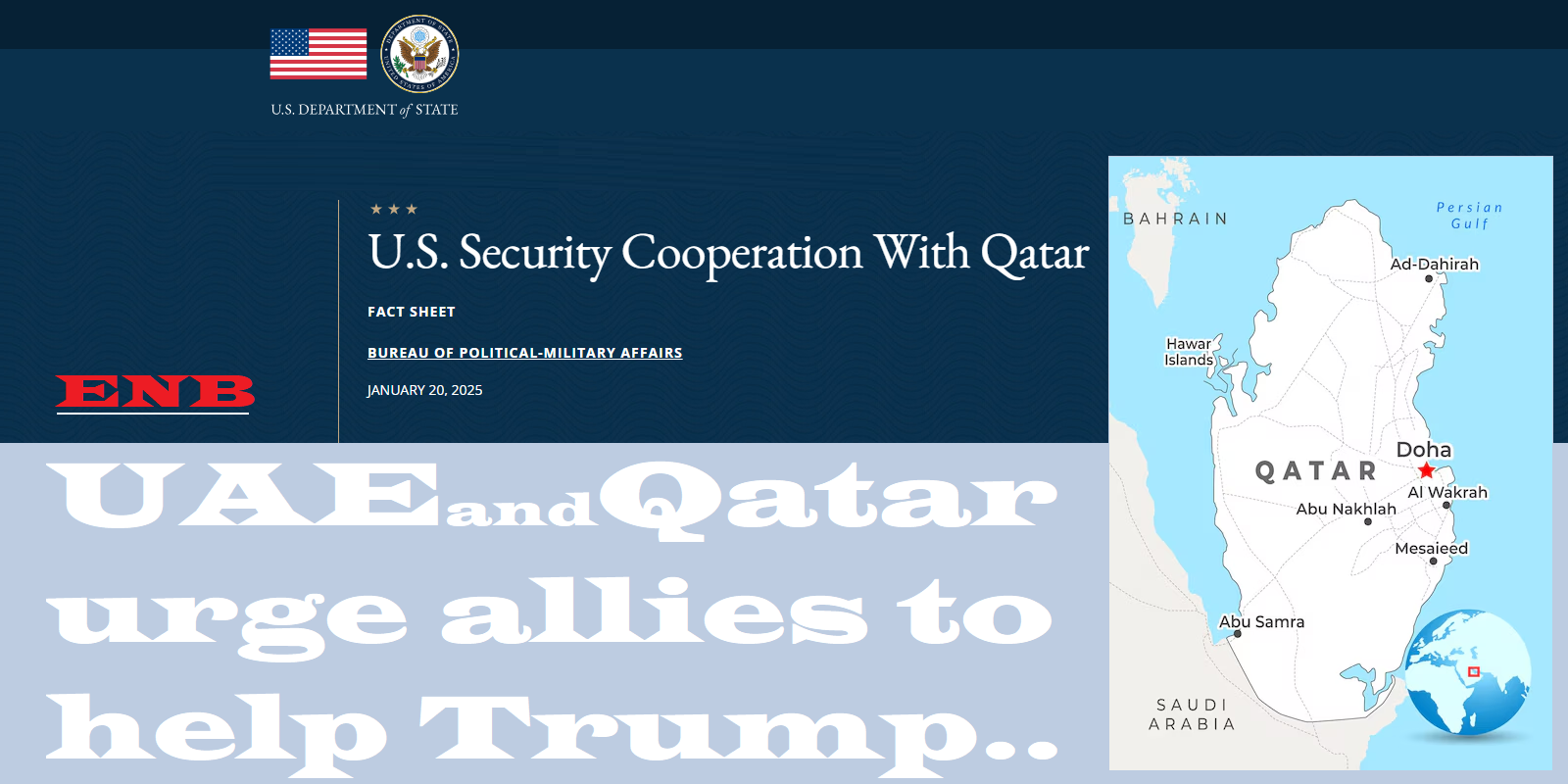
UAE and Qatar urge allies to help Trump find off-ramp on Iran
The UAE has requested assistance from its allies with medium-range air defense, while Qatar has asked for help to counter drone attacks.
Bloomberg March 02, 2026
Privately, both the UAE and Qatar are working to quickly improve their air defense capabilities, the people familiar with the matter said. The countries are seeking to build a wide coalition to advance a swift and diplomatic end to the conflict, the people said, in order to prevent regional escalation and a prolonged energy price shock.
They were speaking on condition of anonymity discussing matters that have not been made public. A Qatari assessment shared with Bloomberg News warned that if shipping lanes in the region remain severely disrupted by the middle of this week they would expect to see a more significant market reaction for natural gas prices than Monday’s sharp spike.
Qatar shut down liquefied natural gas production at the world’s largest export facility after it was targeted in an Iranian drone attack, sending European gas prices surging more than 50%. Privately, both the UAE and Qatar are working to quickly improve their air defense capabilities, the people familiar with the matter said.
Officials at Qatar’s International Media Office and the UAE’s foreign ministry didn’t immediately respond to requests for comment. The UAE has requested assistance from its allies with medium-range air defense, while Qatar has asked for help to counter drone attacks — which have emerged as a greater threat than ballistic missiles — the people added. Qatar’s stocks of Patriot interceptor missiles will last four days at the current rate of use, according to an internal analysis seen by Bloomberg News.
UAE President Mohammed bin Zayed Al Nahyan and Qatari emir Tamim bin Hamad Al Thani have held telephone calls with a number of European leaders in recent days including the UK’s Keir Starmer, France’s Emmanuel Macron and Germany’s Friedrich Merz.
The United Arab Emirates and Qatar are privately lobbying allies to help them persuade President Donald Trump to reach for an off-ramp that would keep US military operations against Iran short, according to people familiar with the matter.
The countries are seeking to build a wide coalition to advance a swift and diplomatic end to the conflict, the people said, in order to prevent regional escalation and a prolonged energy price shock. They were speaking on condition of anonymity discussing matters that have not been made public.
A Qatari assessment shared with Bloomberg News warned that if shipping lanes in the region remain severely disrupted by the middle of this week they would expect to see a more significant market reaction for natural gas prices than Monday’s sharp spike.
Qatar shut down liquefied natural gas production at the world’s largest export facility after it was targeted in an Iranian drone attack, sending European gas prices surging more than 50%.
Privately, both the UAE and Qatar are working to quickly improve their air defense capabilities, the people familiar with the matter said. Officials at Qatar’s International Media Office and the UAE’s foreign ministry didn’t immediately respond to requests for comment.
The UAE has requested assistance from its allies with medium-range air defense, while Qatar has asked for help to counter drone attacks — which have emerged as a greater threat than ballistic missiles — the people added. Qatar’s stocks of Patriot interceptor missiles will last four days at the current rate of use, according to an internal analysis seen by Bloomberg News.
UAE President Mohammed bin Zayed Al Nahyan and Qatari emir Tamim bin Hamad Al Thani have held telephone calls with a number of European leaders in recent days including the UK’s Keir Starmer, France’s Emmanuel Macron and Germany’s Friedrich Merz.
Bloomberg first published: Mar 2, 2026 10:50 pm
U.S. Security Cooperation With Qatar
U.S. Security Cooperation With Qatar
Fact Sheet
The United States and Qatar are working collectively towards the common goal of a stable, secure, and prosperous Middle East. Qatar is also a vital U.S. partner on a wide range of regional security issues, a member of the Global Coalition to Defeat ISIS, and provides critical basing access supporting U.S. military operations throughout the Middle East. The United States works with Qatar and other members of the Gulf Cooperation Council to increase cooperation on border security, maritime security, military preparedness, cybersecurity, and counterterrorism. The access, basing, and overflight privileges granted by Qatar facilitate U.S. operations against al-Qa’ida and its regional and global affiliates.
As highlighted in the September 2020 U.S.-Qatar Strategic Dialogue’s Joint Statement, the U.S. and Qatar emphasized the vital contribution their defense partnership provides for the security and stability of the region. This strong and lasting partnership is key to successfully combating terrorism, countering violent extremism, and deterring external aggression.
Since 2003, Qatar has contributed more than $8 billion in developing al-Udeid Air Base for use by the United States, and the base is host to the headquarters of U.S. Central Command Forward, U.S. Air Force Central Command Forward, and U.S. Special Operations Command Central Command Forward, as well as Combined Joint Interagency Task Force – Syria, U.S. Central Command’s Combined Air Operations Center, and the U.S. Air Force’s 379th Air Expeditionary Wing. These contributions are indispensable to supporting U.S. military operations throughout the region.
Qatar hosts U.S. Navy ship port visits allowing for crew liberty and logistic ship resupply. Qatar also provides support to the Combined Maritime Forces Combined Task Force 152, a multinational naval partnership that conducts maritime security operations in the Persian Gulf. These missions increase regional security by providing a visible presence and deterrent to maritime crime in the Gulf.
The U.S. has over $26 billion in active government-to-government cases with Qatar under the Foreign Military Sales (FMS) system, making Qatar the second-largest FMS partner in the world. Recent and significant FMS sales include: Integrated Air & Missile Defense System, including the Patriot long-range missile system, the National Advanced Surface to Air Missile System, and the AN/FPS-132 Early Warning Radar; F-15QA fighter aircraft — the most advanced F-15 in production; and AH-64E Apache attack helicopters. Each of these programs includes facility construction and extended munitions, logistics, and training support.
Since 2016, the U.S. has also authorized the permanent export of over $2.8 billion in defense articles to Qatar via the Direct Commercial Sales (DCS) process. The top categories of DCS to Qatar include: aircraft, special operations training, and fire control/night vision.
The United States and Qatar have the following defense cooperation agreements: 2012 General Security of Military Information Agreement, 2013 Acquisition and Cross-Servicing Agreement, 2013 Basic Exchange and Cooperation Agreement for Geospatial Intelligence, 2014 Defense Cooperation Agreement, 2016 Communications Interoperability and Security Memorandum of Agreement, and 2020 Maritime Implementing Agreement.
The United States Interagency Man-Portable Air Defense Systems (MANPADS) Task Force provides training on MANPADS Recognition and threats to aviation security to border security, aviation security, and defense personnel working on the front lines to fight illicit weapons proliferation. Since 2019, the MANPADS Task Force has provided MANPADS recognition and interdiction training to 14 Qatari security officials.