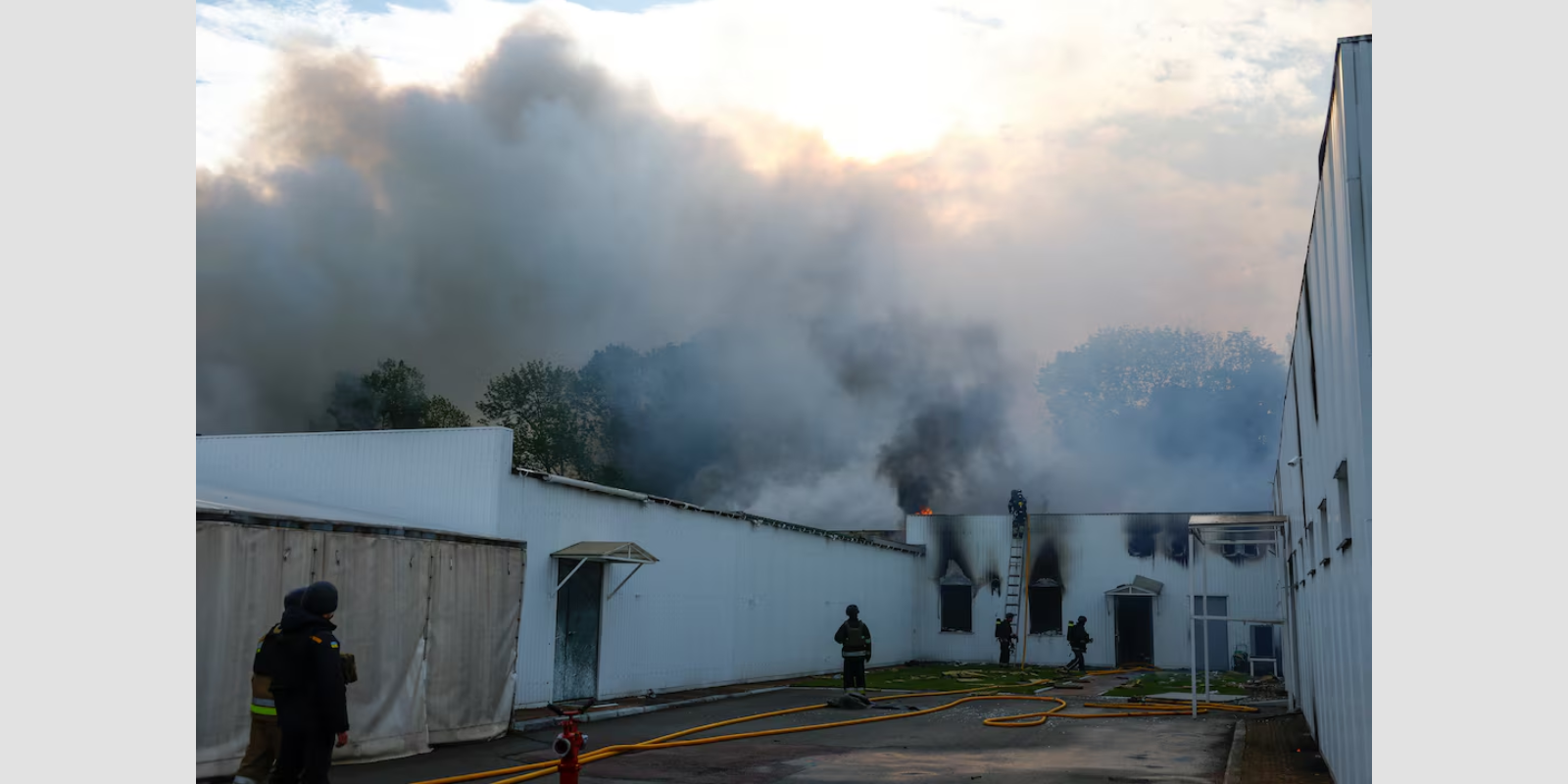
Rare earth elements in Türkiye. Photo by Anadolu Images.
Rare Earth Elements and the Geopolitical Realignment of the Middle East
Middle East By Alp Cenk Arslan March 19, 2026
We see the Middle Eastern narrative being rewritten in laboratories and mines.
Over the past century, the geopolitical pulse of the Middle East has been measured in barrels of crude oil. The oil shocks of the 1970s shaped behavioral patterns within the international system, determined alliances, and established a global security architecture dependent on the flow of Persian Gulf hydrocarbons to Western industrial centers.
However, by the mid-2020s, a new agenda had emerged alongside oil: rare earth elements, especially neodymium and praseodymium (NdPr), which are part of the lanthanide series, as well as critical minerals, including battery metals such as lithium and cobalt. These materials have transcended industrial use and have become the strategic raw materials of the 21st century. The supply chain architecture of these elements across the Middle East is triggering a profound realignment of the balance of power stretching from Tehran to Riyadh.
Today, the region is no longer content with its usual role. The Middle East is striving to position itself as a vital hub for refining and extracting materials for the green and digital transformation. Undoubtedly, this transition is not uniform. It is divided by two competing visions: Iran’s alternative economic approach, which is based on self-sufficiency, and the Gulf states’ future-oriented diversification strategy, which is based on global integration. In this article, we will examine the Iran-Gulf divergence and its impact on U.S.-China supply chain security within the framework of rare earth elements (REE) and attempt to go beyond Iran-focused analyses.
Iran’s mineral “resistance”
In Tehran, the search for natural resources is a matter of survival. Although sanctions have sometimes crippled oil exports, the Islamic Republic is turning to its geological wealth. Total mineral reserves are estimated to be worth tens of trillions of dollars. The country frames this as insurance against Western isolation.
The opening of a domestic monazite processing plant in April 2025, as well as the regime’s 2023 announcement of massive lithium deposits discovered in Hamadan, are emerging as lines of defense. Nuclear, orthopedic, and warfare capabilities are critical for a state that specializes in asymmetric warfare. Permanent magnets in missile guidance systems are indispensable for the Revolutionary Guard’s sophisticated radars and electronic warfare systems, which are central to modern Iranian deterrence.
Aiming for vertical integration, Iran is seeking to build a sanctions-resistant technological-military complex starting from monazite mines in Yazd and extending to the domestic extraction of high-purity elements. This strategy is based on the comprehensive agreement signed with Russia in January 2025 and on strengthening ties with China. In essence, Tehran is trading its raw mineral potential for processing technology, thereby positioning itself within a non-Western axis of rare earth elements that challenges the U.S.-led supply security framework.
High-risk insurance in the Gulf
A different picture emerges on the opposite shore of the Persian Gulf. For Saudi Arabia and the United Arab Emirates (UAE), critical minerals are emerging as a bridge to a post-oil future. Unlike Iran’s defensive stance, the Gulf’s strategy is aggressively expansionist and collaborative.
In May 2025, Maaden and MP Materials announced a cooperation framework to develop the rare earth value chain. Then, in November 2025, a refining and separation investment materialized in Saudi Arabia through a joint venture supported by the U.S. Department of Defense. Maaden holds at least a 51% majority stake in this structure, while MP Materials and the US Department of Defense together hold up to 49%. Through this arrangement, Riyadh positions itself as a Western alternative to Chinese dominance, demonstrating an example of modern risk management. While maintaining its role in BRICS and welcoming Chinese investments in the electric vehicle sector, Riyadh is also building mineral cooperation with Washington.
The scale of capital involved is staggering. Gulf states are investing tens of billions of dollars in overseas acquisitions in Africa and Indonesia, using their existing wealth to acquire new wealth. The UAE’s $1.4 billion lithium processing plant and Saudi Arabia’s processing center in Yanbu are designed to break China’s midstream refining bottleneck. In this sense, the Gulf states are seeking a new way forward in an alternative future where internal combustion engines are obsolete.
Regional comparison: Dominance or synergy?
The divergence between the approaches of Iran and the Gulf states is creating a new source of tension in Middle Eastern security. The “Lanthanide Rift,” which stretches along the Persian Gulf, represents two irreconcilable philosophies regarding state strategy. Tehran views its mineral wealth as essential to survival and autonomy. In the Iranian economy, every gram of neodymium extracted from Yazd symbolizes resistance to Western pressure.
The ultimate goal is to secure the survival of the regime and its military self-sufficiency, ensuring that its missile and drone programs are not dependent on shipments from a hostile capital. This inward-looking strategy relies on overtly aligning with a non-Western axis, such as Russia, China, and the BRICS bloc. Rather than seeking capital in traditional markets, Iran relies on state-funded ventures and complex barter arrangements with ideological allies.
In stark contrast, the Gulf monarchies, led by Saudi Arabia and the UAE, are pursuing global integration and future-oriented diversification. For Riyadh and Abu Dhabi, critical minerals are tools that will propel their new energy and economies into the post-hydrocarbon era and establish them as indispensable global hubs. Unlike Iran, the Gulf states are practicing the art of multiple alignments. They leverage U.S. security guarantees and joint venture capital, as exemplified by the 2025 minerals pact with Washington. Simultaneously, they act as major trading partners and energy suppliers to China.
While Iran focuses on domestic resistance, the Gulf region is aggressively pursuing global supply chain integration. It is leveraging the pull of sovereign wealth funds to partner in the world’s most lucrative mining projects. While Tehran is exchanging goods, the Gulf is investing. This creates a regional paradox: one is building shields while the other is building bridges.
This situation points to an impending “Resource Cold War” in the region. Iran’s advances in NTE processing capacity could strengthen the “Axis of Resistance,” making Iran a more autonomous and formidable player in regional conflicts. Conversely, the Gulf’s alliance with the US on minerals could strengthen the security architecture that Iran seeks to dismantle. The U.S. State Department’s announcement of the 2026 Critical Minerals Meeting indicates that the strategic mineral stockpile, known as “Project Vault,” may increasingly rely on Gulf stability. Thus, the security of Riyadh’s mines becomes as critical to U.S. national security as the Strait of Hormuz.
The China factor: The shadow hegemon
When discussing NTEs in the Middle East, it’s impossible to ignore the elephant in the room. Despite the United States’ recent risk-reduction efforts, China still controls approximately 60-70% of the global supply and an astonishing 80-90% of the refining and separation capacity, according to various estimates. China’s planned export restrictions on heavy NTEs by 2025 have sent shockwaves through the global defense market, prompting the U.S. and its Middle Eastern partners to rush into diversification.
For Iran, China is a lifeline. China provides the complex separation technologies needed to convert monazite into usable neodymium. From a Gulf perspective, China is a competitor for the same minerals in Africa but also a primary customer of the minerals they extract. This gives rise to a delicate “trilateral dialogue” between Washington, Beijing, and the capitals of the Middle East. In this new era, the region is transitioning from being a passive stage for superpower competition.
Global security implications
The weaponization of supply chains is redefining the boundaries of the Middle East. Security experts must now watch out for resource nationalism as well. There are several risks at this point. These include disruptions in defense production, hybrid threats, sanctions circumvention, and environmental impacts. If regional tensions escalate, especially around the Persian Gulf, disruptions will affect not only oil prices, but also the production of defense systems that depend on specific regional supply chains.
Iran’s covert supply chains could facilitate the circumvention of sanctions. Tehran could obscure the origin of materials used in global electronics by mixing non-traditional exports (NTEs) with those of other friendly countries, creating a legal and ethical minefield for Western companies. NTEs are extremely toxic and water-intensive to extract. In the water-stressed Middle East, the race to mine could generate ecological insecurity. This could lead to regional unrest or transboundary disputes over contaminated aquifers, adding an environmental dimension to traditional resource conflicts.
Lanthanide phase
From this perspective, we see the Middle Eastern narrative being rewritten in laboratories and mines. The Techno-Political Age has arrived, and critical minerals pave its path. Iran’s shift toward a mineral-based alternative economy and the Gulf’s quest for post-oil power emerge as two sides of the same coin. In the 21st century, it is important to acknowledge that power flows not only from the barrel of a gun but also from the ability to control the materials used to build guns, drones, and networks.
Therefore, the West needs to realize something. The West’s dependence on Middle Eastern stability has not decreased with the energy shift—it has only changed form. The big game here hinges on who can refine rare earth elements. In this new era, those who control the supply chain have the potential to control the future of geopolitics as well.
(Originally published in Turkish by Kriter)
Read: International Crisis: Rare Earth Elements in Greenland
Read: The Great Reconfiguration of Global Supply Chains
Read: Report: China’s Rare Earth Magnet Exports Fall
Read: Act II of the New World Disorder: American Neo-Hegemonism
Read: From Zimbabwe to Washington: Africa’s Mineral Nationalism