நிதி உதவி வழங்க !

UPI ID : enb@axis.com
UPI ID : enb@axis.com

Fuel prices increased, petrol by over Rs. 24ADA March 9, 2026 The Ceylon Petroleum Corporation (Ceypetco) has announced a significant revision of fuel prices effective from midnight today (09) in the wake of rising global fuel prices owing to the Middle East conflict.Accordingly, the price of Auto Diesel has been increased by Rs. 22 to Rs. 303 per litre while Super Diesel has been hiked by Rs. 24 to Rs. 353 per litre. Petrol 92 Octane has been increased by Rs. 24 and Petrol 95 Octane by Rs. 25 with the new prices set as Rs. 317 and Rs. 365, respectively.The price of a litre of Kerosene has been hiked by Rs. 13 to Rs. 195.Meanwhile, Lanke IOC has also revised fuel prices in line with the Ceypetco prices. The revised rates are as follows:Auto Diesel – Rs. 303 (increased by Rs. 22)Super Diesel – Rs. 353 (increased by Rs. 24)Petrol 92 Octane – Rs. 317 (increased by Rs. 24)Petrol 95 Octane – Rs. 365 (increased by Rs. 25)Kerosene – Rs. 195 (increased by Rs. 13)Speaking on the “Ada Derana Big Focus” program today (09), Professor Priyanga Dunusinghe of the Department of Economics at the University of Colombo had stated that the government must take prompt steps to prepare for the likely increase in domestic fuel prices given the global trend.He explained that global crude oil prices have risen sharply, noting that the price of Brent crude stood between US$ 92 and US$ 93 per barrel last Friday, but climbed to around US$ 115 per barrel when markets opened on Monday.According to Prof. Priyanga Dunusinghe, the increase in global oil prices will likely result in higher prices for petrol, diesel, and gas, while also pushing up electricity generation costs, especially where fuel is used for power production.Professor Dunusinghe further noted that Octane 92 petrol in Sri Lanka could rise to around Rs. 360–370 per litre if the global trend continues.
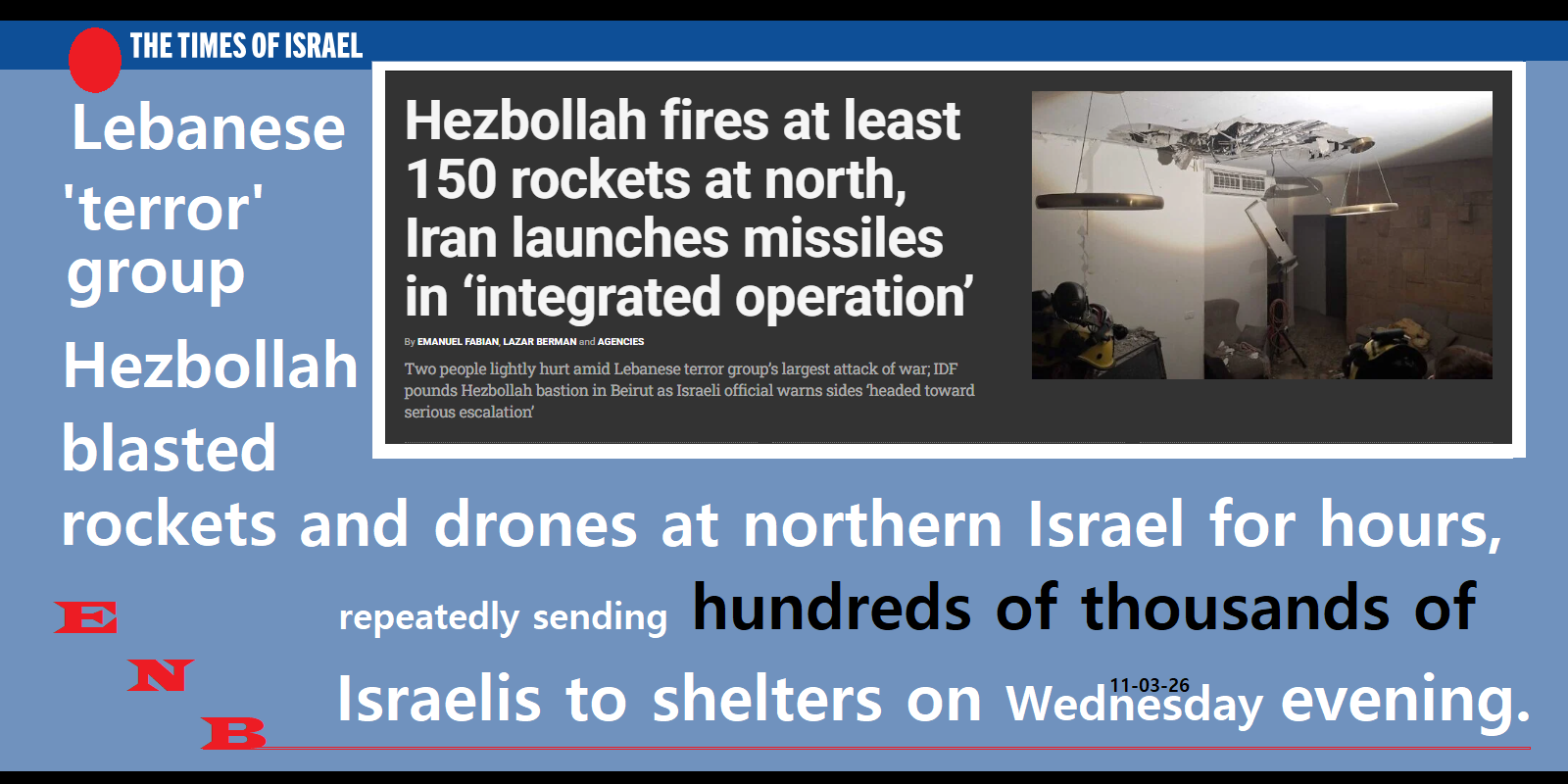
Hezbollah fires at least 150 rockets at north, Iran launches missiles in ‘integrated operation’Two people lightly hurt amid Lebanese terror group’s largest attack of war; IDF pounds Hezbollah bastion in Beirut as Israeli official warns sides ‘headed toward serious escalation’By Emanuel Fabian, Lazar Berman and Agencies 12 March 2026, TOILebanese terror group Hezbollah blasted rockets and drones at northern Israel for hours, repeatedly sending hundreds of thousands of Israelis to shelters on Wednesday evening.It marked the largest Hezbollah attack on Israel since hostilities intensified earlier this month, as the terror group began attacks to support its sponsor, Iran, which is under intense attack from a joint US-Israel air campaign that began on February 28.An opening salvo of 100 rockets was launched around 8 p.m. as a missile from Iran targeted the central region of the country, in what Iran’s Islamic Revolutionary Guard Corps said was a coordinated attack. More Iranian missiles targeted the north and south of the country.The Iranian missiles were successfully intercepted by air defenses, which also worked to thwart the Hezbollah attacks. However, several impacts were reported, causing fires, and two people were lightly injured.The Magen David Adom ambulance service said the two, a 35-year-old woman and a man in his 50s, were hit by “flying objects” following an impact. They were taken to a hospital.According to rescue services, a rocket that struck a home in the northern town of Bi’ina injured one of the two victims. Four others were treated for acute anxiety at the scene.As the Israel Defense Forces instructed residents of the north to stay close to shelters, Hezbollah continued firing rockets alongside drones, with sirens set off across the Galilee and in Haifa, as well as in communities up to 50 kilometers from the border with Lebanon.In all, the terror group fired at least 150 rockets at the north over the course of several hours, according to IDF assessments.A number of long-range rockets fired by Hezbollah also struck open areas. Because the rockets were heading for open areas, no sirens were activated by the military. Sounds of explosions were reported by residents of central Israel amid the attack.The attacks continued into early Thursday, with suspected drone infiltration and rocket alerts sounding in Nahariya and a number of Western Galilee communities, as well as Acre and some of Haifa’s northern suburbs. Hezbollah also fired long-range rockets, setting off sirens in Tel Aviv and surrounding towns, amid which the IDF announced the detection of an Iranian ballistic missile, which triggered alerts in central Israel, the Jerusalem area and parts of the south.Some of projectiles were intercepted, according to initial military assessments. Police reported damage was caused by an impact in central Israel. Fragments following the interceptions also reportedly fell in several areas.The IDF, meanwhile, launched heavy airstrikes on Hezbollah’s strongholds in southern Beirut, while an Israeli official said the military could begin hitting civilian infrastructure if the Lebanese government fails to rein in Iran-backed Hezbollah.The IDF earlier warned that Hezbollah would likely attempt to increase its rate of rocket and drone attacks on Israel.CNN reported that Israel was preparing for a potential “significant expansion” of attacks from Iran and Hezbollah on Wednesday. Echoing the earlier reports, Channel 12 news cited an update sent to cabinet ministers saying that officials expected heavy missile and rocket fire from Hezbollah and Iran later in the day.Hezbollah’s opening barrage of rockets was launched from several areas in Lebanon. The terror group, in a statement, said that “in response to the criminal aggression against dozens of Lebanese cities and towns and Beirut’s southern suburbs,” its fighters targeted sites in northern Israel “with dozens of rockets” as part of a new operation announced a short time earlier.Iran’s powerful IRGC military force, which controls the country’s missile weaponry, described the attack on Israel as a “joint and integrated operation” with Hezbollah.In a statement carried by the Tasnim news agency, the IRGC said that it launched several ballistic missiles, while Hezbollah launched drones and rockets at over 50 targets in Israel.Previously, the IDF had said it had no intelligence indicating that concurrent fire from Iran and by Hezbollah in Lebanon was a “coordinated” effort.The Israeli Air Force responded to the attack by carrying out an “extensive” wave of strikes on Hezbollah rocket launchers and other infrastructure in Lebanon, the military said.The strikes were intended to thwart additional fire toward Israel.Ahead of strikes on Beirut, and for the third time on Wednesday, the IDF called on Lebanese civilians to evacuate the capital’s south.“Do not return to the southern suburb until further notice,” said army spokesman Col. Avichay Adaree.AFP correspondents reported hearing the sound of blasts across the city, while footage showed large explosions and smoke covering the area, and the state-run National News Agency reported at least “six heavy strikes” on the southern suburbs.Before the wave of strikes, the IDF said it had so far struck over 70 targets in Beirut’s south during the war with Iran, including demolishing 50 multi-story buildings used by Hezbollah.‘Heading toward a serious escalation’Amid the continued Hezbollah attacks, a senior Israeli official told The Times of Israel that the terror organization’s strongholds will be destroyed unless Lebanon’s government acts.“The Lebanese government needs to get a grip on their country,” said the official, “or Hezbollah parts of Beirut will soon look like Gaza.”The comments came after a senior security official, who spoke anonymously to Hebrew media outlets, told Ynet: “We are on the eve of a fateful campaign in Lebanon which will determine the future of both countries.”“There is a security discussion right now,” said the official. “The campaign in Lebanon is going to expand significantly.”The official said that the expanded campaign would include the call-up of more reservists.“Hezbollah, in its calculations, wants to turn our attention away from Iran, and thinks that if it draws us in, we will take our foot off the gas in the campaign against Iran,” said the official. Hezbollah, the official continued, “wants to create a new balance in which Israel’s enforcement policy in Lebanon ends, and we don’t attack at all. That won’t happen. Therefore, this is heading toward a serious escalation.”“We have more capabilities and tools, and we can conduct campaigns in parallel against Iran and against Lebanon,” said the official.The official told Ynet that the Lebanese government was not affecting Hezbollah’s behavior in any way.According to Channel 12, Israel sent a warning to Lebanon’s government through the US and Western countries that if Beirut does not get a grip on Hezbollah, Israel will attack Lebanese national infrastructure.Referring to a ceasefire that ended a 2023-2024 war between Israel and Hezbollah, the senior security official recalled to the network that the Beirut government committed to disarming Hezbollah and taking control of all military equipment in the country.“That is not happening, and so Israel is no longer required to refrain from hitting infrastructure,” said the official. “If Lebanon doesn’t come to its senses and stop Hezbollah, we will attack civilian infrastructure, something Israel has refrained from doing so far. They have had endless opportunities to show their sovereignty, but regrettably, they are not participating even if they have good intentions.”On October 8, 2023, Hezbollah began attacking Israel, a day after the assault led by the Iranian-backed Hamas on southern Israel triggered the war in Gaza.Fighting escalated into open war by the following September, during which Hezbollah suffered major losses to its leadership and stockpiles. The war ended with the US-brokered ceasefire in November. However, Israel has repeatedly said the Beirut government is not doing enough to disarm Hezbollah, and has carried out numerous strikes it says are to prevent the group from rearming.
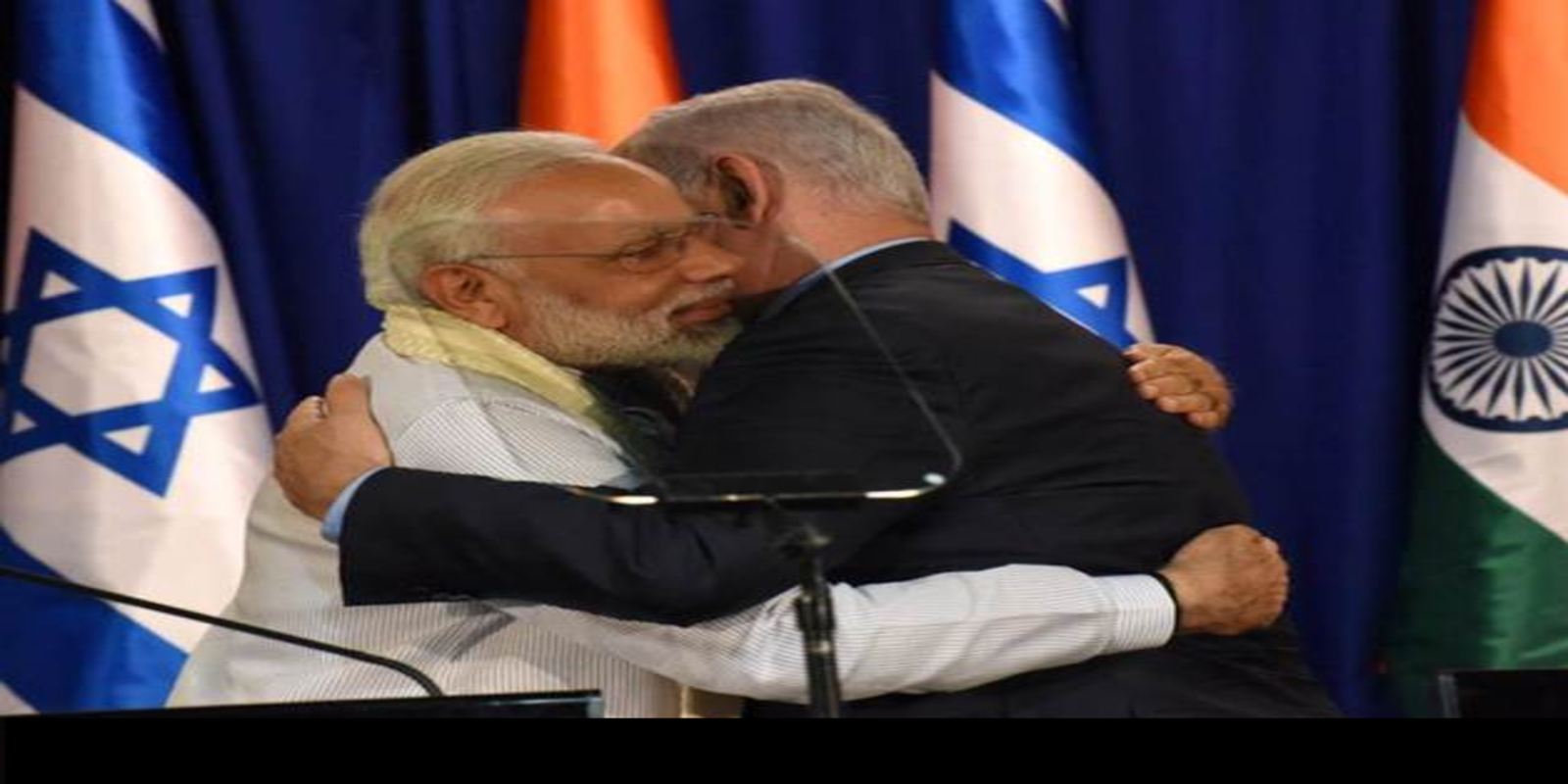
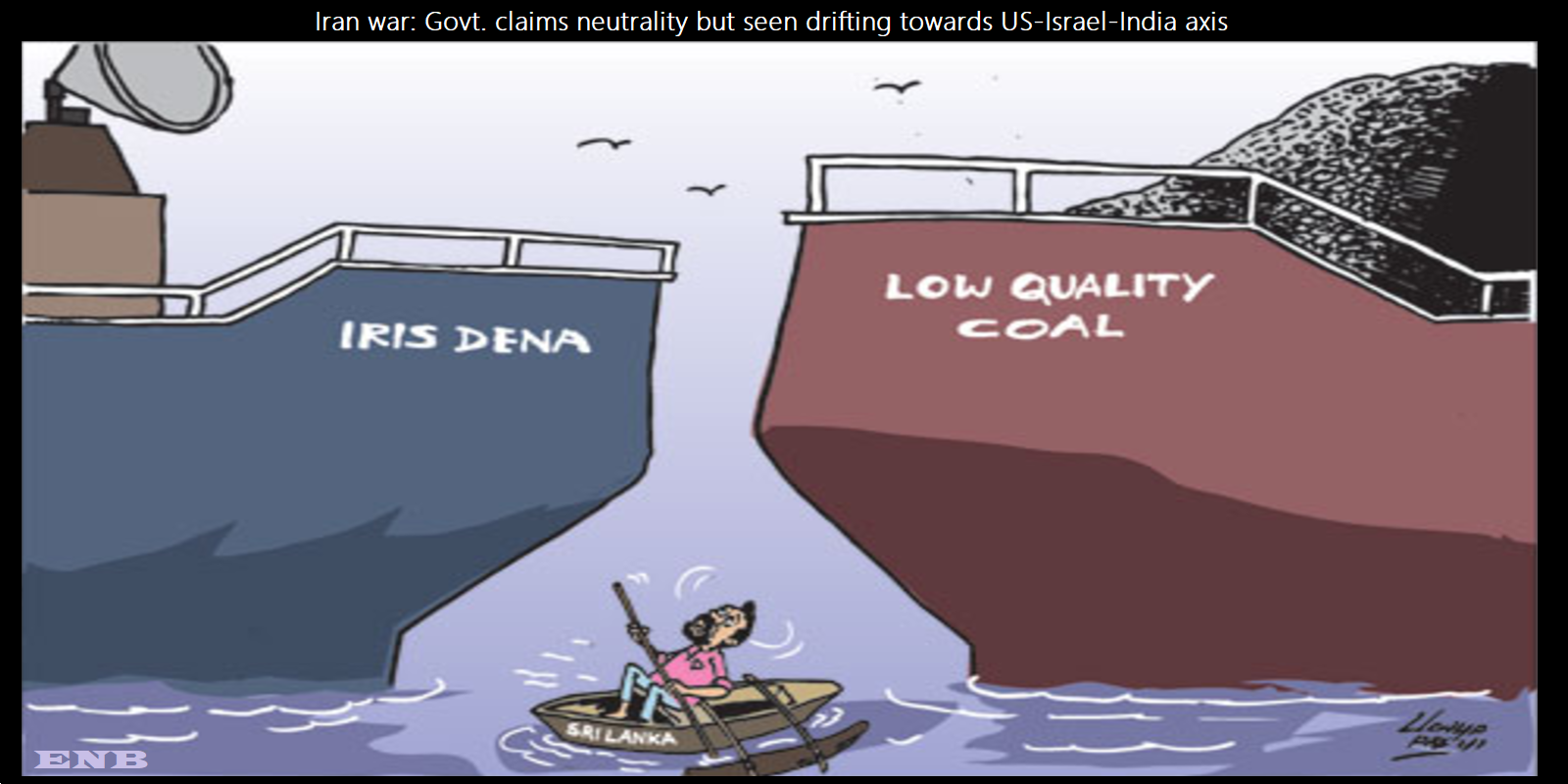
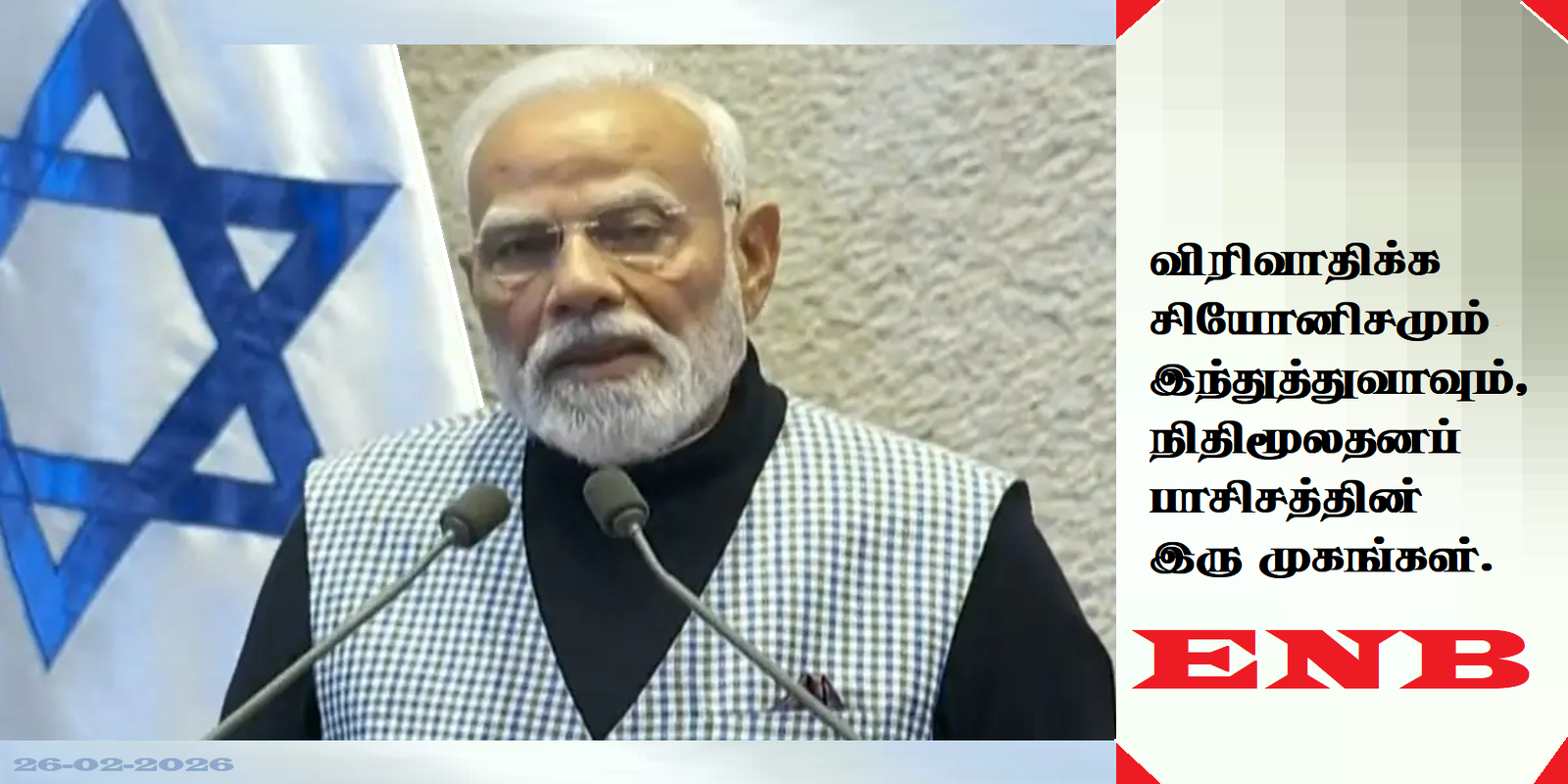
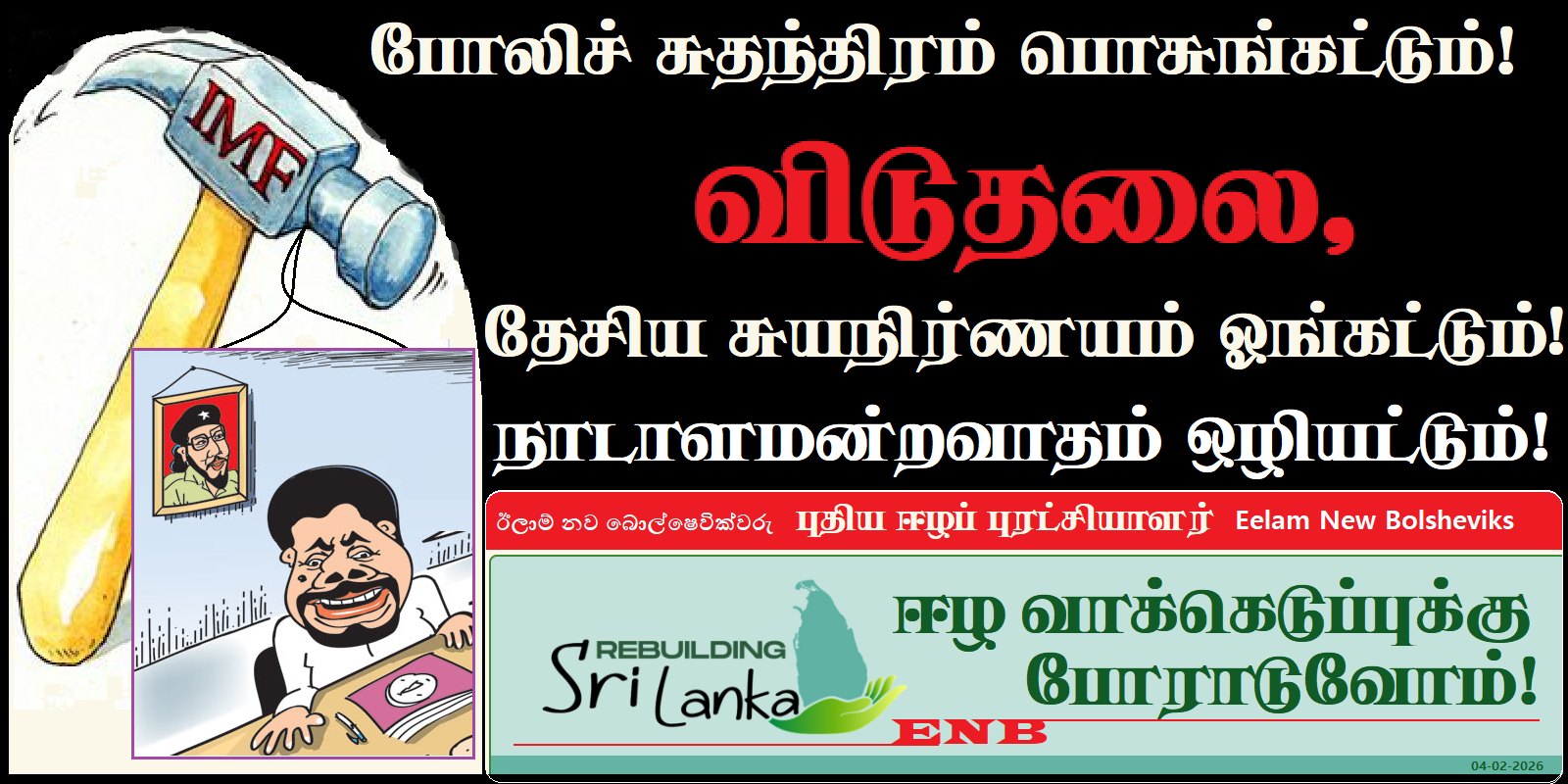
மோடி-இஸ்ரேல் ENB சுவரொட்டிபோலிச்சுதந்திரம் ENB சுவரொட்டி