Indian defence minister’s visit emphasises maritime security; ropes in Lanka
- Singh says India, Lanka joint stakeholders in developing integrated Maritime Domain Awareness system
- President’s Office communique gives few details; President reiterates Sri Lanka will not allow its territory to be used for activities inimical to India’s security
- In response to UNHRC report, Govt calls for end to country specific mandate; Core Group statement raises concerns over accountability
- With Namal in remand, SLPP holds Anuradhapura rally; plans nationwide campaign
- NPP’s first two rallies draw large crowds; focus on corruption and 22A
By Our ST Political Desk 13-09-26
When the then Indian Defence Minister Krishna Chandra Pant visited Sri Lanka in June 1988, Indian troops under a peacekeeping flag (IPKF) were assigned to ostensibly subdue the LTTE in the north and east of the country while government troops were redeployed to put down an insurgency by the Janatha Vimukthi Peramuna (JVP) in the rest of the country. Mr Pant had arrived in Colombo as Indian troop casualties had begun to mount after the LTTE launched attacks on them starting from October 1987, less than three months after the signing of the Indo-Lanka Peace Accord in July that year, meant to end the separatist war in the country. India’s external intelligence agency, RAW, was still directing the LTTE.
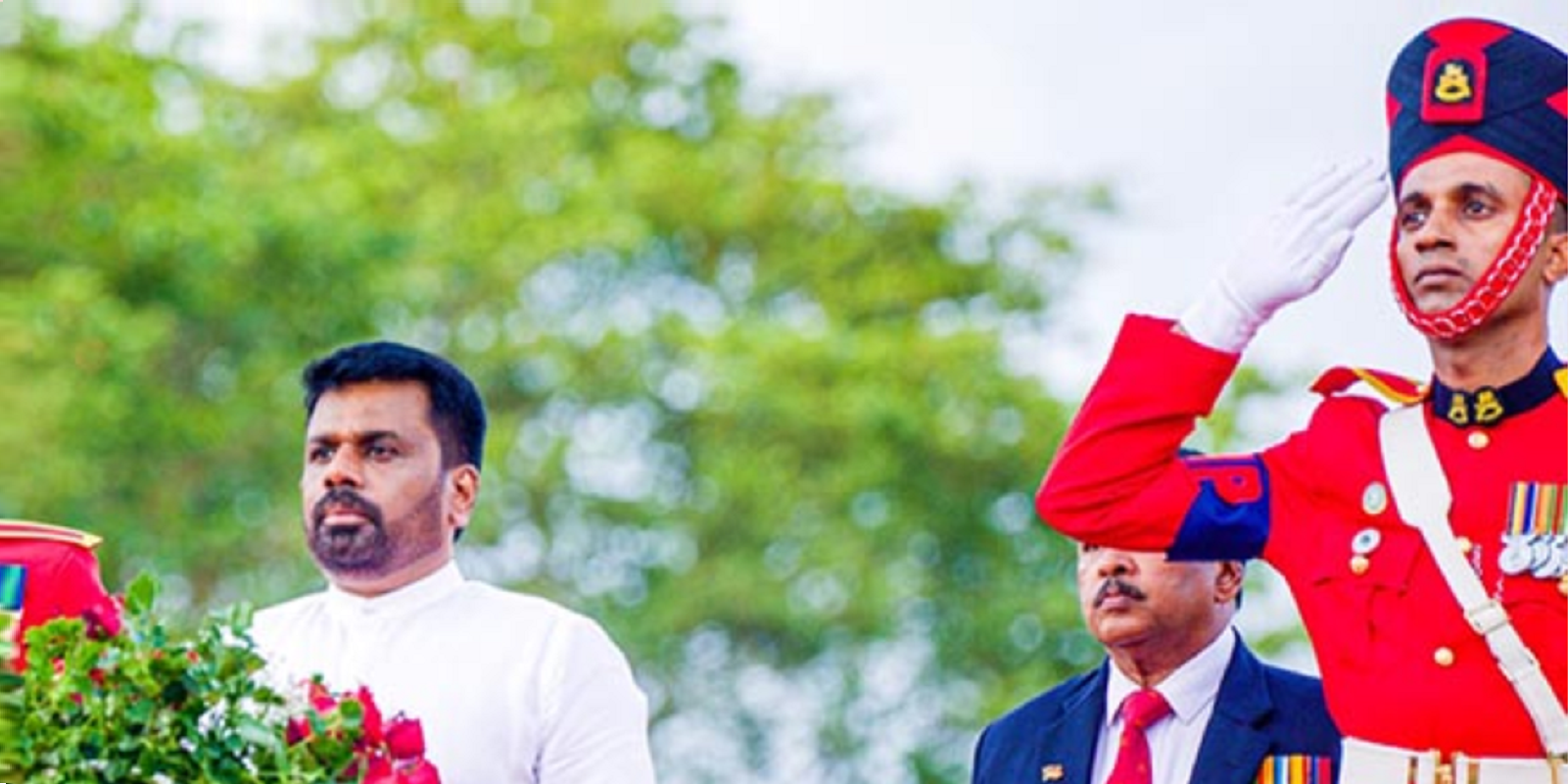
During the visit, Mr Pant announced the withdrawal of a small number of troops from the 70,000-strong Indian military contingent stationed in Sri Lanka. The country was smothering from all sides at the time, a sharp contrast to the country that the Indian defence minister was visiting after a lapse of more than 38 years. Much has changed between then and now to the extent that the JVP, the party that vehemently opposed the 1987 Accord and made it the rallying call to launch a second bloody insurrection, is now in power. Hence, it was with open arms and much fanfare that President Anura Kumara Dissanayake welcomed the current Indian Defence Minister, Rajnath Singh, to Sri Lanka on Wednesday, the coming together of ‘civilisational twins’, as the two sides fondly refer to their close relationship.
Mr Singh arrived in Colombo the previous afternoon leading a high-level delegation comprising senior officials from India’s Ministry of Defence and Ministry of External Affairs.
Though it was a short visit, Mr Singh packed a tight itinerary which included meetings with President Dissanayake, Prime Minister Harini Amarasuriya and Defence Ministry Secretary Air Vice Marshal (Retd.) Sampath Thuyacontha. He also visited the Ministry of Defence at the Defence Headquarters Complex and was accorded a ceremonial guard of honour and later laid a wreath at the Indian Peace Keeping Force (IPKF) Memorial in Battaramulla. He also met with Opposition Leader Sajith Premadasa and discussed maritime security and stability in the Indiana Ocean.
The minister’s programme in Colombo also included an interaction with the Indian diaspora and a visit to the Gangaramaya. He wound up his visit by attending a special Pooja at the Seetha Amman Temple in Nuwara Eliya, where he was received by MP Jeevan Thondaman.
A special highlight of the Indian minister’s visit was the arrival in Colombo on September 8 of INS Udaygiri, the Indian Navy’s indigenously built multi-role stealth frigate for a three-day Operational Turnaround (OTR). A deck reception was organised onboard INS Udaygiri in the Indian Defence Minister’s honour with several government ministers and senior officials in attendance. INS Udayagiri was among the first responders during the devastating Cyclone Ditwah.
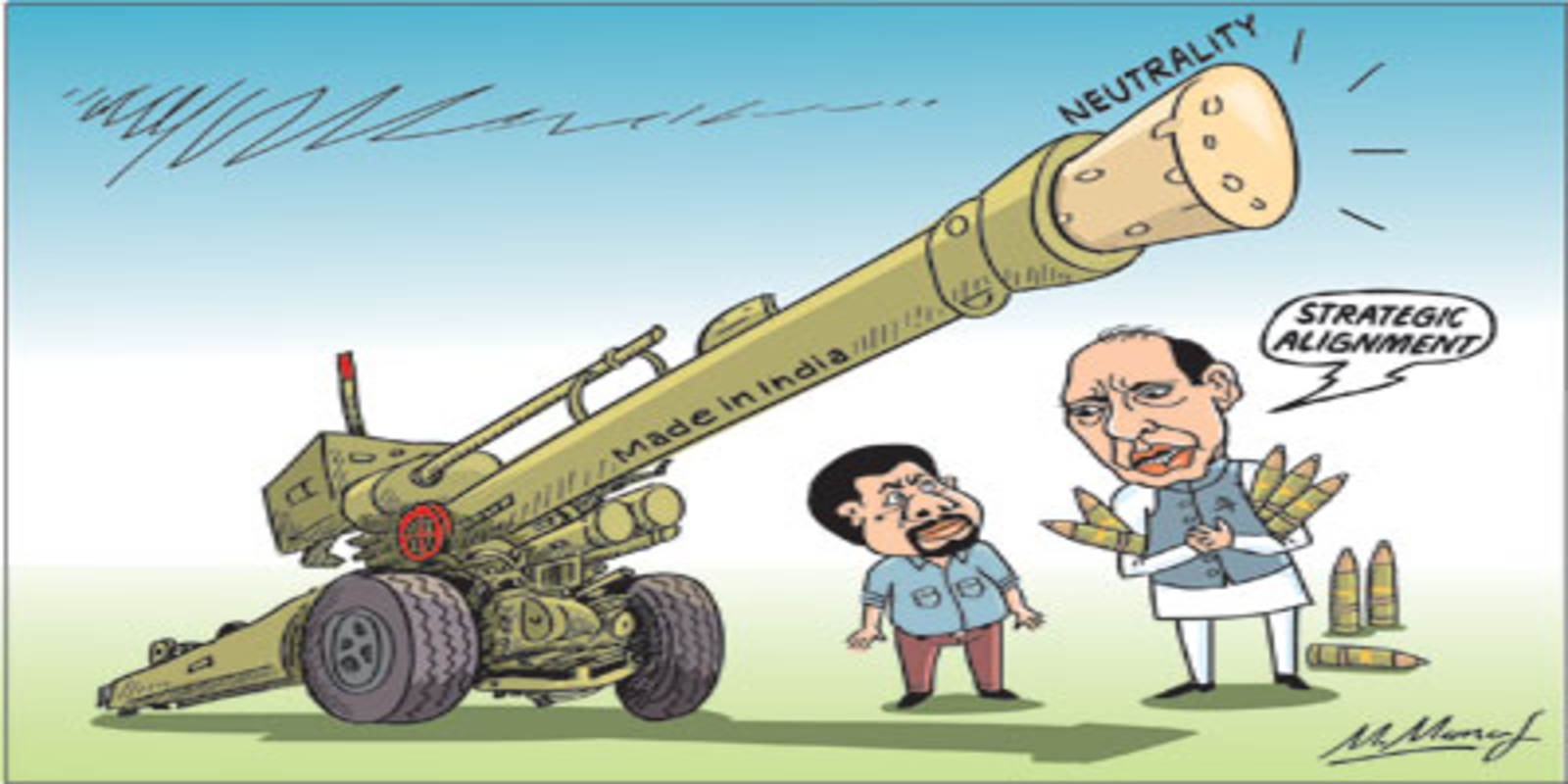
As always, behind the public niceties, the visiting Indian minister had more serious matters to discuss with the Lankan leadership, mainly on maritime cooperation. Mr Singh, who was appointed Defence Minister in 2019, had chosen to visit India’s southern neighbour at a time of increasing tensions around the Indian Ocean due to the conflict in West Asia. Speaking during his visit at the Defence Ministry, Mr Singh said that national security and economic growth cannot be viewed in isolation, as they are intrinsically linked to geography and security, emphasising that neither country can ‘afford to remain indifferent to the developments in the region.’
The main speech delivered by the Indian minister was when he addressed an audience which included the three service commanders and senior military personnel at the Defence Headquarters.
He noted that as the Indian Ocean enters a period of profound strategic and economic transformation, India and Sri Lanka must synergise their efforts, build upon their collective competencies and address emerging challenges together. “The tectonic shifts and rapid transformation underway present both challenges and opportunities. The two countries must leverage their longstanding maritime partnership to turn these opportunities into shared growth,” he said.
In his address, Mr Singh said he envisaged a future where India and Sri Lanka emerge as joint stakeholders in developing a mutually beneficial and integrated Maritime Domain Awareness system, providing comprehensive maritime information on a real-time basis. “This would entail systematic cooperation and interaction amongst concerned agencies, navies and coast guards of the two countries with a view to addressing the challenges of illegal fishing, suspicious vessels tracking, narcotics trafficking, smuggling, terrorism and other security threats,” he said.
The details released by the President’s Office on the meeting were sketchy except to state that the Indian Defence Minister held extensive discussions on further strengthening the existing defence, economic, maritime and regional partnerships between India and Sri Lanka, as well as the historical ties between the two countries, in a mutually beneficial manner. President Dissanayake had reiterated that Sri Lanka would never allow its territory to be used for any activities inimical to India’s security interests, an undertaking that the Lankan leader made during his visit to India in December, 2024, and once again when Indian Prime Minister Narendra Modi visited Colombo in April, 2025
President Dissanayake’s emphasis was on the government’s national programme to combat drug trafficking, and thus he apprised the Indian minister of the programme and sought India’s fullest support in its efforts to combat the illicit drug menace. He also sought support to extradite Sri Lankan drug traffickers currently serving prison sentences in India.
The President also raised the fisheries issue and wanted to secure India’s support to safeguard the principal livelihood of Sri Lankan fishermen and discussed how the two countries worked together to resolve the issue. The Indian minister said the issue needs to be addressed together, but a mutually beneficial agreement on this sticky issue seems distant.
Three MOUs were signed during Mr Singh’s visit. They were for the upgrade of the L70 guns for the Sri Lanka Air Force and cooperation between the two countries’ National Cadet Corps and National Defence Colleges.
With the escalating tensions in West Asia and the Indian Ocean being drawn into the theatre of war, the Indian minister’s visit would have done little to ease the pressure building up on the government to ensure it remains neutral in such a situation.
Govt campaign
On the domestic front, President Dissanayake is leading the charge on behalf of the NPP to win back a growing number of disgruntled voters as he completes two years since taking office. In addition to the public rallies which he will address in all districts, the President met with Catholic, Hindu and Muslim religious leaders this week to keep up the momentum of his party’s pledge to strengthen coexistence, peace and reconciliation among all communities in the country and to ensure national unity by preventing any form of racist or religiously motivated hate activity.
Separate meetings were held with the religious leaders on Thursday. The delegations included representatives of the Catholic clergy led by Colombo’s Archonship, Malcolm Cardinal Ranjith; the Hindu clergy from Colombo, Batticaloa and Jaffna; and representatives of the All Ceylon Jamiyyathul Ulama.
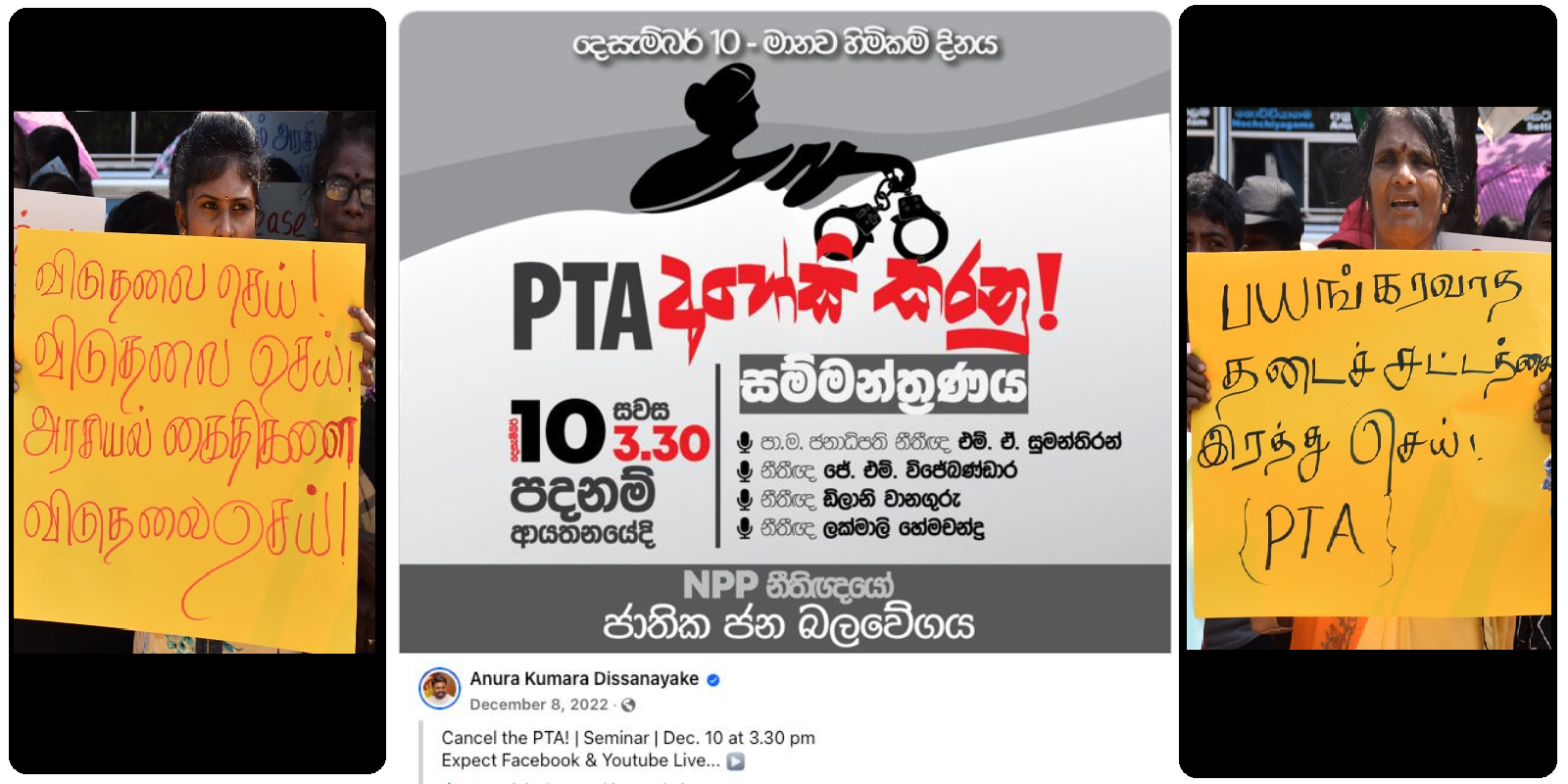
These meetings were held days after the UN Human Rights Council in its latest report on Sri Lanka noted that the government has continued to promote national unity and denounce racism, while also noting that the government has continued to rely on the repressive Prevention of Terrorism Act (PTA), which it is yet to repeal, or undertake meaningful revisions to the law and other legislation that impact fundamental freedoms across all of Sri Lankan society. The report noted that activists and victims of decades-long civil war continue to face surveillance, questioning, and intimidation by state intelligence services, particularly in northern and eastern Sri Lanka, undermining conditions for genuine reconciliation.
While there were some words of encouragement in the report presented by the UN Human Rights Commissioner Volker Turk, who undertook a visit to Sri Lanka last June, he noted that there has been no recognition or accountability for crimes under international law, gross human rights violations, and serious violations of international humanitarian law committed by all parties during the war.
This week also saw a joint statement issued by the Sri Lanka Core Group on the country’s human rights situation. The group comprises Canada, Malawi, Montenegro, North Macedonia and the UK. The statement, delivered by the UK’s Human Rights Ambassador, Eleanor Sanders, welcomed the positive developments highlighted in the report presented earlier by the UN Human Rights Chief.
“However, much further action is needed to build confidence in accountability and reconciliation efforts. Progress in several emblematic cases has not yet been accompanied by a comprehensive, victim-centred accountability process to address past violations. Mass grave excavations are a stark reminder that thousands of cases of enforced disappearances remain unresolved. And reports of intimidation, harassment, and restrictions affecting civil society, journalists and victims’ groups, including in the North and East, still raise concerns,” the Core Group stressed.
Sri Lanka, meanwhile, appealed to UN Human Rights High Commissioner Volker Türk to conclude “country-specific mandates” where national processes demonstrate progress. The development was significant since this was the first time that the country had formally asked the UNHRC to end its mandate on Sri Lanka. Sri Lanka has been subject to UNHRC resolutions for 14 years, dating back to the first accountability-focused text adopted in 2012 (Resolution 19/2). Resolution 60/1, which the UNHRC adopted in October of 2025, is due to come to an end towards the end of 2027, with the presentation of a comprehensive report on progress in reconciliation, accountability and human rights in Sri Lanka at its 66th session.
Delivering Sri Lanka’s appeal on behalf of the government, Permanent Representative of Sri Lanka to the United Nations in Geneva, Ambassador Sumith Dassanayake, insisted that no Council mandate should be regarded as indefinite. “All mandates, particularly country-specific mandates, should be subject to periodic review against defined objectives and measurable outcomes. Where mandates overlap, the Council should actively pursue their consolidation or rationalisation,” said Ambassador Dassanayake. He further stressed that sunset clauses and phase-out provisions should be incorporated into country-specific resolutions where appropriate.
For the government the human rights issue is a Catch-22 situation. The government clearly wants to avoid a situation where the charges of a Ranaviru dadayama or witch-hunt against war heroes become a slogan as they did in the past, and so have chosen to circumvent the issue by sidestepping human rights violation allegations and pursuing cases of corruption and related cases linked to senior military offices.
Former Navy Commander Admiral of the Fleet Wasantha Karannagoda, against whom there are several serious allegations of human rights violations, was indicted before the Colombo High Court in August along with Yoshitha, son of former President Mahinda Rajapaksa. The charges against him are for causing a loss to the state by allegedly facilitating Yoshitha Rajapaksa to participate in the Royal Navy Young Officers’ Course at the Royal Navy Training College in the United Kingdom, without lawful authority, while serving as Commander of the Navy.
This week the government intensified its investigations, centring around former president Gotabaya Rajapaksa, who as the secretary to the Ministry of Defence played a crucial role in the military operations which ended with the defeat of the LTTE.
He was summoned to appear before the Financial Crimes Investigation Division (FCID) on Friday and questioned for several hours in connection with the ongoing investigation into the controversial procurement of MIG fighter aircraft for the Sri Lanka Air Force during his tenure as Defence Secretary.
He appeared before the FCID a day after former Air Force Commander Roshan Goonetilleke appeared before the FCID to give a statement regarding the MIG aircraft deal. He, along with Admiral Wasantha Karannagoda, led the Air Force and Navy during the crucial 2006-2009 period, which saw the end of the three-decade-long separatist war.
Namal’s Janasatana
Even as Gotabaya Rajapaksa was being questioned by the FCID, his nephew and Sri Lanka Podujana Peramuna (SLPP) National Organiser Namal Rajapaksa continued to be in remand custody after being arrested by the Commission to Investigate Allegations of Bribery or Corruption (CIABOC) over its ongoing probe into the purchase of Airbus aircraft for the national carrier, SriLankan Airlines.
The case involves the purchase of six A330 and four A350 aircraft and the lease of four other planes in deals agreed to between 2012 and 2013. Mr Rajapaksa was arrested on charges of obtaining USD 800,000 as part of a bribe amounting to EUR 1,454,000 for the Airbus deal. This was based on a sworn affidavit provided to investigators by businessman Nimal Perera, who is now in Australia.
Mr Rajapaksa was remanded until September 18 after being arrested on September 4 by CIABOC officials and produced before the Colombo Chief Magistrate’s Court. He was taken to the Welikada Remand Prison straight after being remanded and spent the night in a special cell along with 10 other remand prisoners.
Special security arrangements have been implemented around the prison ward where Mr Rajapaksa is being held, and following a request made on his behalf, prison authorities have permitted him to receive all three meals from home. Three family members have also been permitted to visit him each day. His father, former President Mahinda Rajapaksa and mother Shiranthi Rajapaksa have visited him this week, while his wife Limini brings home-cooked meals for her husband. A host of current and former opposition MPs from various parties also visited him in prison. Given his position as a sitting MP, Mr Rajapaksa has also been allowed to attend Parliament sessions, and he was transported by prison bus to Parliament to take part in this week’s sessions.
Namal Rajapaksa and others in the SLPP have insisted that his arrest and incarceration were aimed at sabotaging the SLPP’s public rally that had been scheduled for yesterday in Anuradhapura. The rally was set to mark the expansion of a successful programme launched by the SLPP National Organiser earlier this year with small-scale public meetings in different parts of the country. The rally in Anuradhapura was meant to be the start of the programme moving to larger-scale rallies at the district and national levels. Even before Namal Rajapaksa’s arrest, the SLPP was convinced the NPP government was hell-bent on sabotaging its rally after attempts to secure the two largest grounds in Anuradhapura town – the Walisinha Harishchandra Grounds and the Salgado Grounds – failed after Anuradhapura Municipal Council officials informed the SLPP that the two venues had already been booked for other events on the day of the rally. The party, however, subsequently managed to book the Municipal Council Housing Scheme Grounds.
Mr Rajapaksa and those within his party were of the view that the best way to respond to his arrest and other attempts to prevent the Anuradhapura rally from going ahead was to continue with the event as planned and to ensure its success. To this end, party activists were hard at work this week organising the rally, named “Janasatana” (People’s Struggle).
Namal Rajapaksa has given clear instructions to hold the Anuradhapura rally and ensure its success. The party’s earlier slogan for its public meetings was “Namal Samaga Gamin Gamata” (From Village to Village with Namal). Since his arrest, it has been changed to “Namal Wenuwen Gamin Gamata” (From Village to Village on Behalf of Namal), underlying how the party is going to move forward with the Anuradhapura rally and other subsequent public meetings while Mr Rajapaksa remains in jail. While the NPP may have thought the venue was small, parliamentarian Rohitha Abeygunawardena had measured it on Friday and had found that the total land area is almost the same as the Salgado Grounds, claimed the SLPP General Secretary Sagara Kariyawasam.
Namal himself struck a defiant note when he spoke in Parliament this week. In his speech during Thursday’s parliamentary debate, Mr Rajapaksa said thousands of people, irrespective of party differences, would flock to the SLPP’s Anuradhapura rally on the 12th to protest against the government’s “lies, frauds and robberies”. He insisted his party will not be cowed in the face of the government’s attempts to suppress the opposition. “You didn’t even give us the ground we requested. If you think this kind of suppression can halt the people’s struggle and prevent the people from rising up against you, then you are sorely mistaken,” Mr Rajapaksa warned the government.
NPP rally
While the SLPP rally was being held in Anuradhapura, the ruling NPP was holding its own farmers’ rally at Deepa Uyana in Polonnaruwa. Presided over by President Anura Kumara Dissanayake, the rally was part of a series of public meetings in each district over the next two months. The first two of these rallies were held at Beruwala and Bulathsinhala in the Kalutara district last Sunday. They are being held to mark two years since the election of President Dissanayake. The SLPP, though, has accused the NPP of staging rallies with the president in attendance due to concerns that Namal Rajapaksa’s programme of going to the villages had boosted both his and the SLPP’s popularity, allegations which the ruling party has strongly dismissed.
There was definitely a large turnout for the president’s first two rallies in the Kalutara district, and the expectation was that similar scenes would be witnessed during yesterday’s farmers’ rally. Given the various issues faced by farmers such as low paddy prices, the welcome for President Dissanayake in Polonnaruwa was far from universal. Some farmer unions openly protested against his visit.
The government’s plan over the next two months is to stage two rallies in each district attended by the president where he will speak directly to the people regarding his government’s achievements over the past two years and explain their objectives going forward. The rallies are being held under the theme “Ape Aanduwa: Wasara Dekai, Ratata Subai” (Our government: Two years of prosperity for the nation).
One area where the government is claiming it has achieved some success over the past two years is in tackling the narcotics trade. It has pointed to the detection, both on land and at sea, of massive stocks of illegal drugs and the arrest of leading drug traffickers, including a significant number who have been brought back to Sri Lanka from overseas. The recent detection of 463kg of crystal methamphetamine (‘Ice’) from two containers at the Colombo Port, which is estimated to be worth more than Rs. 8 billion, was the latest such success. The raid was a joint operation conducted by the Police Narcotics Bureau and the Central Crime Investigation Bureau following information received by the Senior Deputy Inspector General in charge of Crimes and Traffic.
While the detection was initially hailed as a significant blow against drug traffickers, the narrative has changed over the past few days after it was confirmed that Inspector General of Police (IGP) Priyantha Weerasooriya has ordered the Police Special Investigation Unit to conduct an internal investigation into “certain shortcomings and omissions” identified in connection with the initial investigation.
A senior Customs official, who spoke on grounds of anonymity, claimed there appears to be a disagreement among law enforcement agencies on who should get the lion’s share of the credit over the massive detection of narcotics. Meanwhile, opposition parties have seized on the find, questioning how the government can assure the public that narcotics were not similarly hidden among the 323 red-labelled containers that were released last year from the Colombo Port without subjecting them to a mandatory physical inspection.
22nd Amendment
The government, meanwhile, is hoping to speedily pass its controversial 22nd Amendment to the Constitution once the Supreme Court delivers its determination to the Speaker next week. The bill primarily aims to raise the retirement age of judges of the Court of Appeal and the Supreme Court. The thinking among government circles is that the country’s top court is likely to rule that the 22nd Amendment Bill can be passed with a two-third parliamentary majority without subjecting it to a public referendum, though government ministers and parliamentarians insist they are prepared to even hold such a referendum in case the court rules it is also needed. The Committee on Parliamentary Business decided this week to hold a two-day debate on both the 22nd Amendment Bill and the Judicature (Amendment) Bill on September 24 and 25. Thus, if the Supreme Court were to determine that the 22nd Amendment Bill can be passed with a two-thirds parliamentary majority, the issue would be done and dusted by the evening of September 25, with the bill set to become law after the Speaker places his signature on it.
Those who oppose the 22nd Amendment, though, have not given up. A collective of 26 civil society organisations called the Free Operations Centre (FOC) have been meeting with opposition political parties this week, with talks focusing on forming a united front to publicly oppose the 22nd Amendment. The group has already held discussions with parties such as the main opposition Samagi Jana Balawegaya, the United National Party, the Sri Lanka Freedom Party, the Sri Lanka Podujana Peramuna, the Sarvajana Balaya and the Communist Party of Sri Lanka, as well as other civil society organisations such as the Movement for a Just Society headed by former Speaker Karu Jayasuriya. FOC representatives are planning to meet with leaders of Tamil and Muslim political parties next week. The goal of these talks, explained FOC spokesman Maithri Gunaratne, is to gather 100,000 people to Colombo when the 22nd Amendment Bill is taken up for parliamentary debate.
“The government claims that the opposition is fragmented and that the people are with them when it comes to this bill. We aim to prove them wrong,” said Darshana Thanthrige, who also represents the FOC. Mr Thanthrige said the FOC is not the organiser of the protest but is acting more in the role of facilitator, bringing various parties and organisations who oppose the 22nd Amendment to one stage in a united pushback against the bill.
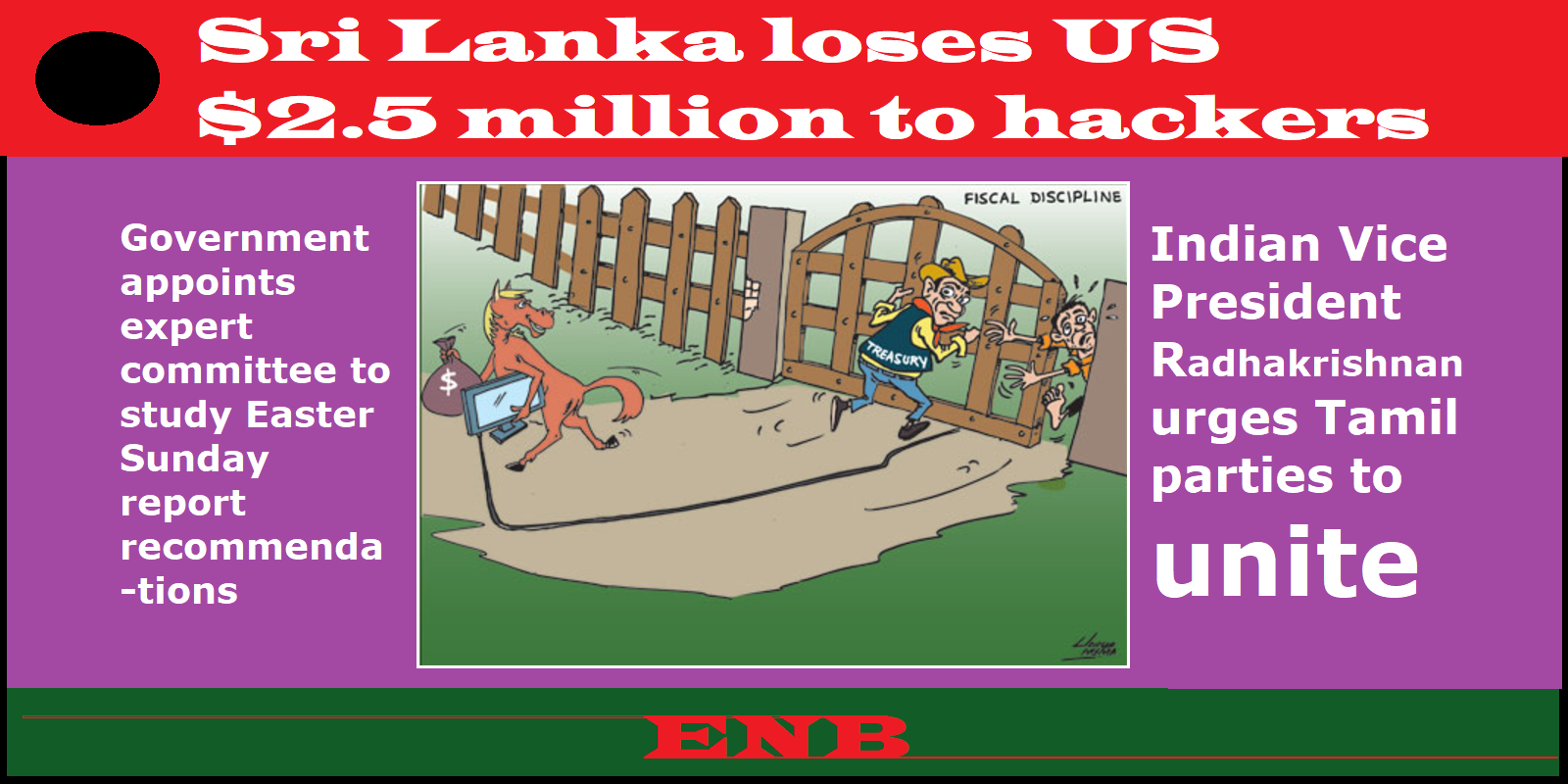
When he met representatives of the All Ceylon Jamiyyathul Ulama at the Presidential Secretariat on Thursday (10), President Dissanayake had pointed out, according to the President’s Media Division, that “as the present government has not been subject to any allegations relating to fraud and corruption or the rule of law, certain groups are now making allegations against the government based on ethnic considerations.” This was no doubt a reference to allegations being made by some in the opposition that the NPP is operating with an anti-Sinhala Buddhist agenda. The more telling comment in the statement, though, is the president’s claim that his government “has not been subject to any allegations relating to fraud and corruption or the rule of law”. There have been a number of serious allegations related to all three of these topics over the past two years. The more serious of such allegations include the release of 323 ‘Red-labled’ containers from the Colombo Port without subjecting them to a mandatory physical inspection, the controversy surrounding the import of low-quality coal for the Lakvijaya Coal Power Plant, and the disappearance of USD 2.5 million from the Treasury.
If President Dissanayake is truly serious about ensuring that alleged wrongdoers are held to account, irrespective of which party they belong to, independent, transparent investigations have to be held into allegations concerning those from his own government. That will be the real test for him as he enters his third year in office.

ஒத்தவை:
சென்ற வாரம் இலங்கை-சண்டே ரைம்ஸ்