Namal’s arrest on bribery charges sparks political storm
- SLPP links arrest to Govt fears over young Rajapaksa’s growing popularity
- UNP condemns arrest as deliberate bid to sabotage Sept 12 rally; SJB silent
- NPP sources say they see Namal and Ranil as challenges
- Herath to skip UNHRC session; praise and criticism for NPP govt in council’s advanced report
- India’s Defence Minister in Sri Lanka on Sept 9; New Delhi pushes for KKS and other strategic projects

By Our ST Political Desk 07-09-2026
Amid chaotic scenes, with a large group of visibly emotional supporters shouting “Jayawewa“, Sri Lanka Podujana Peramuna (SLPP) National Organiser and parliamentarian Namal Rajapaksa was bundled into a prison bus outside the Colombo Chief Magistrate’s Court on Friday evening after being ordered to be remanded until September 18. Even though it was only a short distance from the prison gates to the bus, it was a struggle for prison officers and police to take Mr Rajapaksa through the throng of SLPP supporters and media personnel jostling to capture the moment on their cameras.
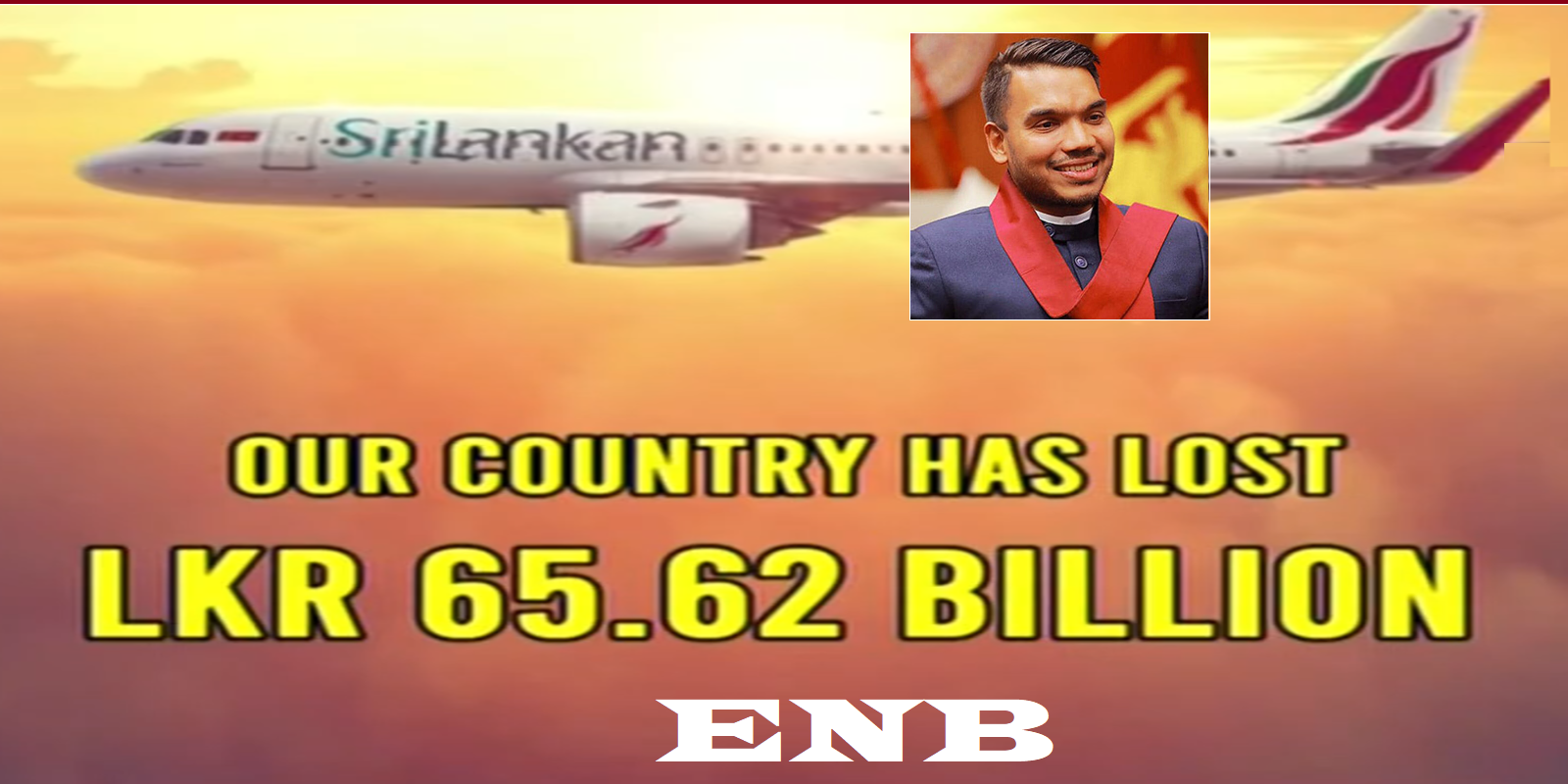
The eldest son of former President Mahinda Rajapaksa was arrested earlier that afternoon after being questioned for almost five hours by the Commission to Investigate Allegations of Bribery or Corruption (CIABOC) over its ongoing probe into the purchase of Airbus aircraft for the national carrier, SriLankan Airlines. The case involves the purchase of six A330 and four A350 aircraft and the lease of four other planes in deals agreed to between 2012 and 2013.
Issuing a media statement announcing his arrest, the CIABOC said Namal Rajapaksa had been arrested on charges of obtaining USD 800,000 as part of a bribe amounting to EUR 1.454 million for the Airbus deal. The funds had initially been deposited to a Standard Chartered Bank (SCB) account in Singapore maintained by a company called Biz Solutions Inc. A total of USD 800,000 received as part of the alleged bribe had subsequently been deposited into an OCBC bank account, also in Singapore, maintained by Sabre Vision Holdings Ltd. The company belonged to a Sri Lankan businessman. The businessman had then converted the USD 800,000 to its equivalent in Sri Lankan rupees, amounting to Rs. 100 million, which was then allegedly handed over to Mr Rajapaksa by the businessman on several occasions in 2014 and 2015, according to CIABOC. The release further stated that Mr Rajapaksa was arrested following a statement given to the Commission’s investigators by this businessman and the statements of France’s Airbus company officials, who had visited the Commission on several occasions, as well as various documents and other evidence obtained during the investigation.
Once Mr Rajapaksa was produced before the Colombo Chief Magistrate’s Court, further details were revealed regarding the status of the investigation and circumstances that led to the arrest. Appearing for the CIABOC, Deputy Solicitor General (DSG) Janaka Bandara informed court that the arrest followed a joint probe conducted by the CIABOC and the Criminal Investigation Department (CID). That investigation, which had received mutual assistance from Australia, Singapore, France and the United States, was now in its final stage, he told the court. The court was further informed that Biz Solutions Inc, registered in Brunei, was a dummy company owned by Priyanka Neomali Wijenayake, wife of former SriLankan Airlines Chief Executive Officer (CEO) Kapila Chandrasena. Funds amounting to USD 800,000 had then been transferred from the SCB account maintained by Biz Solutions Inc. to the OCBC account maintained by Sabre Vision Holdings Ltd., owned by Sri Lankan businessman Nimal Perera. Mr Perera is now in Australia, and investigators who had travelled to the country recently had interviewed him as part of the investigation. He had refused to return to Sri Lanka, citing alleged death threats against him, but had given a sworn affidavit to investigators that he had converted the USD 800,000 received by his company into Sri Lankan rupees and handed the money over to Namal Rajapaksa. The money amounted to Rs 100 million based on the exchange rate prevailing at the time.
The DSG stated that the CIABOC is opposing bail being granted to the suspect, as a certificate had been submitted by its Director General under Section 149 of the Anti-Corruption Act, requiring special circumstances to be established for bail.
President’s Counsel Sampath Mendis, appearing for Mr Rajapaksa, sought bail for his client, arguing that the MP had been arrested solely on the basis of a statement made by Nimal Perera. He stressed that neither French officials nor officials from Airbus had stated that they had given money to Mr Rajapaksa.
Mr Mendis also questioned the credibility of Mr Perera, pointing out that another case involving Mr Perera was currently being heard in the High Court in relation to the ‘Krrish deal’. In that case too, it had been alleged that money had been received into an account belonging to a company named Sabre Vision Holdings Ltd. However, in that case, Nimal Perera had stated that the account did not belong to him but to an Italian friend, the counsel stated. In 2019, the CID did not believe what Nimal Perera said. If so, how can Nimal Perera be believed in 2026, asked Mr Mendis.
The court, however, remanded Mr Rajapaksa after ruling that the defence had been unable to present exceptional circumstances that merited granting bail to the suspect.
Mr Rajapaksa had been notified to present himself before the CIABOC on Friday and had come prepared for his possible arrest, SLPP sources said. The main reason for their suspicion was that the National People’s Power (NPP) administration was determined to thwart the SLPP’s planned public rally scheduled to take place on September 12 in Anuradhapura. President Anura Kumara Dissanayake too is expected to attend an NPP public rally in the same historic town the following day, September 13.
The NPP is stressing that the public rallies headed by the President are being held to mark the second anniversary of Mr Dissanayake being elected President. Nevertheless, there is no denying that they are coming hot on the heels of a largely well-received programme begun by Namal Rajapaksa, where the SLPP’s National Organiser travelled to villages in various parts of the country, listening to issues faced by the people and holding small-scale public meetings. Given the success of the programme, the SLPP had decided to expand the meetings by holding large public rallies, with the first of these to be held in Anuradhapura on September 12.
Namal Rajapaksa believed that as soon as these meetings started, the government’s popularity would plunge even further as more voters flocked to the SLPP. As such, he and the party were aware that the government would do everything possible to prevent this, claimed SLPP General Secretary Sagara Kariyawasam. “Arresting him under any pretext was the easiest route. We were ready for that eventuality and had been making preparations,” Mr Kariyawasamn said.
Indeed, ensuring that the Anuradhapura rally goes ahead as planned was uppermost in the mind of Mr Rajapaksa as well, even as he was sitting in court on Friday while his case was being heard. He had briefly spoken with a group of his close confidants, including former Minister Johnston Fernando, SLPP Hambantota District MP D.V. Chanaka, former MP Sanjeewa Edirimanna and General Secretary Sagara Kariyawasam, while the case was proceeding to instruct them to ensure that the rally goes ahead as planned. “He asked us several times before he was taken to prison as well to make sure the rally is a success, saying that we needed to do that for him,” said Mr Kariyawasam. Therefore, the party has decided to go ahead with the September 12 meeting in Anuradhapura no matter what obstacles are thrown in its way, he insisted. The party has also decided to continue with all the other meetings it has planned until Mr Rajapaksa can attend the meetings himself once he is released.
Meanwhile, a statement posted on Namal Rajapaksa’s social media accounts on Friday evening on behalf of the MP said if there is any evidence relating to him, he welcomes a “fair, impartial and transparent investigation”.
The statement attributed to Mr Rajapaksa, however, also questioned the timing of his arrest and remanding in custody. “Today, I have been remanded until 18 September. Tomorrow, the Government will hold a political rally to mark two years in office, with the President scheduled to address the gathering. On 12th September, thousands of our supporters are also expected to attend our own political meeting,” said the statement.
Given these events, the MP claimed members of the public are entitled to ask, “Why today? Why now? Why until September 18?”
“People may be underestimated, but they are not unaware. They know what is happening,” the MP added.
“I will respect the legal process and cooperate with any lawful investigation. I also reserve my right to challenge any allegation or decision through the remedies available to me under the law,” he stressed.
Booking a venue for the SLPP’s planned Anuradhapura rally has also proved to be difficult for the party, and party officials are attributing the difficulty to the government’s attempts to prevent it from going ahead, or if that fails, to at least cause severe inconvenience to the organisers and supporters who are planning to attend it. Attempts by the SLPP to book the two largest grounds in the town – the Walisinha Harishchandra Grounds and the Municipal Council Grounds (Salgado Grounds) – have failed, with the Anuradhapura Municipal Council officials informing the party that the Walisinha Harishchandra Grounds has been booked for a musical show while the Anuradhapura Police has booked the Salgado Grounds. Nevertheless, party sources said the SLPP had anticipated such tactics and has moved to secure a different venue for the meeting. The SLPP’s public rally is now likely to go ahead at the Anuradhapura Municipal Council “Niwasa” Grounds from 2.00pm on September 12. The SLPP claims that its National Organiser’s arrest has only served to further energise the party base and is now anticipating an even higher turnout than initially expected.
In the wake of his son Namal’s arrest, former President Mahinda Rajapaksa, who has largely chosen to stay away from the political stage in recent months, is likely to personally be in attendance for the Anuradhapura rally. He may also address the rally, where he is likely to emphasise that his son’s arrest is an act of “political revenge” by the NPP government targeting the Rajapaksa family.
While the SLPP has been emphatic in denouncing Mr Rajapaksa’s arrest, it has also received support from other quarters, most notably the United National Party (UNP). The UNP’s Media Unit issued a statement on Friday evening stating that the party strongly condemns Mr Rajapaksa’s arrest.
“It is abundantly clear that MP Namal Rajapaksa was arrested in a calculated move to sabotage the SLPP public rally scheduled to take place under his leadership on the 12th of this month in Anuradhapura town,” the statement said, supporting the SLPP’s stance that the arrest had been motivated by a desire to prevent the Anuradhapura rally from going ahead.
Opposition Leader Sajith Premadasa, or his party, the Samagi Jana Balawegaya (SJB), though, had not made any official comment regarding Mr Rajapaksa’s arrest up until last evening.
The controversial Airbus deal has been scrutinised on multiple occasions over the years, and the probes are well-documented. They include inquiries by Parliament’s Committe on Public Enterprises (COPE), a Board of Inquiry by Attorney-at-Law J.C. Weliamuna and the National Audit Office. A Presidential Commission of Inquiry (PCoI) appointed by Maithripala Sirisena to check alleged irregularities at SriLankan also gathered evidence, as did a presidential commission of inquiry into serious acts of fraud, corruption and abuse of power, state resources and privileges (PRECIFAC). The CIABOC’s and CID’s investigations too have been ongoing for a long time and are now in their final stage, according to what was stated in court on Friday.
Nevertheless, the timing of Mr Rajapaksa’s arrest so close to the large SLPP rally does raise questions. The MP had also been vocal in the media in the days leading up to the arrest, stating that he wouldn’t be surprised if the government moved to arrest him under some pretext to thwart the upcoming rally. With Namal Rajapaksa now due to miss the upcoming rally, there will inevitably be those who would doubt the coincidence.
Namal seen as a bigger challenge than Sajith
SLPP sources, meanwhile, insist that Mr Rajapaksa’s arrest is further evidence that the NPP government now views him as its main threat at any upcoming election. It is no secret that the SLPP has slowly moved to regain the popularity it had so catastrophically lost during the economic crisis. The party made significant gains in the local government elections, and Mr Rajapaksa’s move to travel to distant villages and hold public meetings has further boosted both his and his party’s popularity. The NPP is well aware that a majority of the country is made up of floating voters. These voters helped propel Gotabaya Rajapaksa to the presidency in 2019 and handed the SLPP a near two-thirds majority at the 2020 general election. It was these same disgruntled voters who later helped elect Anura Kumara Dissanayake as president and gave the NPP a two-thirds parliamentary majority. As such, given that opinion polls have indicated a significant drop in popularity of the NPP government in recent months, there is no doubt serious concern within the government ranks that some of those voters are starting to throw their lot back with parties such as the SLPP.
The government also seems to be keeping a close watch on statements made by former President and UNP Leader Ranil Wickremesinghe. The government was swift to respond to a warning made by Mr Wickremesinghe while speaking at a recent book launch, where he claimed the country could face another severe economic challenge from the end of 2028 unless it builds its foreign reserves to USD 15 billion. Various government ministers and deputy ministers, including Deputy Finance Minister Anil Jayantha Fernando, moved to dismiss his claims. The NPP is also keeping an eye on attempts spearheaded by the UNP to form a joint opposition front.
All this is in sharp contrast to how the government is treating the main opposition and SJB Leader Sajith Premadasa. Meanwhile, even those in the opposition have both publicly and privately raised concern over Mr Premadasa’s effectiveness, or lack thereof, in the position of opposition leader.
The ruling party was fully focused on the upcoming public rallies featuring the President. The first of two such rallies will be held today (6) in the Kalutara district, with rallies in Beruwala and Bulathsinhala.
There is “nothing unusual” for the President to attend such rallies, a party leader said, noting he also attended similar rallies in September last year to mark the end of his first year in office. “The rallies are held not because of any concern we have about the opposition gaining popularity, but to explain to the people the successes we have achieved over the past two years and the work that still lies ahead of us.”
The ruling party claimed the President will be highlighting several key achievements of the government made over the past two years. These include establishing the rule of law. President Dissanayake will point to legal action taken against politicians of the former governments.
The party will also point to the recent arrest of local NPP politicians in Kegalle and Jaffna to show the government will take action against wrongdoers within its own ranks. A Kegalle municipal councillor was arrested and subsequently remanded till September 9 on charges of misappropriating over Rs.26 million under the guise of constructing a cabana project. Meanwhile, an NPP member of the Vadamarachchi South-West Pradeshiya Sabha in Jaffna was arrested after he allegedly attacked the house of a retired government official in the Nelliady area, damaging CCTV cameras installed within the premises. He was later released on police bail and subsequently resigned from his position as a local council member. The NPP will be pointing to these incidents as evidence that this is a government that insists that the rule of law is applied equally to all.
Other topics will include how those in the opposition were instrumental in bankrupting the country when they were in power, the “new political culture” created by the NPP where no contracts are awarded or commissions given to party supporters, and its “zero-tolerance” approach to fraud and corruption.
The President will also emphasise his government will not allow ethnic and religious hatred to raise its head and lead to conflict again. “We are creating a country where all communities and religions can co-exist in peace, and the President will reiterate his commitment to ensuring this.” Another topic that the President is likely to touch on is the transformation brought to the education sector through ongoing education reforms.
Human rights front
While the President is gearing up to address island-wide public rallies, Sri Lanka’s human rights woes are far from over, with the country figuring prominently at the United Nations Human Rights Council’s 63rd session, which opens in Geneva, Switzerland, tomorrow. UN Human Rights High Commissioner Volker Türk, who visited Sri Lanka in June, will present a written update to the Council on the progress in reconciliation, accountability and human rights in Sri Lanka on the first day of the sessions, and going by the advanced report on the human rights situation in Sri Lanka released on Friday, in addition to the pre-existing human rights issues, the country is facing scrutiny on other fronts as well.
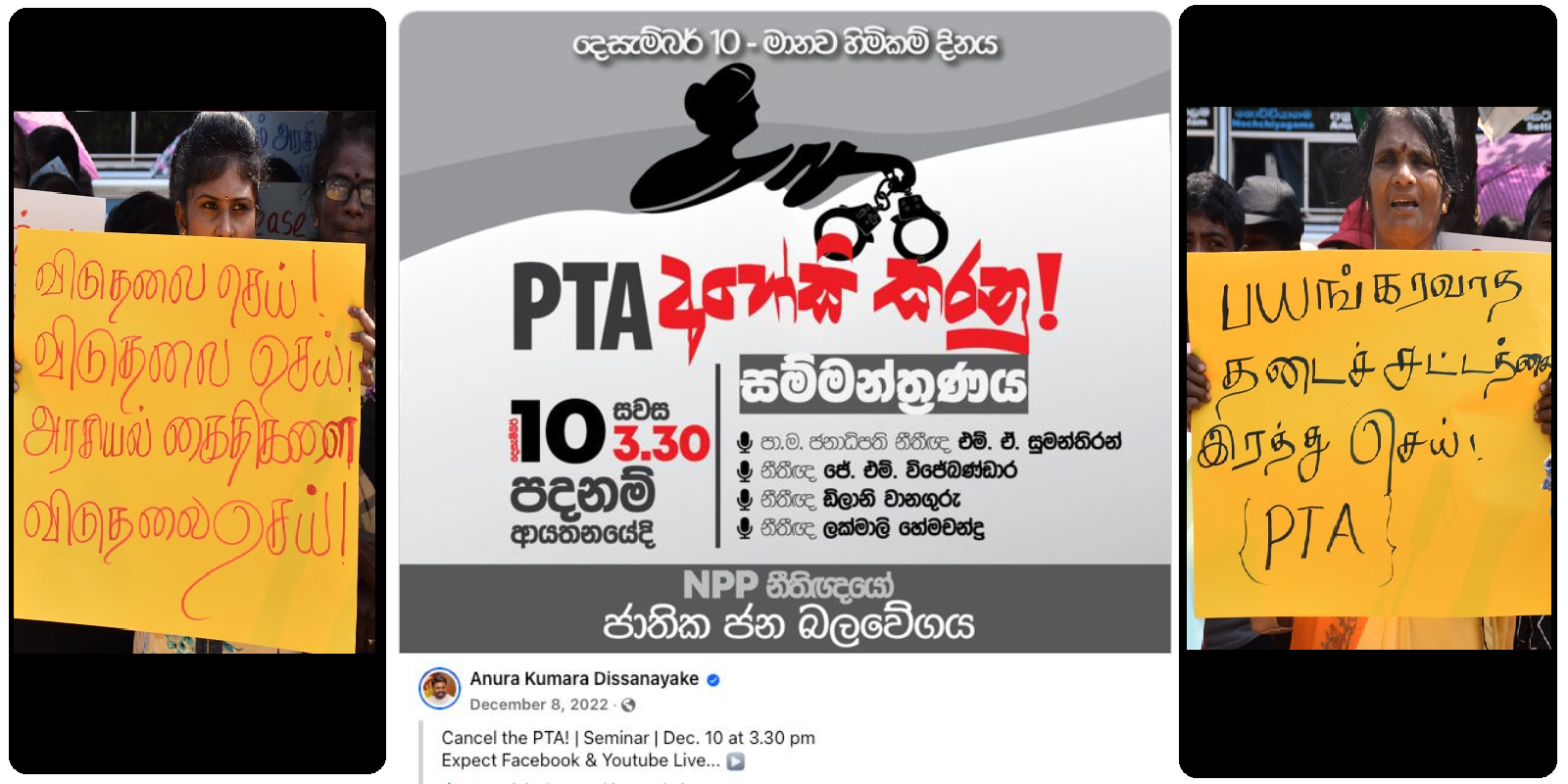
For the NPP, which promised to deliver on the human rights front once elected, there is growing pressure from the UNHRC to deliver on its promises. Among its unfulfilled promises are the repeal of the Prevention of Terrorism Act (PTA) and the establishment of an independent public prosecutor’s office. The Protection of the State from Terrorism Act (PSTA) that was approved by Cabinet more than a fortnight ago has yet to be gazetted; the reason for the delay has not been made known to the public. The bill has drawn fire from human rights organisations as being even more draconian than the PTA.
The UNHRC report said that while the government has continued to promote national unity and denounce racism, it has continued to rely on the repressive PTA and has yet to repeal or undertake meaningful revisions to the law and other legislation that impact fundamental freedoms across all of Sri Lankan society.
The UNHRC called on the government to impose a moratorium on the PTA, expedite its repeal, and ensure that any replacement legislation complies with international human rights law and the benchmarks set out by United Nations human rights experts.
The UN High Commissioner’s report also made reference to the NPP pledges of a new constitution to ‘guarantee equality and democracy and the devolution of political and administrative power to every local government, district and province. “While local government elections were conducted in May 2025, provincial council elections under the 13th Constitutional Amendment have still not been held since 2014,” the report said. It called on the government to implement its commitment to devolution of political and administrative power to every local government, district and province.
The UNHRC also said that while the government has taken notable steps to tackle corruption and made high-profile arrests and police-led investigations into some political killings, enforced disappearances and the 2019 Easter Sunday attacks, meaningful progress, however, remains largely absent in relation to accountability for international crimes allegedly committed by both state security forces and the Liberation Tigers of Tamil Eelam during the armed conflict.
The report noted that while the NPP-led government is committed to creating an independent Office of the Public Prosecutor, separating prosecutorial functions from the Attorney General’s Department, there has been no reported progress on this or an operational Public Prosecutor’s Office yet.
The report also made reference to the constitutional amendments (22A) to extend the retirement age of Supreme Court and Court of Appeal judges, adding that the United Nations Special Rapporteur on the Independence of Judges and Lawyers has consistently emphasised that judges’ tenure, conditions of service, and retirement age should be secured by law and protected from executive interference. It added that ‘judicial career processes must be insulated from political influence and that both real and perceived judicial independence are essential to maintaining public confidence in the administration of justice.
UNGA sessions
Foreign Affairs Minister Vijitha Herath will skip the upcoming UNHRC session, though he had earlier planned to attend it. Instead, Sri Lanka’s Permanent Representative to the UN in Geneva will deliver the statement on behalf of the country. Minister Herath will, however, attend the annual sessions of the United Nations General Assembly (UNGA) in New York, which will be held from September 22 to 28. Sri Lanka’s turn to address the GA has been scheduled for September 28,which will be the last day of the sessions.
President Anura Kumara Dissanayake will not attend the UNGA sessions this year, which will be significant, as its current chief, António Guterres’ term ends on December 31, and the UNGA is in the process of selecting a new Secretary General to the UN. Almost 80 Heads of State and 45 Heads of Government are expected to attend the sessions this year. Heads of State and Heads of Government are usually given priority of speaking at the sessions.
High-profile visits
Prior to taking wing to New York, Minister Herath will be kept busy with several high-profile visits scheduled in the coming week. India’s Defence Minister Rajnath Singh is scheduled to visit the country from September 9 and 10 with talks aimed at strengthening bilateral defence cooperation, with maritime security in the Indian Ocean Region.
He will meet with President Anura Kumara Dissanayake, who is also the Minister of Defence, Prime Minister Harini Amarasuriya and Defence Ministry Secretary Air Vice Marshal (Retd.) Sampath Thuyacontha. Senior government sources in Colombo said the visit by the Indian Defence Minister will focus on the speedy implementation of the defence co-operation MoU signed between the two countries in April last year.
The Defence MoU in place is an umbrella document that made existing Defence cooperation initiatives more structured. It is learnt that it covers areas such as joint exercises, capacity building in various areas, exchanges in Humanitarian Assistance and Disaster Relief (HADR), increasing port calls by naval units of both countries and, of course, exploring defence industry cooperation between the two sides.
India is also stepping up efforts to expedite the India-Sri Lanka Memoranda of Understanding (MoU) planned for the development of the Kankesanthurai Port (KKS) with the assistance of the Indian Government.
On Thursday, a discussion was held between Energy, Ports and Civil Aviation Minister Anura Karunathilaka and a delegation representing the Indian government, including India’s Deputy High Commissioner Maitrey Kulkarni. They discussed issues concerning the proposed MoU. The project is expected to strengthen maritime connectivity between India and northern Sri Lanka, improve port infrastructure in the Northern Province, and boost regional economic activity. The two sides proposed setting up a joint steering committee and technical committee to take the project forward.
It was announced in February this year that the Indian government would provide USD 63.5 million to develop the KKS port, with the project slated to be managed as a joint venture between the Sri Lanka Ports Authority (SLPA) and an entity nominated by the government of India. However, work on the project has been slow, with the Sri Lanka government not showing urgency to expedite the project despite insistence from India not to stall the project further.
The hesitation on the part of the government to expedite the Indian-backed KKS project as well as the development of the Jaffna International Airport at Palaly may have to do with differences within the government on the scale of India’s involvement in projects in the country. Transport Minister Bimal Rathnayake, who previously held the Ports and Aviation portfolios and was removed from the posts for no outward reason, appears to be someone who is cautious about the scale of Indian projects in the country.
Mr Rathnayake, who was in Jaffna recently, was questioned by journalists on the delay in the development of the airport and port projects despite offers of Indian financial assistance. “As a government, we are concerned about development, but it is the government that will decide what development should be undertaken and where,” he said. His answer was cryptic, but many have read into it to mean that these two projects may not be a priority for the government at present.
Meanwhile, prior to the Indian Defence Minister’s visit, Sri Lanka will also welcome two senior US officials whose focus too will be on increasing maritime cooperation.
The visiting officials are US Federal Maritime Commission (FMC) Chairman Laura DiBella and FMC Commissioner Robert J. Harvey. They will visit Sri Lanka September 6–10 to advance US-Sri Lanka cooperation on maritime trade, investment, and the shipping networks connecting American businesses and consumers to markets across the Indo-Pacific.
During the visit, Chairman DiBella and Commissioner Harvey will meet with senior Sri Lankan government and maritime leaders. Ms DiBella will address the 8th Colombo International Maritime and Logistics Conference, and Mr Harvey will serve on a panel, the US Embassy in Colombo said.
22nd Amendment
Over the course of two days this week, a five-judge Supreme Court bench held its hearing into fundamental rights petitions challenging the constitutionality of the 22nd Amendment to the Constitution as well as intervening petitions filed in support of the bill. The bench, headed by Chief Justice Preethi Padman Surasena, also comprised Justices Achala Wengappuli, Arjuna Obeyesekere, Sampath Abayakoon and Gihan Kulatunga. A detailed account of the hearing into the petitions on the 22nd Amendment Bill, which primarily aims to raise the retirement age of superior court judges, appears in our news pages.
Those who challenged the constitutionality of the bill asked the Supreme Court to rule that the bill was inconsistent with the Constitution and can only be passed in its current form by a two-thirds parliamentary majority and by the people at a referendum.
When the petitions were taken up for hearing on Tuesday, counsel for several petitioners also requested for the petitions to be considered by a full bench comprising all sitting judges of the Supreme Court. The court, however, rejected the request, and consideration of the petitions went ahead before the five-judge bench. The court’s ruling will be communicated to the Speaker within the next two weeks.
A three-judge bench of the Supreme Court comprising Justices Shiran Goonaratne, Mahinda Samayawardhena and Sampath Wijeratne also concluded a hearing into fundamental rights petitions that were filed challenging the proposed Anti-Corruption (Amendment) Bill. That ruling too will also be communicated to the Speaker in the coming weeks.

ஒத்தவை:
சென்ற வாரம் இலங்கை-சண்டே ரைம்ஸ்