As Lanka seeks fuel from India, Modi pushes for oil tank farm and joint energy projects
By Damith Wickremasekera Sunday Times lk 29-03-2026
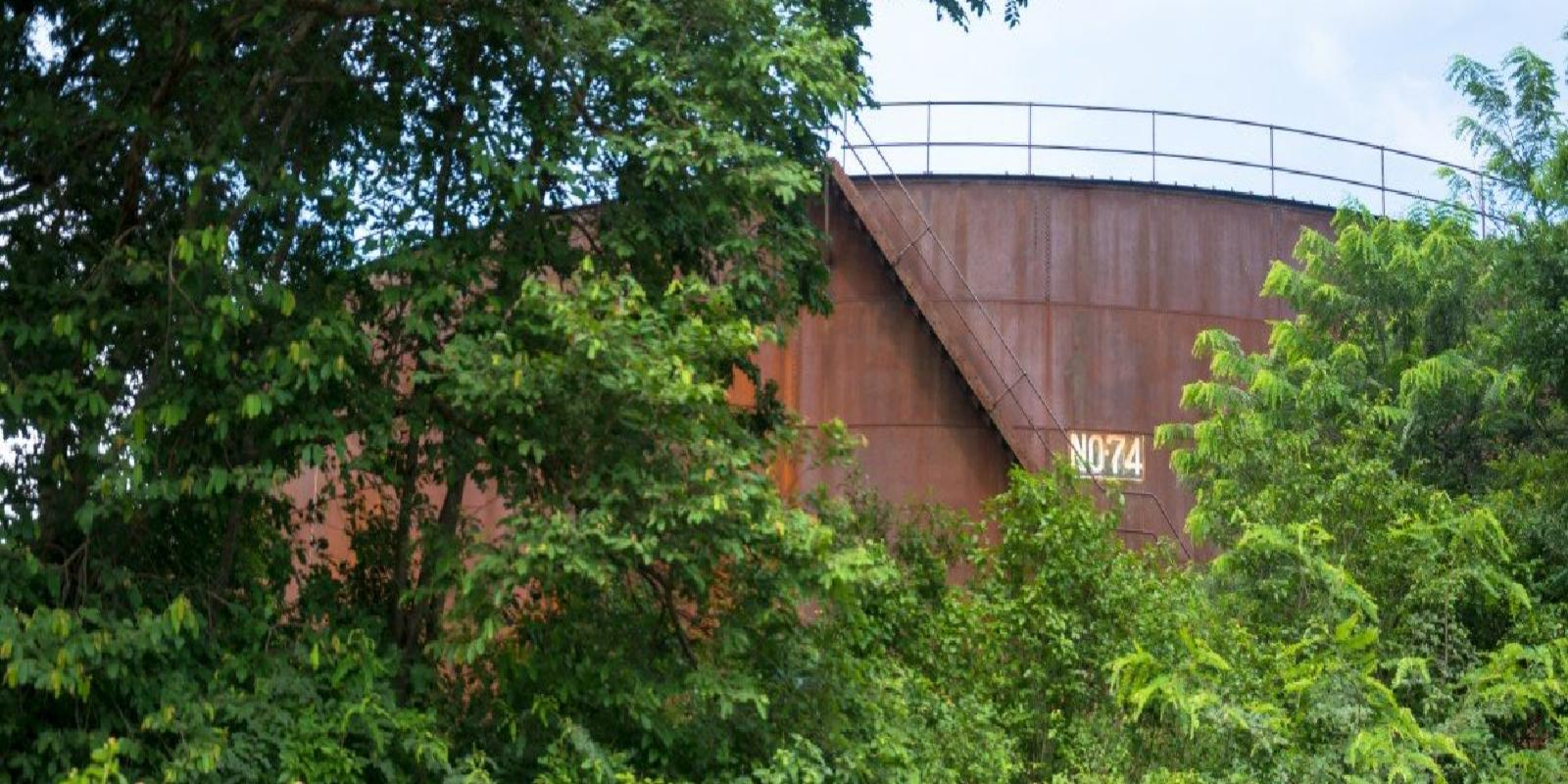
Indian Prime Minister Narendra Modi urged President Anura Kumara Dissanayake during a phone conversation this week to expedite the energy sector projects agreed upon between the two countries, particularly the work on the joint venture to develop the Trincomalee oil tank farm.
The prodding came when President Dissanayake called Mr Modi to request rescue supplies from India’s IOCL (Indian Oil-Lanka). The government had asked for Indian government intervention to release 38,000 metric tonnes of fuel that had been held up by IOCL due to disruptions in fuel supplies after the closure of the Strait of Hormuz.
Mr Modi told the Sri Lankan President that the project would be mutually beneficial and would ensure Sri Lanka’s energy security as well as increase the country’s storage capacity.
Under a 2023 joint venture Trinco Petroleum Terminal (Pvt) Limited agreement between Sri Lanka’s Indian Oil Corporation and the Ceylon Petroleum Corporation (CPC), 61 tanks in all are to be developed, with nine in the first phase. However, work on the project has been stalled for several years even though the agreement is in force.
“The renovation of each tank will cost around USD 1.2 million, with the entire project to cost around USD 75-100 million,” Foreign Affairs Minister Vijitha Herath said. The matter had been discussed during talks he held with India’s External Affairs Minister S. Jaishanker.
Mr Herath told the Sunday Times that a special cabinet paper would be submitted shortly to expedite the project and call for tenders to renovate the oil tanks.
“This project will ensure that domestic supply will be stable while India can use the facility for bunkering or for exporting products from here,” he said.
In the joint India-Lanka statement issued following President Dissanayake’s visit to India in December 2024, the two sides acknowledged ongoing cooperation in the development of Trincomalee Tank Farms, with both leaders deciding to support the development of Trincomalee as a regional energy and industrial hub.
Meanwhile, a shipment of 38,000 MT of petroleum products – 20,000 MT of diesel and 18000 MT of petrol – from India arrived in Colombo today.
“Lanka IOC had earlier secured fuel supplies for March from the Middle East and Singapore. However, suppliers with whom the contracts were placed expressed their inability to deliver the product and invoked force majeure in view of supply disruptions and vessel unavailability due to the ongoing conflict in the Middle East,” the Indian High Commission said in a statement yesterday.
“Due to the above disruptions, rescue supplies were requested from India from IOCL. The current shipment of 38,000 MT is part of these supplies. The Government of India, through Lanka IOC, has extended support to Sri Lanka for maintaining continuity of fuel supply,” the statement said.
Are strategic sites being given away to retain political power and control?
Trincomalee Oil Tank Farm: Is it only worth USD 500 Million?
by Zulfick Farzan 05-01-2022 | News 1st
COLOMBO (News 1st): Sri Lanka's Cabinet of Minister has approved the proposal for a new deal to jointly develop the Trincomalee oil tank farm with India.
The Cabinet of Ministers approved to allocate 24 oil tanks for the business activities of the Ceylon Petroleum Corporation and to allocate 14 tanks of the Lower Oil Tank Complex already in use by Lanka IOC for the company’s business activities.
The Cabinet also approved to implement a development project by a company named Trinco Petroleum Terminal Pvt. Ltd for the remaining 61 tanks, of which 51% will be owned by Ceylon Petroleum Corporation and 49% by Lanka IOC.
According to Sri Lanka's Energy Minister Udaya Gammanpila, this deal will bring Sri Lanka USD 500 Million.

Why is the Trincomalee Oil Tank Farm so important?
Trincomalee Harbour is a seaport in Trincomalee Bay or Koddiyar Bay, a large natural harbour situated on the northeastern coast of Sri Lanka.
The harbour, one of the largest natural harbours in the world, is overlooked by terraced highlands, and its entrance is guarded by two headlands, while it is well protected from the gale monsoon winds.
PORT DIMENSIONS
Water - 1630 hectares
Entrance channel - 500 meters
Land Area - 5261 hectares
The Trincomalee Harbour is bordered by Foul Point and Fort Fredrick, and importantly this harbur can accommodate multiple vessels at any given time.
During World War II, the Trincomalee Harbour was an important position and stronghold, and construction by the Oil Tank Farm by the British commenced in 1928, and it was completed in 1938.
Trincomalee harbour being the second deepest natural harbour in the world, the British who were in control of the island decided to make this their primary logistics station in the east, covering 850 acres.
It is reported that the Trincomalee Oil Tank Farm consisted of 103 tanks, but in fact, only 99 were constructed.
Some reports claim that the Tank Number 99 was never constructed, as number 99 was considered as Bad Luck, and after Tank Number 98, the builder constructed Tank Number 100.
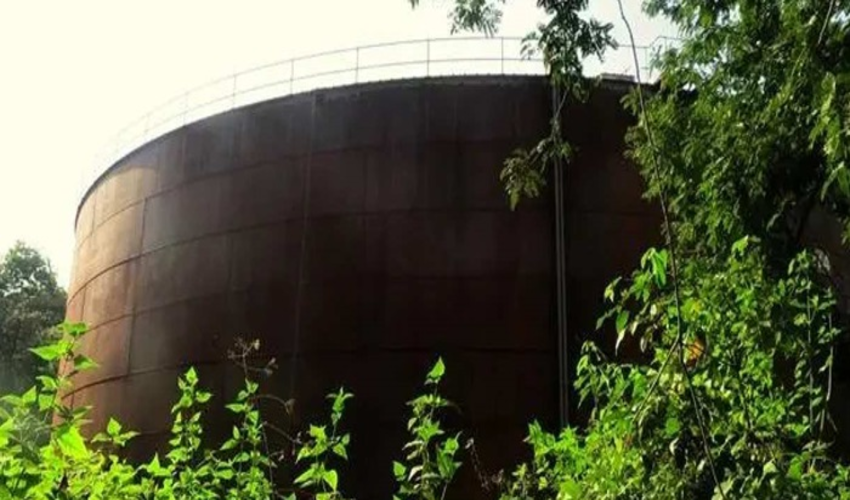
The Trinco Oil Tank Farm consists of two sections, and the 14 tanks located close to the harbour area known as the Lower Tank Farm and the rest is known as the Upper Tank Farm.
Each tank with a height of 45 feet, could hold 12,000 tonnes of fuel and has an astonishing total capacity of over 1.2 million tonnes.
What is even more astounding is that when it was constructed, the British also constructed an underground fuel pipe system spanning 56 kilometres.
In addition, the steel was placed together using the latest technology available at the time for the construction of the tanks.
The tanks near the harbour are enclosed by 1-foot thick concrete rings.
Some believe that the concrete was poured around the tanks in a bid to protect the tanks from a possible submarine attack, while it is commonly believed that this was to protect the tanks from erosion.
It is also reported that the Lanka IOC had removed the concrete enclosure from most of the tanks for their requirements.
When the British were ruling Sri Lanka Petrol, Diesel, Kerosene, Furnace Oil, and Jet Fuel was stored at the Trinco Oil Tank Farm.
Interestingly, Tank Farm contained a pipe system where fuel from one tank can be transferred to another tank in the event of an emergency.
The Oil Tank Farm also contains a jetty that can accommodate any vessel of any size in the World.
Because the Trinco Oil Tank Farm was a key installation of the British in Sri Lanka during World War II, a kamikaze attack was carried out during the Japanese air raid on Trincomalee at dawn on April 9, 1942.
Even after Sri Lanka obtained independence in 1948, the Colombo Port, Trincomalee Port and the Katunayake Airport were controlled by the Royal Air Force and the Royal Navy.
However, the Late Prime Minister Sirimavo Bandaranaike secured the Trinco Oil Tank Farm placing a 250,000 Sterling Pound name-sake compensation, for the Ceylon Petroleum Corporation.
In 1985, India approached the J. R. Jayawardena Government to venture into the Trincomalee Oil Tank Farm.
An attempt was made via the Indo - Lanka agreement signed in 1987, however, it did not materialize.
An annexure to the agreement noted that the revival and the operations of the Trinco Oil Tank Farm should be carried out as a joint venture between Sri Lanka and India.
However, India reportedly obtain the oil tanks via an agreement signed in 2003.
Yet, in 2022 it is made clear by the Sri Lankan Government that Indian Oil Subsidiary Lanka IOC would be given 49% stake in the joint development of the Trincomalee Oil Tank farm, with Ceylon Petroleum Corporation keeping 51%.
It must be noted that the Hambantota Port located close to all major shipping routes in the world, is leased for 99 years to China.
The West Container Terminal was given to India for development while China develop the Colombo Port City.
Questions have been raised as to what these projects have done for the common man of Sri Lanka, living in the rural village.
In such a backdrop, the Trincomalee Oil Tank Farm is estimated to be valued USD 500 Million.
Concerns have been raised as to whether Sri Lanka's strategic sites are being given away for the upliftment of the economy, or to retain political power and control.

ஒத்தவை:

சென்ற வாரம் இலங்கை-சண்டே ரைம்ஸ்