Budget 2027: Economic woes make
IMF tie-up indispensable
- Govt undecided on IMF decoupling; three options remain if it stays with the Fund; Ghana offers a model, economist says
- President reaffirms commitment to end drug menace; says there are only two types of people: those who support the drug trade and those who oppose it
- Transfer of magistrate who ordered contempt proceedings against police chief raises questions
By our ST Political Desk 08-11-2026
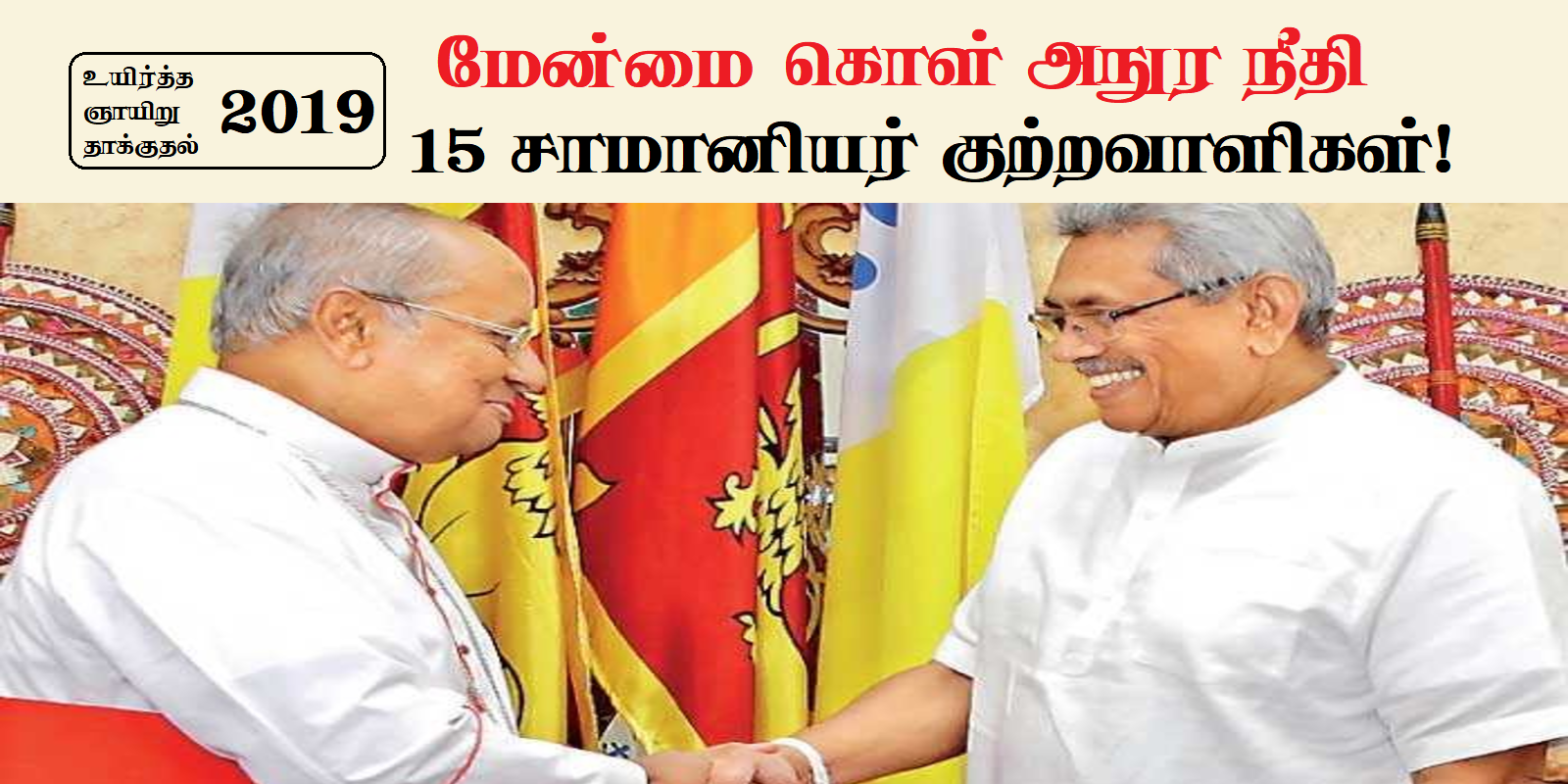
In 2009, soon after the defeat of the LTTE, then President Mahinda Rajapaksa used a phrase that became a hallmark of his administration thereafter. “Hereafter”, he said, ‘the country will only be divided into two groups, one consisting of those who love the country (the patriotic) and the other of those who do not do so (the unpatriotic). President Anura Kumara Dissanayake this week set out a new political narrative along similar lines, stating that the only divisions among citizens henceforth should be between those who support criminals and those who oppose them. “Let us set aside all our other divisions. Above those divisions, we must recognise only two sides: those who support the drugs trade, armed criminal gangs and the criminal State built around them, and those who oppose them. That is all. There should be no other division in the country,” he said.
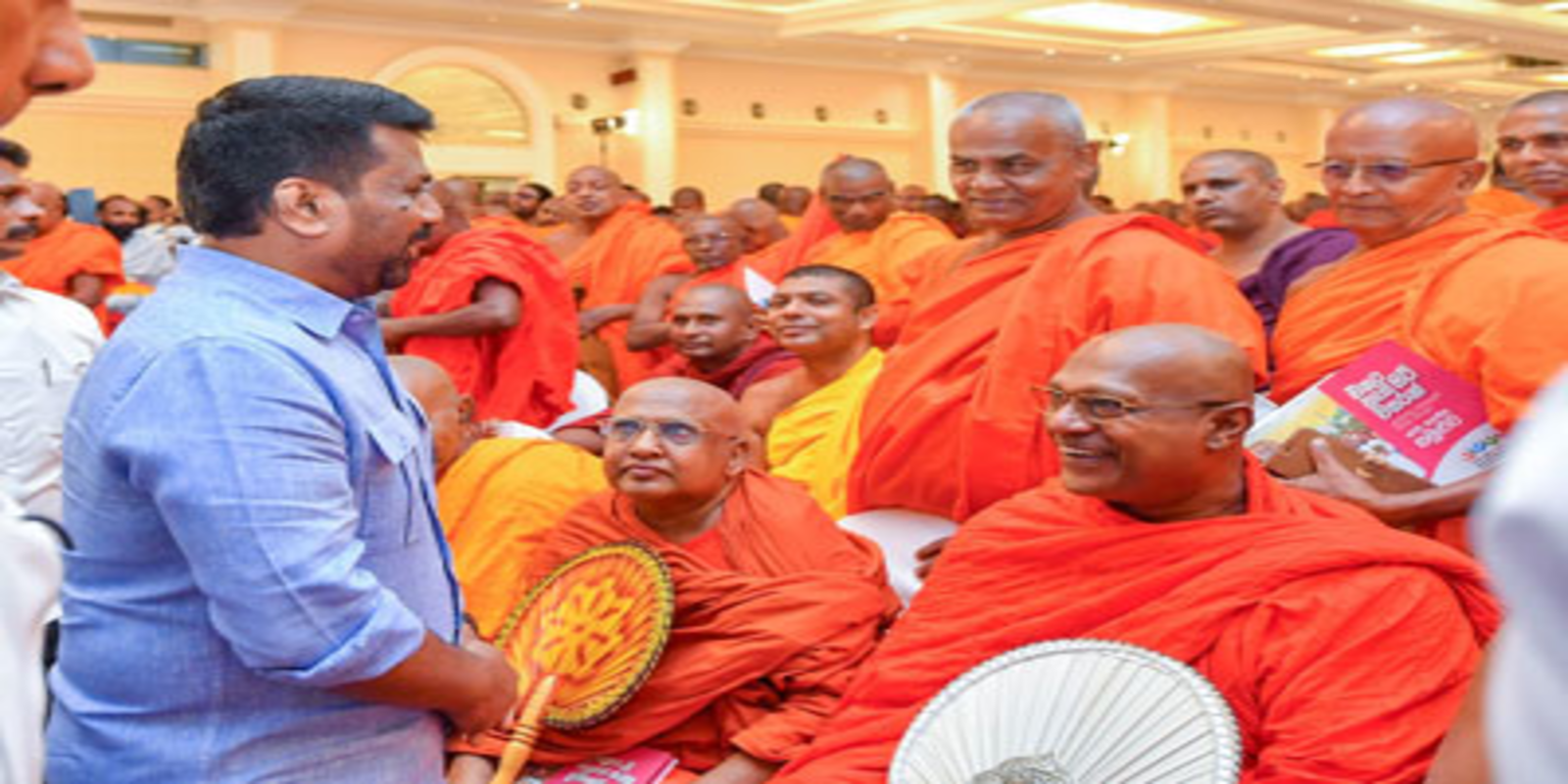
The President brought forth the new dividing line when he addressed members of the clergy, a gathering of around 2,000 Buddhist monks invited to mark the first anniversary of the Government’s ambitious Ratama Ekata national anti-drug programme. Directives were sent to all District Secretaries to gather around 100 Buddhist monks from each division, and transport arrangements were made to have them brought to ‘Temple Trees’, the prime minister’s official residence in Colombo, for the meeting on Thursday. Members of the clergy of other faiths too were present, but as the President said in his speech, it was one of the ‘largest gatherings of Buddhist monks in one place in Sri Lanka in recent times.’
The reasons that members of the clergy were made the focal point of the anti-drug programme’s anniversary were to make them a vital part of the programme given their interaction with the public on a regular basis and their ability to carry the government’s message to the grassroots. “Members of the clergy were specifically chosen to attend the gathering to appraise them of the progress of the programme so far and to seek their assistance to make it a success,” said a senior government source, dismissing opposition criticism of using state resources to transport and host a large number of members of the clergy at Temple Trees.
POC Bill and the two groups
The highlight of the President’s speech was his remarks regarding the Prevention of Organised Crime (POC) Bill, which has come under fire, both locally and internationally, for its draconian provisions. For the President, it was clear-cut as to why some were opposing the bill and whose concerns need to be taken into consideration. “There are two groups opposing this legislation. One is, it is quite clear, those who receive privileges and protection from organised criminals. We do not take that group into consideration. But there is another group – those who speak about democracy and the fundamental rights of the people of our country. We are ready to discuss the matter with that group,” he said.
The POC Bill has been challenged before the Supreme Court with 26 petitions filed on the grounds that certain provisions of the Bill violate fundamental rights guaranteed for citizens by the Constitution. A three-judge bench comprising Chief Justice Preethi Padman Surasena, Justice Achala Wengappuli, and Justice Sampath Abeykoon heard the petitions. Its determination will be sent to the Speaker shortly.
The President on Thursday said the government would consider amending the bill to remove contentious provisions. “We have repeatedly indicated to the Supreme Court that we are prepared to amend these provisions. What we need is strong legislation to combat organised crime. However, the law alone is not enough. Ultimately, once an organised criminal or drug trafficker is arrested, that person must be brought before the law and punished. As a Government, we do not follow a policy of imposing punishment outside the law. That has happened in the past,” he said.
Yesterday, while addressing a group of NPP trade unionists in Colombo, President Dissanayake said that the government would not rush the Protection of the State from Terrorism Act (PSTA) and the POC bill through Parliament and would engage with all groups who have raised concerns on the proposed legislation. “The people are with us, so why should we bring laws to repress them?” he asked.
United Nations human rights experts, international human rights organisations, local rights groups including media organisations and civil society groups have called for the withdrawal of the POC bill and for wider discussions before such a law is enacted.
In a formal 31-page communication issued on October 30, 2026, five United Nations human rights mandates were among those who urged the government not to proceed with the proposed Prevention of Organised Crimes Bill in its current form. The communication was made public this week.
The UN experts—dealing with torture, arbitrary detention, enforced disappearances, extrajudicial executions, and violence against women and girls—warned that the legislation violates international standards and could drastically increase the risk of severe human rights violations. One area of concern is that the new bill allows police custody for 72 hours before a magistrate review and up to one year of detention at police stations via ministerial authorisation, heightening the risk of torture and arbitrary detention. The President said the government is willing to reduce the 72-hour detention to 48 hours, but this is unlikely to change the draconian nature of the bill as a whole.
The other areas highlighted by the UN mandates were the admissibility of police confessions in court, restrictions on journalists reporting court proceedings, police access to phone records without court approval, surveillance and access to encrypted communications and fears that trade unions and protesters could fall within the law.
Frontline government leader and Foreign Affairs, Tourism and Foreign Employment Minister Vijitha Herath told the Sunday Times that when the Ratama Ekata programme was launched a year ago, the President had said new laws would be enacted to tackle the drug menace. “This law has to be tougher than existing laws, as we are dealing with criminals mainly engaged in drug trafficking and serious crimes. If the laws are not tough, they will be arrested and, within a few days, walking free on bail. A tough law will act as a deterrent while also enabling law enforcement authorities to secure conviction of such criminals,” he said.
One problem with enacting tougher laws to be enforced by the police, opposition MPs have pointed out, is the dismal track record of the police, particularly in handling suspects. The two custodial deaths in recent weeks will do little to build public confidence in empowering police with tougher laws at a time when there are serious questions about the conduct of many in the force.
Police vs judiciary
This week, Police Media Spokesperson, Assistant Superintendent of Police (ASP) F.U. Wootler disclosed that 208 police officers have been arrested in connection with various offences, including drug-related crimes, while nearly 1,500 others have been suspended from service over various misconduct in the past year.
Acknowledging that corrupt and unsuitable officers remained within the Police Department, he said measures were being taken to identify and remove them while ensuring that strict legal action was taken against the wrongdoers. By the police spokesman’s admission, it’s clear that concerns regarding giving more powers to the police are valid.
This week Gampaha Magistrate Bandula Gunaratne, who directed that contempt of court proceedings be initiated against the IGP over an alleged violation of court orders was transferred to the Judges’ Training Institute with immediate effect. The transfer was ordered by the Judicial Service Commission (JSC) Secretary Prasanna Alwis. The JSC is headed by the Chief Justice, with two Supreme Court judges appointed by the President as its members.
The case involved the police filing a case against a man for the possession of drugs, but upon inquiry it was found to be a baseless charge. The court dismissing the case ordered three police officers and the Police Department to pay the man Rs 200,000 in compensation and for the IGP to issue a nationwide circular instructing officers not to institute frivolous cases against innocent people. However, the court order had been disregarded with a Deputy Inspector General of Police in charge of the Western Province North issuing guidelines applicable only to the Gampaha, Kelaniya and Negombo police divisions. This led to the magistrate directing that contempt of court charges be initiated against the IGP.
The IGP wrote to the JSC against Magistrate Gunaratne, prompting the Commission to call for his observations. The transfer order was issued shortly after the magistrate submitted his observations to the commission. Government sources said the magistrate had overstepped his authority in this case, which may be correct, but if transferring out judicial officers should they issue rulings that displease the powers that be happen, questions are bound to be asked if the law is being applied equally to all, as is often parroted out by those in power, or there is selective application of the law so that those who are on the government side are spared.
Budget 2027 and the path ahead
Meanwhile, the coming week is shaping up to be yet another important one for President Anura Kumara Dissanayake, as in his capacity as Minister of Finance, Planning and Economic Development, he will present Budget 2027 in Parliament next Thursday (12). The Appropriation Bill 2027, gazetted in September and presented to the House for the first reading on October 7, estimates total government expenditure of over Rs 4992 billion (Rs 4.99 trillion) for next year.
Once the President delivers his budget speech on November 12, the second reading debate will be held for seven days, from November 13 to November 20. The vote on the Second Reading will be held at 6.00 p.m. on November 20.
Thereafter, the Committee Stage debate will be held for 19 days, from November 21 to December 14, with the vote on the Third Reading of the Budget scheduled for 6.00 p.m. on December 14.
During this period, the budget debate will be held every day, including Saturdays, except on public holidays and Sundays. Parliament is scheduled to meet at 9.30 a.m. on each of these days.
Budget 2027 will be one of the NPP Government’s most crucial budgets given that Sri Lanka’s current 48-month Extended Fund Facility (EFF) arrangement with the International Monetary Fund (IMF) is due to come to an end in March 2027. The government has so far been extremely vague about the course of action it intends to take once the current IMF programme ends. Judging by the statements made by various government ministers, it seems the Dissanayake government is still undecided over the nature and scope of its engagement with the IMF at the end of the current EFF arrangement.
Economic experts warn however, that the government will need to be more forthcoming when the President presents Budget 2027 next week. Sri Lanka’s recovery will face a real test after March 2027 and as such, the Budget should do more than say which way the government will go, an economic expert with extensive knowledge of Sri Lanka’s dealings with the IMF says.
He noted that the country’s recovery after it entered into an IMF-supported programme on March 20th, 2023 has been real, but has proved costly for households. Thanks to hard decisions taken from 2022, an economy that shrank by 7.8 per cent in 2022 grew by 5 per cent in 2025, with prices broadly stable. Government revenue rose to 16.7 per cent of national output, from 8.3 per cent in 2021, and a primary deficit of 5.7 per cent in 2021 turned into the largest primary surplus in the country’s history. In July 2026, the World Bank placed Sri Lanka back in the upper-middle-income group, which it had joined once before, in 2019, only to fall out a year later.
“The end of the programme is the test: whether, this time, the country can hold its course when no one outside is checking, or needs a lighter arrangement to keep it there,” said the source.
He singled out Ghana as an example for the options open to the government should it opt not to enter into another EFF facility. Ghana halted payments on most of its foreign debt in December 2022. The country ended its IMF loan in July 2026 and chose a Policy Coordination Instrument (PCI), under which the IMF keeps reviewing its policies but lends nothing. Its government judged that the task had moved from finding money to keeping discipline and investor confidence.
Sri Lanka meets that test from a stronger position than seemed possible in 2022. The previous administration took over in July 2022 with the country in default, usable reserves all but gone and inflation heading towards 70 per cent. It raised taxes, moved fuel and electricity to cost-recovery prices, negotiated the IMF programme and passed laws meant to outlast it, among them a new Central Bank Act, the Public Financial Management Act and the Public Debt Management Act. Within months, the fuel and gas queues were gone, and the long daily power cuts came to an end. To shield the poor and vulnerable from the cost of adjustment, it raised cash support and directed it to the households in greatest need through the new Aswesuma programme. It restructured domestic debt, reached agreement with official creditors and, in principle, with bondholders, and paid the political price.
The present government, elected in September 2024 on a promise to seek changes to the programme, chose instead to keep it in place. It completed the bondholder exchange, kept and increased support to low-income households under Aswesuma, and revenue and the primary surplus kept rising.
Two governments of very different outlooks have carried one programme, while households carried its cost. That shared ownership is the country’s strongest asset going into 2027.
Yet, the gains are not locked in. After Cyclone Ditwah and the West Asia conflict pushed up costs, inflation reached 8.3 per cent in October 2026. In the first nine months the trade deficit widened to US$ 7.9 billion from US$5.2 billion a year earlier, as the fuel import bill rose by about half. The Treasury expects this year’s primary surplus to fall to about 2 per cent of GDP, from 5.4 per cent in 2025, and the IMF expects public debt to stay at about 100 per cent of GDP.
This is not 2022. The danger now is less a sudden collapse than the slow loss of discipline that often follows the end of a programme.
The expert opined that a new Extended Fund Facility (EFF) or Stand-By Arrangement (SBA) is not the answer. Both are loans for a balance-of-payments gap that cannot be financed in any other way. In 2023, Sri Lanka had defaulted and had run out of reserves. With its debt restructured and reserves rebuilding, its problem after 2027 is credibility, not finance.
Neither fits the task. An SBA is for a short-term shock; an EFF for deep, multi-year adjustment, which Sri Lanka has just been through.
Repayments on the current loan begin to fall due from late 2027. A new loan would, in part, mean borrowing from the IMF to repay the IMF.
“An eighteenth programme would tell investors, just as Sri Lanka plans to return to markets, that it cannot yet stand on its own,” he opined.
If a severe shock opened a real financing gap, IMF lending would still be there, as a reserve rather than a habit.
For a country that does not need its money, the IMF offers three options, he explained.
The first is the Policy Coordination Instrument (PCI). Set up in 2017, the PCI lets a government show its commitment to reform without borrowing. The government sets its own targets for the budget, reserves and reforms, which the IMF’s Executive Board approves and reviews, usually every six months. A PCI normally runs for two to three years, can be renewed and costs Sri Lanka nothing. Its policies must meet the same standard as a lending programme, which is why creditors, rating agencies and investors take it seriously, and a country on track can move to IMF financing quickly if a shock hits. Ghana’s 36-month PCI shows what this looks like in practice.
Ghana asked for the PCI because it had no balance-of-payments need once its loan ended, and its main features read like a list of Sri Lanka’s own unfinished tasks:
A fiscal floor: a primary surplus of 1.5 per cent of GDP in 2026 and at least 0.5 per cent from 2027, backed by a debt target written into law. Sri Lanka has its own primary surplus target and fiscal rules under the Public Financial Management Act.
A limit on central bank lending to the government, which Sri Lanka’s new Central Bank Act already prohibits.
A gradual rebuilding of reserves, towards six months of imports by 2029, monitored through reserve floors. Sri Lanka’s reserves, at US$6.9 billion at end-September, also remain thin.
Regular electricity tariff adjustments and tighter oversight of state enterprises, the same cost-recovery and state enterprise reforms that Sri Lanka still has to secure.
Stronger revenue administration, anti-corruption measures and wider social protection, much as Sri Lanka needs for revenue, governance and Aswesuma.
The two cases are not identical. Ghana’s public debt is about half of output, against about 100 per cent in Sri Lanka, so Sri Lanka has less room for error and more reason for an anchor. But the logic is the same: no new money, a programme the country writes for itself, and outside checks that last only until the habit of discipline has formed.
The second option is Staff-Monitored Programme (SMP). This is an informal agreement with IMF staff, without the Board’s endorsement, usually lasting nine to eighteen months. It is used mostly to build a track record before a loan, and sends a much weaker signal.
The third option is known as Post-Financing Assessment (PFA). It is less a choice than the default. A country that owes the IMF more than twice its quota and has no programme is placed under this check of its capacity to repay. Sri Lanka will be above that level for several years, so a clean break would not end IMF scrutiny; it would only narrow it, without the public signal a PCI gives.
Walking away with nothing carries its own risk too. In late 2019, while the last programme was still running, large tax cuts were announced; the programme was left unfinished and the slide towards default began. For a country whose main task is to keep reforms in place through elections and changes of government, a PCI may suit better than either a new loan or a clean break. But it should be a bridge, not a new home. The IMF allows one PCI to follow another without limit, so Sri Lanka should decide at the outset that this would be a single, time-bound arrangement of two to three years, with a clear exit to ordinary annual IMF surveillance at the end.
A PCI, however, is only as good as the programme behind it: fiscal rules under the Public Financial Management Act, a Central Bank left free to keep prices stable and never again asked to print money for the budget, cost-recovery energy prices with targeted support for the poor, reform of loss-making state enterprises, stronger anti-corruption laws, and a real push on exports and renewable energy.
“Therefore, the government should set out a credible three-year plan for discipline, debt, prices, state enterprises, energy and exports after the programme ends, since a decision without a plan would carry little weight,” he emphasised. The aim is not to swap one IMF arrangement for another, but to reach the point where Sri Lanka never again needs the IMF to rescue it, the source noted. If a PCI is chosen, the Budget should also state at the outset when and how it will end, the expert stressed.

ஒத்தவை:
சென்ற வாரம் இலங்கை-சண்டே ரைம்ஸ்