May Day rhetoric adds to growing Govt. woes
- Taking to both mainstream and social media, the opposition slams the Govt., insisting AKD’s words amounted to executive interference in the judiciary
- NPP rejects allegations, saying the President was merely expressing an opinion based on court proceedings
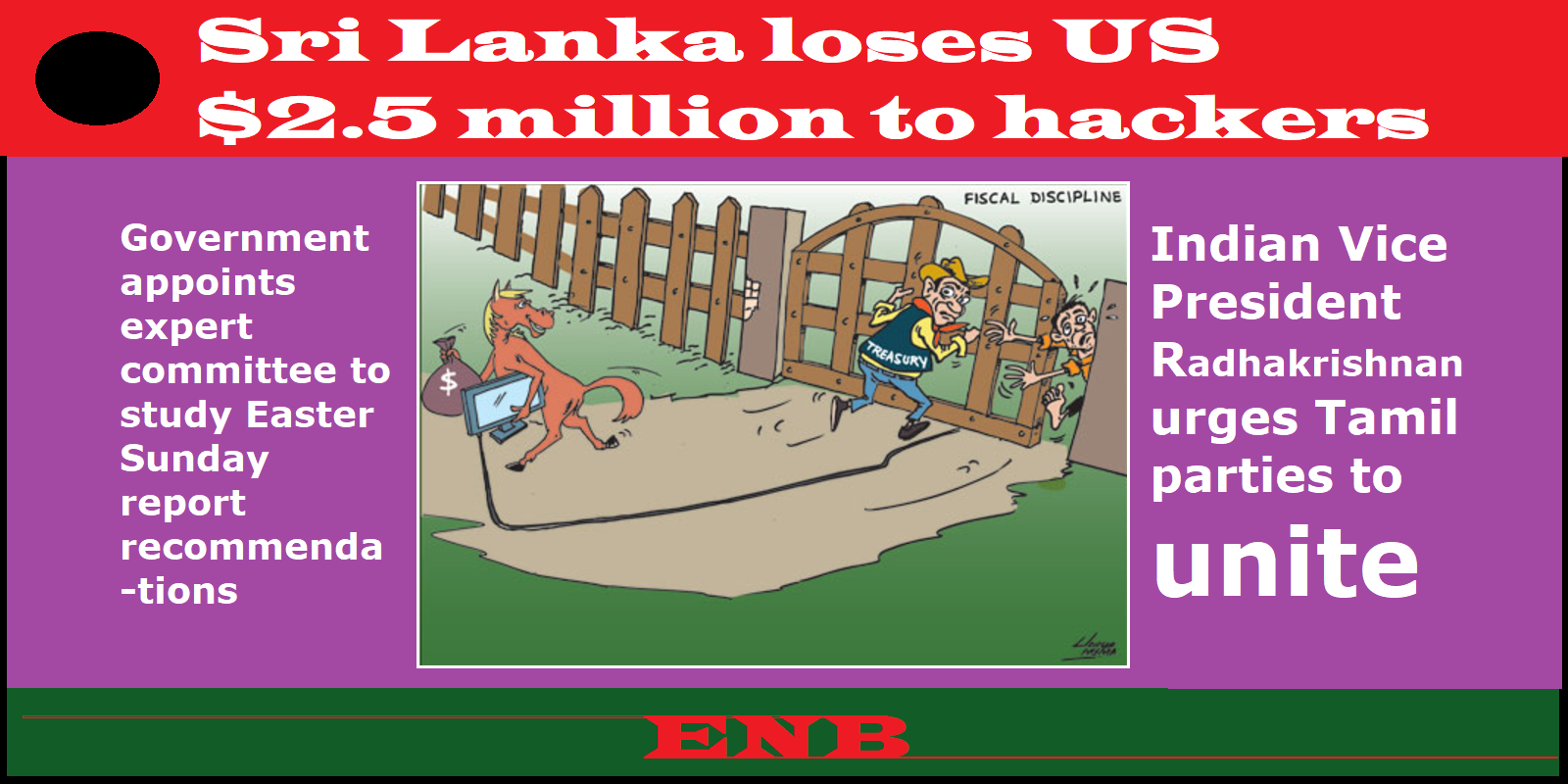
- Deputy Finance Minister briefs parliament the US$2.5 million Treasury theft, but opposition expresses displeasure over Govt. Blocking moves to summon Treasury Secretary
By our ST Political Desk 10-05-2026
Through the past 18 months it has been in government, there have already been a number of occasions where the National People’s Power (NPP) government has found itself in awkward situations due to ill-advised public comments made by its ministers or mps. In most such cases, senior government figures have had to step in to clarify such statements and attempt damage control. In some instances, President Anura Kumara Dissanayake himself has been forced to intervene and put controversies generated by such comments to bed.
Last December, for instance, President Dissanayake was forced to come before Parliament and stress that emergency regulations imposed in the aftermath of Cyclone Ditwah would not be used to suppress freedom of expression or criticism of the government. This was just days after Deputy Public Security Minister Sunil Watagala publicly ordered senior police officers to use emergency powers to act against individuals, including those living abroad, who, he claimed, were spreading false and malicious content on social media targeting the President and government ministers. It has also become almost customary for President Dissanayake—undoubtedly his party’s most gifted speaker—to come before Parliament and clarify matters in an attempt to assuage public anger over any controversy his government finds itself in. The situation has developed into a running joke, with opposition members mocking the government members on when they intend to roll out the President to do damage control over an issue.
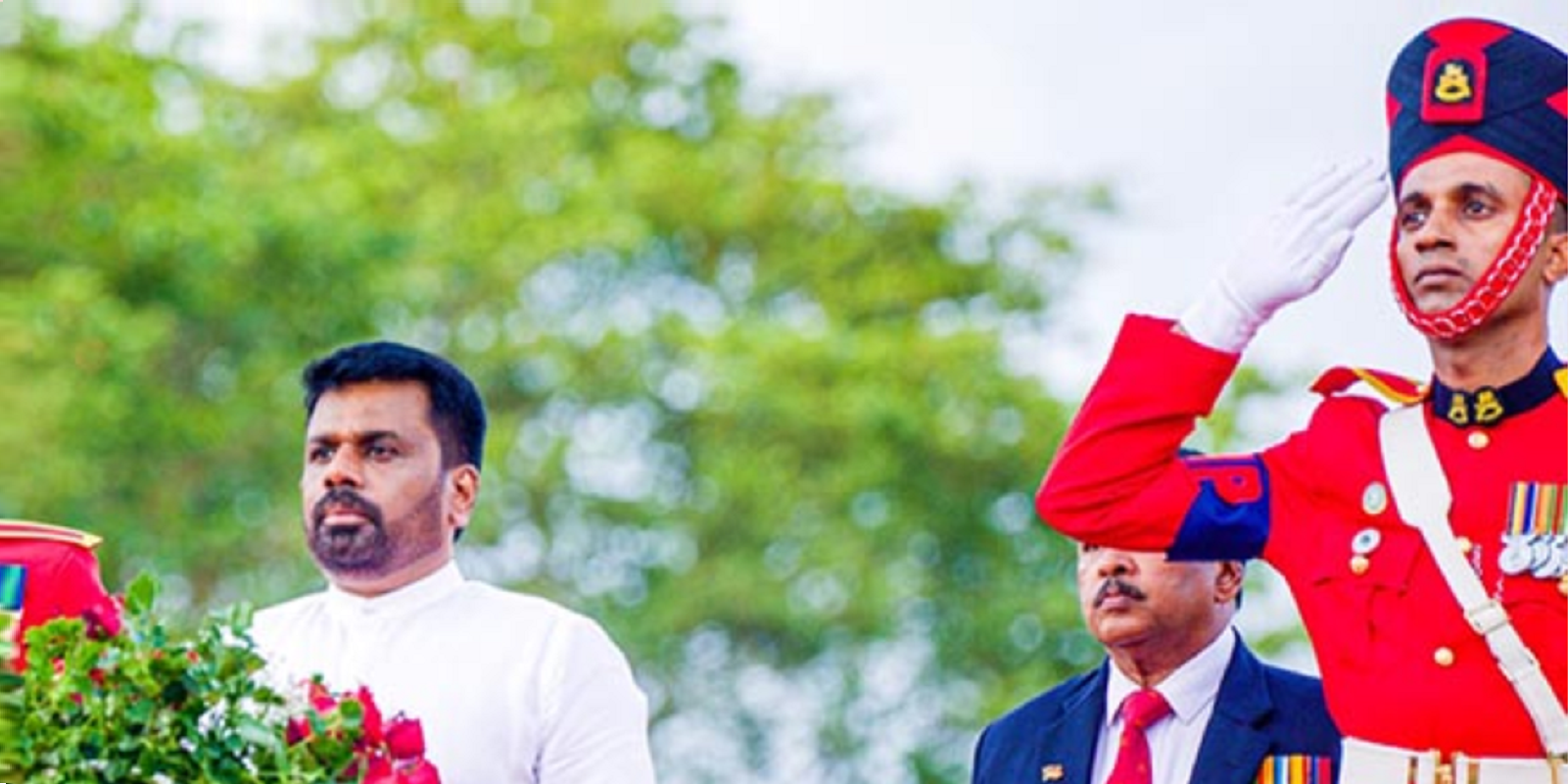
Given this situation, it is interesting to see how the government responds to increasing unease over public comments made by President Dissanayake during his party’s May Day rally in Maharagama regarding a pending judicial determination. The comments came as part of a lengthy speech at the rally, the second he had attended that day, with the first being in Nuwara Eliya. In his Maharagama speech, President Dissanayake stressed that it is the expectation of the people that those who stole public funds would be punished. He rattled off a list of locations where houses and property allegedly purchased with stolen public funds and which had no listed owner had either been seized or were in the process of being legally seized. He noted that the government was strengthening the Commission to Investigate Allegations of Bribery or Corruption (CIABOC). New courts had been established in official residences previously used by cabinet ministers to try corruption cases. In some instances, the courts where the former ministers are tried are the same official residences they used to reside in as ministers, he quipped.
It was the following part of his comment on judicial matters that have drawn the most serious concern. An English translation of the comments made in Sinhala is as follows: “The court cases are being heard expeditiously. I saw that during May alone, 15 major cases comprising 10 corruption cases and five criminal cases were pending before court. One case was heard on April 30, and the verdict is to be delivered on May 25. Be prepared to applaud the verdict when it comes. That is how things are being done.”
The President did not mention which court case he was referring to, but his statement telling party members to be prepared to applaud an upcoming judicial verdict obviously raised questions as to whether the President was already aware of the upcoming verdict and, if so, how. Or was he just guessing? Opposition parties have been raising concerns for months now regarding what they claim is undue interference by the government in judicial affairs. The President’s comments added further fuel to these claims. On Wednesday, May 6, the opposition handed over to the Speaker a letter signed by 35 mps calling for an urgent adjournment debate on a ‘Resolution Condemning Executive Interference with the Judiciary’. The resolution notes that the doctrine of separation of powers requires that the executive shall not interfere with, influence, or appear to influence the exercise of judicial power. Despite this, the letter adds that at the May Day rally, President Dissanayake publicly asserted that a court determination in a matter heard on April 30 would be delivered on May 25 and called upon the public to be prepared to “celebrate” the outcome.
“Such statements may reasonably be construed as implying prior knowledge of, or expectation regarding, the outcome of pending judicial proceedings, thereby giving rise to a perception of executive influence or interference,” the resolution notes. It points out that public confidence in the administration of justice depends not only on the actual independence of the judiciary but also on the appearance of independence free from external pressure. As such, it calls on Parliament to unequivocally condemn any statement or conduct by members of the Executive that undermines, interferes with, or appears to interfere with the independence of the judiciary.
Opposition politicians have also taken to both mainstream and social media to criticise President Dissanayake’s comments, insisting that they raise enormous concerns regarding executive interference in the judiciary. Several current and former opposition mps have opined that President Dissanayake should face contempt of court charges over the matter since he is commenting on a judgment that is yet to be delivered. Sri Lanka Podujana Peramuna (SLPP) General Secretary Sagara Kariyawasam is among them. Mr Kariyawasam says the President should definitely face contempt of court charges over his comments. “What the President is implying when he tells people to be prepared to celebrate a judgment that is yet to come is that either judges inform him what their verdict will be beforehand or they send their judgments to him prior to announcing them in court. Otherwise, how can the country’s President know how the judges will rule?” He queried. Stressing that this is a serious issue, Mr Kariyawasam emphasised that such statements amount to an interference in the judiciary and have no place in this country. Unfortunately for Mr Kariyawasam, the Constitution provides immunity to a sitting President.
He also warned that the government’s interference in judicial affairs may extend much further. Chief Justice Preethi Padman Surasena is due to retire by the end of November. Under the Constitution, the government can use its 2/3 parliamentary majority to grant him an extension. At present, Supreme Court justices can serve until they reach the age of 65. There is, however, already a resolution in Parliament to increase that age limit to 67 years, though it is yet to be included in Parliament’s order book.
It is not only politicians who are raising concerns over the President’s May Day comments. The Bar Association of Sri Lanka (BASL) also released a statement this week on the “Independence of the Judiciary”. The statement, issued under the signatures of BASL President Rajeev Amarasuriya and Secretary Nalin De Silva, stressed that an independent judiciary stands as the bedrock of a vibrant and enduring democracy, safeguarding the rule of law and ensuring that justice prevails without fear or favour.
“Judicial independence is not merely an institutional safeguard; it is fundamental to preserving the dignity of the individual, upholding the rule of law, and sustaining the moral authority of a democratic society,” the statement asserted.
“It is in this light that we express grave concern at the statement made by H.E. the President at the recent May Day Rally referring to a judicial decision due to be delivered on 25th May 2026, stating that the audience would be able to applaud the decision when delivered. The tenor of the statement is open to the suggestion that there is interference with the judicial process, and as such, the BASL apprehends that the statement may erode public confidence in the judiciary,” the BASL statement said.
While President Dissanayake is yet to clarify his comments, government sources insist his comments should not be taken as an interference in judicial matters. A senior government source said that as many as 14 high-profile court cases could be concluded before the end of this year. They include cases involving former ministers Wimal Weerawansa, Priyankara Jayaratne, Sarana Gunawardena, Rajitha Senaratne, Johnston Fernando and Lakshman Yapa Abeywardena. Meanwhile, over 60 corruption cases involving former senior government figures are in the process of being filed. He also opined that the President would have been merely expressing an opinion regarding the potential outcome of a case after following how it had gone and the evidence presented in court.
He also claimed the controversy generated by the comments and the resulting attacks on President Dissanayake and the government follows a pattern where various elements are trying hard to destabilise the government. “No other government has been obstructed in its work in the way ours has during such a short time. This is because we don’t make deals like previous governments. That is why there is this wholesale effort to bring us down, but these attempts will stop once the cases (against former government figures) are brought to an end.”
Besides the President’s May Day comments, there have also been other issues that have raised concerns among those in the opposition regarding judicial independence. The transfer of Colombo Fort Magistrate Isuru Neththikumara to the Judicial Service Commission (JSC) is one such matter. Judge Neththikumara had been hearing a number of high-profile cases, including the case filed against former President Ranil Wickremesinghe, who is accused of misusing over Rs.16.6 million in public funds during what authorities claim was a private visit to the UK in 2023 to attend the graduation ceremony at the University of Wolverhampton, where then First Lady Maithree Wickramasinghe was accorded an honorary professorship.
The government, though, dismissed these concerns, with the senior government source pointing out that it is the JSC, headed by the chief justice, which is responsible for transfers of judicial officers. There is no regulation that says a judge has to serve so many months or years at any given post. The JSC is well within its rights to effect transfers whenever it sees fit based on service requirements, the source stressed.
Death of Kapila Chandrasena
Meanwhile, close on the heels of the death of the assistant director of the Treasury’s External Resources Department came the discovery of the body of former srilankan Airlines Chief Executive Officer (CEO) Kapila Chandrasena. Mr Chandrasena’s body was found on Friday morning in the Kollupitiya house of former Sri Lankan cricketer Aravinda De Silva, who is related to Mr Chandrasena by marriage. The former srilankan CEO had only been released on bail on Tuesday after being arrested on March 12 by the CIABOC over the alleged acceptance of a USD 2 million bribe during the procurement of Airbus aircraft for the national carrier in 2013. His body was found a day after the Colombo Chief Magistrate issued a warrant for his arrest following a request by the CIABOC to revoke his bail. The CIABOC had alleged that Mr Chandrasena had breached the court’s trust by submitting unsuitable sureties.
Mr Chandrasena had earlier told CIABOC officials that Rs 60 million was paid to former President Mahinda Rajapaksa in three separate instalments of Rs 20 million each. However, he later filed a motion in the Colombo Chief Magistrate’s Court accusing CIABOC Director General Ranga Dissanayake of threatening him to implicate Mr Rajapaksa and other politicians over the Airbus scandal.
Interestingly, when Mr Chandrasena and his wife had been arrested under money laundering charges related to the Airbus deal in 2020, that particular case came before Ranga Dissanayake, who was at the time the Colombo Fort Magistrate.
Treasury heist
While the controversy over President Dissanayake’s May Day rally comments persists, the major scandal involving the disappearance of USD 2.5 million from the Treasury also continues to haunt the government. This week, the entire Parliament was briefed by the government for the first time regarding the alleged cyber-heist at the Treasury. Deputy Finance and Planning Minister Anil Jayantha Fernando briefed the House in response to a series of questions raised by Opposition Leader Sajith Premadasa under Standing Orders.
Giving a timeline of the events, Deputy Minister Fernando stated that a bilateral debt restructuring agreement with Export Finance Australia (EFA) was signed on October 27 last year. The official who oversaw this particular agreement from the Treasury’s side was then Assistant Director of its External Resources Department (ERD), Ranga Rajapaksha, who was found dead last week at his residence in what a post-mortem inquiry later found to be suicide. Mr Rajapaksha had forwarded the agreement to EFA, noting that the Treasury was prepared to make the payments under the restructured agreement, to which he had received a reply with a number of invoices. The ERD had then forwarded these invoices to the Treasury’s Public Debt Management Office (PDMO), from where they were forwarded to the Central Bank (CBSL). The CBSL had thereafter deposited the payments according to the instructions given in the invoices. The payments to the third party, amounting to USD 2.5 million, were credited in November 2025 and January 2026 through 10 payment vouchers.
Meanwhile, loan repayments to India’s Exim Bank were overseen by a different official at the ERD. She had also received invoices in the same manner as what happened with the Australian repayments. She too had followed the procedure and forwarded them to the PDMO, the CBSL and, ultimately, to the Payments Division. However, there was a difference in this transaction compared to the Australian one in that several persons had become involved in the matter, with multiple emails being exchanged, as well as a telephone call made by the third party. The ERD official overseeing the payments had also noticed that one of the emails purportedly sent by Exim Bank had misspelt the word ‘bank’ as ‘benk’. It was this mistake that ultimately raised suspicion. The suspicions had led ERD officials to get in touch by phone with officials from Exim Bank, which led to the truth being revealed. The scheduled payments had then been immediately halted. The ERD also took steps to notify the Sri Lanka Computer Emergency Readiness Team (SL-CERT).
The incident led officials to go over previous loan repayments from other agreements as part of their internal review. It was during this probe that officials, through the Australian High Commission in Colombo, uncovered that repayments totalling USD 2.5 million made under the bilateral loan agreement with Australia had not been received. That discovery was made on March 22, at which point complaints were made to both SL-CERT and the CID, and immediate enquiries were undertaken. Meanwhile, a five-member technical investigation committee co-chaired by two deputy secretaries of the Treasury was appointed on March 24 to conduct an internal inquiry into the incident. Initial investigations had established that five officials had been directly involved in email communications with the alleged third party posing as someone from Export Finance Australia. However, one of the officials involved in the communications had been on maternity leave at the time of the incident, and her email communications had been compromised and manipulated. According to information uncovered so far, she personally had not used that email address during the time she was on leave. Based on what was uncovered during the internal inquiry, a decision was taken on April 10 to transfer the four ERD officials directly involved in the email communications on the incident to other departments to make it easier to facilitate the investigation. Based on more information that later came to light, a decision was taken on April 17 to interdict the Treasury officials at the centre of the incident.
In addition to the internal inquiry, investigations are also ongoing regarding the technical aspects of the case since this is a deeply technical matter, Deputy Minister Fernando told the House. “We can’t immediately come to a conclusion whether any officials had been knowingly involved in this fraudulent transaction, whether it was a case of hackers compromising the system or whether they received help from a third party. This could have happened in a multitude of ways,” he said. As such, it is the government’s responsibility to further investigate this technical aspect, which is why another probe is ongoing with the involvement of experts, including from the University of Colombo. Dr Fernando said the government will present the findings to the House as well once that inquiry is complete.
Opposition mps are still demanding that Treasury Secretary and former NPP Deputy Finance Minister Harshana Suriyapperuma answer questions over the incident. SJB Kurunegala District Parliamentarian Dayasiri Jayasekara, this week, wrote to the Secretary-General of the Inter-Parliamentary Union (IPU) complaining that Speaker Jagath Wickramaratne refused him permission to raise a privilege issue regarding alleged constitutional and parliamentary violations by Treasury Secretary Suriyapperuma.
In his letter to the IPU, Mr Jayasekara claims that matters in the privilege issue include the Treasury Secretary’s alleged failure to report to Parliament concerning the unlawful transfer of USD 2.5 million from the Treasury, alleged non-compliance with parliamentary committee procedures under the Standing Orders of Parliament, and questions relating to constitutional eligibility concerning his alleged dual citizenship and qualification to sit and vote in Parliament. The SJB MP had wanted the Treasury Secretary summoned before Parliament’s Committee on Ethics and Privileges to answer these charges.
“The right of parliamentarians to raise questions of privilege and matters relating to constitutional governance is an essential component of parliamentary democracy and legislative independence. The refusal to permit even the presentation or preliminary consideration of such a matter raises serious concerns regarding parliamentary accountability mechanisms in Sri Lanka,” Mr Jayasekara states in his letter, urging the IPU to seek clarification from the relevant parliamentary authorities in Sri Lanka regarding the grounds upon which the privilege motion was disallowed.
Tamil Nadu assembly elections
Not too far from domestic affairs, the recently concluded Indian state elections, which caused some major political upsets in the states of West Bengal, Tamil Nadu and Kerala, are being keenly followed by Sri Lanka.
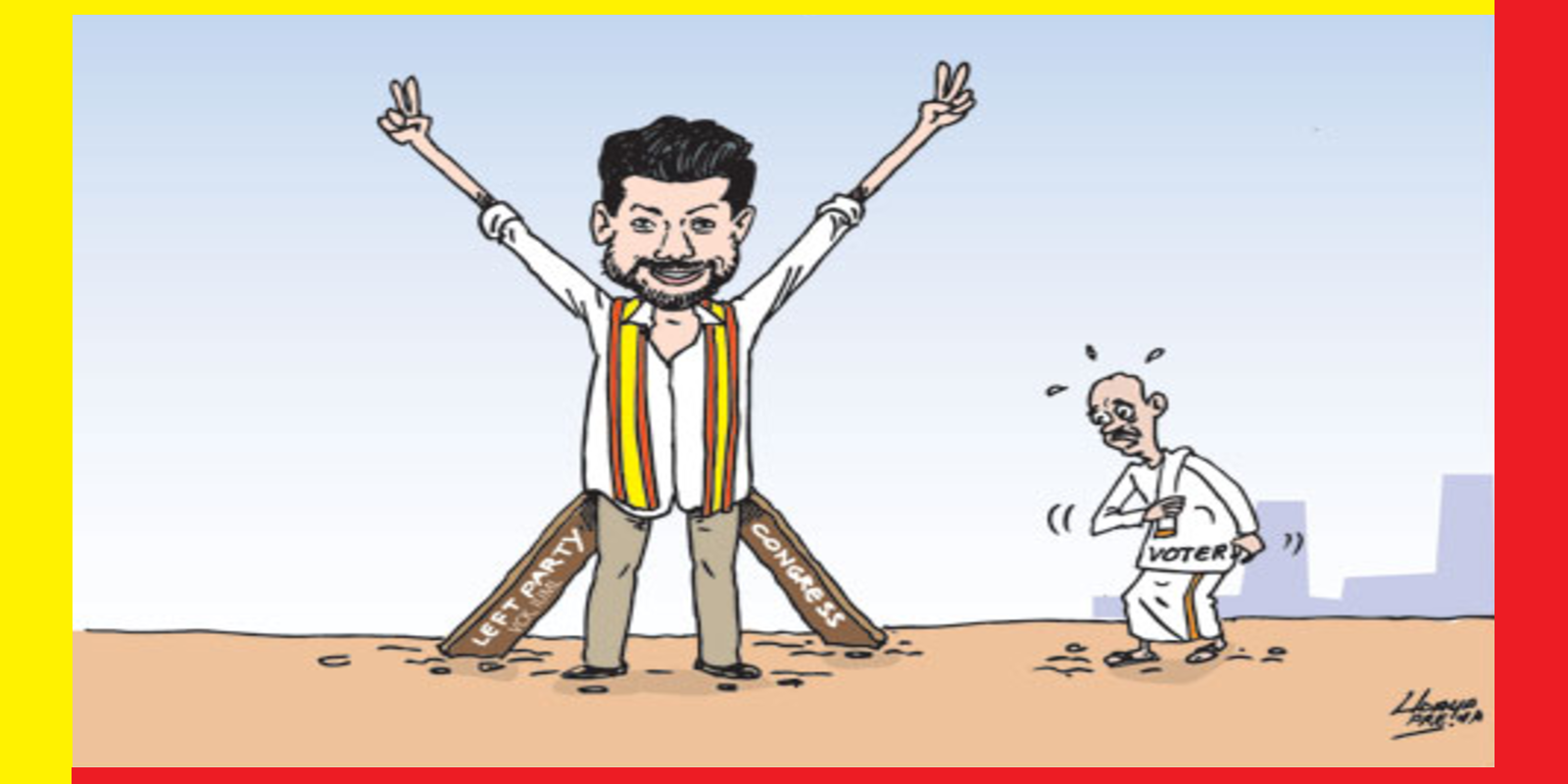
The government is standing by with congratulatory messages and flower bouquets to be handed over to Tamilaga Vettri Kazhagam (TVK) leader, movie star-turned-politician Joseph Vijay, who is tipped to be the state’s new chief minister. A senior government source said they are waiting till he takes the oaths of office before sending the greetings.
This is in contrast to many from Tamil political parties in Sri Lanka as well as others who have already shot off their best wishes to Vijay over his remarkable performance at the polls, sidelining the Dravida Munnetra Kazhagam (DMK) of outgoing Chief Minister M.K. Stalin and the All-India Anna Dravida Munnetra Kazhagam (AIADMK).The two parties have dominated politics in the state for decades.
Ilankai Tamil Arasu Kachchi (ITAK) General Secretary M. A. Sumanthiran was among those who congratulated Vijay soon after it emerged that his party would be the single largest party in the Tamil Nadu state assembly. ‘We earnestly hope that the support of the people and government of Tamil Nadu for the Tamil people of Sri Lanka will continue unabated,’ he wrote on X. Batticaloa District MP Shanakiyan Rasamanickam, speaking in Parliament, also congratulated Vijay and said the ITAK looks forward to working closely with the government and the people of Tamil Nadu.
Vijay, who has a major fan following among lovers of South Indian cinema in Sri Lanka, was also congratulated by SLPP MP Namal Rajapaksa on ‘a resounding victory!’ He wrote on X: “The real work begins now, and I wish you and your team the strength and determination to overcome the challenges ahead and deliver meaningful benefits to the people.”
The government has delayed the congratulatory messages given the confusion in Tamil Nadu over who would be the new chief minister. This was because Vijay’s party lacks a majority on its own and requires the support of other parties to form the government. However, with the support of the Congress party and other parties, the TVK had by yesterday obtained the required 118 to form the government.
“In the aftermath of Cyclone Ditwah, the then Tamil Nadu Chief Minister M. K. Stalin took the initiative to send a massive consignment of humanitarian assistance to Sri Lanka which included around 950 tonnes of essential relief materials. We want to maintain the same level of cordial relations with Tamil Nadu even if there is a change at the top of the state administration,” a senior government source said.
He also said the government does not expect any changes in the policies of the government of Prime Minister Narendra Modi on Sri Lanka. “Indo-Lanka relations are on solid footing, and we expect that to continue whatever changes happen in the domestic political landscape,” he said, adding that the government will engage positively with India at all levels.
Fifty-one-year-old Vijay voiced support for the Tamils of Sri Lanka during the Tamil Nadu election campaign and called for additional protection for Indian fishermen while also calling on the Indian government to take back Kachchativu, saying the islet is essential for protecting local fishermen’s rights.
However, talk of Indians staking claim to Kachchativu was dismissed by government officials here, saying such comments are made in the heat of an election campaign and will not change the ownership of the islet, which is in Sri Lanka’s hands.
What could happen once Vijay is appointed as CM would be more pressure on the central government to persuade the Sri Lankan side for the full implementation of the Thirteenth Amendment to the Constitution and the holding of the long-delayed Provincial Councils in Sri Lanka. Anything more than this is unlikely given that the new chief minister is likely to be kept busy surviving in the world of cutthroat politics of Tamil Nadu and that his government will always be on edge having to depend on other smaller parties to stay in office.
Two high-profile visits
For the Ministry of Foreign Affairs, it was a busy week with two high-profile visits by two heads of state—Maldivian President Mohamed Muizzu, followed by the visit of Viet Nam’s President Tô Lâm. Both were reciprocal visits, with President Anura Kumara Dissanayake having visited the Maldives in July 2025 and Viet Nam in May last year. The two visits concluded successfully with several mous signed with both countries and promises of expansion of cooperation in key areas, including defence and trade.
Sri Lanka and the Maldives signed seven mous covering education, higher education, health, defence, sports, tourism, and archiving during President Muizzu’s two-day visit. These agreements are expected to further enhance collaboration and promote mutual development in the respective areas of cooperation.
A Maldives-Sri Lanka Business Forum organised by the Ministry of Economic Development, Transport & Trade of the Republic of Maldives and the High Commission of the Maldives in Sri Lanka was held with the participation of President Muizzu, bringing together over 400 business leaders from both countries, alongside policymakers. The forum provided a valuable platform to explore new opportunities for trade, investment, and economic partnership, reinforcing the growing commercial engagement between Sri Lanka and the Maldives.
President Lam’s visit from May 7-8 is the most high-level visit to the country by a Vietnamese leader since the two countries established diplomatic relations in 1970. Since the Minister of Foreign Affairs of the Provisional Revolutionary Government of the Republic of South Vietnam Nguyen Thi Binh in 1976 and Prime Minister Pham Van Dong in 1978, the visit by President Lam, who is also the General Secretary of the Communist Party of Viet Nam is an important milestone in relations between the two countries.
One important development during the visit was the decision to upgrade ties from a bilateral relationship to a comprehensive partnership, with which both countries committed to further consolidating and strengthening their friendly cooperation, establishing high-level political trust, and expanding the scale and level of cooperation toward a comprehensive and substantive direction across all fields.
A notable area of cooperation will be defence cooperation, with the two sides agreeing to effectively implement the MOU on defence cooperation signed in 2011 and encouraging more substantive cooperation activities, particularly in United Nations peacekeeping training. Both parties also agreed to cooperate in areas such as repair services and procurement of defence equipment and expedite negotiations toward the signing of cooperation agreements in the field of defence to establish a framework for collaboration while enhancing cooperation in information exchange and defence technology transfer, according to a joint statement released by the MFA at the conclusion of President Lam’s visit.
The two sides also agreed to assess and renew the Agreement on Cooperation in Combating and Preventing Crimes signed in 2009; coordinate in the fight against transnational crime, cybercrime, terrorism, and illegal immigration; and expand cooperation in maritime security, police, and cybersecurity.
During the Vietnam–Sri Lanka Trade–Investment–Tourism Cooperation Forum held in Colombo, Vietnam Airlines Chairman Đặng Ngọc Hòa, who led a 200-member delegation to Sri Lanka to coincide with President Lam’s visit, also officially announced the launch of Vietnam Airlines’ new direct service between Ho Chi Minh City and Colombo.
During the visit, the two countries signed a number of cooperation agreements covering security, science and technology, religion, culture, information and communication.

ஒத்தவை:
சென்ற வாரம் இலங்கை-சண்டே ரைம்ஸ்