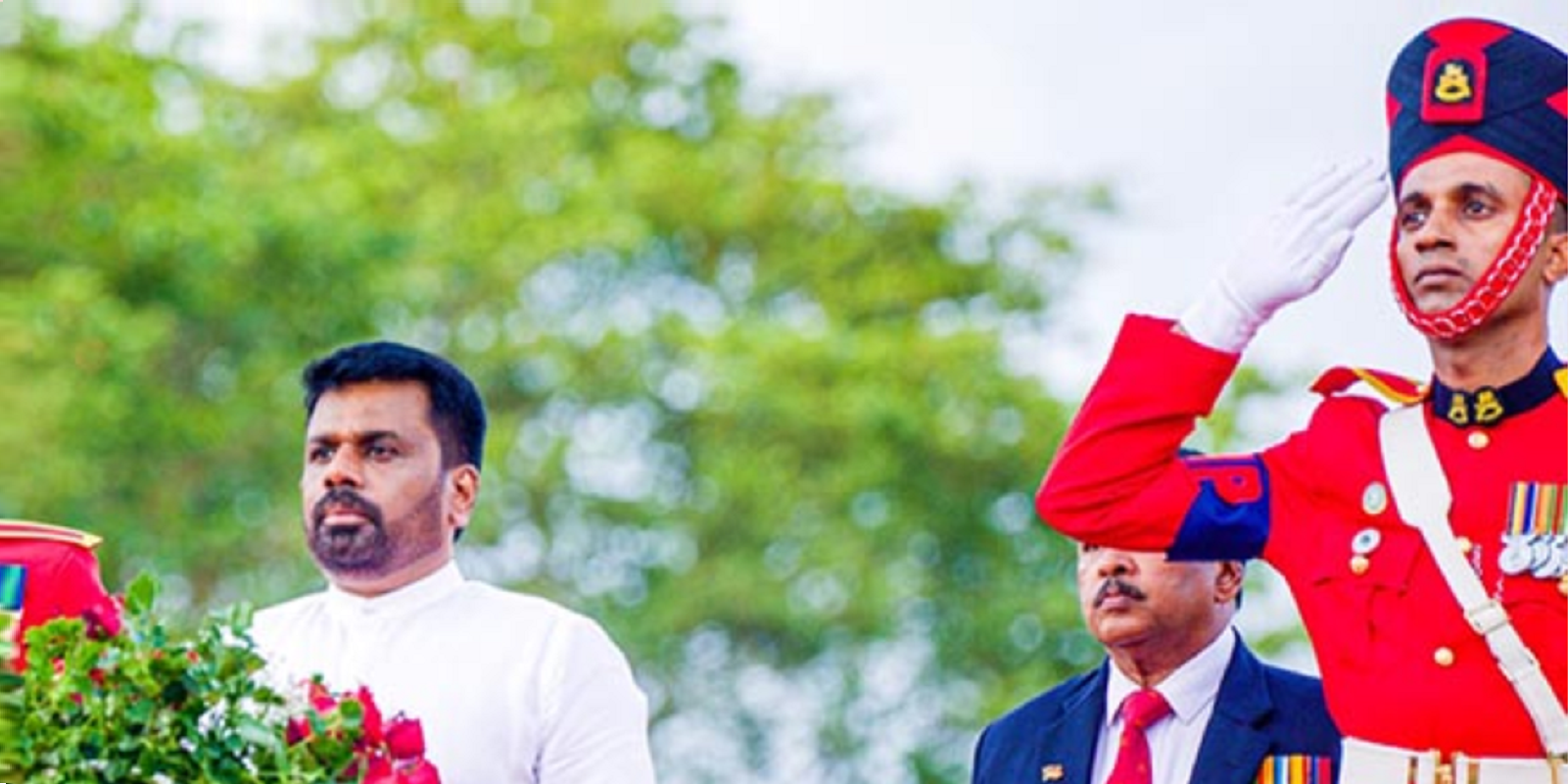
Meaningful changes cannot be made without taking risk, says President; vows to take risks on 22A
- Talks between President and BASL begin on a confrontational note, end in stalemate; gap between positions widens
- President explains reasons for 22nd Amendment, only to draw more criticism from legal and human rights activists
- Concerns grow over amendments in pipeline to PTA, NGO Act, and Online Safety Act
- Campaign promises to abolish executive presidency and enact progressive legislation remain nonstarters
By our ST Political Desk 16-08-26
Though it did not initially show on his face, President Anura Kumara Dissanayake was not happy when he sat down for a widely anticipated meeting with the Bar Association of Sri Lanka (BASL) at the Presidential Secretariat on Wednesday. He was irked after being blindsided earlier that morning by a BASL statement regarding the topic that was to be discussed with him later that day, namely the 22nd Amendment to the Constitution seeking to extend the retirement age of superior court judges. The amendment seeks to increase the retirement age of Court of Appeal judges from 63 to 65, and Supreme Court judges from 65 to 67. The lengthy statement had reiterated the BASL’s “vehement objection” to the proposed amendment, insisting that it “manifestly undermines, erodes and threatens the independence of the judiciary”.
The BASL’s 20-member delegation was led by its president, Rajeev Amarasuriya. The delegation was originally due to comprise more members, but the number had to be reduced after the Justice Ministry informed the BASL that seating in the room at the Presidential Secretariat was limited. Mr Amarasuriya, Deputy BASL President Rienzie Arsakularatne, PC; Senior BASL Member Prof. Savithri Goonerasekera; and Former BASL Presidents Geoffrey Alagaratnam, PC, and Upul Jayasuriya, PC, expressed their views during the discussion, which lasted for nearly 90 minutes.
President Dissanayake allowed all five BASL speakers to express their views before giving his response. A video of the President’s remarks, lasting nearly 24 minutes, was later released to the media by the President’s Media Division (PMD), along with a full transcript of his comments. In his response, the President made plain his unhappiness over the association’s decision to release a statement ahead of its discussion with him. He noted that while the BASL had come to the discussion with a particular position, he had made “a considerable effort” to come there with an open mind. “I believe that, in our country, everyone is free to express their views on any matter following a discussion. However, when a discussion has already been scheduled, I do not believe it is appropriate to issue a statement in the morning setting out the content, substance and points to be presented at the discussion later in the day. My view is that doing so can constrain the scope for an open discussion. I make this observation while fully recognising and respecting your right to express your views and to issue such statements,” the President asserted, scoring a point in his opening remarks.
While it was not the first time that President Dissanayake had publicly referred to the government’s plans to extend the retirement age of superior court judges, it was the first time that he expanded on the ‘bigger picture’ regarding the government’s extensive plans to clear more than 1.1 million cases still pending in court and to ensure that issues faced by both the judicial and wider law enforcement mechanisms are resolved. If at all, it deftly covered any ‘bigger picture’ the government had of a political nature.
The President laid out a host of steps his government has already taken or intends to take to resolve wider issues affecting various institutions involved in law enforcement and the administration of justice. Regarding the Commission to Investigate Allegations of Bribery or Corruption (CIABOC), he spoke of plans to establish 24 CIABOC branch offices across the country. Approval has already been received to recruit 373 officers for this purpose. The matter has also been discussed with the Department of Management Services, and approval has been obtained to place these investigators on salary scales higher than those applicable to the general public service, the President revealed. Action is also being taken to strengthen the police by recruiting 10,000 new officers and providing them with new equipment and technology. The Attorney General’s Department will also be strengthened with 50 additional officers, while the promotion process and allowances of legal officers within the department will be revised.
Other measures highlighted by the President include steps to increase the number of Court of Appeal judges to 24 (excluding the President of the Court of Appeal) through the 22nd Amendment to the Constitution; establishing 11 new High Courts, increasing the number of High Court judges from 110 to 120; and recruiting new magistrates through an amendment to the Judicature Act.
He also dismissed claims that the proposed amendment to extend the retirement age of superior court judges was being introduced in haste to benefit specific individuals. “Whenever such a change is made, there will inevitably be judges who have already retired and others who are approaching retirement age. This is a situation that exists within any judicial system at any given time. Therefore, I do not interpret this as an undue privilege or as undue influence being exercised in favour of a particular group.”
The President at one point in his statement, referred to an alleged risk spoken of by former BASL President Upul Jayasuriya, that a previous President had to leave office due to a constitutional amendment and that the same fate may befall him. “I am prepared to accept that risk. I did not come into office with the intention of remaining here indefinitely. I am also someone who is prepared to take risks in order to bring about change. I do not believe that meaningful change can take place without taking risks. Change always requires a willingness to accept a degree of risk,” said the President.
Mr Jayasuriya later clarified what he had exactly stated, as a video recording of him expressing his views was not released to the media. What he referred to was earlier instances where the executive and the legislature interfered with the judiciary, specifically the impeachment of former Chief Justice Shirani Bandaranayake. “What I said was that though that motion (to expel the then chief justice) was passed by Parliament, it was not approved by the people. I urged the President to introduce a constitutional amendment that can be approved by the people.” The President only got around to answering the points raised by BASL’s speakers after they had all spoken, and as such, Mr Jayasuriya pointed out the President had used his comments about ‘taking risks” to justify his viewpoint.
A statement issued by the BASL following the meeting stated that its delegation “emphasised that the proposed amendment would have a serious impact on the independence of the judiciary” and that, in the circumstances, it should not be proceeded with. The statement said that the BASL had further pointed out that there are several other urgent matters requiring the attention of the government which must be given priority. The BASL delegation had also proposed that the government conduct a proper and meaningful consultative process involving all stakeholders before proceeding further with the constitutional amendment. Another suggestion made was for the matter to be referred to a parliamentary select committee as part of this consultative process.
The BASL later stated that it has thus far only received the recording of the initial submission made by its President Rajeev Amarasuriya during the discussion. A fair portion of this recording received is also not clear or garbled, it said. Nevertheless, the association yesterday released the first part of the submissions made by Mr Amarasuriya. In those comments, the BASL President had stressed that the entire community of lawyers and judges opposed the proposed amendment. If the President was claiming only a portion of lawyers were opposed to the amendment and not the entire community, then it was a wrong opinion, Mr Amarasuriya had said.
He had also pointed out that though the government was speaking of a backlog of 1.1 million pending cases, more than 800, 000 of those cases were at the Magistrate’s Court level. Even here, the issue was not primarily with the judges, but deficiencies in other areas, most notably, the delay in obtaining reports from the Government Analyst’s Department. Mr Amarasuriya had reiterated that the BASL did not believe extending the retirement age of judges was the most urgent step that should be taken to resolve issues within the judicial system.
“They came in like a pack of hyenas and left like a group of rabbits,” was how one senior government source described the BASL delegation’s interactions with the President, claiming that the association was largely subdued after the President made clear his irritation with their statement earlier that morning. He also claimed that the BASL seems content to “drag any consultative process on the amendment until next year”. The implication is that current Chief Justice Preethi Padman Surasena is set to retire in December and that those who are opposed to the amendment are fine with it as long as it does not come into effect until the retirement of the present Chief Justice. The BASL, however, has repeatedly claimed its opposition to the amendment is not centred on any particular individual.
If anything, what happened at the meeting was essentially both sides laying out their positions, showing just how far apart they seem to be. The President’s comments make it clear that he believes he and his government are in the right when it comes to raising the retirement age of superior court judges and that this constitutional amendment is necessary as part of wider reforms being effected across the judicial and law enforcement sectors. The implication that the entire exercise is being rushed notwithstanding the opposition to it has nothing to do with a December deadline or an individual, as the President says.
The President also insisted during the meeting with the BASL that he intends to fill the current vacancies in the superior courts (four each in the Supreme Court and the Court of Appeal) within a month. He cited one specific instance which he claimed had prevented him from filling these vacancies, namely, the ongoing High Court trial-at-bar into the Easter Sunday attacks. That case involves about 23,000 charges and 3,000 witnesses, he revealed. The three-member High Court Bench hearing the case includes the senior-most judge currently serving in the High Courts, President Dissanayake noted, adding that judge would then be among those eligible for appointment to the Court of Appeal. He remarked that when he had looked into the matter, he found that the case is now at its final stage. “It is a case that has attracted significant public attention and in which society has a strong expectation that justice will be served. We all know this. Therefore, I had the view that the judge concerned should be appointed to the Court of Appeal. You are aware of the potential impact that such an appointment could have on the case. I also considered the impact on the judge if he were not appointed. I had to consider whether having him continue to sit on such a significant case could itself place him at an unfair disadvantage. That was the consideration involved.”
The President’s argument that he is holding off making appointments to the Court of Appeal until after the High Court trial into the Easter Sunday attacks is concluded (as the President of the High Court is the most senior judicial officer to be promoted next to the Court of Appeal) is being criticised by some in the legal community. A judge getting promoted halfway through a trial is a “normal thing”, say senior lawyers. “When one judge gets promoted or retires, a new judge comes in and the court adopts the proceedings so far, even if a case is in its final stages,” they point out. And for good measure add, “When the President says a case will end soon, how does he know? And what if ‘soon’ means a year? Is the vacancy in the Court of Appeal going to be kept vacant for a year?”
Recently, a High Court trial-at-bar sentenced former Inspector General of Police (IGP) Pujith Jayasundara and former Defence Ministry Secretary Hemasiri Fernando to death for failing to take action to prevent the Easter Sunday attacks despite receiving prior intelligence information. In February 2022, following a lengthy trial, a three-member High Court Trial-at-Bar acquitted both men of charges of failing to act to prevent the attacks despite receiving prior intelligence information. The court ordered the acquittal of the accused without calling for evidence from the defence. The Attorney General appealed the verdict in the Supreme Court, which ordered the High Court to recall and record evidence from the defence. By this time, the judges from the earlier bench were not available, resulting in the Chief Justice having to appoint an entirely new three-member High Court trial-at-bar. The new trial-at-bar accordingly heard the case and delivered its verdict on July 31, finding both accused guilty by majority verdict and sentencing them to death. “The judges in that case related to the Easter attacks decided on the evidence that had been led before three other judges, so if the President is saying that such a situation is not possible in this other case, then it is a very serious situation,” the lawyer opined.
Legal circles have also noted that there are four vacancies in the Court of Appeal, and the President need not wait till the conclusion of the Easter Sunday attack trial-at-bar. He can simply choose to promote someone else.
Meanwhile, opposition to the government’s plans to raise the retirement age of judges shows no sign of abating. This week, opposition parties made public the letter that the Mahanayake Theras had written to President Dissanayake raising concern over the proposed constitutional amendment. The government had initially denied the President had ever received such a letter, though this position had to be abandoned after Mahanayake Thera of the Malwatte Chapter, Ven. Most Venerable Thibbatuwawe Sumangala Thera, during a meeting with representatives of opposition parties lobbying against the proposed amendment, confirmed that such a letter had indeed been sent. “We believe that it is not appropriate for the government to take steps to increase the age limit at this time. We would like to emphasise that it may lead to a question mark over the independence of the judiciary and the entire process of administering justice. It is a common understanding that public confidence in the administration of justice by the judiciary depends not only on the actual independence of the judiciary but also on the existence of that independence beyond doubt,” the letter stated. It was signed by all four prelates.
The government has still not directly addressed the contents of the letter by the prelates beyond pointing out that Justice Minister Harshana Nanayakkara and Cabinet spokesman Nalinda Jayatissa have also visited the Mahanayake Theras to brief them on the government’s plans. The official line is that the government has managed to address any concerns the prelates may have had. Both sides have also visited other religious leaders, including those of the Catholic Church and the All Ceylon Jamiyyathul Ulama.
International reaction
The amendment is also facing growing international scrutiny. This week, the United Nations Special Rapporteur on the independence of judges and lawyers, Margaret Satterthwaite, issued an official communication addressed to the Government of Sri Lanka raising concerns over plans to amend the country’s Constitution to raise the retirement age of superior court judges.
The UN Special Rapporteur has recommended that any proposed amendment to the judicial retirement age “be pursued through a transparent, inclusive, impartial, consultative and comprehensive justice reform process”. She has warned that any ad hoc permanent change to the tenure of judges, without proper consultation and necessary safeguards, may erode the public’s confidence in the administration of justice and pose a serious threat to the independence of the judiciary.
The National People’s Power (NPP) government, though, does not seem too concerned by the opposition to its proposed amendment. Government sources noted that both the draft bill on the 22nd Amendment to the Constitution aiming to raise the retirement age of superior court judges and the Judicature (Amendment) Bill, which seeks to increase the number of judges on the High Court and increase the retirement age of High Court judges and all other judges, are scheduled to be presented to Parliament next Tuesday (18). Opposition parties and civil society organisations have already indicated they intend to challenge the 22nd Amendment Bill in the Supreme Court once it is presented to Parliament, setting up an inevitable showdown in the country’s highest court.
Concern over other amendments
For a government that came to power to repeal repressive laws and enact more progressive legislation, the government is falling back on those promises. While the proposed constitutional amendment relating to the retirement age of judges is drawing all the attention, there are several other laws in the pipeline which too may be more harmful than good in the interests of the public.
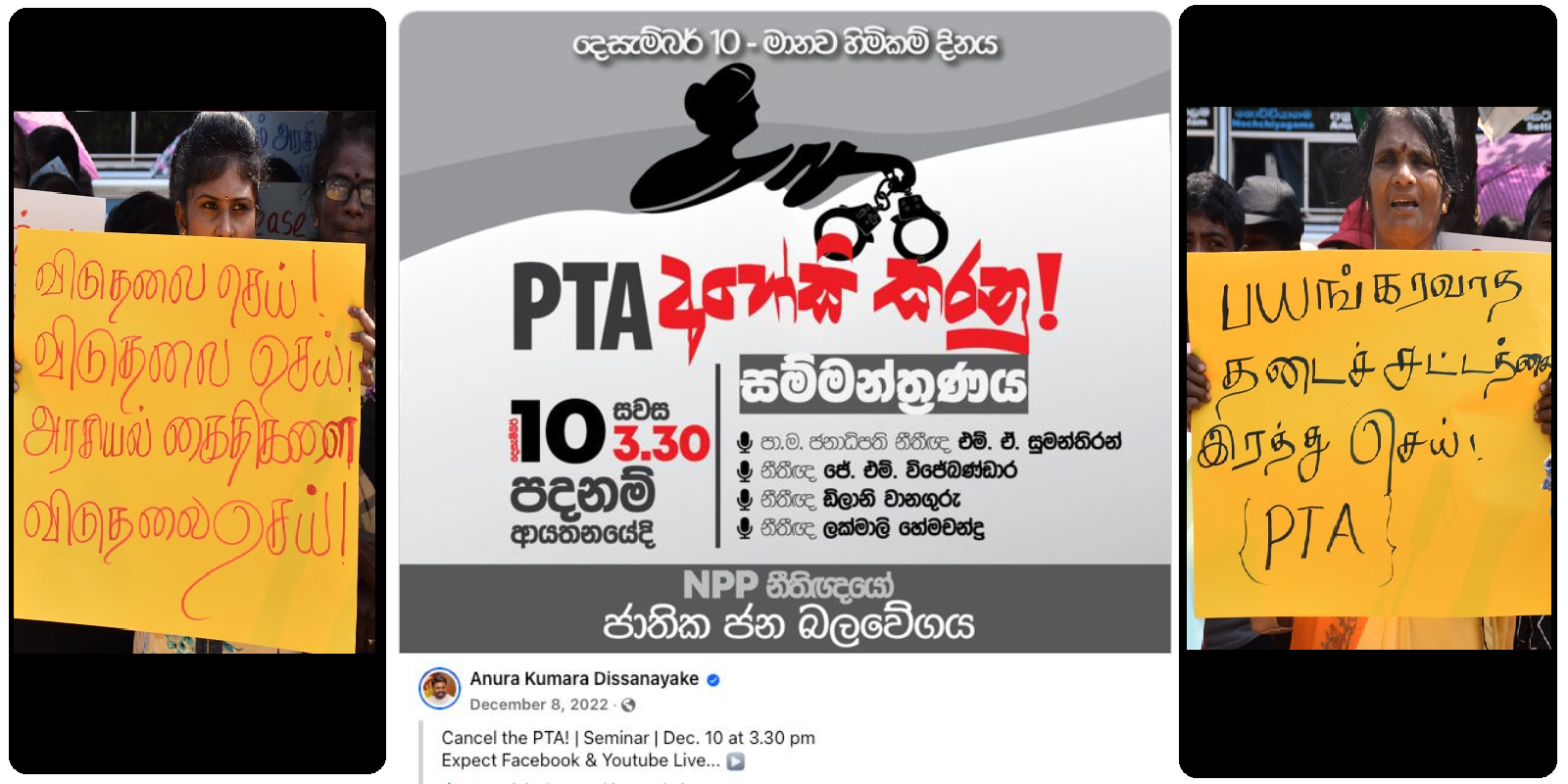
While pledges have been made that the government would prioritise the repeal of the Prevention of Terrorism Act and replace it with a legislation in keeping with international guidelines on anti-terror laws along with promises to repeal the Online Safety Act, these have been slow in coming. In fact, what is becoming clear is that this government is recycling some of the legislation mooted by previous administrations and sugar-coating them with either a new name or a few changes to make them look more acceptable.
Take the case of the Non-Governmental Organisations (Registration and Supervision) Bill 2026, which will provide for mechanisms for monitoring foreign funding, with the purpose of avoiding fraudulent transfer of funds, money laundering, and financing terrorism. It’s almost entirely on the lines of the NGO-related bill that was drafted by the Ministry of Public Security during the government of former president Ranil Wickremesinghe.
Alarm has been raised over the proposed bill by several civil society organisations, including the Civil Society Organisation (CSO) Collective, a broad network of independent civic groups, activists, and non-governmental organisations.
This week the CSO released a detailed analysis of the draft NGO (Registration and Supervision) Act, concluding that the bill in its current form is unacceptable as a basis for engagement and requires a complete overhaul rather than minor amendments.
The draft of the bill had been shared by the NGO Secretariat on July 8, 2026, and the Collective had already conveyed to the Secretariat that the bill fails to address longstanding principles and concerns raised with successive governments.
Some of the core problems it identified are as below:
Mandatory registration that criminalises unregistered informal and voluntary collectives, violating international standards on freedom of association that Sri Lanka has ratified.
A one-size-fits-all regime covering virtually all non-governmental, not-for-profit and voluntary activity, including small community groups, advocacy initiatives and spontaneous disaster-response efforts.
Three-year registration validity with compulsory renewal, creating operational uncertainty, administrative burden and opportunities for undue influence.
An intrusive supervisory architecture centred on a minister-appointed competent authority with broad powers of entry, information access, evaluation, suspension and deregistration, delegable down to divisional level.
Duties requiring organisations to “align with the policies of the government”, restrictions on advocacy, and vague grounds linked to sovereignty, public order and political ideology that chill independent voice and dissent.
Disproportionate offences and penalties for administrative lapses, limited procedural safeguards, and unfettered ministerial regulation-making powers.
The CSO Collective recommended a coherent policy grounded in voluntary registration for social-service organisations, clear and limited administrative functions for a registration body, independent appointment processes, and targeted, risk-based measures developed through proper consultation and risk assessment. “Powers of supervision, intrusive inspection, mandatory policy alignment and criminalisation of ordinary administrative matters must be removed,” the group said in a statement.
The Collective called on the government to withdraw the present draft, publish a clear policy rationale, conduct genuine multi-stakeholder consultations, and work with civil society on legislation that enables rather than constrains legitimate civic activity.
The same is true of the Protection of the State from Terrorism Act (PSTA), intended to replace the PTA. This too seems to be a rehashed version of the Anti-Terrorism Act (ATA) that was mooted by the previous administration.
International human rights groups such as Amnesty International (AI) and Human Rights Watch (HRW) have voiced concerns on the contents of the bill drafted under this government. HRW noted that the proposed legislation includes numerous provisions similar to the current abusive law and risks facilitating the same kind of repression and does not meet benchmarks set out by the United Nations counterterrorism expert or comply with human rights obligations and commitments that Sri Lanka made to the European Union to benefit from trade arrangements under the Generalised System of Preferences, or GSP Plus.
Amnesty International also flagged several areas of concern in the proposed bill, such as insufficient precision and an overly broad definition of terrorism, creating a real risk of arbitrary application and abuse; extension of police powers to armed forces and coast guards; prolonged pre-charge, pre-trial detention without the allegations against the suspect made known to the defence; and deferment of criminal proceedings and suspension of prosecution and trial offered as alternatives to a fair trial and extensive presidential powers.
Meanwhile, the government has repeatedly promised to repeal the Online Safety Act and replace it with new legislation, but so far this has also been confined to words.
The majority of the bills that have been passed since the government took office have been in the form of amendments to existing bills. Fresh legislation it promised for different sectors remains in the pipeline and could become a pipedream for the people if this trend of enacting laws that are as repressive as the ones in the law books continues.
Going by this record, promises to abolish the executive presidency and enact a new constitution seem a nonstarter.
India’s concerns
While on the domestic front the government faces numerous challenges, it is having to deal with renewed pressure from India to hold the long-delayed PC polls.
While the President’s Office and the Ministry of Foreign Affairs have chosen not to comment on whether visiting Indian Foreign Secretary Vikram Misri called upon the Sri Lankan leadership to implement their commitment to hold Provincial Council elections at the earliest, delaying tactics by appointing committees to study the electoral system cannot hold out much longer.
Added to that there is the pressing issue relating to Indian fishermen venturing in Lankan territorial waters. A total of 119 Indian fishermen have been arrestedc this year up to July 31, and 17 of their boats have been confiscated by the Sri Lanka Navy.
During his brief visit to the country by the Indian foreign secretary last week, he discussed issues pertaining to fishermen and requested Sri Lanka’s cooperation for early release of fishermen and boats detained in Sri Lanka. He sought a humanitarian approach, keeping in view the livelihood requirements of fishermen, which should continue to guide the country’s approach.
This comes as the Tamil Nadu government is intensifying pressure on the central government of India to take up the issue with the Sri Lankan government.
According to Indian media reports, the Tamil Nadu (TN) Fisheries Minister A. Srinath is slated to visit Delhi in the coming week to raise the issue of TN fishermen being arrested by the Sri Lanka Navy with Indian Union Ministers S. Jaishankar and Rajiv Ranjan Singh.
Mr Srinath told reporters this week that discussions on the issue were ongoing and that he had also discussed the matter with the Tamil Nadu Chief Minister, Joseph Vijay.
“Next week, we will go to Delhi and meet Dr Jaishankar and Singh to discuss measures to prevent the arrest of Tamil Nadu fishermen. A positive outcome will be reached soon,” he told reporters.
On Thursday Chief Minister Vijay wrote to India’s External Affairs Minister Jaishankar seeking the Centre’s urgent diplomatic intervention in the arrest of nine Indian fishermen from Tamil Nadu and the seizure of their mechanised boat by the Sri Lankan navy while they were purportedly fishing off Katchatheevu. These arrests were made on August 12.
According to the Sri Lanka Navy, the Indian fishermen were arrested for engaging in fishing activities, violating Sri Lanka’s maritime boundaries. The arrests were made during an operation conducted off the Brumalia Point in Talaimannar.
While both sides have been advocating a humanitarian approach to the issue, with the change in government in Tamil Nadu, there is growing pressure on New Delhi to act on this issue. The new TN government has been vocal on the need to safeguard the fishing rights of its people, and the centre, which has so far taken a lackadaisical approach to the issue, is likely to press the Sri Lankan government to come to some agreement which would enable the Indian fishermen to operate in Lankan waters without threat of arrest.

ஒத்தவை:

சென்ற வாரம் இலங்கை-சண்டே ரைம்ஸ்