உலகிலேயே மிகச் சிறிய நாடு இலங்கை மட்டுமல்ல, ஒட்டுமொத்த உலகப் பொருளாதாரமே இந்த குண்டுச் சட்டிக்குள் தான் குதிரை ஓட்டுகின்றது.கற்க வீடியோ இறுதியில்.
President to spearhead district-level mass rallies to revive popularity
- Large-scale meetings to begin in Kalutara District and continue until end of October
- NPP insiders scoff at comments linking Govt’s drive to worries over Namal’s popular rallies
- President meets Mahanayakes at Esala Perahera; talks brief but cordial
- Govt defends 22A in response to UN Rapporteur; cites need for judicial reform
By our ST Political Desk 30-08-2026
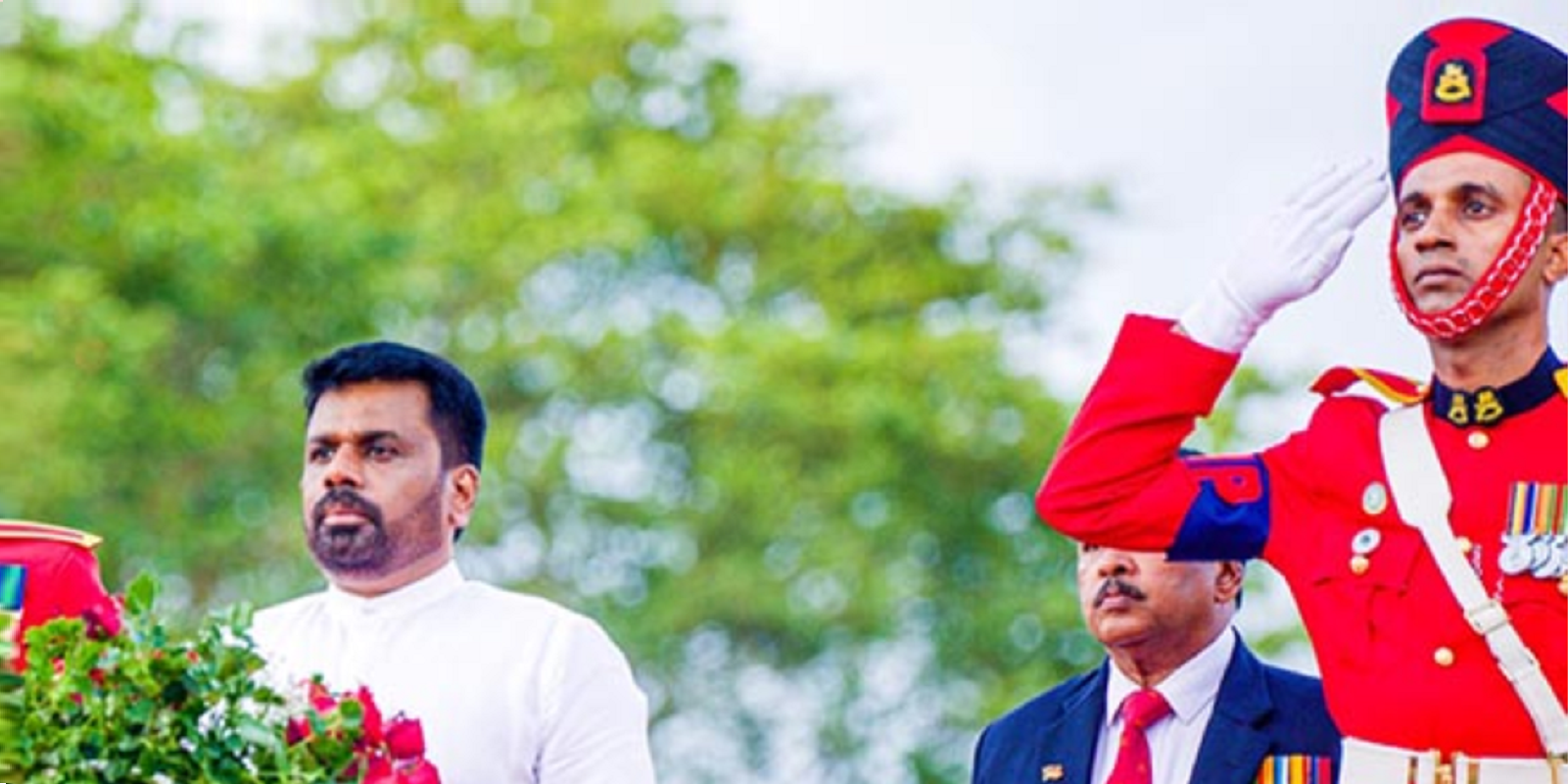
As he nears the end of his second year in office in September, President Anura Kumara Dissanayake is set to spearhead attempts by the National People’s Power (NPP) government to regain some of its lost popularity by going back to the villages to rally the party faithful. Starting from next month, the President will address a series of public rallies organised by the ruling party at the district level.
Party sources said the presidential rallies are part of a larger reorganising effort for the NPP at the grassroots level to bring more of the central party machinery to the cadres in the villages. It aims to better link local council members of the party and the public at the village level with the state machinery at the national level. They note that many small-scale meetings attended by ministers, MPs and local councillors have already been held at the village level as part of these efforts.
The move to bring in President Dissanayake, though, signals a new shift for the NPP as it moves to large-scale public rallies at the district level. At least two such large-scale rallies are to be held in every district starting from next month. In some places, the party is also organising farmers’ rallies and women’s rallies. All of these larger public rallies will be held during the weekends with the aim of maximising the turnout. The first of these public rallies attended by President Dissanayake will be held on September 6 in the Kalutara District, with a rally in Beruwala town followed by one in Bulathsinhala. More rallies will follow at Polonnaruwa on September 12, Anuradhapura on September 13, Matara on September 20 and Gampaha on September 27. The rallies are to continue until the end of October, after which the President will be presenting his government’s budget for next year to Parliament on November 12.
It has become something of a running joke among political circles now that whenever the NPP chooses to bring out President Dissanayake, it is aiming to do damage control for the party and also seize the narrative it has lost. This has been the case time and again, especially when the President has addressed Parliament. More often than not, it has been after the NPP government has shot itself in the foot. Recently released opinion polls have also shown that the government’s approval rating has fallen significantly by July this year. It has also not been lost among political observers that the NPP has chosen to bring forth the party’s leader to address the public following the media and public attention generated by Sri Lanka Podujana Peramuna (SLPP) National Organiser Namal Rajapaksa. Mr Rajapaksa has travelled extensively over the past few months to different parts of the country, holding small-scale public meetings and attacking the government’s record. Opposition Leader Sajith Premadasa has also been holding such meetings, and the criticism that both political leaders have directed at the government from the village level seems to have struck a nerve within the ruling party.
The SLPP believes that Namal Rajapaksa’s move to travel from village to village, speaking with the people about the issues faced by them and also speaking about these issues during public meetings, has been successful in boosting both the young leader’s and the SLPP’s popularity. They believe that Mr Rajapaksa has especially spoken about issues such as the cost of living and the problems faced by farmers. The programme started out about two months ago, initially as a small project, but has now expanded. The NPP’s decision to trot out President Dissanayake for public meetings was a direct result of the success achieved by Mr Rajapaksa, the SLPP claims. “We are happy to see that the President, who has been sitting behind a desk in an air-conditioned room in Colombo for much of the past few months, has now been forced to visit the villages again to follow Namal’s example,” a party leader quipped.
The SLPP, for its part, is also moving to match the NPP campaign by planning to hold larger-scale meetings in the main towns following the success of its village-level smaller meetings with Mr Rajapaksa as the main speaker.
The party claims they have received “many invitations” from the people of the North and East for Mr Rajapaksa to visit their areas to look into issues faced by the people. They mention that the younger Rajapaksa might be visiting the Batticaloa district soon since a large number of invitations had been received from people of that district.
The NPP, on the other hand, wants to better explain its political vision and development goals to those in the villages and the country as a whole. This can only be done by going back to the grassroots level, said one of their partymen. He said the move to have President Dissanayake attending and addressing public rallies was part of the strategy to achieve these objectives. He also stressed that none of the public rallies to be attended by the President is geared towards a future election, downplaying the purpose of these public rallies is aimed at any likelihood of the Provincial Council elections being held soon.
It appears that the decision to hold large-scale rallies at the district level was motivated in part by grassroots meetings being held by opposition parties. The NPP hierarchy has been saying the opposition parties are “spreading disinformation among the public”. The NPP’s rallies are part of the party’s strategy to counter this situation. They dispute claims that the meetings conducted by parties such as the SLPP have been well-received by the public. “Some opposition political groups are holding meetings in some supporter’s garden by collecting all their supporters in the entire district. Some media then carry snippets from these meetings, making it look as if these parties can rally large-scale support even for small meetings in a village and that the people are with them, but the truth is entirely the opposite,” one NPP representative said.
In defence of 22A
President Dissanayake, meanwhile, was active this week, travelling extensively out of Colombo for a number of official functions. On Wednesday, he attended the 42nd National Milad-un-Nabi State Celebration held at the Al-Hilal Central College Grounds in Negombo, where he again reiterated his government had no intention of withdrawing its controversial 22nd Amendment to the Constitution, which primarily aims to raise the retirement age of superior court judges.
Referring to attempts being made to “create a major uproar” over the constitutional amendment, the President insisted that what he was seeking through the amendment was to expedite the process of delivering justice to the people. “Whatever minor objections may be raised, in whatever manner, I assure you that we will not reverse any decision taken in the interests of the people. At the same time, if there are shortcomings in any of the decisions we take, we will not hesitate to change them. We are always a government that listens to the voice of the people,” the President emphasised.
On Thursday, the President was in Kandy for the end of the annual Esala Perahera. That afternoon, he called over at the Malwathu Maha Viharaya, where he paid his respects to the Mahanayake of the Malwatte Chapter, Most Venerable Thibbatuwawe Sri Sumangala Mahanayake. He then visited Asgiriya Maha Viharaya, paying respects to the Most Venerable Warakagoda Sri Gnanarathana Mahanayake Thera. It put to rest social media comments saying the President was not meeting the Mahanayake Theras while in Kandy. They attributed it to the chief prelates’ reservations about the 22nd Amendment that the President was pursuing. Photographs released by the Presidential Media Division (PMD) show the President in reverence towards the chief prelates who were cordially engaging with him.
Thursday was the first time President Dissanayake had met the two Mahanayake Theras since the controversy over the letter sent to him by them and the other chief prelates of the main Buddhist chapters, raising concern over moves to extend the retirement age of superior court judges. The government had initially claimed it was unaware of such a letter but was forced to admit a letter had been received. The admission came after Malwathu Mahanayake Thera confirmed to an opposition delegation that they had indeed sent such a letter but that they had not received a response. Justice Minister Harshana Nanayakkara, along with Health Minister and Cabinet Spokesman Nalinda Jayatissa, were dispatched by the government to brief the Mahanayakes regarding the proposed 22nd Amendment, with the government claiming thereafter that the chief prelates’ letter had been drafted based on “incomplete information” and that their concerns had been addressed after it was explained that the government planned to raise the retirement age of all judges and not just those on the superior courts. The chief prelates have so far not commented on the government’s claims that their concerns regarding the government’s move “had been addressed”.
The President’s meeting with the Malwathu Mahanayake Thera would have been especially awkward given that it was Ven. Sumangala Thera, who had publicly disclosed that the chief prelates had sent a letter to the President. Visuals released to the media did not betray any awkwardness, however, with smiles all round. Nevertheless, sources said that President Dissanayake’s visit to the Malwathu and Asgiri Viharas occurred in the late afternoon on Thursday and that he did not stay long as arrangements for that evening’s final Randoli Perahera were then being made. Indeed, the official press release issued by the PMD noted that the President’s discussion with the Malwathu Mahanayake was “brief”.
On Friday, the President was at Poonagala in Badulla for a ceremony to distribute title deeds to 163 beneficiaries of Phase III of the Indian Housing Project. The event also saw the handing over of houses constructed by the government at the “Navodaya Gama” (Navodayapuram) housing project for 50 families who lost their homes in Poonagala and Kabaragala in a landslide in 2023.
While speaking of the need to protect the central hills, the President disclosed plans to introduce a new bill by the end of this year or beginning of next year to establish a Central Highlands Protection Authority by bringing together the powers of all institutions and departments responsible for the task under one authority. “Powers of some institutions will be devolved. Chairs may shift around a little and titles may change. No one should be alarmed by this,” said the President. While he may have been speaking of what might happen when establishing the proposed Central Highlands Protection Authority, some speculated whether the President was also hinting at bigger changes within the government in the coming months.
Response to UN rapporteur
Elsewhere, with the number of fundamental rights petitions filed in the Supreme Court against the 22nd Amendment increasing on a daily basis, the government has moved to allay concerns raised internationally over the controversial bill. It has now formally responded to concerns raised by the United Nations Special Rapporteur on the Independence of Judges and Lawyers, Margaret Satterthwaite, over the proposed legislation. Ms Satterthwaite had sent a lengthy communication addressed to the government earlier this month expressing concern over the proposed amendment and requesting further information on the planned judicial reforms.
The UN Special Rapporteur’s communication had observed that the amendment, in the form reportedly proposed and in its implications, “may not be in line with international human rights standards related to the independence of the judiciary and the right to a fair trial, including: the separation of powers, the ability of judges to perform their functions free from undue influence, pressure or interference, and the public’s confidence in the judiciary’s independence.” She had further noted that the bill’s shortcomings may render the proposed amendment incompatible with article 14(1) of the International Covenant on Civil and Political Rights (ICCPR) and principles 1, 2, 11 and 12 of the United Nations Basic Principles on the Independence of the Judiciary.
The government had to respond, and quickly, to the concerns raised by the UN Special Rapporteur, given that the matter is likely to be taken up at the upcoming UN Human Rights Council (UNHRC) sessions in Geneva starting next month. The formal response, sent by the Ministry of Foreign Affairs (MFA) through Sri Lanka’s Permanent Mission in Geneva late last week, has now been made public. It points out that the 22nd Amendment Bill proposes three substantive amendments, namely: (i) raising the retirement ages of judges of the Supreme Court and Court of Appeal (from 65 years to 67 years and from 63 years to 65 years, respectively); (ii) specifying that in the case of the Chief Justice the age of retirement shall be either the date on which he/she reaches the age of 67 years or the date on which a period of six years is completed from the date of appointment as Chief Justice (whichever occurs earlier); and (iii) increasing the maximum number of judges of the Court of Appeal from 19 to 24. The Judicature (Amendment) Bill, presented at the same time, proposes to raise the retirement age of the judges of the High Court from 61 years to 63 years and stipulates that the compulsory retirement age of all other judges and magistrates shall be 62 years. The said bill also proposes to increase the maximum number of High Court judges from 110 to 120.
Interestingly, the government has used a report presented to the UNHRC sessions in March 2017 by one of Ms Satterthwaite’s predecessors, Monica Pinto, to defend its proposed amendment. That report was presented following a visit to Sri Lanka undertaken by the then Special Rapporteur from April to May 2016. Referring to that particular report, the government has pointed out that the Special Rapporteur at the time remarked that the number of judges in the country seems insufficient vis-à-vis the population and to deal with the variety of legal issues in Sri Lanka.
“While emphasis has been placed on the increase of the retirement age of judges, the said increase must be considered part and parcel of the proposal to improve access to justice and efficiency in the administration of justice, which requires the increase of the number of judicial positions, which creates a corresponding need to ensure and retain an appropriate level of judicial experience and continuity,” states the government’s response.
The NPP government has also maintained that increasing the mandated retirement age in accordance with the proper legal procedure motivated by legitimate objectives is not inconsistent with Sri Lanka’s obligations under the ICCPR. The government has also emphasised that the proposed amendments “are wholly in accordance with binding and non-binding norms of international law concerning judicial independence and that the said amendments do not result in the actual or perceived compromise of judicial independence.”
While conceding that changing the retirement age may affect the expected duration of office of judges already serving, the government has insisted that such an effect “does not automatically establish political interference”. The response has further pointed out that the exclusion of sitting judges would defeat the legitimate objective of increasing the retirement age, being the retention of judicial experience and institutional continuity.
While the MFA has cited a nearly decade-old report by a former UN Special Rapporteur on the Independence of Judges and Lawyers to defend the 22nd Amendment, there is no mention in that UN report about raising the retirement age of judges as a way to rectify judicial delays. In fact, the 2017 report has specifically stressed that the “severe situation” seen in the country when it comes to judicial delays can only be addressed with the adoption of a comprehensive set of measures “designed and implemented in consultation with all stakeholders, in particular with judges, staff of the Attorney-General’s department and lawyers”. Such consultation was virtually non-existent when it came to the 22nd Amendment or even the Judicature (Amendment) Bill. In fact, the government’s official position, as articulated by Cabinet spokesman Nalinda Jayatissa in early June, was that there had been “no discussion” within the Cabinet about extending the retirement age of judges. Yet, just over two months later, Justice and National Integration Minister Harshana Nanayakkara presented the draft bill on the 22nd Amendment to Parliament.
Many of those challenging the 22nd Amendment Bill, meanwhile, are requesting through their fundamental rights petitions for the Chief Justice to exercise powers conferred on him under the Constitution to direct that the matter be heard by a full bench of the Supreme Court. This is in view of the matter’s general and public importance and owing to the obvious conflict of interest arising from it, as it is a matter that interests all judges of the Supreme Court in a case where they stand to benefit from the proposed extension of service. Lawyers for the Bar Association of Sri Lanka (BASL) were drafting papers on these lines, relying on Section 49 (3) of the Judicature Act on Conflict of Interest to support this argument.
Suresh Salley’s detention
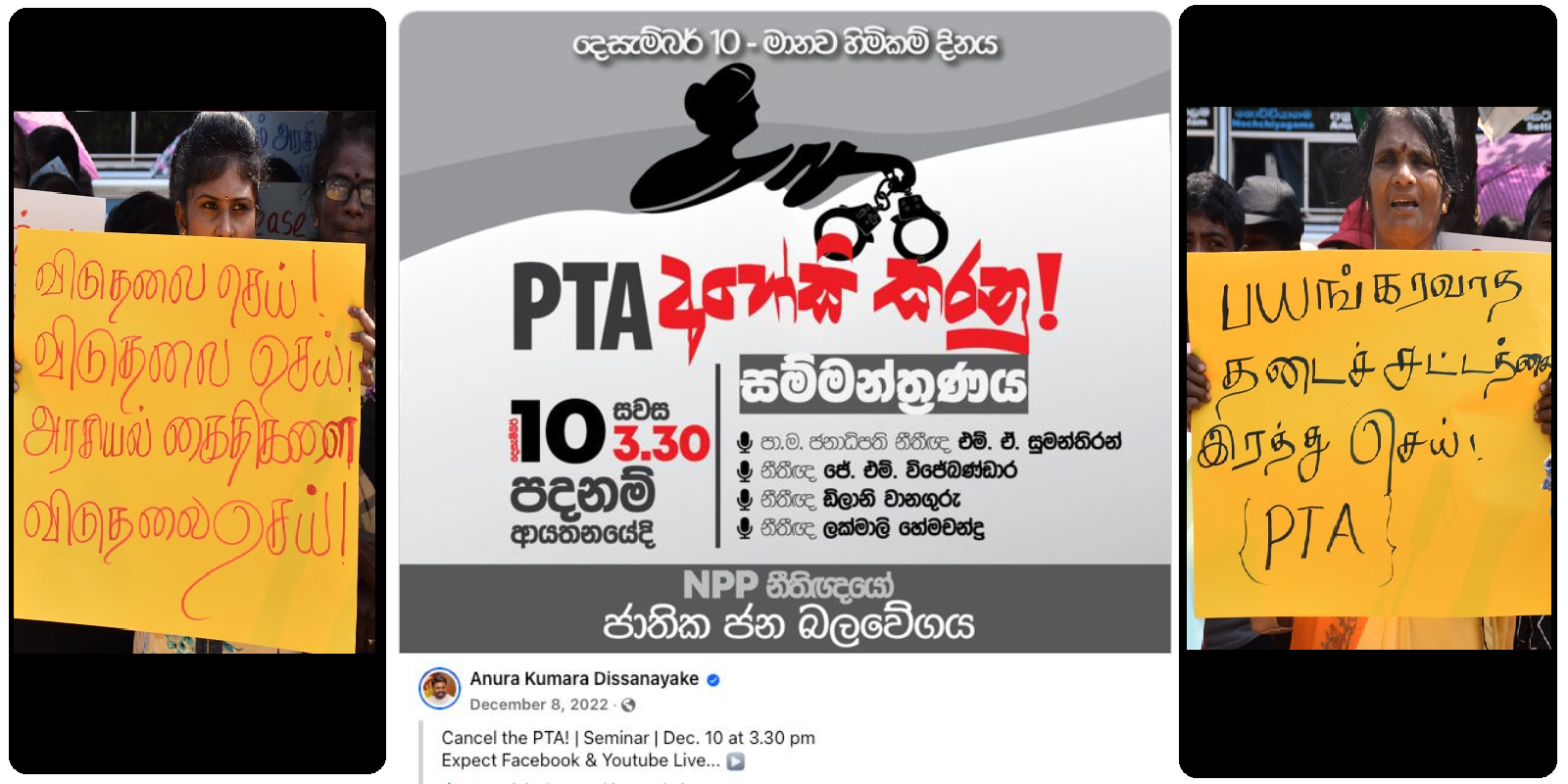
Meanwhile, this week, the detention order on former Director of the State Intelligence Service (SIS) retired Major General Suresh Sallay has been extended for a further 90 days. He is being held under the Prevention of Terrorism Act (PTA) in connection with investigations into an alleged conspiracy behind the 2019 Easter Sunday terror attacks.
The former SIS chief who was arrested by the CID in February this year remains in hospital undergoing treatment for a cardiac-related condition.
Prior to the extension of the Detention Order (DO), Mrs C. Sallay, the mother of the former SIS chief, wrote to President Dissanayake urging him not to extend the DO and seeking an opportunity to meet with the President.
In her letter addressed to the President, Mrs Sallay said her son had served the Sri Lankan Army for 37 years and served the country diligently and should be given a fair hearing.
“I am not asking to stop any investigation. If there is evidence, investigate them and find the truth. But while the investigation is taking place, as a mother, I very kindly request you not to further extend my son’s detention,” she requested.
Earlier, Manori Sallay, the wife of Maj. Gen. Sallay, had written to the President, the second such letter since May, making an urgent appeal for the non-extension of the DO in view of his deteriorating health condition.
So far there has been no acknowledgement of any of the letters addressed by the Sallay family to the President.
The Colombo Permanent Trial-at-Bar will deliver its verdict on September 22 in the case against the 25 accused charged with conspiring to carry out the 2019 Easter Sunday terror attacks and aiding and abetting the attacks. They face 23,270 charges, including allegations of conspiracy, aiding and abetting, collecting arms and ammunition and attempted murder under the PTA.
Anti-terrorism bill
Meanwhile, the Protecting of the State from Terrorism (PSTA) Bill, which is intended to replace the Prevention of Terrorism (Temporary Provisions) Act, No. 48 of 1979, has not yet been published in the gazette despite the Cabinet giving its approval to it early last week.
In December 2025, the Ministry of Justice published a proposal for the new anti-terrorism law, but the new draft drew criticism from international human rights activists who said that the new law retains much of the provisions in the PTA and, in some instances, enhances state powers which stifle civil liberties and are inconsistent with internationally accepted guidelines for framing anti-terrorism laws.
The coming weeks and months will pose many challenges for the government, both locally and internationally. With the SC ruling on 22A pending and the High Court verdict on the Easter Sunday terrorist attacks also due.
The government also has to address several issues before the UN Human Rights Council in two weeks’ time in Geneva. There is also the fresh application that needs to be made seeking an extension of the GSP Plus preferential trade facility as the current scheme expires on December 31, 2026. How it handles the international concerns regarding 22A as well as concerns regarding the welfare of prisoners will be crucial if the country is to continue to benefit from facilities such as GSP+ as well as other trade concessions; a lot on the plate to be handled.

ஒத்தவை:

சென்ற வாரம் இலங்கை-சண்டே ரைம்ஸ்