Govt hauled over the coals, finds breather in Sallay arrest
- Govt source says arrest linked to statement discrepancies; authorities silent on mastermind questions
- Opposition fires on all cylinders over low‑grade coal, warns of looming power crisis
- Draft MoU with India on Lanka’s mineral resources sparks fresh protest
By our Political Desk Sunday Times lk 01-03-2026
Those in the ruling Janatha Vimukthi Peramuna (JVP)-led National People’s Power (NPP) have been talking of finding the spectral mastermind (maha molakaru) behind the 2019 Easter Sunday terrorist attacks for many months now.
It began during the election trail in 2024 with the promises made in its election manifesto to ‘expose all information related to murders, including the Easter Sunday attacks, to take appropriate legal action against the politicians and public officials who were found guilty by the verdicts of the Supreme Court in relation to the attacks as well as prompt legal action against the relevant politicians and officials according to the recommendations of the Presidential Commission that looked into these attacks.’
The pledges to expose the shadowy ‘maha mola karu’, a term coined by Colombo’s Archbishop Malcolm Cardinal Ranjith, began during the presidential election campaign with the then NPP candidate and now President Anura Kumara Dissanayake, keen to win over Catholic voters and get the backing of the Cardinal for his election bid.
The same line was followed during the general election, and for this the NPP was rewarded with a majority of votes from the community, with the blessing of the Cardinal. Since then, the Criminal Investigation Department (CID), headed by Senior Superintendent of Police (SSP) Shani Abeysekara, has been under pressure to deliver on its promises to get this elusive ‘mastermind’. The pressure intensifies as another Easter Sunday draws nearer, as was evident from what transpired in April 2025. Just days away from the dawn of the holy day, a day remembered since 2019 by Sri Lankans for the immeasurable tragedy it brought upon hundreds of people, the CID arrested Tamil Makkal Viduthalai Pulikal (TMVP) leader Sivanesathurai Chandrakanthan, better known as Pillayan. His name had cropped up from time to time among those who believe in a wider conspiracy behind the terror attacks as being a possible ‘mastermind’, but a few days after his arrest, the Police Department said his arrest was not linked to the Easter Sunday attacks but had to do with evidence linking him to the 2006 abduction and disappearance of the then Eastern University Vice Chancellor, Professor S. Ravindranath. He remains in custody, being held under the Prevention of Terrorism Act (PTA) with no indictment so far.
With another Easter Sunday weeks away, the CID once again sprang into action, this time arresting Major General (Retd) Suresh Sallay, the former Director of the State Intelligence Service (SIS). He was taken in under the PTA on Wednesday, and after being held initially for 72 hours, he will remain in custody for three months under a Detention Order, under the same draconian law, which, ironically, the NPP has pledged to repeal. Maj. Gen. Sallay was appointed to the SIS by then President Gotabaya Rajapaksa in December 2019 and retired in October 2024 after the current president was elected. Prior to his SIS appointment, Maj. Gen. Sallay served as the Director of the Army’s Directorate of Military Intelligence and has won praise for his work on obtaining crucial intelligence reports on the LTTE and its hierarchy. He was attached to the Sri Lankan High Commission in Malaysia at the time of the Easter Sunday bombings.
The allegation that the former SIS head had been involved in a conspiracy with the only confirmed mastermind so far behind the Easter Sunday bombings, National Thowheed Jamaath (NTJ) leader Zahran Hashim, who planned and executed the attacks, has been made by a man identified as Azad Maulana, who was the main figure featured in Britain’s Channel 4 documentary titled “Sri Lanka’s Easter Bombings” in 2023.
Mr Moulana, hailing from Maruthamunai in the Eastern Province, had once been Pilliyan’s secretary and has, since the bombings, fled the country and is reportedly seeking political asylum in Switzerland.
In the Channel 4 documentary, Moulana claimed that he had arranged a first meeting between Maj. Gen. Sallay and Zahran. He also recalled several other meetings with the former SIS chief in the aftermath of the bombings. The CID has been depending heavily on the evidence of Mr Moulana in its attempt to identify a mastermind other than Zaharan, but so far those in government have refused to say if Maj. Gen. Sallay is the man.
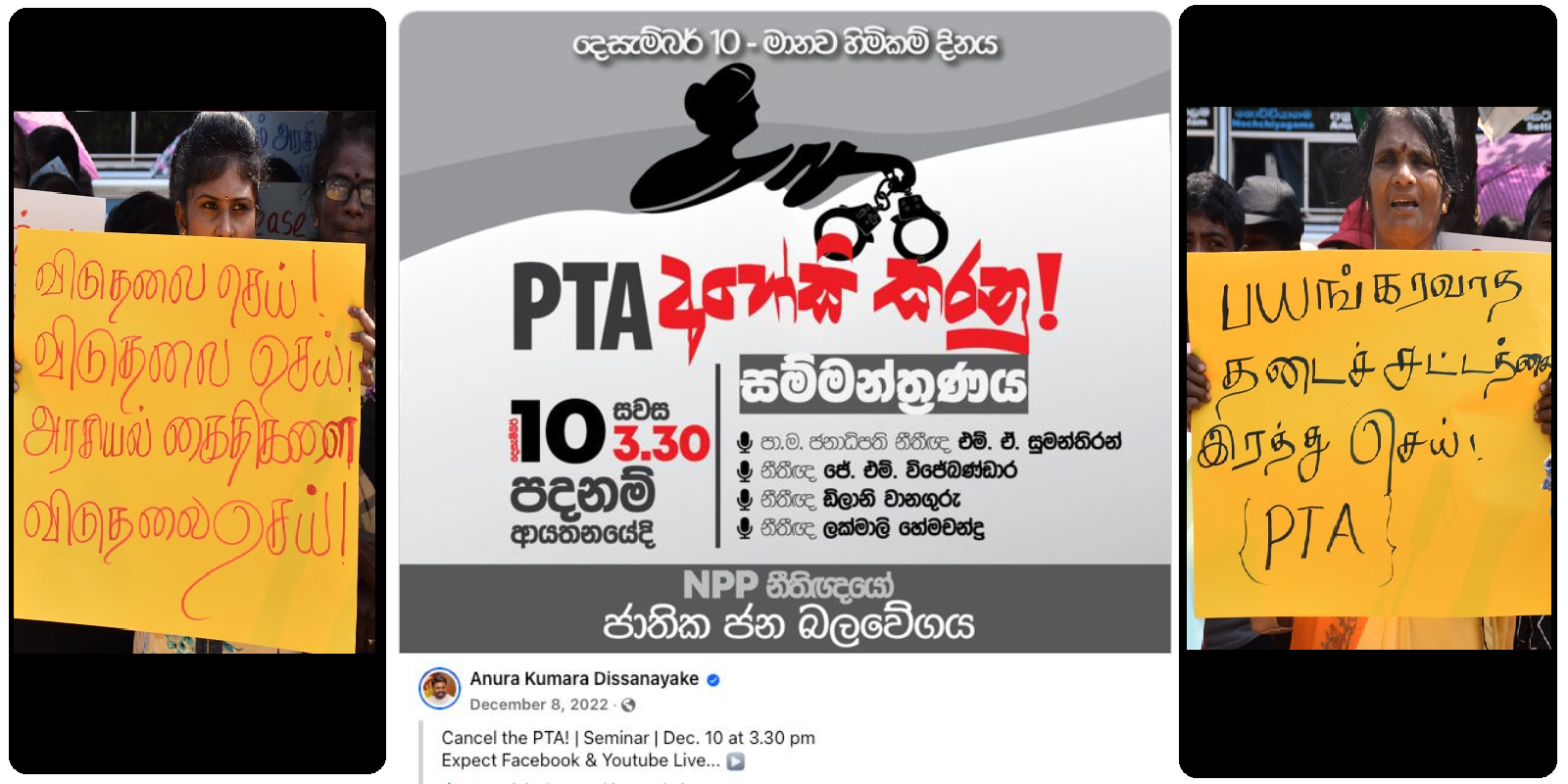
Protests against PTA: The latest to be arrested under the controversial law is Sri Lanka's one time intelligence chief Suresh Sallay
A senior government officer familiar with the ongoing investigation told the Sunday Times that the former SIS chief has been detained due to discrepancies in his statements to the CID relating to the deadly attacks and evidence of other suspects who are being held in connection with the investigation. “We have made it clear that whatever status one may have enjoyed, it will not deter us from carrying out investigations against them,” the official said, adding that several other former military and intelligence officers are under investigation and there could be more arrests.
Details of Maj. Gen. Sallay’s arrest are still sketchy. Police Media Spokesman F. U. Wootler said the former SIS Chief was arrested at 7.50 am on Wednesday in the Peliyagoda Police Division by a special CID team.
“The arrest has been made based on clear evidence obtained through the outcomes of the ongoing investigations into the Easter Sunday attacks,” the spokesman said.
Given the high-profile nature of the arrest, it has drawn both praise and condemnation from different quarters. Rev. Father Cyril Gamini, spokesperson for the Archdiocese of Colombo, was among those who reacted to the arrest. He decried what he said were attempts by some quarters to disrupt the investigation by making misleading statements, adding that the Church believes there is sufficient evidence to justify the arrest of the former SIS officer.
This is in sharp contrast to the views expressed by many opposition politicians who have made several allegations against the government over the arrest, with some stating that the arrest is being used to divert attention from the growing scandal over the import of inferior coal for the Lakvijaya coal power plant (see detailed copy on Page 14), while others allege that the government is hunting down intelligence officers who played a crucial role during the military operations against the LTTE separatists.
While the CID is investigating a conspiracy which was purportedly hatched in the runup to the bombings, including by intelligence and military officers, 25 men accused of links to the attacks are standing trial before the Permanent High Court Trial at Bar in Colombo. The case is ongoing.
While the Sri Lanka legal process is just starting, in January 2021, the U.S. Justice Department announced that three Sri Lankan citizens have been charged with terrorism offences, including conspiring to provide material support to a designated foreign terrorist organisation (ISIS). The men were part of a group which called itself “ISIS in Sri Lanka”—the group that was responsible for the 2019 Easter attacks, which killed 268 people, including five US citizens, and injured over 500 others.
According to the US Justice Department documents, two days after the attacks, ISIS claimed credit for the terrorist acts, attributing the murders to “Islamic State fighters”. In late April 2019, the then-leader of ISIS praised the attackers for what he called a retaliation against “the West” for defeating ISIS the prior month in Baghuz, Syria.
The criminal case was filed on Dec. 11, 2020, in the US District Court in Los Angeles after a nearly two-year investigation by the FBI, which assisted Sri Lankan authorities in the wake of the suicide bombings. The three men charged in the US and other suspects linked to the attacks are currently detained in Sri Lanka.
The arrest of a senior former SIS officer will no doubt give some respite to the government, which has been under fire from the Cardinal, not only for failing to deliver on pledges related to the Easter Sunday bombings but also for other issues, including the government’s education reforms. While the political fallout is likely to continue in the days to come, Maj. Gen. Sallay’s arrest seems to have appeased the Church for now and is likely to win the government praise when the Cardinal delivers his next Easter Sunday sermon. However, given that most of the high-profile arrests under this government so far have resulted in either long-term detention of suspects under the PTA, including those linked to the drug trade and other past crimes, with no progress reported to courts even after a suspect has been in detention for close to a year, it’ll be a long time before the CID will be able to pin the ‘maha molakaru’ tag on anyone.
Govt. under fire over low-quality coal
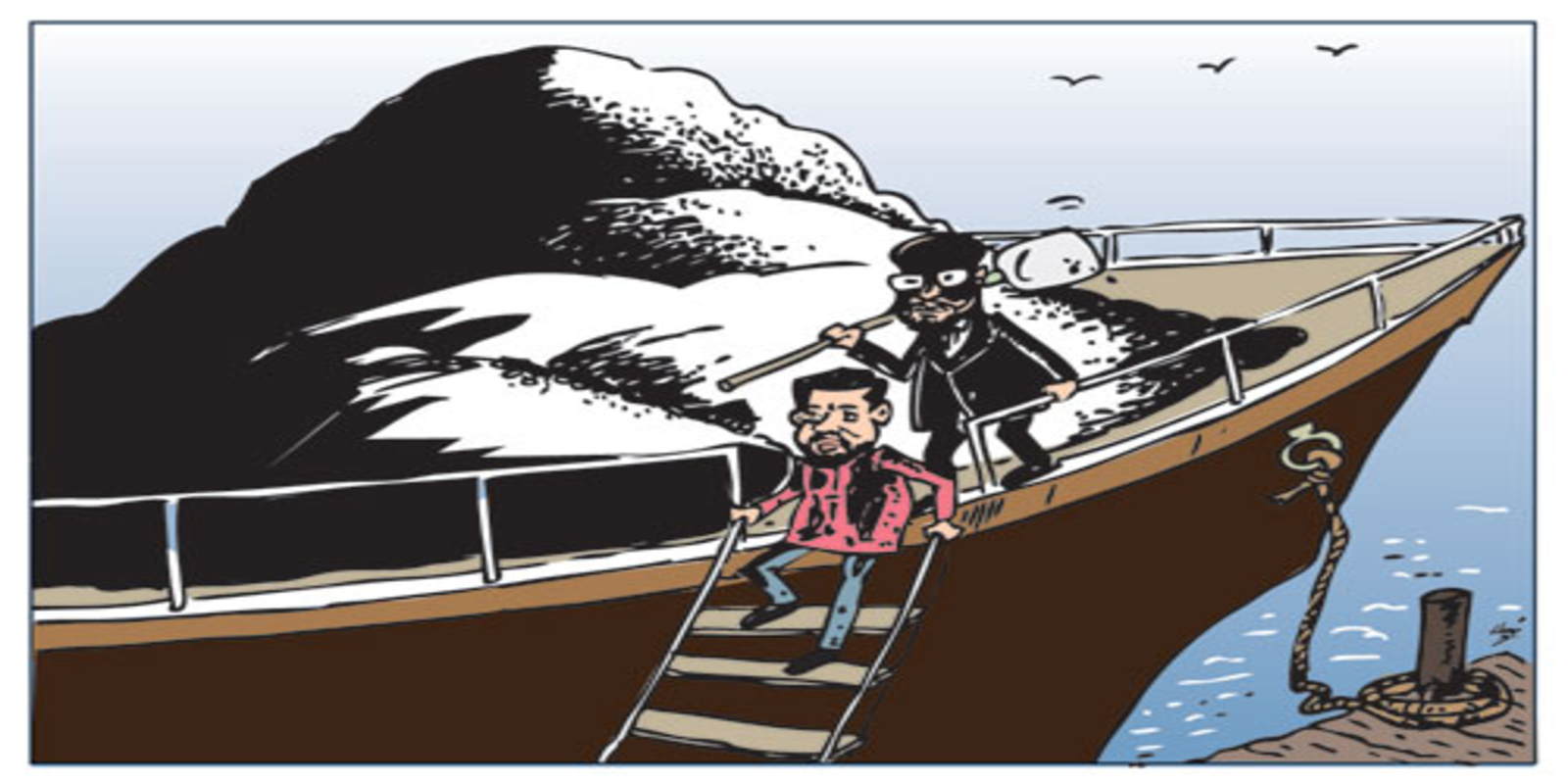
As pointed out, Maj. Gen. Sallay’s arrest comes as the government grapples with an escalating scandal surrounding the purchase of substandard coal for the Lakvijaya coal power plant in Norochcholai. As such, many opposition politicians have been quick to label the arrest as a government ploy to divert attention from a scandal whose fallout is likely to have far-reaching consequences for the country’s power sector.
The Sunday Times revealed last week that operational information released by the Lakvijaya power plant continues to reveal that a majority of South African coal shipments that have arrived—after being purchased under the latest tender via India’s Trident Chemphar Ltd—do not meet the minimum criteria for use in the plant. This newspaper also revealed that the data contradicts reports from Cotecna (an independent laboratory that is collecting samples at the unloading port in Norochcholai), which show that all of the required parameters, including ash content and Gross Calorific Values (GCV), have been met.
While there is provision in the purchase agreement to appoint a “third umpire” in terms of another independent accredited laboratory to test the coal samples, neither the Lanka Coal Company (Pvt) Ltd (LCC) nor the Energy Ministry had done so up until last week. The Sunday Times, however, learns that a South African laboratory – Bureau Veritas – has been contracted by the government this week as an independent laboratory to test two forthcoming coal shipments (see detailed story on Page 14).
A report submitted by the Ceylon Electricity Board (CEB) two weeks ago to Parliament’s Sectoral Oversight Committee on Infrastructure and Strategic Development carried a table of “Estimated Direct Losses due to power generation (Million Rupees).” It calculated Rs. 7.9bn in losses to the CEB from just the first eight shipments. The penalty to be claimed from the supplier is not considered in the calculation, the report stated. Data supplied by the CEB showed that the GCVs of coal that arrived in multiple shipments were below the minimum levels required to generate optimum electricity from the Lakvijaya plant’s three units.
The more details emerge regarding the incident, the more questions they seem to throw up.
For its part, the government is insisting that while several coal shipments have been found to be below the minimum standard, there is no evidence of corruption in the procurement process. They have challenged the opposition or others, who claim that the tender process had been mired in corruption, to produce evidence. Amid increasing accusations by opposition MPs that the entire procurement process had been engulfed in corruption from the beginning, NPP MPs have rushed to the defence of beleaguered Energy Minister Kumara Jayakody, who is facing growing calls to resign over the scandal. On Tuesday, the Energy Ministry announced the appointment of a seven-member committee to evaluate the current coal supply mechanism for the Lakvijaya coal power plant. The committee, comprising senior university academics and energy ministry officials, will be headed by Prof. W.D.A.S. Rodrigo of the Department of Electrical Engineering, University of Moratuwa. Among the committee’s tasks would be to calculate the losses from the coal shipments.
Addressing this week’s Cabinet briefing on Tuesday, Cabinet Spokesman and Minister Nalinda Jayatissa said that only the first coal shipment had registered Gross Calorific Values (GCV)—which represents the heat released upon combustion—below 5900 kCal/kgf in both quality tests, including the one conducted by Cotecna. LCC requires GCVs of between 5,900 (reject value) and 6,150. Under the terms of the purchase agreement, the agreement can be cancelled only in the event of two shipments registering GCVs of reject value, the minister said, adding that as such, the government is not able to cancel the purchase agreement at present.
Nevertheless, as fears of a power crisis grow owing to the substandard coal shipments, the government has sought advice from the Attorney General on legal avenues available to it. Meanwhile, the LCC this week also called for bids for the supply of 300,000 MT of coal for the Lakvijaya Coal Power Plant under emergency procurement. The invitation for bids notes that bids will be received up to 10.00am (Sri Lanka Standard Time) on March 6 and will be opened in the event of an emergency situation arising due to failure of the existing coal supply. In the event that no emergency situation arises due to failure of the existing coal supply, the sealed and unopened bids shall be returned to the respective bidders without being opened, according to the document.
The urgency on the part of the government is understandable. The 900 MW Lakvijaya Coal Power Plant is critical for the country’s entire electricity supply. There have been multiple occasions over the past few years of scheduled island-wide power cuts having to be imposed owing to breakdowns at the plant. The NPP government will also be mindful of the belief among some analysts that it was the imposition of extended power cuts, which at one point lasted up to 13 hours a day during the 2021/2022 economic crisis, that served as a ‘tipping point’ for middle-class Sri Lankans to take to the streets as protests against the then Gotabaya Rajapaksa government intensified. Indeed, those in the NPP, as part of the opposition then, were among those who were at the forefront of those protests.
The NPP government’s insistence that there has been no corruption in the coal procurement process has been firmly rejected by the opposition. They insist that Energy Minister Kumara Jayakody and senior ministry officials are responsible for the scandal. Participating in a political talk show on a private television channel on Thursday, Sri Lanka Podujana Peramuna (SLPP) MP D.V. Chanaka, who has repeatedly raised concerns in Parliament over the coal tender, claimed the procurement was definitely corrupt and insisted both Minister Jayakody and ministry officials responsible should be arrested under the Anti-Corruption Act. Several opposition-aligned civil society activists lodged a complaint with the CID on Friday requesting an investigation into the procurement process for substandard coal.
Controversy over Indo-Lanka MoU on minerals
As news came through on Wednesday morning of Maj. Gen. (Retd.) Sallay’s arrest, Indian High Commissioner to Sri Lanka Santosh Jha was meeting former President and United National Party (UNP) Leader Ranil Wickremesinghe at his Flower Road office. A brief caption issued by the Indian High Commission said that High Commissioner Jha made a courtesy call on Mr Wickremesinghe and the two “discussed the evolving political and economic landscape in Sri Lanka” and that they “exchanged views on the potential for continuous deepening of the #IndiaSriLanka partnership for mutual benefit of the two countries and the region.” No further details of what was discussed at the meeting were released to the media, though a UNP source said that Maj. Gen. Sallay’s arrest would have “inevitably” come up during the course of the discussion as the two spoke of current political developments.
The UNP, meanwhile, has decided to go on the offensive over what it claims is a political witch-hunt targeting its leader, Ranil Wickremesinghe, and his wife, Prof. Maithree Wickramasinghe, over the alleged misuse of state funds amounting to over Rs. 16.6 million during a private visit to the UK in 2023. Mr Wickremesinghe, who was then president, is accused of undertaking the visit at state expense to attend a graduation ceremony at the University of Wolverhampton, where his wife was awarded an honorary professorship. The party has taken a decision to lodge complaints with a number of international organisations, including the Inter-Parliamentary Union (IPU), against what it calls the government’s victimisation of their party leader. These complaints are also set to be presented to the United Nations, the European Parliament, and other international bodies. Separately, the party will also be approaching foreign diplomatic missions based in Colombo to brief them on the matter.
Additionally, a programme is scheduled to be launched after March 1 to brief monks, other religious leaders, lawyers, youth groups, and all other parties in every district about what the UNP claims is unjust victimisation of Mr Wickremesinghe. The UNP leader, too, is set to take centre stage with a “Read with Ranil” programme, to be launched on March 19 under the “Smart UNP” initiative.
Meanwhile, a group of academics, journalists, feminist activists and lawyers issued a statement on Monday expressing deep concern over reports that Prof. Wickramasinghe had been summoned before the Financial Crimes Investigation Division (FCID) of the CID. “Professor Maithree Wickramasinghe is an independent scholar of recognised integrity and distinction. Any investigative processes relating to matters of public accountability must be conducted fairly, transparently, and in strict adherence to due process. However, it is deeply troubling when a scholar of her standing appears to be drawn into proceedings that are fundamentally political in nature and centred on allegations concerning another individual who is her husband,” says the statement, signed by 85 signatories.
Prof. Wickramasinghe was initially supposed to appear before the CID on February 20 to provide a statement with regard to the UK visit under probe but informed the CID through her lawyers that she was unwell and, as such, had requested two weeks’ time to provide her statement.
Some in the government have raised concerns regarding the statement issued in support of Prof. Wickramasinghe, noting that while the investigation does centre on Ranil Wickremesinghe, it is only fair for investigators to call his wife in for questioning given that he is accused of misusing state funds to attend her graduation ceremony.
Those in the NPP also point out that it made an explicit pledge in its manifesto – A Thriving Nation, A Beautiful Life – to eradicate corruption. According to sources from the President’s office, figures provided by the Commission to Investigate Allegations of Bribery or Corruption (CIABOC) in its 2025 Progress Review Report reveal that it has arrested 214 individuals, including politicians and state officials, on bribery and corruption charges over the past year.
They include 15 politicians, including ex-ministers Keheliya Rambukwella, S.M. Chandrasena, Prasanna Ranatunga, and Chamara Sampath Dasanayake.
Arrested state officials include a former Commissioner General, a serving Deputy Commissioner, and 10 officers from the Department of Motor Traffic. The highest number of arrested state employees comes from the Police Department, totalling 33.
Fourteen officers working under the Ministry of Justice are also among the arrested. Following investigations, legal action has been filed against 153 individuals. In 2025, 36 accused were found guilty and sentenced in trials over charges filed by the CIABOC.
As the scandal over substandard coal shipments escalates, the NPP government is also coming under attack from some in the opposition who accuse it of getting ready to sign off the country’s mineral wealth to India.
The accusations stem from a section of a document now in circulation on social media among opposition figures. The document is a draft of a Memorandum of Understanding (MoU) between the Indian Government’s Ministry of Mines and Sri Lanka’s Geological Survey and Mines Bureau (GSMB) on “Cooperation in the Field of Geology and Mineral Resources”. The draft MoU had originally been drawn up in 2024 but had been forwarded by the Indian High Commission in Colombo to the Ministry of Foreign Affairs, Foreign Employment and Tourism last month.
Areas of cooperation under the agreement will cover the following: (i) Exploration, extraction and exploitation of mineral resources; (ii) Exchange of expertise in the field of exploration, mining and mineral processing and development of related projects; (iii) Conduct of geological surveys and geophysical surveys in areas with prospected minerals using modern advanced techniques and technologies in potential geological domains of the country, including its narrow offshore continental shelf; (iv) Support for carrying out exploration projects of minerals with subsequent allocation of mineralised blocks to Indian organisations/companies; (v) Promote and support cooperation between companies of their respective countries; (vi) Promotion of investment in the area of mining, mining-related activities and the natural resource sector; (vii) Support for training and capacity building of geoscientists of Sri Lanka in different branches of geology & exploration; (viii) Mutual exchange of knowledge and expertise in the field of geoscience, sustainable resource management and environmental management; and (ix) Other forms of cooperation as may be mutually agreed upon by the Parties.
The draft MoU has elicited strong protests from various quarters, including the National Freedom Front (NFF). Party Leader Wimal Weerawansa, who posted images of the leaked document in his X account earlier this month, noted that while there is no question of there being agreements/MoUs between countries for commercial purposes, “the problem is that such matters are not properly discussed in Parliament and in a proper intellectual forum.”
“The ownership of the subsoil resources of a country belongs to the entire people, and any decision taken on them is a very serious decision,” Mr Weerawansa said.
Other parties and organisations such as the Patriotic National Movement and the Movement for People’s Struggle have also come out against the proposed MoU, accusing the government of planning to give away the country’s mineral wealth, both on land and at sea, to India.
An Indian High Commission official did not dispute the veracity of the document when asked for comment but insisted that the document was the draft of an MoU. “Nothing has been signed, and as of now, nothing is under consideration,” the official emphasised. The official added that any MoU between India and Sri Lanka would be a joint collaboration proposed for the benefit of both countries.
India has been reaching out to the NPP government since last year over opportunities in the country’s mineral sector. Indian mining companies led by the country’s Mines Ministry visited Sri Lanka in May last year to look at potential collaborations in the mines and minerals sector even as the GSMB—the primary government agency responsible for managing and conserving Sri Lanka’s mineral resources—and the Environment Ministry, under which it falls, maintained they knew nothing about an MoU proposed to be signed with India on “Cooperation in the Field of Geology and Mineral Resources”. The renewed push this year shows India’s continued keenness to dominate the country’s minerals sector.

ஒத்தவை:
சென்ற வாரம் இலங்கை-சண்டே ரைம்ஸ்