India’s deafening silence in the face of “zone of peace” being blown to bits
By Nirupama Subramanian in New Delhi

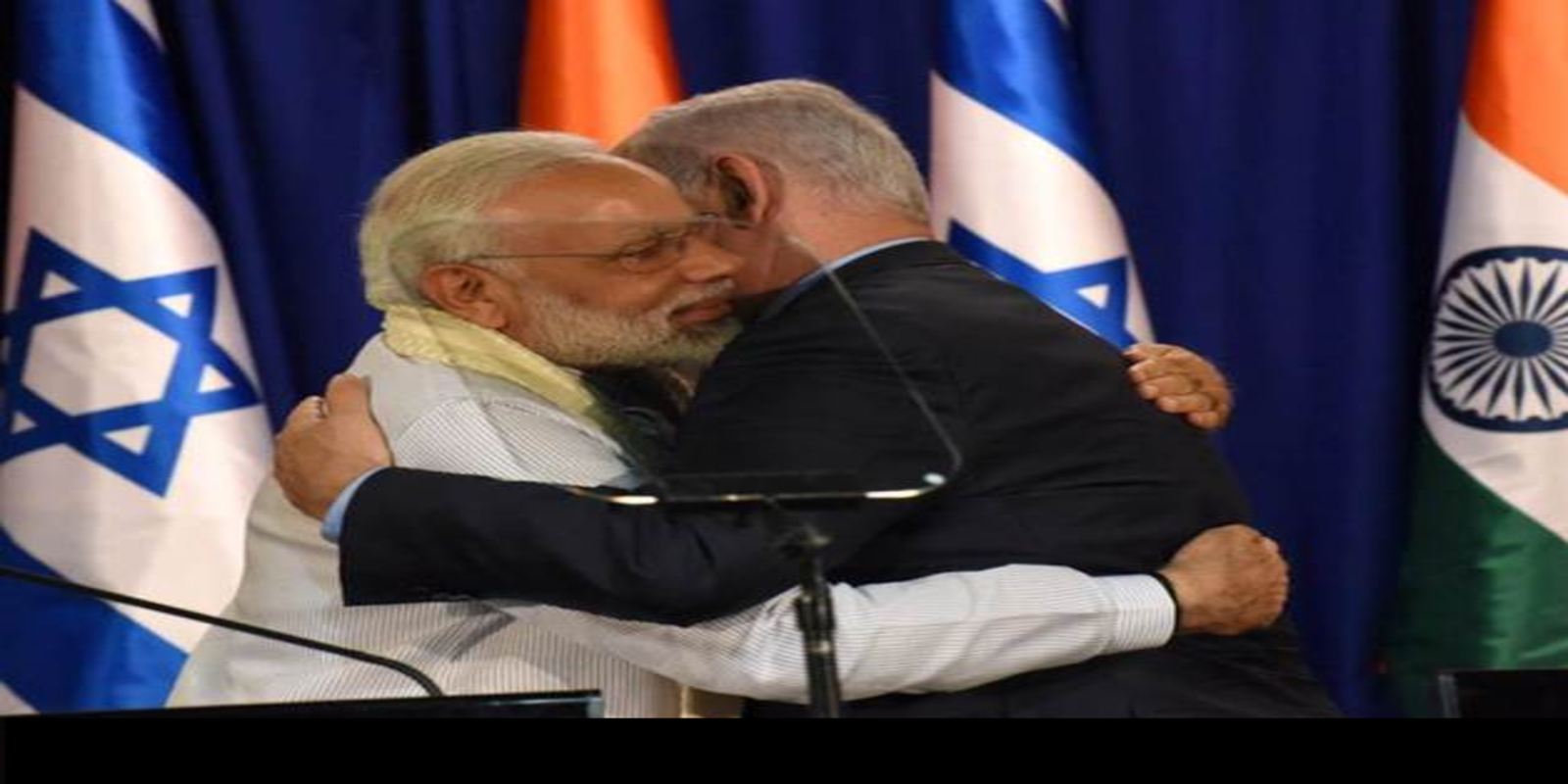
When Prime Minister Narendra Modi jetted off to Tel Aviv for an official visit from February 25 to 26 at the invitation of his “friend” and Israeli Prime Minister Benjamin Netanyahu, he and his foreign policy advisers might not have expected that the US-Israeli war on Iran, launched two days later on February 28, would come so close to home.The US Navy’s torpedoing of the Iranian naval ship IRIS Dena, 40 nautical miles off Galle, in Sri Lanka’s Exclusive Economic Zone, destroyed Sri Lanka’s vision of the Indian Ocean waters around it as a “zone of peace”. It shot a hole through all the clever acronyms devised to project India’s claim as the numero uno of this part of the Indian Ocean. One of those acronyms, SAGAR (Security And Growth for All in the Region), emphasises that countries from Seychelles to Bangladesh (all part of the Colombo Security Conclave) need not look to an extra-territorial power (read China), as India is the first responder and net security provider of the region.
What made it worse was that India had hosted the ship, along with two other Iranian naval ships, as part of the International Fleet Review 2026, a big-ticket global naval event, held at Vishakapatnam, the headquarters of India’s Eastern Naval Command.
The event realises the Hon’ble Prime Minister Shri Narendra Modi’s MAHASAGAR vision (Mutual and Holistic Advancement for Security and Growth Across Regions), announced in 2025.
This is how a Press Information Bureau statement described the International Fleet Review 2026 and two other big-ticket maritime security events—Exercise MILAN 2026 and the Indian Ocean Naval Symposium 2026—all held together between February 18 and 26 at Visakhapatnam.
As many as 74 countries were represented, though not all sent warships. India’s INS Vikrant led the show. Iran sent the Dena, an indigenously built Mowj-class destroyer equipped with missiles and anti-submarine torpedoes. Sri Lanka also participated with SLNS Sagara and SLNS Nandhimitra. The United States, which was initially supposed to send a destroyer of the Arleigh Burke-class guided missile destroyer named USS Pinckney (DDG-91), sent a P-8 maritime patrol aircraft instead. The US is reported to have withdrawn the warship for “emergency requirements”. The Maritime Executive, a Florida-based maritime publication, had a different take, saying it would have been “embarrassing” for the Indian hosts to have had Pinckney moored alongside Dena, should war have broken out with Iran during the period of the fleet review.
India had called the event “a major operational manifestation of the (MAHASAGAR) vision, demonstrating India’s commitment to being a ‘Preferred Security Partner’ for all friends and partners.”
All that and the theme of the show, “Unity Through Oceans”, now lie at the bottom of the sea, along with the debris of the Iris Dena, lost along with the bodies of scores of its personnel.
The attack on the Dena came when PM Modi was already being criticised at home for travelling to Israel. Questions were being raised if Netanyahu had briefed him about the imminent attack on Iran, plans for which had reportedly been finalised in early February, according to Israeli news reports. Suspicions took flight also because India did not condemn the US-Israeli assassination of Iran’s Supreme Leader Ayatollah Khamenei.
In response to the public outrage and criticism that the US had reduced Delhi to a voiceless spectator of its aggression in Iran, now on its doorstep, India put out belatedly that it offered safe harbour to IRIS Dena (The Indian Express, March 7), but the unattributed report does not specify when in the sequence of events this offer was made and if it was timely enough for the Iranian naval ship to take up the offer before it got blown up.
India also said it had given another Iranian ship, IRIS Lavan, the green light to dock at Kochi port in Kerala on March 1. It came in safely on March 4, the day of the attack on Dena, and has been docked there since.
Typically, Delhi is never shy about what it does to help neighbouring countries. Most recently, for instance, when Sri Lanka was hit by Cyclone Ditwah, the Indian Navy’s Operation Sagar Bandhu (friends of the sea), to deliver humanitarian aid and relief material, was well publicised.
It remains a puzzle why India has been so coy this time. It took Delhi more than a day—and that too after being harshly criticised by some sections of the Indian media for not doing the least it could have done by going to the Sri Lankan Navy’s assistance in its rescue of survivors of the Dena—to issue a statement that it had been told by Colombo about the distress call from the Iranian ship and sent one of its surveillance aircraft to assist in the search and rescue effort in the morning. In addition, INS Tarangini, which was in the vicinity, was also sent.
Sri Lanka has not made any mention of Indian assistance in its rescue effort. The two countries’ Maritime Rescue Co-Ordination Centres have started working closely together for real-time information. Recently the MRCC in Colombo was refurbished with a $6 million grant, with the work carried out by Bharat Electronics, which also powers the Indian MRCC. The two countries have also signed a “Memorandum of Understanding for Defence Co-operation”. The Indian statement said it was informed of Dena’s distress by the Colombo MRCC.
The Indian statement did not mention that the ship was torpedoed to its watery grave by the US Navy while it was homebound from the IFR at Vishakapatnam, nor did it condemn the aggression. The silences are their own answer. For a country that has tried to portray itself as neutral in this war, these silences have told a different story—a story underlined by the US announcing that it was “allowing” India to buy Russian oil for a month to make up for supplies stuck in the high seas due to the Iran war.
Delhi was forced to condole Khamenei’s killing only when the Iranian embassy in the Indian capital opened a condolence book on March 4. Foreign secretary Vikram Misri signed it on behalf of the government. It was in contrast to how India responded to President Ibrahim Raisi’s death in an air crash in Iran. External Affairs Minister S. Jaishankar signed the condolence book, and India declared a day’s mourning.
Jaishankar finally spoke to the Iranian foreign minister Abbas Aragchi, the first call between Delhi and Teheran since the US-Israeli attacks began, after Aragchi posted an angry tweet on X. In a post on X on Thursday, Araghchi said, “The US has perpetrated an atrocity at sea, 2,000 miles away from Iran’s shores. Frigate Dena, a guest of India’s Navy carrying almost 130 sailors, was struck in international waters without warning. Mark my words: The US will come to bitterly regret (the) precedent it has set.”
In his phone conversation with Jaishankar and Sri Lankan foreign minister Vijitha Herath, who is in Delhi for the Raisina Dialogue, an MEA-backed marquee event on geopolitics and geoeconomics organised by the Observer Research Foundation, Araghchi said he “stressed the responsibility of all governments and the UN to firmly condemn the criminal actions of the United States and the Israeli regime”.
Iran’s deputy foreign minister Saeed Khatibzadeh also attended the Raisina Dialogue, the first Iranian high-level visit to India since the breakout of hostilities in Iran. Speaking at the conference, he said India must ask the US why it was targeting Iranian ships in the Indian Ocean. Both Iranian ministers effectively spotlighted India’s silence.
In contrast to these silences have been Prime Minister Modi’s voluble calls to the leaders of the Gulf states that Iran attacked in retaliation for the US-Israeli attacks on its territory.
Many questions have arisen in the wake of Dena’s sinking. India and the US have a much-vaunted security co-operation with a raft of intelligence and information-sharing agreements. Did India know beforehand that the Americans would hit it? Or were they kept in the dark despite these agreements? How much did Sri Lanka know? According to reports in Sri Lankan media, the SLN spokesman initially claimed that the cause of the Dena’s sinking had not been established. There were other reports saying that the Sri Lankan Navy was “requested” by the US Navy’s Indo-Pacific Command to pick up survivors, which, under the laws of war, is the responsibility of the vessel that carried out the attack. Still other reports indicate that Sri Lanka took permission from Washington to provide safe harbour to IRIS Bushehr.
In India, Prime Minister Modi and the ministers in charge of the related portfolios – EAM Jaishankar and Defence Minister Rajnath Singh – have all been silent. Unless the governments of India and Sri Lanka provide a full and comprehensive account of what happened and their own roles, these questions will continue to be asked.

ஒத்தவை:
சென்ற வாரம் இலங்கை-சண்டே ரைம்ஸ்