Embattled president delivers Avurudu relief as coal crisis deepens
- Subsidies and relief for farmers, Aswesuma beneficiaries; Govt works on multiple fronts to secure fuel supply
- President denies wrongdoing in coal tender; Audit Office report exposes irregularities; Calls grow for energy minister’s resignation
- SJB MPs press Sajith over stalled reunion talks with UNP; Ranil returns home after surgery
As Parliament on Friday debated a no-confidence motion against the energy minister, the SJB held a protest at the Parliamentary junction to highlight what it calls corruption in the coal tender
By our-ST Political Desk 12-04-2026
As the National New Year dawns, Sri Lanka, which has undergone many difficult periods in recent years, is facing yet another challenging time. No doubt it will be a time that both the country’s government and its people will be truly tested, as events at home and abroad threaten to push back hard-won economic gains.
The foremost challenge facing the National People’s Power (NPP) government, just like many others in the region and around the world, is the fuel crisis brought on by the war between the US-Israel axis and Iran. Though a temporary two-week ceasefire has been declared, it remains highly unstable and could unravel at any moment, particularly given that Israel continues its devastating attacks on Lebanon, which both the US and Israel insist is not covered by the ceasefire agreement. In stark contrast, Iran and mediator Pakistan insist it does.
Given the ongoing volatility, shipping in the Strait of Hormuz, the vital waterway which typically sees 20 per cent of the world’s oil and liquefied natural gas (LNG) passing through, remains severely restricted, though it is supposed to be freely open to vessels during the temporary pause in fighting. Oil prices, which fell below USD 100 per barrel following the announcement of the ceasefire, are steadily climbing back up.
All this means continued pain for the people in countries such as Sri Lanka, where fuel, gas and electricity prices have increased significantly since the start of the war. Such increases have in turn led to a rise in the cost of living, which ultimately creates disaffection with the government in power.
To ensure the uninterrupted supply of fuel, the government is working on multiple fronts. Talks have been ongoing with Russia, though a positive outcome looks unlikely without the US extending an initial 30-day waiver to buy sanctioned Russian oil. The waiver expired yesterday. The government has also been talking to India, which recently sent a shipment of 38,000 metric tonnes (MT) of fuel to Sri Lanka. China has also stepped in to offer fuel stocks to Sri Lanka on a priority basis after the government sought Chinese assistance. The first fuel shipment from China is expected at any time now. The shipment will be in addition to the fuel stocks sent to Sinopec Energy Lanka for its filling stations.
Energy Minister Kumara Jayakody told Parliament on Thursday that the country had 59,373 MT of diesel and 90,783 MT of 92 octane petrol in stock. He also said the country was expecting 203,000 MT of diesel and over 117,000 MT of 92 octane petrol. The minister claimed fuel supplies had been guaranteed up to the end of May or the beginning of June. Two further fuel supply tenders are to be opened on April 16 and 21. A ship with 37,300 MT of diesel was being unloaded at the Colombo Port. The shipment includes 5,000 MT of super diesel, while 35,000 MT of Jet A-1 fuel was also being unloaded, he said, giving details of shipments that were already being unloaded or were due in the coming days.
The government points out that measures such as distributing fuel according to a QR-based system and introducing an odd-even licence plate system for motorists to pump fuel have normalised the distribution of fuel. “This is the result of good management by the government. Everyone gets fuel. There are neither shortages nor queues. We have brought the situation back to normal within one month,” he told the House.
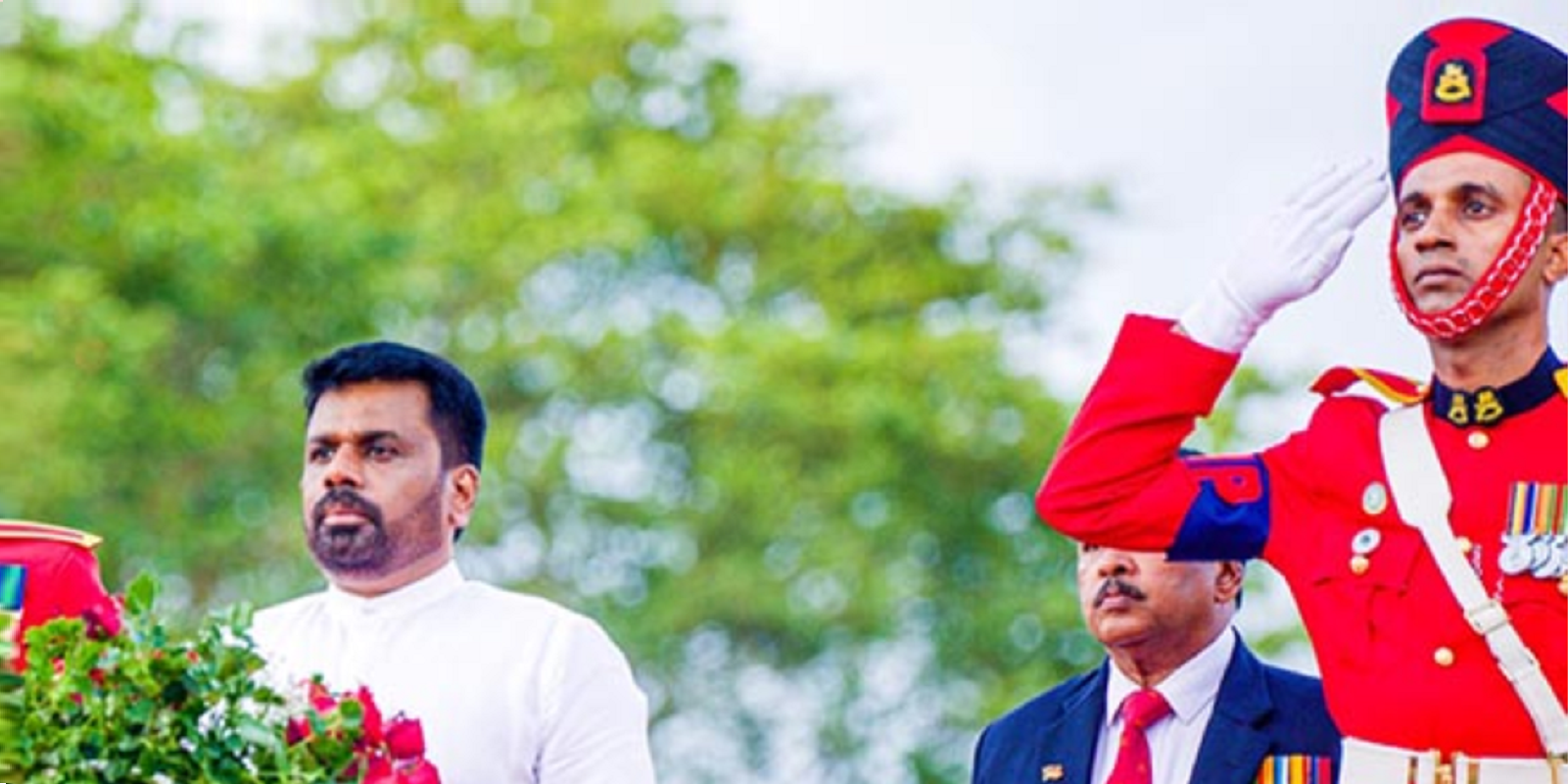
The government does appear confident that it has been able to secure enough fuel supplies for the immediate future. This week, it did away with the temporary holiday given to the state sector on Wednesday. The measure was applied for two weeks (the third Wednesday was anyway a Poya holiday). President Anura Kumara Dissanayake had earlier made it clear to his Cabinet that he did not wish for work to come to a halt owing to the crisis and that speedy measures should be taken to bring about normalcy.
Amidst the rising cost of living, President Dissanayake came to Parliament on Tuesday to announce a Rs. 100 billion relief package for three months to ease the burden on the public. The country has been put in a perilous situation due to multiple reasons, ranging from the fallout of the conflict in West Asia and the return of the dangerous climate cycle known as El Niño, which is likely to deprive the country of its regular rainfall, to the substandard coal imports that has dealt a major blow to the generation to full capacity by the Norochcholai plant.
The relief package announced by the President is for targeted groups and includes diesel, petrol, fertiliser and electricity subsidies, as well as an increase in the Aswesuma allowance.
In his address to Parliament, the President said that in light of the situation that has arisen alongside the conflict in West Asia, several sectors are currently experiencing considerable strain, prompting the government to initiate a programme of relief measures.
Here are extracts of the President’s speech:
“We examined the impact of rising fuel prices. If adjusted to market rates, the price of a litre of diesel would exceed Rs 600. This price includes a tax of Rs. 50. I have noted that some have proposed removing this Rs 50 tax. However, even if the tax were removed, the price would only reduce by Rs. 50. Instead, our approach is to retain the tax while allocating up to Rs. 100 per litre of diesel from the Treasury.”
“This means that on or around May 1, we will reintroduce the fuel pricing formula. This will be calculated based on actual data from the preceding month. At the next revision, a subsidy of up to Rs 100 per litre of diesel will be provided, calculated against the actual cost. Similarly, a subsidy of up to Rs 20 per litre of petrol will be granted. This will cost about Rs 20 billion a month. We have structured this proposal for three months. Accordingly, Rs 60 billion has been allocated for diesel and petrol subsidies.
“The fertiliser subsidy will be implemented through a well-structured system. Recommendations will be made based on the type of crop cultivated, whether paddy or other crops. We have also considered providing an additional subsidy, which will serve as a systematic criterion when extending other forms of assistance. Accordingly, we have decided to increase the fertiliser subsidy from Rs 25,000 to Rs 30,000. This subsidy incorporates other associated costs as well.
“In addition, given the higher extent of additional crop cultivation during the Yala season, we have decided to increase the fertiliser subsidy for such crops from Rs 15,000 to Rs 18,000. Furthermore, with regard to tea cultivation, we are already providing a subsidy of Rs 4,000 for a fertiliser bag to smallholder tea growers. In addition, we will provide a further one-off allowance of Rs 5,000 per bag. Altogether, this will cost about Rs 6.5 billion.
“The key issue we are facing is how to provide relief to low-income groups. At present, the only criterion we have to identify low-income earners is the Aswesuma programme. There have been certain criticisms regarding this. However, at this moment, Aswesuma remains the only systematic mechanism available to identify low-income households. Under the existing Aswesuma scheme, the benefit levels are Rs 17,500, Rs 10,000, and Rs 5,000. For April, we have taken steps to increase these benefits as follows: the Rs 17,500 allowance will be increased to Rs 25,000; the Rs 10,000 allowance to Rs 15,000; and the Rs 5,000 allowance to Rs. 7,500. Accordingly, an additional Rs. 8.5 billion will be incurred this month for this purpose.
“We have decided to provide a subsidy to consumers whose electricity usage is below 90 units to offset the changes in the next electricity bill. For this purpose, we will allocate Rs 5 billion a month, amounting to Rs 15 billion over three months. Current estimates suggest that losses over the three-month period may reach about Rs 32 billion. Of this, the government will bear Rs 15 billion, while around Rs 7 billion may arise from issues related to coal, which will be recovered accordingly.”
The President said that while the initial relief package is proposed for three months, if the situation deteriorates further, the government will return to Parliament with additional proposals. “We are striving to maintain bank interest rates below 10 per cent and inflation below 5 per cent. Any appreciation of the US dollar will have adverse effects on us. The relief measures we have introduced are aligned with the current circumstances. We will ensure an uninterrupted supply of energy and fuel until the end of May, supported by the fuel subsidy measures,” he said.
Coal crisis
While the President’s speech was geared towards reassuring the country that his government had the situation well in hand, there are real fears that another crisis is on the way. For days now, there have been fears that the low-grade coal supplied by India’s Trident Chemphar could lead to an electricity crisis and force authorities to impose scheduled power cuts. The bungled coal tender has been the source of much controversy and corruption allegations, though the official view from the government, including President Dissanayake, is that while the coal is definitely below standard, there was nothing wrong with the procurement process that led Trident Chemphar to be awarded the contract.
President Dissanayake acknowledged the problem with low-grade coal when he addressed Parliament to announce his government’s relief package. The problem for electricity arises in three main ways, said the President. “First, due to declining water levels in reservoirs, we are compelled to generate more electricity from thermal power plants. Second, there has been a significant increase in the prices of furnace oil, naphtha and diesel. Third, due to the reduced quality of coal, an issue frequently raised, there is a shortfall in expected power generation, which in turn requires us to compensate using other power plants at an additional cost.”
The President also accepted that the Lakvijaya Coal Power Plant in Norochcholai was generating below its required output of electricity. “At times, the expected 270 units are not achieved. The real issue lies in the quality of coal. This is not a problem with the tender process, but rather with the supplier failing to provide coal of the required standard,” he claimed. He added that the coal is tested in designated laboratories. “Before shipment, a laboratory report certifies that the coal meets the required standards. Based on this, we make 80 per cent of the payment. The remaining 20 per cent is paid after further testing in an Indian laboratory.” Nevertheless, the President observed that “for some reason, the coal continues to pass both laboratory tests.” While three shipments have failed, the rest have passed according to test reports, he pointed out.
He noted that the government has withheld the remaining 20% payments for certain coal shipments, while in some cases, it has imposed penalties and in others, the initial 80% payment has not been released.
The President insisted the cost arising from reduced electricity generation due to poor-quality coal must be borne by the supplying companies. “It will not, under any circumstances, be passed on to the public. It must be absorbed within the national system management framework.”
There was no question that the President’s comments also served as a defence of Energy Minister Kumara Jayakody, who has been under intense pressure over the past few weeks to step down from his post following multiple controversies surrounding him. Last month, the Commission to Investigate Allegations of Bribery or Corruption (CIABOC) indicted him before the Colombo High Court on the charge of corruption. The CIABOC accuses him of committing financial irregularity whilst he was serving as the procurement manager of the Lanka Fertiliser Company in 2016. He has been charged with causing a loss of more than Rs 8.8 million to the state through his alleged actions of allowing a contracted private company to make undue financial profits.
Opposition parties moved a No-Confidence Motion (NCM) against Minister Jayakody in Parliament on Friday. Among the charges made against him in the NCM were that he had “failed to discharge his primary duty of ensuring the procurement of adequate and good-quality coal for the Norochcholai Lakvijaya Coal Power Plant” and that he had recently been indicted by the CIABOC in the Colombo High Court on corruption charges.
The situation got even more awkward for Mr Jayakody (and for President Dissanayake) following the National Audit Office releasing a damning special audit report titled “Coal Purchase Process by Lanka Coal Company for the Lakvijaya Power Plant and the Coal Procurement for the Season 2025/2026″. Rather ironically, the report was tabled on the same day (April 7) that President Dissanayake used his speech to defend Minister Jayakody. The report has some troubling observations on how the entire saga unfolded and how Trident Champhar was awarded the coal contract.
“It was observed that the Lanka Coal Company, when establishing the criteria for registering coal suppliers, had relaxed those criteria to an unacceptable level and that criteria with lower standards than those requested with the bid documents had been considered during registration. Due to this, it was observed that suppliers with experience in supplying coal at or near the rejected gross calorific value level have also been given the opportunity to supply coal for this power plant,” the report notes.
The NAO had also observed that the total estimated loss due to overconsumption as a result of the increase in the amount of coal required to generate one kilowatt hour of electricity using coal in the original nine ships supplied by Trident Champhar Limited for the 2025/2026 season was Rs. 2,237.7 million as calculated by the audit.
A detailed story on the Auditor General’s report appears in our news pages. Suffice to say, despite the President and his government’s insistence that there is “no problem” with the coal procurement process, there is no question that the special audit report throws up serious concerns regarding the matter.
NCM against Jayakody
There had been calls in the days leading up to the NCM for Mr Jayakody to step down from his position. At a media briefing convened by parties of the Joint Opposition this week, former minister Prof. G.L. Peiris questioned the suitability of Mr Jayakody to hold the energy minister’s portfolio given that the ministry handles vast financial transactions and requires an official of “pure integrity”. He pointed out that the minister is currently on bail after being indicted by the Bribery Commission on corruption charges. Prof. Peiris also reminded the current administration—specifically the NPP government’s main party, Janatha Vimukthi Peramuna (JVP)—about its past stance during the no-confidence motion against then Health Minister Keheliya Rambukwella, where they argued that anyone supporting a tainted minister was complicit in fraud. “They should act now according to the stance they took then,” he stressed.
Minister Jayakody, though, has brushed aside the allegations against him, and the President and the NPP government have chosen to stand behind him. Opposition MPs have claimed that while there are those in the NPP who have privately expressed reservations with Mr Jayakody continuing to hold the Energy Ministry portfolio, they will have no choice but to bow to orders from Pelawatte (JVP Headquarters) and be compelled to use their votes to defeat the NCM.
Opposition MPs, meanwhile, are accusing the government of attempting to impose the burden of the loss suffered from the low-grade coal shipments onto consumers through electricity hikes. The government strenuously denies the charges, insisting that it will be able to recover the losses through the penalties imposed on the supplier. The opposition is also claiming that unannounced power cuts started being imposed this week to balance the system owing to the strain on it caused by the usage of low-grade coal. When the opposition made the accusations in Parliament this week, Minister Jayakody vehemently rejected such unannounced power cuts were taking place, arguing that the opposition was trying to label electricity breakdowns as power cuts.
IMF’s USD 700mn
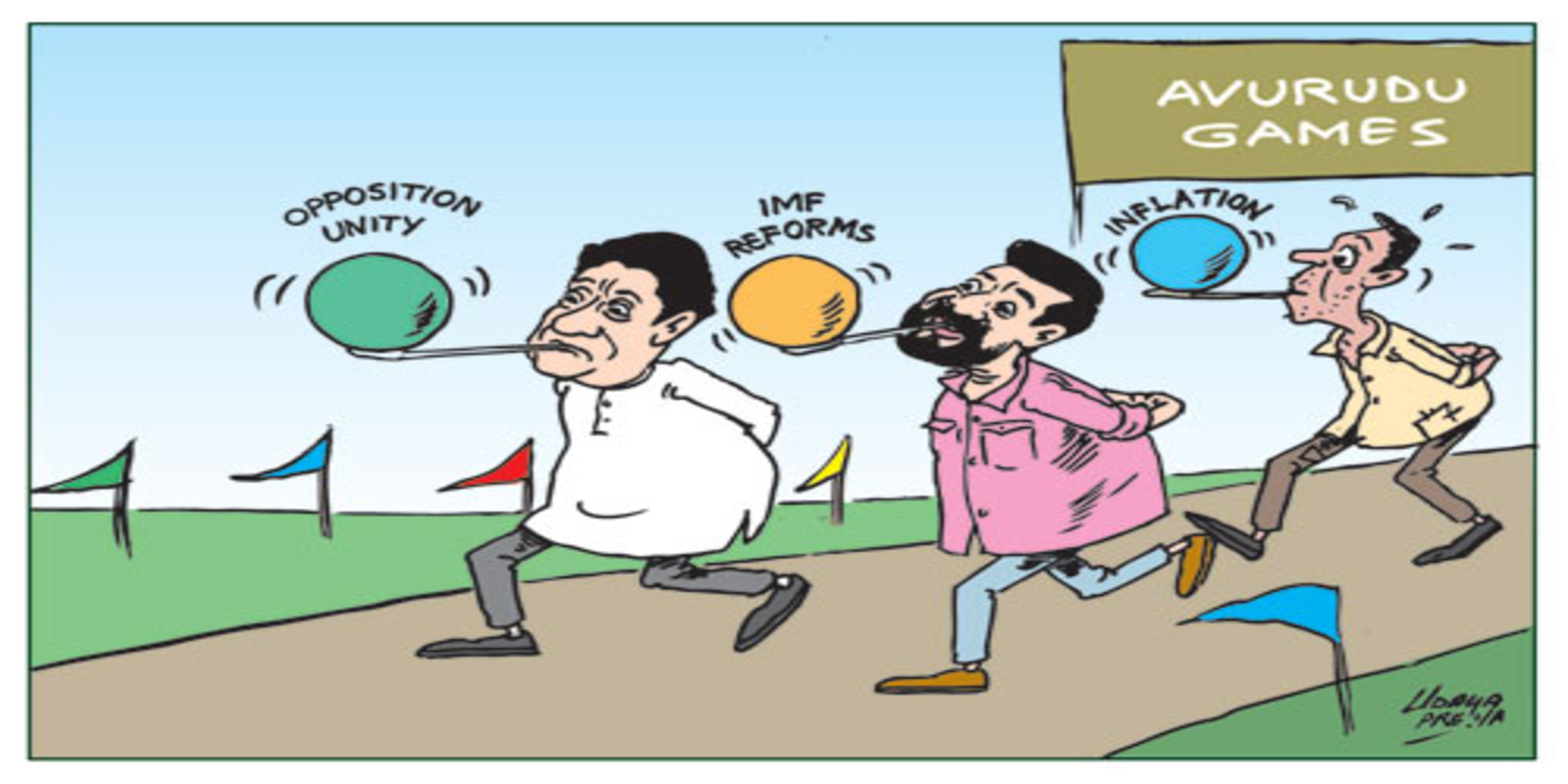
Though it has been facing unwelcome headlines owing to the low-grade coal scandal, the government would no doubt be breathing a sigh of relief after the International Monetary Fund (IMF) announced on Thursday that IMF staff and Sri Lankan authorities had reached staff-level agreement on economic policies to conclude the combined Fifth and Sixth Reviews of Sri Lanka’s reform programme supported by the IMF’s Extended Fund Facility. Once the review is approved by the IMF Executive Board, Sri Lanka will have access to about USD 700 million in financing.
“The economic reforms implemented by the Sri Lankan authorities have continued to support the recovery, with reserves accumulating and real GDP growth and revenue mobilisation outperforming expectations. However, Sri Lanka is significantly exposed to the Middle East conflict and needs to build back better following Cyclone Ditwah,” the IMF said in its statement announcing the agreement.
There are, however, conditions that need to be met. “The staff-level agreement is subject to IMF Executive Board approval, contingent on: (i) the restoration of cost-recovery electricity and fuel pricing while protecting the vulnerable and (ii) the completion of the financing assurances review, to confirm multilateral partners’ financing contributions and assess adequate progress with debt restructuring,” IMF Mission Chief Evan Papageorgiou stressed. The government will be increasingly under pressure in the weeks ahead on this cost-recovery pricing mechanism.
UNP-SJB talks
While the government is dealing with the challenge of stabilising the economy, Samagi Jana Balawegaya (SJB) leader Sajith Premadasa is facing some challenges from within his own party. One has been the lack of progress in the talks between the SJB and the United National Party (UNP) to strengthen cooperation between the two sides. While in January, Mr Premadasa described the talks held then as “successful” and expressed confidence that they would lead to a “victorious conclusion’, there has been no progress since then.
Hence some in the SJB now want to take the matter into their own hands and not allow the leader to be the sole decision-maker on the possible tie-in between the two parties. This week when the SJB’s management committee met, a group of MPs had said they would like to be party to the discussions, as there had been no progress in the talks between the two sides. They pointed out that delaying this, given the political climate in the country, would be a disadvantage. Mr Premadasa had in turn given the go-ahead for them to proceed with the talks.
In addition to this, Mr Premadasa is facing flak from some in his party for the decision to attend the recent book launch where Pivithuru Hela Urumaya leader Udaya Gammanpila unveiled a book titled ‘Looking for the Easter Attacks Mastermind’. His presence at the book launch has come under fire by some, particularly for his appearance alongside former Presidents Mahinda Rajapaksa and Gotabaya Rajapaksa, of whom the SJB leader has been a vocal critic.
Since the launch of the book, SJB MP Mujibur Rahman has gone public with a strong attack on Mr Gammanpila, accusing him of attempting to mislead the public and stir communal tensions. However, he refused to be drawn into the question of why his party leader made an appearance at the book launch.
SJB General Secretary Rajith Madduma Bandara, who was also at the event, has defended their presence, saying when they get an invitation, they accept it. “We didn’t endorse the views of Mr Gammanpila just because we attended the book launch,” the SJB General Secretary said.
The Easter Sunday terror attack investigation has got a renewed impetus with its seventh anniversary due in two weeks. These are likely to intensify as April 21 draws near. While the government which came to power with promises to find a ‘mastermind’, there has been no smoking gun so far, though the arrest of the former State Intelligence Services (SIS) chief Suresh Sallay has been showcased as a major achievement. However, there is unlikely to ever be a full closure to this case given that investigations so far have been aimed more at appeasing certain sections in the country than at a genuine attempt at justice for the victims and their families.
Meanwhile, there was welcome news for the UNP this week after party leader and former President Ranil Wickremesinghe, who had been recuperating following surgery at Mount Elizabeth Hospital in Singapore last month, returned to the country on Thursday. Party sources said Mr Wickremesinghe will be resting at home for several more weeks in keeping with his doctors’ advice.

ஒத்தவை:
சென்ற வாரம் இலங்கை-சண்டே ரைம்ஸ்