
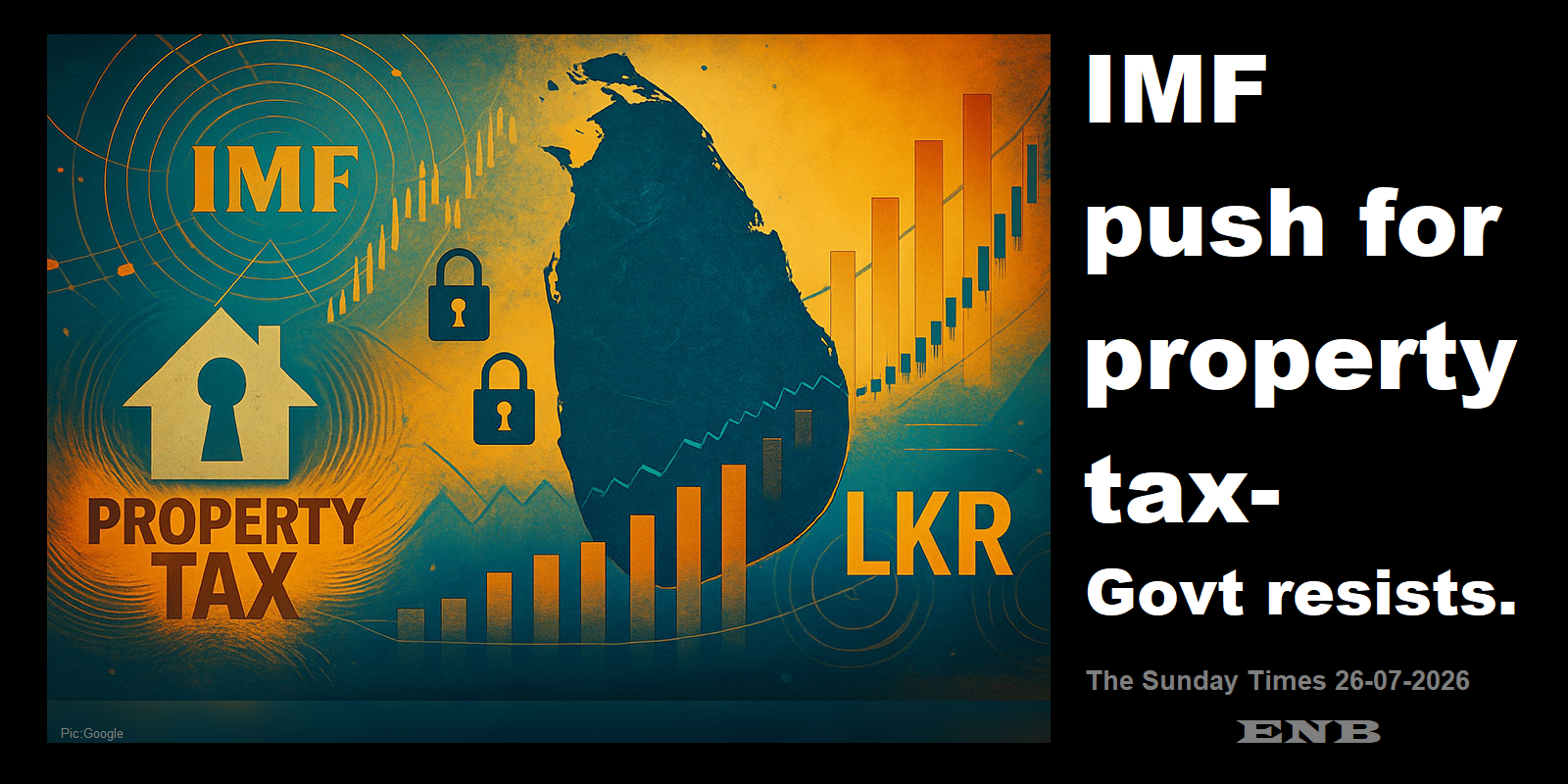
Govt resists, IMF push for property tax
IMF insists on secondary property tax in 2027 budget
Govt says revenue target met; no need for tax
By Damith Wickremasekara Sunday Times lk 26-07-2026
A difference of opinion between the International Monetary Fund (IMF) and the government has emerged over a proposal to introduce the secondary property tax in the 2027 budget proposals, the Sunday Times learns.
The IMF has proposed that the property tax targeting additional, or secondary, residential properties be introduced in the upcoming budget, but the government is of the view that the tax was not required as other revenue measures were available and that the revenue targets have already been met.
According to sources familiar with the ongoing budget consultations, the IMF raised the idea of taxing second and subsequent homes as part of the broader revenue mobilisation push that has underpinned Sri Lanka’s Extended Fund Facility programme since 2023.
The government has conveyed to the IMF that the revenue measures to be proposed for the 2027 budget were sufficient to meet the required targets, and therefore the necessity would not arise to introduce the tax.
Also, the government believes that a proper database about ownership of property would be required and therefore would take time to prepare such information.
The Sunday Times learns that there is a strong possibility that the IMF may continue to push for the introduction of the tax, even if it does not materialise in the 2027 budget proposals.
The original 2023 commitment envisaged a conventional nationwide property tax by 2025. A technical mission in February 2024 found it blocked on two fronts: the Thirteenth Amendment assigns property-related tax revenue to the provinces, ruling out a straightforward central levy, and the Valuation Department had no usable, current data on the country’s roughly five million properties.
The Fund’s workaround, published that August, was an Imputed Rental Income Tax — taxing the deemed rental value of a person’s own home as income, sidestepping the constitutional problem — targeted for April 2025, then abandoned after the November 2024 election when the current government judged it was not workable.

ஒத்தவை:

சென்ற வாரம் இலங்கை-சண்டே ரைம்ஸ்