Case against Govt bid to extend judges’ retirement age reaching critical point
- BASL convenes special meeting to oppose what it calls attempts to undermine judicial independence; seeks meeting with President
- Opposition parties join the fray, but insiders say their campaign lacks force;
- Govt proceeds without offering convincing justification
- Underworld raises ugly head again, sparking questions about Govt’s Ratam Ekata anti-crime drive
By our ST Political Desk 02-08-2026
Tucked in between the “Amalgamation of Department of Social Services, the National Secretariat for the Elders and the National Secretariat for Persons with Disabilities” and “Conducting the Regional Dialogue for East and South Asia Regions of Green Climate Fund” in the list of Cabinet decisions issued on Tuesday by the Department of Government Information was Cabinet Decision No. 12.
The proposal, presented by Justice and National Integration Minister Harshana Nanayakkara the previous day, called for the amendment of the Constitution and the Judicature Act to “Make the Judicial Process More Efficient and Formal”. Thus, the proposal which had garnered much opposition over the past few months obtained the official seal of Cabinet approval, paving the way for the change of the Constitution and the law. In approving the proposal, the National People’s Power (NPP) government made it clear that it is determined to go ahead with increasing the retirement age of judges despite growing opposition to the move.
When reports emerged last week that the proposal to extend the retirement age of judges, including those of the superior courts, was about to be presented at the next Cabinet meeting, there were last-minute requests for the government to pause and hold further consultations on the matter. Bar Association of Sri Lanka (BASL) President Rajeev Amarasuriya wrote on social media that he hoped that better sense would prevail and that those promoting the amendment “will pause, reflect, and place the long-term interests of our constitutional democracy above all else.” The request went unheeded.
If the Cabinet’s approval of the proposal signalled the government’s intention to push ahead with a controversial constitutional amendment to increase the retirement age of superior court judges, then those who are opposed to such an amendment also moved swiftly to assert that they were equally determined to thwart those plans.
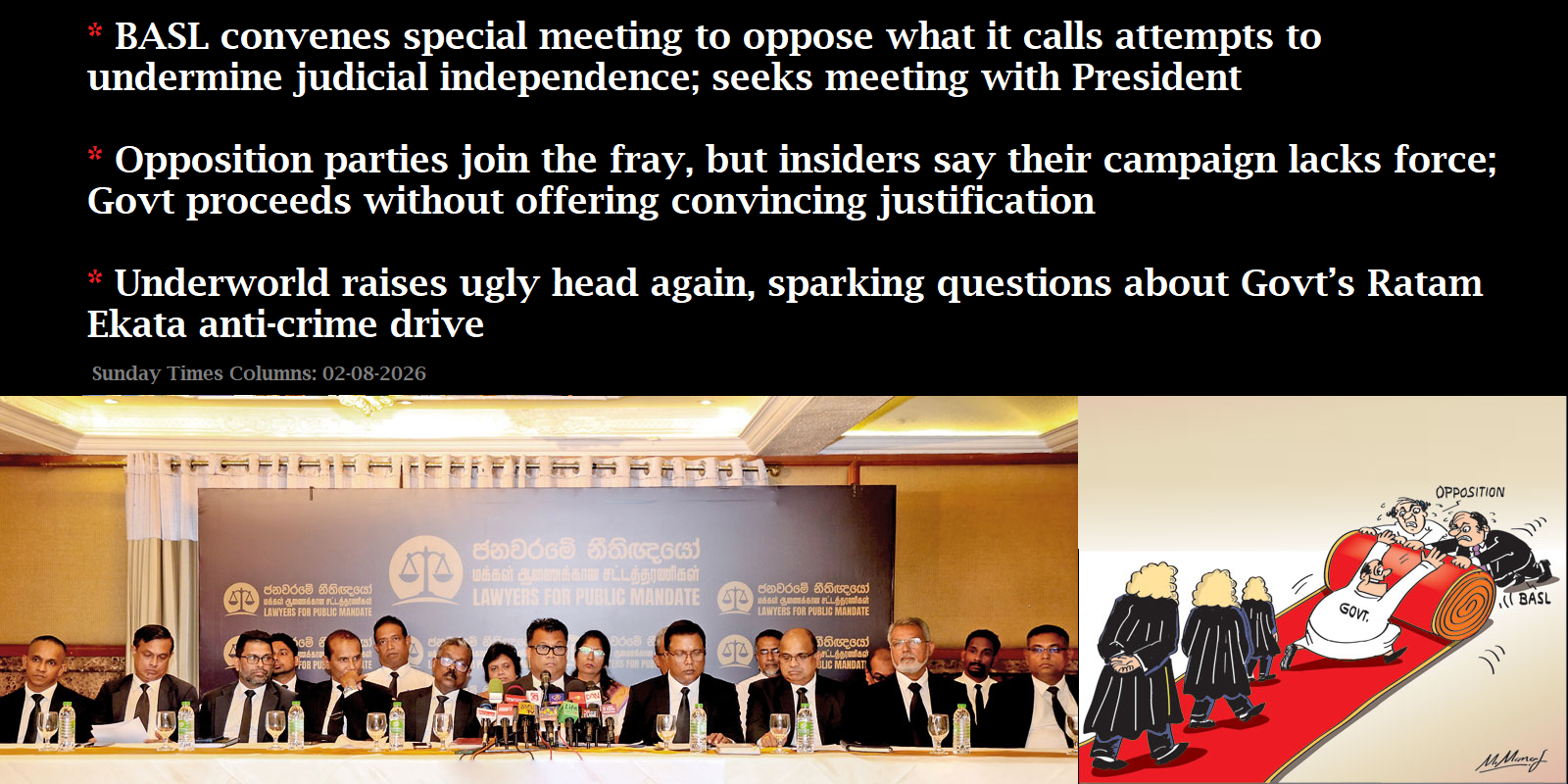
On Wednesday, the BASL headed by Mr Amarasuriya convened a special general meeting of its entire membership. Estimates vary about the total number in attendance, both physically and virtually, with some reports saying more than 3,500 lawyers were physically present. The BASL stated afterwards that it was the largest gathering of its membership in history. Government sources, however, disputed the BASL’s claims of a historic turnout, and it was not long before pro-government social media accounts started circulating screenshots of the virtual turnout of the BASL’s meeting, claiming that the numbers that had joined physically and virtually were vastly inflated. What was not in dispute was that the general membership who were present unanimously passed a resolution emphasising that the Association “unequivocally opposes” the government’s move to introduce a constitutional amendment increasing the retirement age of superior court judges while those judges are still in office.
A number of opposition politicians, who are also lawyers and members of the BASL, were present at the meeting. They were joined by NPP Leadership Council and Executive Committee member Lal Wijenayake, who broke with his party to publicly oppose the government’s move. Mr Wijenayake told the media that the proposal to increase the retirement age of judges had not been requested by the party’s leadership, executive or steering committees.
The BASL’s resolution emphasised that “no compelling necessity, objective evidence or institutional justification” has been publicly demonstrated to warrant such a constitutional amendment. Moreover, it charged that the proposal has been advanced without any comprehensive consultative process involving the judiciary, the Bar, academia, civil society or other relevant stakeholders and without advertence to the available independent studies or constitutional review.
The resolution referred to the Justice Sector of Sri Lanka Assessment and Strategic Action Plan: Commercial, Contract and Investment Law Enforcement – prepared following extensive consultation with stakeholders under the auspices of the Ministry of Justice – pointing out that the report identifies numerous structural reforms necessary to strengthen the justice system “but does not recommend extending the retirement age of judges as a reform priority”.
The pressing challenges confronting the justice system include judicial vacancies, case delays, inadequate judicial resources, insufficient technological modernisation, procedural inefficiencies and the need for comprehensive institutional reform, all of which require urgent attention, the BASL’s resolution insisted. It added that vacancies in the Supreme Court and the Court of Appeal should be filled expeditiously in accordance with the Constitution, rather than altering the constitutional tenure of serving judges.
“Public confidence in the administration of justice depends not only upon the actual independence of the judiciary but also upon the appearance of that independence,” the resolution asserted.
Accordingly, the BASL stressed that the proposed amendment should not proceed in the absence of a demonstrated institutional necessity; a transparent and evidence-based justification; meaningful consultation with all relevant stakeholders; and a comprehensive assessment of its constitutional implications.
It went on to add that any future review of judicial retirement ages should form part of a comprehensive judicial policy and constitutional reform process conducted following broad public consultation, comparative study and independent expert evaluation.
The BASL’s resolution further called upon the President, Government and all Members of Parliament to “uphold the Constitution, respect the institutional independence of the judiciary, preserve public confidence in the administration of justice, and refrain from proceeding with constitutional amendments affecting the tenure of serving judges unless such proposals are demonstrably necessary, transparently developed, widely consulted upon, and fully consistent with Sri Lanka’s constitutional traditions and international obligations relating to judicial independence.”
Though the government had not met with BASL representatives in the days leading up to the proposal on judges’ retirement age being presented to the Cabinet, Justice Minister Nanayakkara invited representatives of the Association for a discussion on Wednesday evening, mere hours after the BASL’s membership had passed the resolution opposing his Cabinet proposal. There was no major breakthrough at the hour-long discussion beyond the Justice Minister’s agreement to study the issues raised by the BASL as to why the Association opposes the government’s plans to increase the retirement age of the judges. The BASL had also sought the Justice Minister’s intervention in convening a meeting with President Dissanayake to explain its position. The BASL stated that Minister Nanayakkara agreed to put the request for a meeting to the President and revert.
BASL President Amarasuriya, who has led the Bar’s opposition to the government’s proposal, estimated that well over 97% of the Bar, together with almost the entire judiciary, are opposed to the proposed constitutional amendment to increase the retirement age of judges. Writing on social media, Mr Amarasuriya observed that, in the past few days, the BASL has received “resolution after resolution” from its 93 branch associations, each expressing support for the BASL’s “principled position” on this matter. He also pointed out that the Judicial Service Association (JSA), representing district judges and magistrates, had also unequivocally objected to the proposed constitutional amendment and had already conveyed this via letter to President Dissanayake.
Nevertheless, a media briefing convened by a pro-government group of lawyers styling themselves as the “Lawyers for Public Mandate” on Thursday tried to drive home the government’s position that the BASL was not the lone voice among lawyers when it came to the proposal on judges’ retirement age. Those who addressed the media briefing argued that by working to increase the retirement age of judges, the government is following through on its pledges made to the people during the 2024 election campaign. It was noted that the government will grant a two-year extension to the retirement age of all judges – from the magistrates all the way up to the Supreme Court justices. The organisation’s lawyers also pointed out that there was little opposition when the controversial 20th Amendment to the Constitution increased the number of judges on the Supreme Court and the Court of Appeal. They also gave a long list of countries where the retirement ages of judges have been increased over the years. Indeed, in countries such as the United States, the positions of Supreme Court justices are lifetime appointments. The contention was that raising the retirement age of judges would ensure that experienced judges would remain longer on the bench, helping to efficiently clear the more than 1.1 million cases that were currently pending in court.
Opposition to the government’s planned move is not just coming from the legal fraternity. The Church of Ceylon (the Anglican Church in Sri Lanka), also issued a statement this week expressing “concern and disappointment” with the Cabinet’s decision to proceed with the proposed constitutional amendment to raise the age of retirement of appellate court judges.
“The government’s attempts at justifying the amendment, citing the need for a speedy disposal of a backlog of cases, were seriously undermined by the fact that a large number of vacancies remain in the appellate courts for reasons that have no rational or principled explanation. We can only conclude, therefore, that the real motivation for this amendment lacks bona fides,” said the statement, signed by Reverend Dushantha Rodrigo, Bishop of Colombo, and Reverend Nishantha Fernando, Bishop of Kurunagala.
The Church of Ceylon’s statement further called upon the President and the Cabinet of Ministers to withdraw the proposed constitutional amendment, for the legislature to remember that its primary function is to check the executive, and the judiciary and its leadership to be mindful of the damage that this amendment will cause to its reputation and the Rule of Law in the country.
The issue is also drawing international attention. Even before the proposal to increase the retirement age of judges was presented to the Cabinet, the Commonwealth Lawyers’ Association (CLA) and the Law Association for Asia and the Pacific (LAWASIA) had expressed concern over the proposed move. This week, it was also reported that the French National Bar Council (Conseil National des Barreaux – CNB) adopted a resolution in support of the BASL over legitimate concerns about the constitutional reforms proposed by the government regarding the judiciary. Only time will tell how much damage will be caused to the government’s international reputation by the impending battle over the constitutional amendment to increase the retirement age of superior court judges.
Opposition campaign
On the political front, the government’s decision to extend the age of retirement of Supreme Court and Court of Appeal judges has galvanised the opposition and brought together political friends and foes. The most significant coming together has been of former president and United National Party (UNP leader Ranil Wickremesinghe and Opposition Leader and Samagi Jana Balawegaya (SJB) Sajith Premadasa, who sat side by side at the meeting spearheaded by Mr Premadasa and held at the Office of the Leader of the Opposition in Colombo last Saturday.
The presence of the UNP leader was a boost for the Opposition Leader given the past animosity between the two, but much water has flowed under the bridge, and relations have thawed to some extent between them by now. The others who were present at Saturday’s meeting included Sri Lanka Podujana Peramuna (SLPP) National Organiser Namal Rajapaksa, former Prime Minister Dinesh Gunawardena, and several other opposition party leaders, MPs and representatives.
Questions obviously are being raised over the motley crew of opposition politicians coming together, with even insiders wondering if such a group can make any impact on public sentiments or on those in government on the judge’s issue.
An insider who wished to remain anonymous said that the opposition politicians who have come together to collectively oppose the government decision on judges’ retirement age have no practical ways in which to handle the situation given that everyone has a different opinion on the matter and it is unlikely to win much public support. “It could be a matter of too many cooks, spoiling the broth. So far, the opposition has been unable to make a meaningful impact where this issue is concerned. It’s more important to engage with professionals and get them to raise their voices against this move,” he said.
The source noted that the government seemed focused on passing the constitutional amendment raising the judges’ retirement age ahead of the upcoming 2027 budget. Given the speed in which the government seems to be moving to get its amendment approved, the chances of preventing the amendment from going through are extremely slim. Nevertheless, he said it was important to engage with professionals over the proposed amendment in order to build public opinion against the government’s plans.
The government too has not taken the joint opposition attempts to draw public attention to the judges’ retirement age extension issue seriously and has questioned the credibility of those who have come together for political convenience. “This seems an attempt to stop the court cases against those in the former administrations who are facing corruption and other charges. This will only strengthen our hands,” a senior government source said.
The source claimed that professional bodies such as the BASL and the JSA had prepared a good battleground to fight against the government’s attempts to increase the retirement age of judges. For a while, the government was also finding it difficult to effectively convey its message on why such a constitutional amendment was necessary and was coming under increasing pressure. “However, the politicians then took over and tried to hijack the fight for their own political ends. This gave some breathing space to the government to come up with an effective counter-strategy,” said the source. “The government can point out those facing court cases for various acts of wrongdoing among the opposition politicians as evidence of how this is only about delaying their own court cases from being heard expeditiously,” he remarked.
Another government source, however, even played down the opposition to the government’s move by the BASL, saying it does not have the widespread support. Underestimating the influence of BASL, however, could be detrimental to the government.
Ilankai Thamil Arasu Katchchi (ITAK) secretary and former parliamentarian M.A. Sumanthiran PC was among the lawyers who attended the BASL special session on Wednesday. He said it is an untimely move by the government to bring such a constitutional amendment without due process. “The meeting shows the whole legal fraternity is totally against it,” he said.
Mr Sumanthiran also said this amendment would put the judges of the Supreme Court in a difficult position where they will have to hear a petition involving their own career.
“I believe this is an ill-thought-out move,” Mr Sumanthiran said while recalling previous instances of successive governments’ attempts to deal with the judicial sector, including the impeachment of former Chief Justice Shirani Bandaranayake by the then Mahinda Rajapaksa government. “If they move ahead with this, it will be the start of their sliding,” he stressed.
The point that the judges of the Supreme Court will have to sit in judgement of a constitutional amendment involving their own legal careers would be akin to the popular Sinhala idiom “Naduth hamuduruwange, baduth hamuduruwange”. While the government can push ahead with the amendment if it so wants, what could be damaging at the end is the credibility of the judiciary, which has to outlive any political party in power.
Those opposed to the government’s proposed constitutional amendment also point out that when it campaigned for the 2024 elections, the NPP had decried ad hoc constitutional amendments and instead pledged to introduce a new constitution for the country. Indeed, in its election manifesto, ‘A Thriving Nation, A Beautiful Life’, the NPP stated that it hopes to ‘introduce a new constitution that strengthens democracy and ensures equality of all citizens’. This initiative will build on the constitutional reform process started in 2015 which remains incomplete,’ said the manifesto. The manifesto added that the proposed constitutional reforms will guarantee equality and democracy and the devolution of political and administrative power to every local government, district and province so that all people can be involved in governance within one country. Two years into its rule, however, there is no indication yet about the party moving forward on its promise.
The same election manifesto also stated the following about the government’s aim for judicial reforms: “Independent and efficient administration of justice and public confidence in the process are crucial in establishing the rule of law. However, the public has lost its faith due to the allegations of undue influence, lack of independency and transparency, delays in the process and expensive nature of litigation in the judicial process. The National People’s Power hopes to rebuild the broken public trust in it by creating an independent, efficient, transparent and affordable judicial system.”
There is certainly a sense of irony in that claim that the public has lost its faith due to the “allegations of undue influence, lack of independency and transparency in the judicial process”, as the same type of phrases are being used against the NPP government’s latest move. Opponents of the proposed constitutional amendment argue that such an amendment, if it comes into being without being subjected to a public referendum, would amount to a blatant interference with the independence of the judiciary and would certainly result in the public losing its faith in the entire judicial process.
Anti-drug drive
Meanwhile, the NPP’s national anti-drug initiative titled “A Nation United” (Ratama Ekata) may not be going exactly according to plan with no let-up either in the number of killings, shootings, etc. relating to drug gang wars in the country since the programme was launched late last year. In fact, the influence of drug kingpins seems to have grown to such an extent that this week the Kavadi dance performance, a crucial segment of the Devinuwara Uthpalawanna Sri Vishnu Maha Devalaya Esala Perahera, was almost called off after threats to the Nilame of the Devinuwara Devalaya.
The issue came to the fore after an audio recording purportedly linked to underworld figure Mohommad Imran alias ‘Kanjipani Imran’ alias KPI circulated, threatening the Basnayake Nilame of the Devinuwara Devalaya and demanding that several Kavadi groups excluded from last year’s procession be allowed to participate.
Another audio recording was later released by a person known as Sehan Sathsara alias ‘Dehi Bale Malli’, another underworld figure, opposing the demand. A shooting incident near a residence close to the Devalaya was also reported on July 21.
In view of the security concerns surrounding the perahera, the Inspector General of Police Priyantha Weerasuriya recommended removing the Kavadi segment from the procession. He was acting on intelligence reports indicating a possible risk of clashes involving individuals linked to organised crime groups. However, this move had an unexpected political fallout for the government with many stating that the government is unable to handle a law-and-order situation involving a regional perahera due to threats from underworld figures which in turn led to the reversal of the IGP’s directive.
Public Security Minister Ananda Wijepala intervened to state that 45 Kavadi dance groups that participated in the Devinuwara Uthpalawanna Sri Vishnu Maha Devalaya Esala Perahera last year have been granted permission to take part in this year’s procession, and additional security arrangements, including the deployment of police and Special Task Force personnel, were made. The perahera went ahead without incident on Tuesday.
While the government may have saved face where the perehera was concerned, there was a blow this week in the case involving underworld gang leader Nadun Chinthaka Wickramaratne, alias ‘Harak Kata’.
The Colombo High Court ruled that charges filed under the Prevention of Terrorism Act (PTA) cannot be maintained against five accused, including ‘Harak Kata’, over an alleged conspiracy to escape while in custody of the Criminal Investigation Department (CID) under detention orders.
The Court stated that there is no legal impediment to proceeding with charges filed against the accused under the Penal Code, considering the offences they are alleged to have committed.
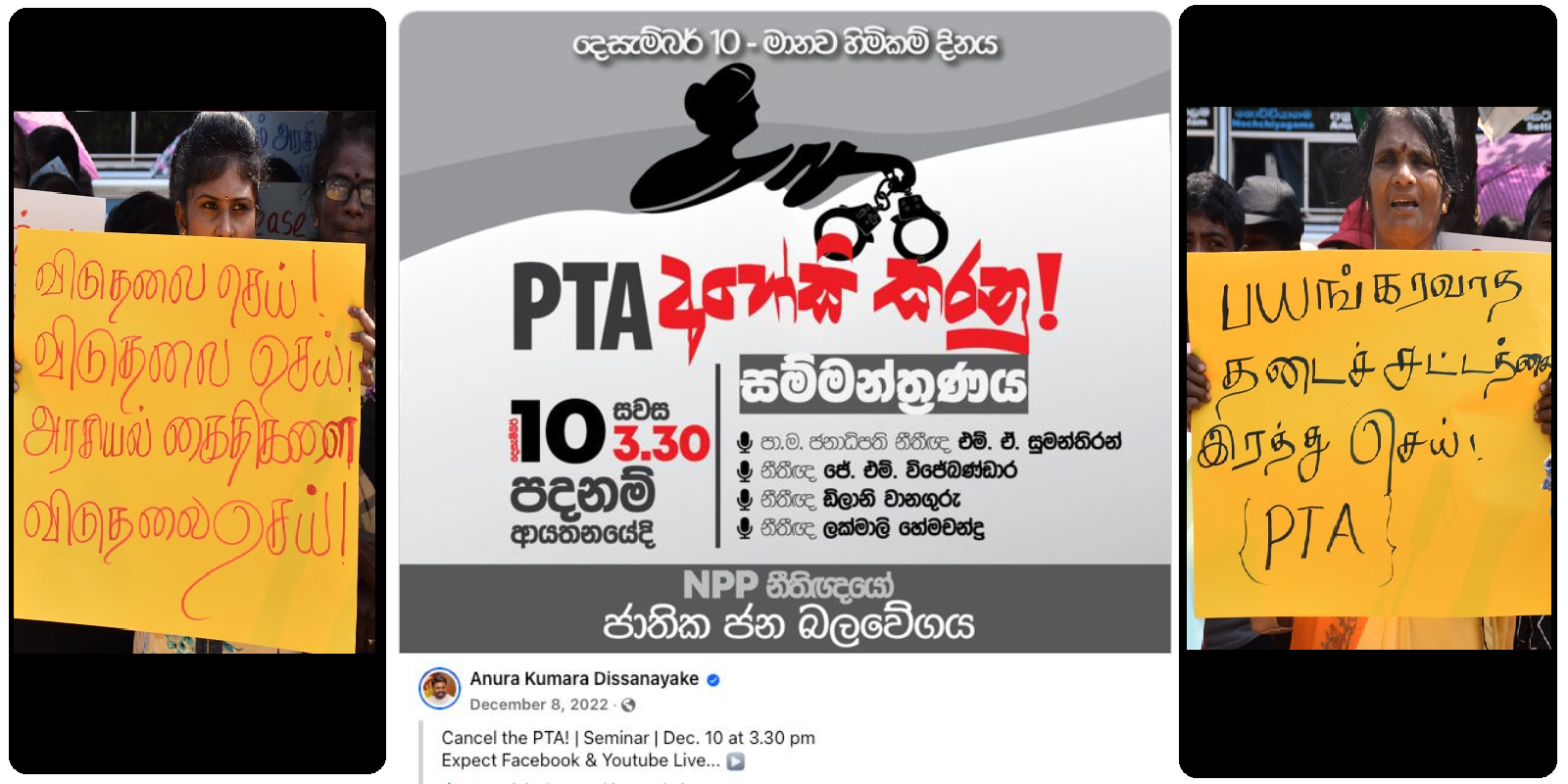
This will put the authorities in a tight spot given that ‘Harak Kata’ has been in custody for over three years since his extradition from Madagascar to Sri Lanka in March 2023. He is being held on 90-day detention orders under the PTA. The use of the PTA to deal with drug-related offenders has been problematic from the start, and this is another instance where using the law, which the NPP has pledged to repeal, has misfired.
‘Shocking’ judgement
Meanwhile, Friday’s judgement by the Colombo Permanent Trial-at-Bar sentencing former IGP Pujith Jayasundara and former Defence Secretary Hemasiri Fernando to death after finding them guilty of criminal negligence and other charges relating to the 2019 Easter Sunday terror attacks has sent shivers down the spine of those serving in the Police Department.
A senior serving officer says that the initial reaction has been one of shock, and many expressed fears for their future once retired from the department.
“The manner in which retired police officers are being hounded is discouraging many serving officers. They will be unable to do their job properly given that a future government may start hounding them over their actions while in the line of duty under this government,” the officer said, speaking on condition of anonymity.
He added that officers involved in the ongoing crackdown on illicit drug trade could be among those who could face charges one day in a similar manner and hence many will be discouraged from doing their duty.
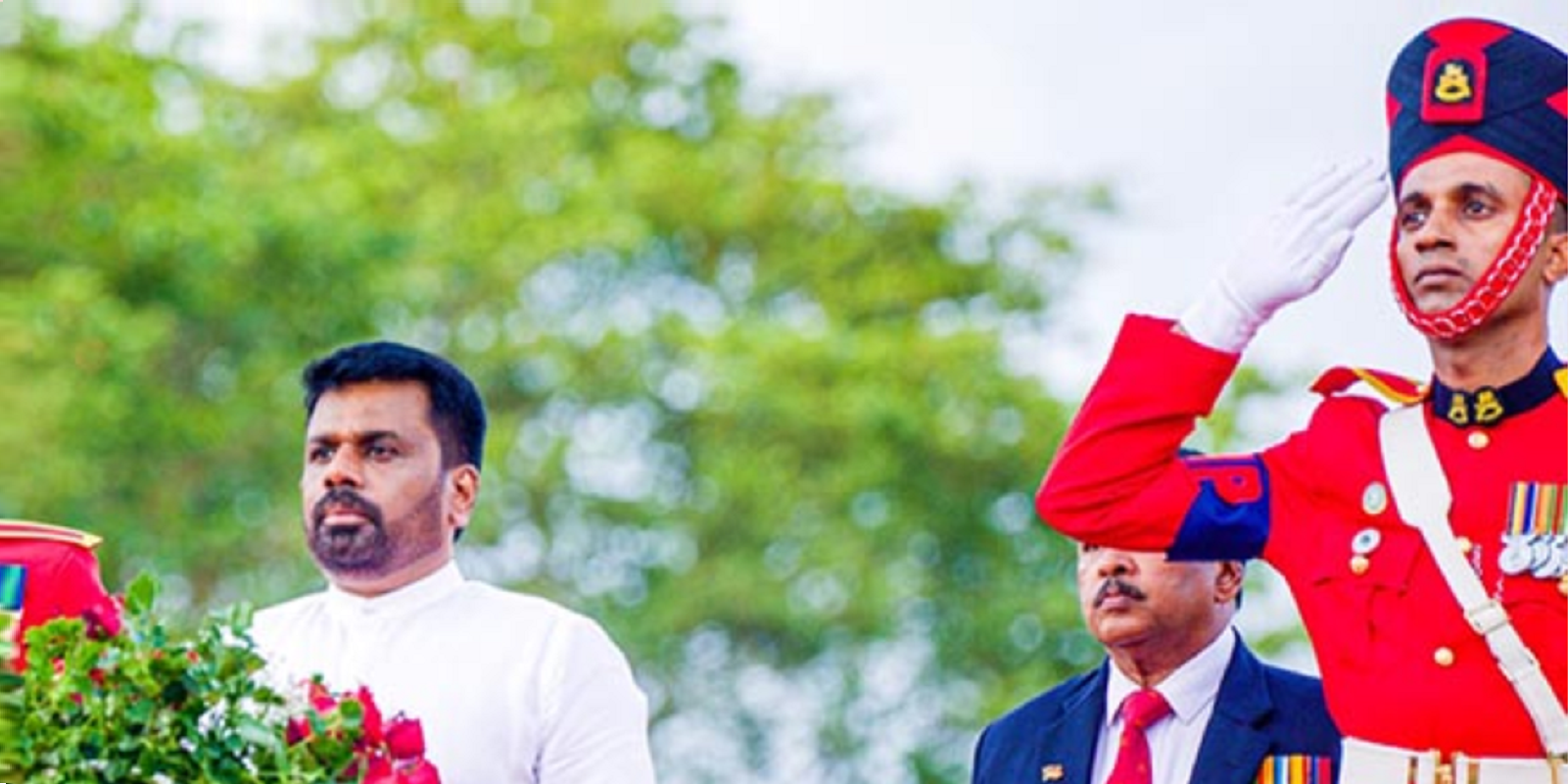
If multiple controversies surrounding the judiciary and the law and order situation have put pressure on President Anura Kumara Dissanayake, he certainly did not show it. The President joined thousands of devotees on Wednesday to attend the final grand procession of the annual Esala Perahera at the historic Ruhunu Kataragama Maha Devalaya, where he hailed the annual pageant as a symbol of Sri Lanka’s cultural heritage and national unity.

ஒத்தவை:

சென்ற வாரம் இலங்கை-சண்டே ரைம்ஸ்