As prison riots add to its woes, Govt resists dropping move to extend judges’ retirement age
- Despite NPP’s manifesto pledge to reform prisons, no comprehensive plan in place
- Corruption within prison system is as much a concern as overcrowding
- Opposition escalates campaign against amendment; legal challenge looms
- Indian foreign secretary’s visit sparks renewed calls for provincial council elections
By our ST Political Desk 09-08-2026
Before taking power, the National People Power (NPP) seemed to have understood the problems embedded in the country’s prison system, going by the contents in its election manifesto ‘A Thriving Nation, a Beautiful Life’. But two years on, instead of any meaningful steps being taken to put the system in order, the situation has worsened inside prisons with uprisings by inmates in several facilities within the past three weeks and fears that there would be more in the weeks ahead.
While some government seniors have hinted at a ‘conspiracy’ behind the spate of incidents of unrest in prisons, overcrowding seems to be the main problem leading to the unrest. While overcrowding has been a problem for many years, the situation has worsened in the past two years with the prison population jumping from 29,000 to 40,000, while the NPP’s pledges of a ‘humanitarian prison – a lawful confinement” are long forgotten.
This week there was unrest in four prisons – Mahara, Magazine Remand Prison (Colombo), Kuruvita and Pallansena – which left three prisoners dead and scores of others injured. Some of the prisoners died of gunshot injuries after the Police and Social Task Force (STF) personnel were called in to quell the unrest, with the army also deployed outside the prisons for crowd control.
Senior DIG Ranmal Kodituwakku, who heads a special rapid deployment unit, was the first to reach the Mahara and Magazine prisons during the unrest, which also led to an attempted jailbreak.
“Some of the prisoners had managed to improvise iron rods and other material at hand to try and break the outer walls of the prisons and escape. These were thwarted due to the quick action by the police and STF,” Senior DIG Kodituwakku said. He said tear gas had to be used to bring the situation under control at Mahara and Magazine prisons.
Justice Minister Harshana Nanayakkara, under whose purview the Prison Department functions and who survived a no-confidence motion against him less than two weeks ago over the Negombo Prison riots, is once again under fire, including from some within the government. While the NCM was roundly defeated in Parliament, with 152 government MPs voting against it with only 36 voting in favour, some of those who supported Mr Nanayakkara have asked him to rein in the situation in prisons soon or face repercussions.
A senior government source who wished to remain anonymous said that at a meeting held on Friday with President Anuara Kumara Dissanayaka to discuss the prison matter, with Public Security Minister Ananda Wijepala, the Justice Minister and Inspector General of Police Priyantha Weerasooriya in attendance, there were some strong words directed at the Justice Minister for the worsening situation in prisons. The President himself had wanted better action plans in place in each of the country’s 32 prisons to avoid any further unrest.
On Thursday, Minister Nanayakkara replied to queries raised by MP Dayasiri Jayasekara regarding the prison situation. He acknowledged that prison overcrowding was the main problem. However, without admitting to any fault during his tenure, the minister chose to blame past rulers for the overcrowding issue. “We are facing this crisis because not a single government in the past 20 years has taken any action to develop this infrastructure. This is not a problem that was created after we came to power. But I accept that we must solve it,” he said.
A senior official familiar with the government plans, including opening new facilities, releasing remand prisoners on special amnesties and amending the law governing bail for suspects arrested in connection with drug-related offences, said there is no cohesive plan in place to deal with the prison overcrowding except for ad hoc measures that are being announced.
“Given that a majority of remand prisoners are those linked to drug-related offences, there are no shortcuts to solve this problem. What has been mooted so far are ‘Band-Aid solutions’ which will not provide any long-term solutions,” he said.
The official said that in the NPP’s manifesto, it had been clearly said that the prison had become a place to punish prisoners rather than to reform them, and they have become criminal centres due to drug trafficking and underworld activities – but they remain the same. The main focus where drug addicts are concerned should be rehabilitation, without which releasing them prematurely could lead to a breakdown in the law and order situation. Rushing to release prisoners and changing laws will not help without proper rehabilitation centres and clear-cut programmes such as community programmes,” he said.
While the government can formulate programmes to ease overcrowding and provide better facilities, etc., according to sources familiar with the working of the prisons, the recent unrest has been largely due to drug addicts turning violent, unable to get their drug supplies, which they usually did even from behind bars.
“It’s an open secret that many of the addicts have access to smuggled drugs inside the prison, but due to the tightening of the security checks, this has become difficult. This is a main reason for their uprisings inside the prisons,” the source said.
Corruption within the prison system isn’t helping, with many jailers being accomplices in bending the rules in favour of prisoners, with parallel administrations being run within prisons. “There are separate businesses being run inside the prison by some corrupt jailers. Some charge Rs 1500 for phone charging, Rs 1000 for an extra bucket of water, etc. Unless this kind of insider deal-making is stopped, it’s unlikely the situation in prisons can improve,” he said.
With more and more high-profile drug dealers being locked up in recent months, the government’s thinking is that they too may be instigating the unrest within prisons to divert attention from the ongoing crackdown on organised gangs linked to the drug trade.
“Due to the recent unrest, hundreds of police, STF and even military personnel have to be deployed to guard prisons. This takes away the resources to carry out raids on criminal gangs, and hence it is possible that they too may be instigating this kind of situation,” a government source said.
While corruption within the Prison Department isn’t entirely new, those in the service say it’s a thankless job without proper facilities and safeguards for them.
The recent killing of the ten prison officials, having been beaten to death by prisoners, has left their colleagues shaken, and this in turn has led to allegations that prisoners are being subjected to torture and beatings on a regular basis. The situation is worse for prisoners who were transferred from Negombo to other facilities.
After the Negombo prison clash, inmates from there were transferred to Welikada, Anuradhapura, Wariyapola, Jaffna, Bogambara, Monaragala, Boossa, Kuruwita, Aguna Kolapalessa, Polonnaruwa, Batticaloa, Kalutara and Pallasena.
When asked about the allegations of torture of prisoners, Minister Nanayakkara told Parliament that various complaints have been made on social media sites regarding this matter. He said the ministry secretary has appointed a ministerial-level investigation committee to investigate whether any attacks have been made on the detainees.
The Committee for the Protecting Rights of Prisoners (CPRP) has exposed the cruel treatment being meted out to the prisoners and called for proper investigations into such claims.
Its members who have been outspoken on the issue claimed that they have received death threats for speaking up on the plight of the prisoners. The CPRP said it has received two death threat letters dated July 17, 2026, and postmarked August 1, 2026, by a group identifying itself as the Patriotic Defence Force and addressed to CPRP executive director Senaka Perera and CPRP convener Sudesh Nandimal Silva.
CPRP has lodged a formal police complaint and also notified the Human Rights Commission (HRCSL).
Judges’ retirement age
Even as the government grappled with the problem of rising unrest within the country’s prison system, it continued on with its controversial plan to increase the retirement age of superior court judges. On Friday, the bill for the 22nd Amendment to the Constitution, which will raise the retirement age of Supreme Court and Court of Appeal judges, was gazetted. The draft bill includes provisions to raise the retirement age of Supreme Court judges from 65 to 67 years and the retirement age of Court of Appeal judges from 63 to 65 years. The draft bill also proposes that the Chief Justice retire upon reaching 67 years of age or after completing a term of six years from the date of appointment as the chief justice, whichever comes first. Furthermore, the draft amendment proposes to increase the number of judges on the Court of Appeal (including its president) from 20 to 25.
Also published in the gazette on Friday was the Judicature (Amendment) Bill, which aims to increase the number of judges on the High Court and increase the retirement age of High Court judges and all other judges. Accordingly, the draft bill includes provisions to increase the number of High Court judges from 110 to 120. It also proposes to raise the retirement age of High Court judges from 61 to 63 years. In addition, the retirement age of all other judges and magistrates has been stipulated at 62 years, notwithstanding the provisions of the Public and Judicial Officers (Retirement) Ordinance.
Meanwhile, the government’s moves to amend the Constitution to extend the retirement age of superior court judges continue to draw local and international concern. This week, the International Association of Judges (IAJ), the world’s largest organisation representing national judges’ associations, released a statement stating that it shares the serious concerns expressed by many other entities, including the Judicial Service Association of Sri Lanka and the Commonwealth Lawyers Association, regarding the proposed amendment.
“From the perspective of the IAJ, it is (i) the timing of and the manner of introduction of, and (ii) the widely perceived reason for this proposed legislation, that causes us to be very concerned, rather than the concept, generally, of making changes to the mandatory retirement age of judges,” the statement noted.
The statement stressed that first, the timing and the manner of introduction of such proposed legislation ought not to be on the basis of an “arbitrary, ad hoc, and peremptory announcement”, as the case here, but that it should rather be on the basis of a “reasoned, principled, consultative, and robust procedure of constitutional amendment”. Otherwise, the independence of the judiciary is threatened, the Association emphasised.
Second, where it is perceived by many knowledgeable observers that such proposed legislation is designed to benefit a specific judicial officer, or officers, as here, regardless of whether that was, in fact, the government’s intention or not, the independence of the judiciary is undermined, the statement pointed out.
Founded in Salzburg, Austria, in 1953, the IAJ represents 93 national associations of judges from five continents around the globe. The Association’s statement is yet another serious blow to the government’s credibility and is yet more evidence that it has so far failed to allay fears, especially within the legal community, that it is determined to push ahead with the controversial amendment because it wants to keep certain judges on the bench for longer and push others out. If that is indeed the motive, it would certainly amount to a blatant interference with the judiciary, no matter how often and how vociferously the NPP and its backers deny it.
As the IAJ statement pointed out, the timing and the manner of introduction of the proposed constitutional amendment, as well as the perceived reason for such an amendment to be submitted at this time, are the issues that have given rise to the significant opposition against the draft legislation. For one, the process of drafting the amendment has been shrouded in secrecy. There was no prior consultation with the various stakeholders, particularly within the legal community, regarding the proposed amendment. This was despite it being known at least since April that the government was mulling changing the Constitution to raise the retirement age of superior court judges.
The government’s initial response after its plan was exposed by former Justice Ministers G.L. Peiris and Wijeyadasa Rajapakshe was to simply say that such an amendment had not been discussed by the Cabinet. This position was soon abandoned, however, with a public acknowledgement that the matter had been discussed and an assurance that the views expressed by both those for and against the amendment would be taken into account when taking a decision. There was no indication, though, that the government had actually listened to both sides before deciding to go ahead with the plan. One would do well to remember that Justice and National Integration Minister Harshana Nanayakkara only gave the Bar Association of Sri Lanka (BASL) a meeting to discuss the matter last week after the Association voted overwhelmingly to oppose the government’s proposed constitutional amendment. The BASL had also sought a meeting with President Dissanayake to discuss its concerns over the proposed amendment, but no such meeting had taken place up until yesterday.
Critics also note that initially, the government was only interested in raising the retirement age of superior court judges through a constitutional amendment. They charge that the amendment to the Judicature Act to raise the retirement age of lower court judges was only announced in the face of fierce opposition to the proposal to raise the retirement age of Supreme Court and Court of Appeal judges.
The government’s justification for raising the judges’ retirement age is that it will keep experienced judges in service longer, aiding efforts to clear a backlog of more than 1.1 million pending court cases. This reasoning, however, has been challenged, with those opposed to the government’s plans pointing out that no effort has been made towards filling existing vacancies in the superior courts. With the retirement of Court of Appeal Judge Dhammika Ganepola in May, there are currently as many as eight vacancies in the superior courts (four each in the Supreme Court and the Court of Appeal). Again, the justification given by those within the government regarding the delay in filling superior court vacancies is that the government wants to fill the vacancies in the lower courts first since this is where most cases are pending.
Nevertheless, the fact that eight vacancies in the superior courts have been left unfilled for more than three months has led to accusations that the NPP government is keeping these positions vacant as a form of inducement for lower court judges, some of whom might be pressured into delivering judgements favourable to the government. This may not be the government’s intention, and indeed, senior ministers have bristled at such accusations. They insist that even the suggestion that judges could be persuaded to deliver favourable judgements in hopes of promotion to the superior courts is insulting to the judiciary. The problem for the government, however, is with perception, and as long as the vacancies remain unfilled, there will always be those who will question the prolonged delay.
While the BASL has been leading the Bar’s opposition to the proposed constitutional amendment, opposition parties have been campaigning against it on the political front. The United National Party’s (UNP) Working Committee, which met this week, passed a resolution calling on the government to suspend the proposed constitutional amendment for the moment.
Clearing the backlog of cases is the expectation of all parties, the party said after the meeting. In this regard, the UNP noted that the Ranil Wickremesinghe government took steps to obtain a “Governance Diagnostic Assessment” in consultation with an International Monetary Fund (IMF) technical team.
The party observed that the assessment report’s observations on the backlog of cases specifically point out that the backlog affects the lower courts, with the annual workload of district judges being about 2000 cases, while magistrates handle over 5000 cases per year.
Especially in the Commercial High Court, there is a clear lack of sufficient staff to support court administrative work and judicial research, the UNP stated, quoting the report. It usually takes 6-7 years to enforce a contract in Sri Lanka, and severe delays can be seen as the norm. Matters related to the recovery of money are the most common type of case before the High Court.
In addition to improving the capacity of Alternative Dispute Resolution (ADR) mechanisms, judicial procedures should be comprehensively reviewed and revised to encourage speedy resolution and minimise trial time, the party statement noted, while stressing that the evaluation report nowhere mentions the need to extend the tenure of judges.
Given these facts, the government’s argument for extending the retirement age of judges is in no way acceptable, the party has emphasised. Instead of pushing ahead with the plan to increase the retirement age of judges, Parliament should first discuss the report prepared by the IMF’s technical team. Before that, the views of the Attorney General, Judiciary and the Bar Association of Sri Lanka can also be taken in this regard, and a new methodology can be formulated, the UNP proposed. After suspending the proposed constitutional amendment, the government should discuss a new system to clear the backlog of cases with all relevant parties, prepare it and present it to Parliament. “It should then be proposed by the Ministry of Justice, and we will fully support it,” said the UNP.
The main opposition Samagi Jana Balawegaya (SJB), meanwhile, handed over to Speaker Jagath Wickramaratne a resolution calling for the appointment of a Parliamentary Select Committee (PSC) to obtain proposals for accelerating the hearing and resolution of a backlog of approximately 1.1 million cases pending in the judicial system. A group of SJB MPs led by Opposition Leader Sajith Premadasa handed over the resolution to the Speaker on Tuesday (4). The submission of a resolution calling for a PSC to be appointed on the matter followed a decision reached during the recent meeting of opposition parties at the Opposition Leader’s office in Colombo.
Both those for and against the proposal to increase the retirement age of superior court judges have also been lobbying influential religious leaders regarding the matter. The Church of Ceylon (the Anglican Church in Sri Lanka) has already come out publicly against the government’s constitutional amendment. Other religious leaders, however, have remained silent.
Representatives of the BASL were in Kandy earlier this week to brief the Mahanayake Theras regarding the proposal to raise the retirement age of superior court judges. After his meeting with the Mahanayake Thera of the Malwathu Chapter, BASL President Rajeev Amarasuriya told the media that the Thera informed him that the chief prelates of the Malwathu, Asgiriya and Ramanna Chapters had sent a letter to the President expressing their opposition to the proposed constitutional amendment.
Government sources disputed this, with Justice Minister Nanayakkara telling Parliament that he had not received such a letter, nor had the President informed him of receiving such a letter. Minister Nanayakkara and Cabinet Spokesman Nalinda Jayatissa subsequently visited the Mahanayake Theras as well, with Minister Jayatissa claiming that the prelates had accepted the government’s explanation and did not express opposition to the proposed judicial reforms. Ministers Nanayakkara and Jayatissa also called on Colombo’s Archbishop Malcolm Cardinal Ranjith to brief the Catholic Church regarding the proposed judicial and prison reforms. Neither the Mahanayaka Theras nor the Catholic Church has so far commented publicly on the proposed amendment.
The government has also been staunchly defending the proposed amendment in Parliament. “Raising the retirement age of judges is merely a very small part of the overall judicial reform process,” Minister Nanayakkara told Parliament on Tuesday in response to a question raised by Mr Premadasa. He added the government has been implementing reforms from the day it assumed office. “We must prevent trials from being delayed and citizens from being dragged through the courts needlessly. The public has realised that, in the past, individuals who committed wrongs were acquitted after changes of government due to cases dragging on indefinitely,” he claimed.
Upon coming to power, the government increased the number of courts in Colombo, the minister pointed out. Eleven High Courts with high case backlogs have been identified, and proposals have been made to establish 11 High Courts outside Colombo. The numbers of small claims courts and commercial high courts have been increased, as have trial-at-bar high courts. Steps are being taken to recruit the necessary judges to hear trial-at-bar cases outside Colombo. Arrangements are also being made to temporarily establish Courts of Appeal outside Colombo.
The minister said recruitment of new magistrates is currently under way. There is an insufficient number of magistrates, so interviews will have to be called once again. New court buildings are being constructed and supplied with the necessary facilities. Furthermore, to address the acute human resource shortage in the Attorney General’s Department, steps have been taken to recruit new state counsel and grant promotions. Measures have also been taken to recruit officers to the Government Analyst’s Department and provide them with the required resources, Minister Nanayakkara elaborated. “Extending the retirement age of judges while implementing these judicial reforms remains just a minor part of the broader reform work.”
With the 22nd amendment now gazetted, opposition parties are preparing legal challenges to the draft bill in the Supreme Court. They will also be continuing their fight against the draft amendment outside Parliament and the courtroom. SJB General Secretary Ranjith Maddumbandara told the Sunday Times that opposition parties will be calling on foreign diplomatic missions in Colombo in the coming days to brief diplomats about the damage the proposed constitutional amendment will cause to the independence of the judiciary. They will also be holding joint public meetings at the district level to educate the people about the harm the amendment will cause, he added.
Sri Lanka Podujana Peramuna (SLPP) General Secretary Sagara Kariyawasam agreed, claiming that the government is trying to abuse the power of the judiciary through the proposed constitutional amendment. The power of the executive, coupled with the power of the judiciary, could destroy the country if it became aligned, he warned. He claimed that it has now come to a point where the very survival of the government seems dependent on it passing the amendment. “I believe the government will move ahead with this amendment even if the entire country opposes it. This is because they know it is needed for them to move forward with their agenda and to crack down on all those who oppose it,” said the SLPP general secretary.
Speaking on grounds of anonymity, a senior government source heaped scorn on allegations the government’s proposed constitutional amendment amounted to an interference with the judiciary. He pointed out that the NPP government has been in power now for 22 months. The present Attorney General was appointed under the previous government but has continued to serve under the current administration, he pointed out. “We also appointed the senior-most justice on the Supreme Court as the CJ. We didn’t parachute people in from outside and made them CJ, unlike some previous presidents,” he quipped. He claimed there is currently a “misconception” that the government is trying to interfere with the judiciary by giving a two-year service extension to the present CJ but insisted one cannot control the judiciary in such a way.
He pointed to ongoing delays in court cases involving politicians and other politically aligned individuals. Sometimes, this is due to delays at the Attorney General’s Department or other agencies. There are also delays owing to writ petitions and fundamental rights petitions being filed in the superior courts. The courts have already granted certain orders that have prevented investigations from proceeding further in relation to certain individuals, said the source. “If the courts are subservient to us, such delays would not occur. The government did not control the courts before this amendment, and neither will it control the courts afterwards. The judiciary is independent.”
Court cases are now being filed against many politicians, he pointed out. “If they go to prison, even if they get out, their chances of successfully re-entering politics are low. This is why they are so afraid of these court cases. They also know that this is not the type of President who will grant pardons to convicted politicians, unlike those who occupied the position previously,” the source remarked. He said the government expects opposition parties to go all out against the constitutional amendment in the coming days but insisted the government will be equal to the task.
Indian foreign secretary’s visit
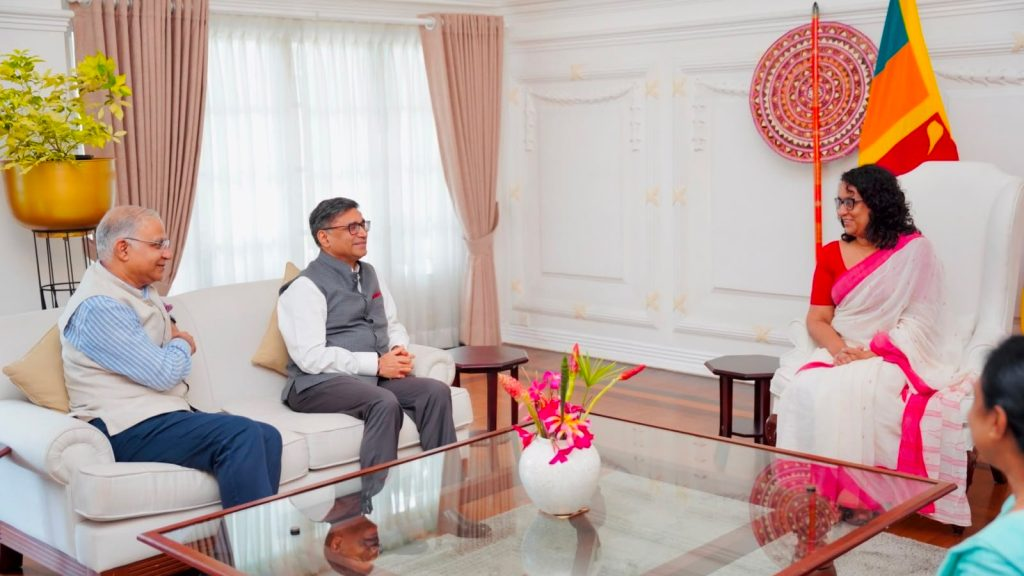
Indo-Lanka relations were in focus this week when India’s Foreign Secretary Vikram Misri visited Sri Lanka. There’s always been hide-and-seek in the India-Sri Lanka relations, with the two sides rarely speaking in one unified voice in matters of mutual interest, but these usually get buried under the layers of diplomatic jargon that come out in statements after high-level engagements.
However, after Mr Misri’s latest trip to Colombo, where he met with President Anura Kumara Dissanayake, some of the contents contained in the press releases issued by the Indian Ministry of External Affairs were missing from the statement issued by the President’s office in Colombo.
This was with regard to the holding of the long-delayed elections to provincial councils as well as the full implementation of the Thirteenth Amendment to the Constitution. The statement by the Indian MEA said the visiting Foreign Secretary also “called upon the Sri Lankan leadership to implement their commitment to hold Provincial Council elections at the earliest and to fully implement the constitutional provisions of Sri Lanka to meet the aspirations of the Tamil people.”
However the President Office was mum on this matter and instead chose to focus on progress of Indian projects in the country, humanitarian assistance, regional challenges of drug trafficking, climate change, etc.
SJB MP Nizam Kariappar, who is in the Political Council of the Tamil-Speaking People, was among those who welcomed Mr Misri bringing up the issue of PC polls with the President. “The Political Council of Tamil Speaking People notes with gratitude that the Indian Foreign Secretary has, as promised, taken up the issues we raised with the High Commissioner. As promised, the High Commissioner briefed the Foreign Secretary immediately, on the eve of his arrival in Sri Lanka. We appreciate this prompt and constructive engagement,” Mr Kariapper said on his X handle.
The group had met with Indian High Commissioner Santosh Jha hours before the Indian Foreign Secretary arrived in Colombo. During the meeting, the delegation discussed its ongoing efforts to secure the long-overdue Provincial Council elections and expressed the hope that the Government of India would continue to support these efforts while noting that India had played a pivotal role in the establishment of the Provincial Council system in Sri Lanka through the Indo-Sri Lanka Accord.

ஒத்தவை:

சென்ற வாரம் இலங்கை-சண்டே ரைம்ஸ்