Main opposition SJB’s campaign against 22A draws flak
- Bid to get BASL leaders to address MPs fails; House Leader slams move as contradictory to Parliament’s business committee process
- Senior lawyers denounce MPs’ personal attacks on Chief Justice in Parliament as ‘shocking’ and ‘not done’
- As government’s 22A caravan moves on regardless, Ranil’s warnings of an economic crisis evoke response from Deputy Finance Minister
- New anti-terror bill ready; Govt sources say it depoliticises PTA; Salley’s wife writes to President, seeks end to detention
By our ST Political Desk 23-08-26
Amid vehement protests by opposition MPs, who held up placards likening the legislation being tabled in Parliament to the death of democracy, Justice and National Integration Minister Harshana Nanayakkara presented the first reading of the controversial 22nd Amendment to the Constitution on Tuesday morning. The bill aims to extend the retirement age of judges of the Supreme Court and Court of Appeal while also increasing the number of Court of Appeal judges to 24. The Judicature (Amendment) Bill, which seeks to increase the number of judges on the High Court and increase the retirement age of High Court judges and all other judges, was presented to the House, separately, at the same time.
As recently as early June, Cabinet Spokesman Nalinda Jayatissa told the media in response to a question that there had been “no discussion” within the government about extending the retirement age of judges. The fact that things had moved so rapidly within the next two months for Minister Nanayakkara to present a draft constitutional amendment to do exactly that leads one to reach two conclusions – either Minister Jayatissa was not being truthful when he said there had been no such discussion or the government had decided, quite suddenly in fact, that it needed to move at astonishingly rapid speed to pass such an amendment. What is so urgent about this particular matter? No one in the government has so far been able to present a clear explanation.
While the government still insisted just over two months ago that any decision to increase the retirement age of superior court judges had not been discussed, there has been speculation going back even longer that this was exactly what it intended to do. In early April, former Justice Ministers G.L. Peiris and Wijeyadasa Rajapakshe held a media briefing where they alleged the government was weighing the possibility of changing the Constitution to extend the retirement age of superior court judges. As such, it is hard to believe that those occupying the highest positions of the National People’s Power (NPP) government and its main party the Janatha Vimukthi Peramuna (JVP) had not been interested in the idea for a while.
Former minister Ranjith Siyambalapitiya presents the first copy of his book to former president Ranil Wickremesinghe as former president Maithripala Sirisena looks on
Initially, those within the NPP administration claimed that raising the retirement age of superior court judges would help to reduce the backlog of some 1.1 million cases currently pending in court. This argument, though, lost much of its logic when it was pointed out that the vast majority of the pending court cases are in the lower courts. Then, when the Judicial Service Association, representing magistrates and district judges, unanimously voted at a special general meeting to oppose moves to raise the retirement age of superior court judges, the government swiftly modified its earlier plan and opted to extend the retirement age of all judges by introducing the Judicature (Amendment) Bill in addition to the draft bill on the 22nd Amendment.
Now, with the presentation of the 22nd Amendment Bill to Parliament this week, the government has firmly set its sights on passing the controversial legislation no matter how much local and international opposition it has generated.
Those opposed to the proposed bill started filing petitions challenging its constitutionality in the Supreme Court within hours of it being presented to the House. The first petition filed against the draft bill was filed on Tuesday afternoon itself by the Bar Association of Sri Lanka (BASL), which has been leading the fight against the amendment on behalf of the private bar. Others who have filed petitions challenging the bill as of Friday include the main opposition Samagi Jana Balawegaya (SJB), former Minister G.L. Peiris, the Sri Lanka Podujana Peramuna (SLPP), the Sarvajana Balaya and a number of civil society organisations.
The BASL and other petitioners are requesting the Supreme Court to rule that the bill is unconstitutional and, if it is to be constitutional, to rule that it should be passed by both a two-thirds parliamentary majority and a public referendum. They are also asking that the petitions challenging the bill be taken up by a full bench of the Supreme Court.
The protest seen during the presentation of the draft constitutional amendment was not the only time things got heated in the House owing to plans to raise the retirement age of judges. For some time now, Opposition Leader Sajith Premadasa has been attempting to bring the BASL to Parliament so that it can conduct a briefing for MPs regarding the 22nd Amendment. The plan was to hold the briefing for all MPs rather than those of the opposition alone. On Wednesday, he informed the House that the BASL had accepted his invitation to brief all 225 parliamentarians in the House regarding the 22nd Amendment and that a BASL delegation would be in Parliament from 12 pm to 1.30 pm on Thursday to brief MPs. “I believe this briefing should be held for all 225 MPs and not just for a section of them,” Mr Premadasa said, adding that all MPs were welcome to attend the briefing scheduled for the following day.
The Opposition Leader’s invitation for all MPs to attend the BASL delegation’s briefing elicited a strong rebuke from House Leader and Minister Bimal Rathnayake. He referred to minutes from the meeting of the Committee on Parliamentary Business chaired by the Speaker on August 7, where it was decided that any move to hold such a briefing for “all MPs” can only be done by the Committee on Parliamentary Business with the consultation and agreement of the Leader of the House. “The Committee on Parliamentary Business has not given permission for any professional organisation or anyone else to convene a briefing for all MPs. That is very clear,” emphasised Minister Rathnayake. He insisted that neither the opposition leader nor any “professional organisation” had the power to “summon” all MPs for a briefing. For one thing, such a development would be against parliamentary procedure. Moreover, if Parliament were to allow it, it would set a precedent where it would also have to allow every other group representing lawyers to hold similar briefings, as even the lawyers are divided on the proposed amendment, Mr Rathnayake argued.
Mr Premadasa shot back that he never “summoned” anyone and that the briefing was open to all MPs. “Anyone who wants to come can do so and those who don’t can stay away,” he said.
Democracy and judiciary under attack: Carrying placards, Opposition Leader Sajith Premadasa and opposition MPs stage a protest in Parliament as the 22nd Amendment was presented in the House on Tuesday
The opposition leader’s attempts to convene a briefing with the BASL, however, failed yet again as the association sent a letter to him on the same day requesting him to postpone the event. A letter signed by BASL President Rajeev Amarasuriya noted that the opposition leader’s proposal was “important and timely” given the national importance of the matter, but that the association had hoped there would be “bipartisan consensus” where an opportunity could be created for all MPs to better understand and appreciate the BASL’s concerns on the proposed constitutional amendment.
“However, in light of the proceedings in Parliament today, i.e. 19.08.2026, and the position of the Government expressed threat, there appears to be no consensus on the same, nor interest presently by the Government to provide this opportunity to its Members of Parliament,” Mr Amarasuriya’s letter observed. He added that since the Opposition has already voiced its vehement objection to the proposed amendment, the briefing would have been useful for Government MPs to “objectively consider their approach to the same”. As such, the BASL President said the association would like to request the opposition leader to take steps to postpone the briefing until there could be assured bipartisan participation.
The BASL President’s claim that the position of the government had “expressed threat” was to create yet more controversy over the saga as the government bristled at the use of the word “threat”. Chief Government Whip Nalinda Jayatissa told Parliament on Wednesday that the letter sent by the BASL Chief in which he had claimed the Government’s position articulated by the Leader of the House amounted to the Government expressing a “threat” was inappropriate according to parliamentary tradition. “There was no such threat,” asserted Mr Jayatissa. Mr Premadasa supported the BASL’s position, arguing that the government’s attitude had indeed been threatening towards the BASL.
The BASL President, meanwhile, made things awkward for himself by first telling the website of a government-run newspaper that the word “threat” may have been a typo and the correct word could have been “there at,” before backtracking and saying the word was indeed “threat”. The fact that the BASL president was initially unaware about a word in a letter he had signed himself provided fodder for pro-government elements to heap scorn on the association.
A government source described the opposition leader’s attempt to set up a briefing for MPs with the BASL as “a case of lawyers going to meet with the accused,” referring to all the cases that are pending in court or are likely to be filed against various opposition politicians. He ridiculed the BASL President’s flip-flopping regarding the word “threat” contained in the letter sent to the opposition leader but stressed it was Mr Premadasa who had been the real loser in the whole saga. “We didn’t think the opposition leader was so ignorant of parliamentary procedure, where it is a requirement to obtain the permission of the Committee on Parliamentary Business to set up such a meeting. There is a procedure to be followed. No organisation can come into Parliament whenever they see fit to lecture MPs. If the BASL was ignorant of this, the opposition leader should have explained it to them,” he said.
The main opposition, Samagi Jana Balawegaya, may also be putting all its eggs in one basket by making its opposition to the 22nd Amendment to the Constitution its political mainstay, but the decision this week to invite representatives of the BASL to brief all MPs on the issue backfired and ended up embarrassing both the SJB and BASL. The government on its part outright rejected Opposition Leader Premadasa’s proposal for all MPs to be briefed by BASL, following which BASL also showed it had lost interest in doing so, leaving the SJB leader looking a bit out of place.
An opposition source, meanwhile, conceded that whatever technical points opposition heavyweights such as Ranil Wickremesinghe may raise regarding the 22nd Amendment, they will not be able to stop the caravan moving on. “This is up to the Supreme Court now,” he said, but noted the amendment is not to help the government to “arrest thieves”. The source claimed the ultimate goal behind the amendment is to aid the NPP when it brings its new Constitution. “We believe this Constitution is set to cement the NPP/JVP’s goal of having one-party rule.
The battle over the 22nd Amendment may now have moved to a new phase, with the proposed amendment being challenged in court. Amid the various Fundamental Rights petitions challenging the bill, there was no shortage of talk of the matter in Parliament all through the four sitting days this week. One unfortunate aspect of the situation was that some opposition MPs stepped outside parliamentary decorum and, arguably, parliamentary rules to level personal attacks directed against the Chief Justice and members of his family. None of the MPs offered any substantive evidence on the allegations they were making but were not stopped by those chairing the parliamentary proceedings at the time. The result is that those allegations, carried on Parliament’s live video feed, are now freely available to view on the internet, going viral on social media, and will remain available even if a subsequent review results in the comments being expunged from Hansard, the official record of Parliament proceedings.
Senior lawyers and BASL members who oppose the 22nd Amendment were critical of such personal attacks being levelled by opposition MPs against the judiciary under the cover of parliamentary privilege.
“It is very sad to see these kinds of unfounded allegations being brandished by parliamentarians within the Well of the House,” said President’s Counsel Upul Jayasuriya, who was a member of the BASL delegation that had met President Anura Kumara Dissanayake to oppose 22A. He noted that MPs cannot make such references to judges without a substantive motion and added that it was “shocking” that they were allowed to make such allegations. “All I heard was them being told their time was up. That was not what they should have said. They should have told the MPs they could not make such comments. It is so unfair. Parliamentary privileges, traditions and rules – everything is being violated when such comments are being allowed.”
He pointed to the potential damage such allegations can do to both the judiciary and the country’s international image. “One can oppose the amendment but not level personal attacks by hiding behind parliamentary privilege. The thing to remember here is that the judiciary cannot respond to these allegations. We have to maintain the dignity of the courts.”
President’s Counsel U.R. De Silva, also a former BASL President, said such kinds of vituperative remarks of a personal nature are “not done”. Whether the government brought this amendment to favour some individual or group of judges is a different matter, he said.
Mr De Silva noted the BASL and others have already dismantled the government’s argument that extending the retirement age of superior court judges would help clear the backlog of cases pending in court by pointing out that the overwhelming majority of the 1.1 million pending cases were in the lower courts, with more than 800,000 cases at the Magistrate’s Court level and 260,000 others at the District Court level. He further pointed out that amendments have already been submitted to the Legal Draftsman to amend the existing Poisonous, Opium and Dangerous Drugs Ordinance to make it possible to allow for bail to be obtained from the High Court rather than the Court of Appeal for those arrested for possessing less than 100 grams of drugs. This, together with other suggested legal reforms, should help to clear the backlog of pending cases considerably, he further opined.
He said, ‘Our position is against the 22nd Amendment, not against individual judges. We are totally against such character assassination.”
While the SJB has been vocal in its opposition to the 22nd Amendment along with many other political parties and groups, the credentials of some in the opposition on issues concerning the judiciary are far from perfect. Hence, it’s a dilemma facing the joint opposition, with the NPP having a slight edge over them given that it is in power for the first time and has a lot to throw back at those opposing its moves with regards to the changes relating to the judiciary. Also, the SJB leader going gung-ho on this issue while not showing the same kind of enthusiasm in addressing the far more pressing issues impacting the public, mainly related to their economic problems, does not seem to sit well with the public at large.
Economic issues
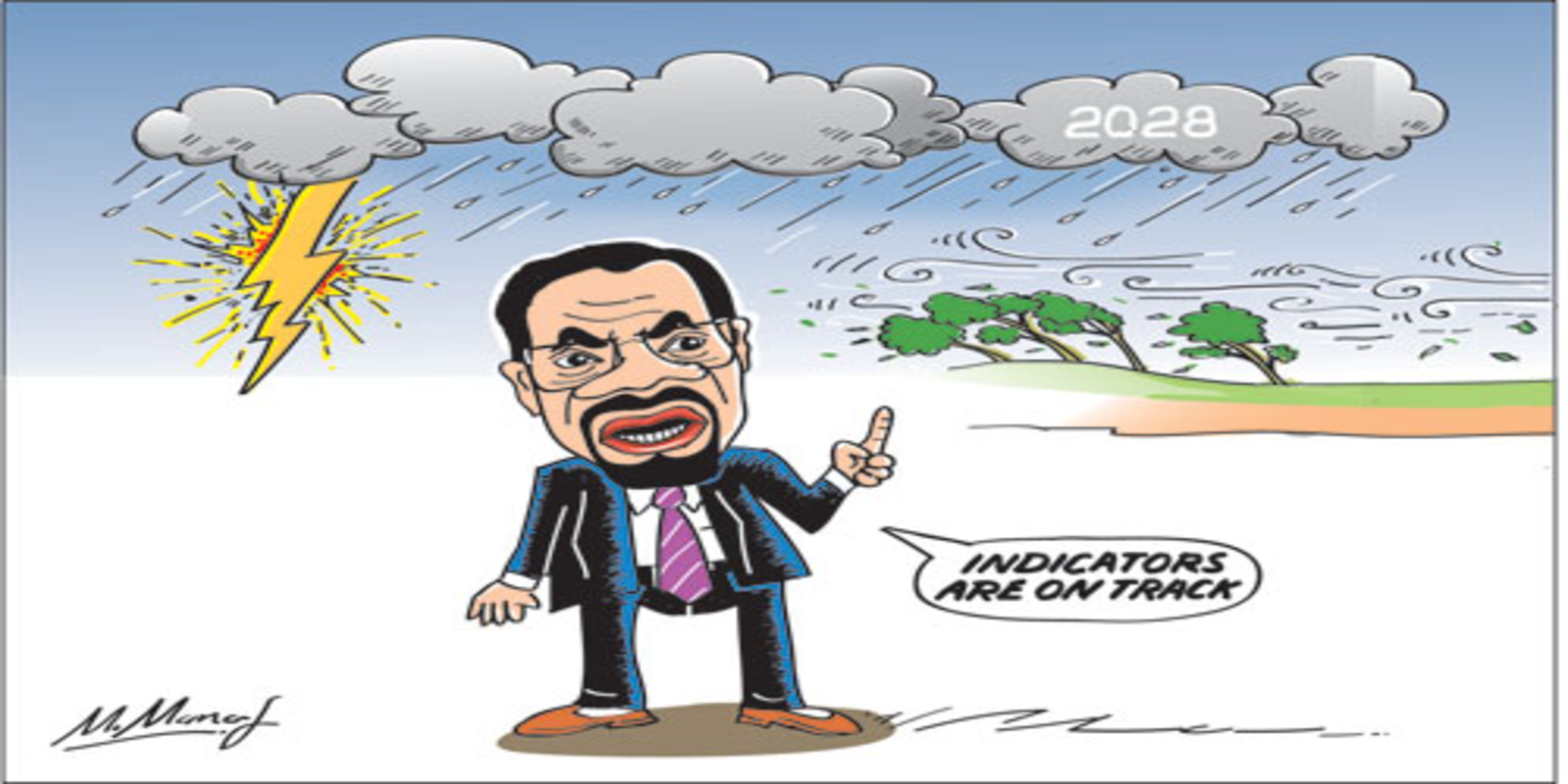
The government too is aware that it will be the economic woes of the public that are impacting its popularity more than the proposed constitutional amendment. Which is why the remarks made by former President Ranil Wickremesinghe, warning that Sri Lanka could face another serious economic crisis after 2028 unless the country takes urgent steps to increase its foreign reserves and strengthen foreign exchange earnings, drew a sharp reaction from the government.
Mr Wickremesinghe made the remarks while delivering the keynote speech at the launch of a book titled ‘Yuddha Dekakata Ura Dee’, written by former minister Ranjith Siyambalapitiya. The former president noted that Sri Lanka’s foreign reserves are expected to reach approximately US$8 billion by the end of 2026, according to projections by the Central Bank of Sri Lanka, but the country needs to increase its reserves to around US$15 billion by 2028 to meet future debt repayment obligations. Hence, the country needs to secure an additional US$7 billion over the next two years, and questioned how the government plans to generate the required funds.
He also recalled that Sri Lanka had obtained an extension on its debt repayments until 2028 during his tenure in office, giving the country time to rebuild its financial position, and raised concerns about Sri Lanka’s economic direction after the current International Monetary Fund (IMF) programme is expected to conclude in March 2027.
Several members of the government were quick to respond to Mr Wickremesinghe’s remarks, but the official response came from Deputy Finance and Planning Minister Anil Jayantha Fernando. Addressing Parliament, he dismissed the former president’s claim, adding that foreign reserves should be viewed only as an external buffer and not as the sole indicator of the country’s economic progress.
He said the government was working to strengthen the country’s external buffer while simultaneously stimulating economic activity and ensuring that the economy does not contract.
The deputy minister said that the IMF had revised foreign reserve targets set for Sri Lanka in 2023, taking into account changes in economic activity, including the decision to resume vehicle imports. He said that the government had drawn up plans for debt repayments up to 2030 and added that there would be no Domestic Dollar Bonds (DDBs) outstanding after 2028.
“After that, we will only have bilateral, multilateral and International Sovereign Bond (ISB) obligations. Sri Lanka will have to repay US$2.8 billion in foreign debt in 2028, US$3 billion in 2029 and US$3.2 billion in 2030,” he said.
New bills
Meanwhile, the government this week got cabinet approval for the Protecting the State from Terrorism (PST) Bill, which is intended to replace the Prevention of Terrorism (Temporary Provisions) Act, No. 48 of 1979.
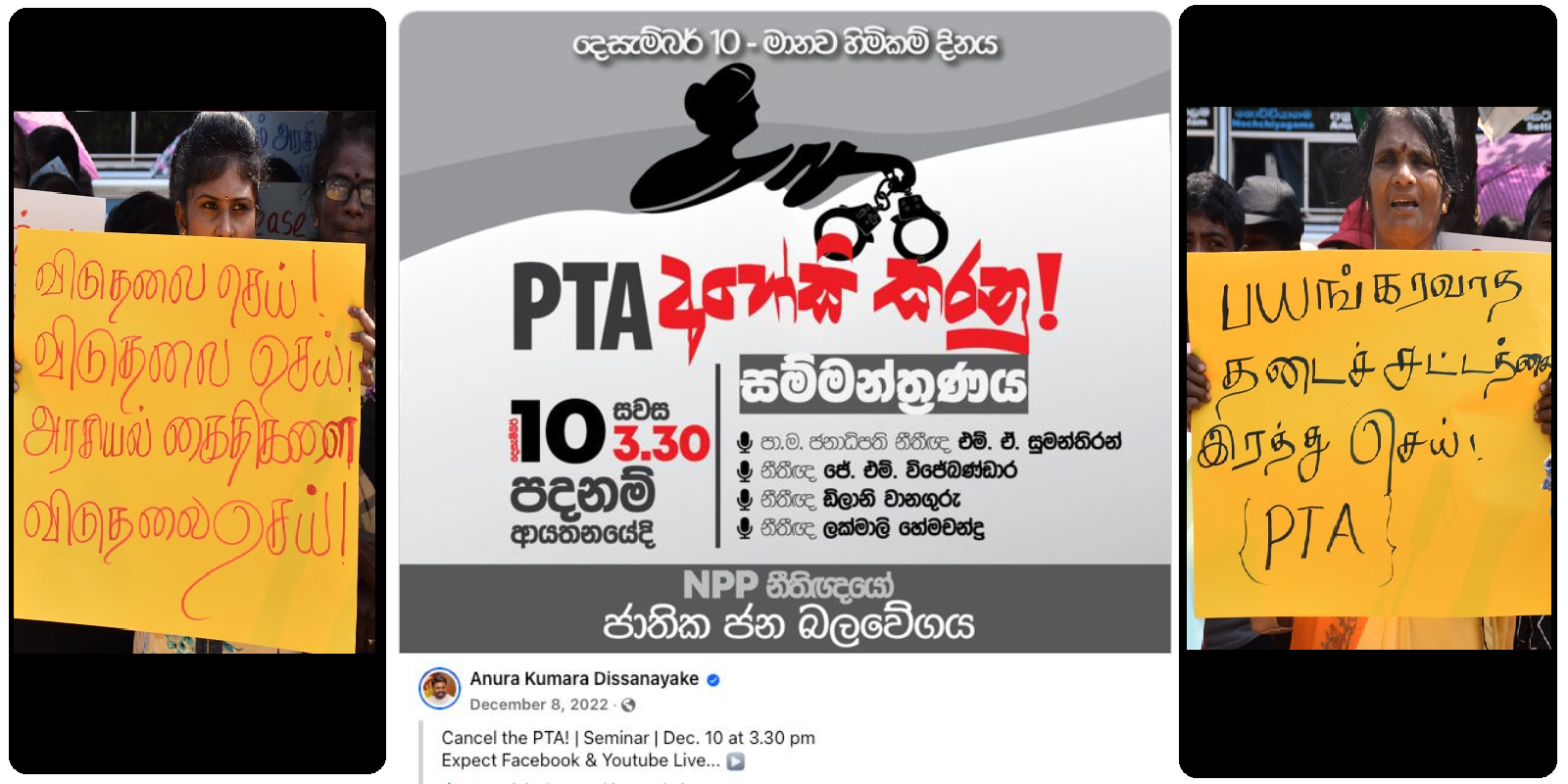
A senior government minister said the new bill would not lead to abuse of the law as has happened under the PTA in the past, as it was used to detain political opponents or others who held views that were contrary to those held by those in power.
“The new bill depoliticises the PTA and ensures that it will not be abused in the manner that the PTA has been used for decades,” he said.
An addition to the new bill would include a section relating to organised crimes and the narcotics trade, which would allow for Detention Orders (DOs) to be issued for those suspected of being involved in such crimes.
A draft Online Safety Bill, which will replace the existing one, as well as amendments to the National Dangerous Drugs Control Board law, are also in the pipeline, the minister said, adding that the government is prioritising dealing with organised crime and drug issues, as they are the two most pressing issues facing the country at the moment.
Letter from Salley’s wife
While those in government speak of abuses under the PTA, there is irony in it that since taking office the NPP too has used the PTA beyond what appears, ex facie, a desirable manner. One of the high-profile personalities who are detained under the PTA is the former head of the State Intelligence Service (SIS), retired Major General Suresh Sallay, over his alleged links to the Easter Sunday terrorist attacks.
On Thursday, Manori Sallay, the wife of Maj. Gen. Sallay, wrote to President Dissanayake – the second such letter since May – making an urgent appeal for the non-extension of the detention order on the former SIS chief in view of his deteriorating health condition. Ms Sallay brought to the attention of the President that since her previous appeal in May, her husband’s health has deteriorated to an extremely serious and life-threatening level.
“Following the deterioration of his health during his detention, particularly after he commenced a hunger strike in protest of his continued detention and the circumstances surrounding his incarceration, my husband was transferred to the National Hospital of Sri Lanka on 7th June 2026 for medical treatment. Thereafter, owing to the deterioration of his condition and the emergence of abnormal cardiac conditions, he was transferred to the Cardiology Unit of the National Hospital of Sri Lanka on 27th June 2026. He has remained under the care and treatment of the medical specialists attached to the Cardiology Unit since then,” she said in the letter.
She noted that his condition had led to a cardiac procedure during which an Implantable Cardioverter-Defibrillator (ICD) was implanted in his heart, and he is in a particularly vulnerable condition following this procedure and requires close, continuous and specialised medical observation and attention.
“In these circumstances, the continued extension of the Detention Order and any attempt to remove him from the controlled medical environment of the National Hospital of Sri Lanka and return him to the custody of the Criminal Investigation Department would, in my respectful submission, expose him to an immediate and grave risk to his life,” she said.
Ms Sallay urged the President to release her husband from detention and transfer him to remand custody under the supervision of the competent judicial authority so that his liberty and the continuation of the investigation may remain subject to judicial supervision while, at the same time, his immediate medical needs can be properly addressed.
“I wish to make it abundantly clear that neither my husband nor our family has any intention whatsoever of obstructing, delaying, or interfering with any lawful investigation. We are prepared to extend our fullest cooperation and support to any investigation conducted by the relevant authorities in accordance with the law. My husband is also willing to comply with any lawful requirement of the investigating authorities and the Court,” she said in the letter.
Ms Sallay also drew reference to government plans to replace the Prevention of Terrorism Act (PTA) by introducing the proposed Protection of the State from Terrorism Bill (PST), with a view to reforming or replacing the more draconian provisions of the existing law. “I am confident that Your Excellency would not find it necessary to rely on such provisions of the PTA to justify a further extension of the Detention Order in my husband’s case, especially in light of his present and critical medical condition,” she added.

ஒத்தவை:

சென்ற வாரம் இலங்கை-சண்டே ரைம்ஸ்