The strategic paradox:
Why the 2002 peace process was the LTTE’s beginning of the end
16 February 2026
Mirror AI Summary - Quick Read
The critics at the foundation institute argued that the LTTE was incapable of democracy. While their track record support this, the peace process offered them a “Golden Bridge” to retreat across. Had Velupillai Prabakaran possessed the foresight of the JVP (Janatha Vimukthi Peramuna) - which transitioned from a violent insurgency to a ruling Democratic Party- the history of the North and East would be prosperity rather than blood
- While experts on the ethnic crisis have dismissed the 2002 peace efforts as futile, a more clinical analysis reveals a different truth
- The peace process acted as a “peace trap.” By engaging in talks, the LTTE was held to a higher standard of international scrutiny
- In Military theory, a “Strategic Pause” is rarely about peace for the sake of peace; it is about changing the conditions of the battlefield. By 2002, the Sri Lankan State and the LTTE were in a “hurting stalemate”. However, the peace process orchestrated by Prof. GL Peiris shifted the conflict from the jungle to the negotiating table-a terrain where the LTTE was inherently disadvantaged
- The 2002 Peace Process, facilitated by Norway, is viewed as a double-edged sword for the LTTE

The seminar held on February 12, 2026, at the Sri Lanka Foundation Institute, organised by senior lawyer and respected political activist Shiral Lakthilake, provided a rare intellectual collision regarding the legacy of Prof. GL Peiris’ work: “The Sri Lanka Peace Process : An Inside View”.
 |
| Former Foreign Minister of Sri Lanka G. L. Peiris addresses the General Assembly at UN Headquarters in New York |
While esteemed panelists like Dr. Sarath Amunugama and Dr. Dayan Jayathilaka dismissed the 2002 peace efforts as a futile exercise with a “ruthless terrorist organization”, a deeper, more clinical analysis reveals a different truth.
The 2002 Peace Process, which was facilitated by Norway, is often viewed as a double-edged sword for the Liberation Tigers of Tamil Eelam (LTTE). While it initially gave them international legitimacy and “co-equal” status with the government, it ultimately set the stage for their military defeat by triggering internal fractures and hardening the international community’s stance against them.
Strategic pause: Gaining the initiative
In Military theory, a “Strategic Pause” is rarely about peace for the sake of peace; it is about changing the conditions of the battlefield. By 2002, the Sri Lankan State and the LTTE were in a “hurting stalemate”. However, the peace process orchestrated by Prof. GL Peiris shifted the conflict from the jungle to the negotiating table-a terrain where the LTTE was inherently disadvantaged.
For the Sri Lankan Government, the peace process offered a critical window to:
Recuperate and Re-arm: Modernising the military hardware and intelligence apparatus.
The peace process effectively acted as a “peace trap.” By engaging in talks, the LTTE was held to a higher standard of international scrutiny that they struggled to meet.
- The “War on Terror” Context: Post-9/11, the global climate shifted aggressively against non-state armed groups. The LTTE’s continued use of child soldiers and political assassinations during the ceasefire alienated their international backers.
- Proscriptions: While the peace process was ongoing, major powers grew tired of LTTE’s intransigence. In 2006, the European Union officially designated the LTTE as a terrorist organization, following the lead of the US, India, and the UK. This choked off their diaspora funding and procurement networks.
- The Washington Boycott: A symbolic turning point occurred in 2003 when the LTTE was excluded from a donor conference in Washington D.C. (as they were a banned group in the US). The LTTE withdrew from talks in protest, but this move only served to portray them as the “spoilers” of peace.
The “Dilemma” Tactic: It forced the LTTE to choose between a dramatic pathway (which threatened their totalitarian control) or returning to war (which would brand them as the aggressors)

Prof. G.L. Peiris (left) and Anton Balasingham
Internal fracture: The Karuna Factor
Perhaps the most significant military outcome of the peace process was the defection of Vinayagamoorthi Muralitharan known as Karuna Amman with thousands of cadres. In, 2004, as the commander of the Eastern Province and second in command to Velupille Prabakaran, Karuna represented the backbone of the LTTE’s fighting force.
The peace process allowed internal regional grievances within the LTTE to breathe. The Eastern cadres, who felt they were being used as “cannon fodders” for the Jaffna - centric leadership, utilised the period of relative calm to reassess their loyalties. The major impact was catastrophic for the LTTE for three reasons.
LOSS OF LAND MASS: The Eastern Province ( Ampara, Trincomalee and Batticaloa) is geographically massive. Losing control over Eastern province meant the dream of a “contiguous” Eelam was mathematically dead.
DEPLETION OF MAN POWER: The LTTE was split into three distinct Human Resources segments: Jaffna, Wanni, and the East. The loss of the Eastern cadres meant the LTTE could no longer sustain a two front war against a much larger Sri Lanka Army.
INTELLIGENCE GOLDMINE : The defection provided the Sri Lankan Military with unprecedented tactical intelligence regarding LTTE bunker lines, supply routes, and hidden caches.
The erosion of “will to fight”

The legacy of Prof. GL Peiris’ work: “The Sri Lanka Peace Process: An Inside View”
In Clausewitzian Military theory, the “will to fight “ is the centre of gravity for any insurgency. The peace process attacked this centre of gravity with surgical precision.
During the years of cease fire agreements (CFA), the LTTE cadres were exposed to a “normal” life for the first time in decades. Thousands of cadres entered the marriages and started families. While thus sounds like a humanitarian success, from a cold military- scientific perspective, it was the beginning of the end for their fighting spirit.
“A soldier or terrorist with a child is no longer a soldier or a terrorist who seeks martyrdom; he is a soldier/ terrorist who seeks survival.”
The transition from a “suicidal and disruptive mentally” to a domestic one created a psychological conflict. When the fanatical zealots; it was a group of individuals who now had something to lose. The “willingness to sacrifice” was replaced by the “instinct to protect” one’s family, fundamentally weakening the LTTE’s asymmetric advantage.
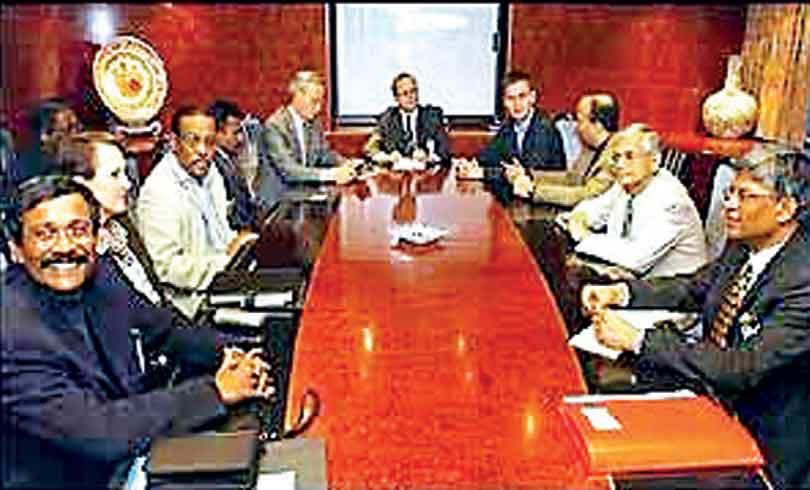
Sri Lanka’s Government and Tamil Tiger rebels met for peace talks in the Norwegian capital, Oslo
Democratic opportunity missed
The critics at the foundation institute argued that the LTTE was incapable of democracy. While their track record support this, the peace process offered them a “Golden Bridge” to retreat across. Had Velupillai Prabakaran possessed the foresight of the JVP (Janatha Vimukthi Peramuna) - which transitioned from a violent insurgency to a ruling Democratic Party- the history of the North and East would be prosperity rather than blood.
The LTTE leader would have transitioned into a Chief Minister governing a legally recognised provincial administration. Instead, by rejecting the peace process’s Democratic concessions, the LTTE Proved to the global community that they were primary obstacle to peace, by justifying the total military solution that followed.
Conclusion: A success misunderstood
Many historians argue that the LTTE’s withdrawal from the peace talks in 2003 was their biggest strategic blunder, as it allowed the government to frame the subsequent military offensive as a “humanitarian rescue mission” against an “unreasonable” foe.
“To the civilian, a ceasefire looks like a halt. To an infantry officer, it looks like a preparatory phase. We didn’t just sit idle during the peace process; we used that time to sharpen the blade. We analysed our past failures, bolstered our ranks, and waited for the moment when the strategic landscape shifted in our favor. It was the silence between the storms that allowed us to gather the strength required to end the war permanently.”
The peace process led by professor GL Peiris was not a “waste of time”. It was the “Grand Strategy” that set the stage for the military victory. It achieved what bullets alone could not. It fractured the enemy from within, depleted their Human Resources through Karuna defection and rotted their fanatical “will to fight” through the introduction of domestic normalcy.
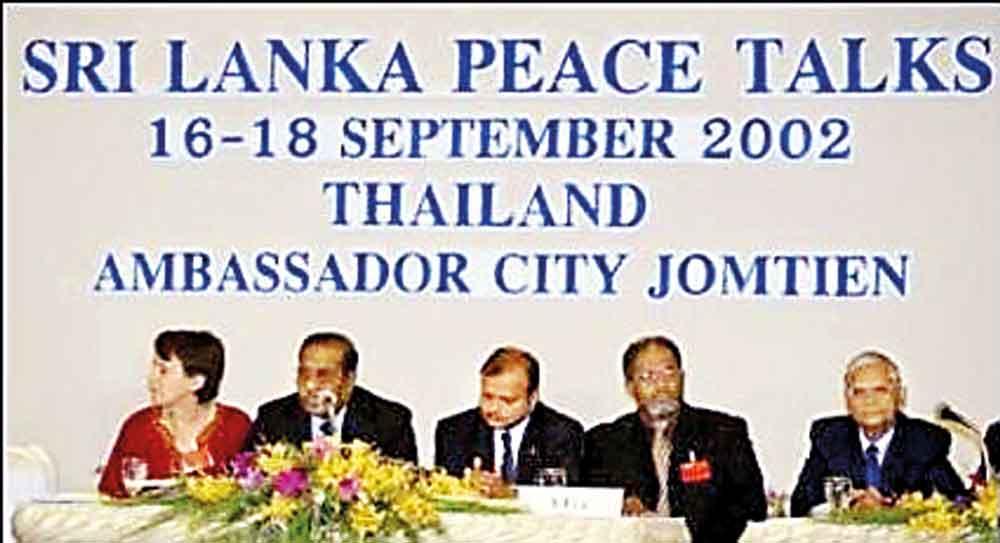
Sri Lankan government chief negotiator G. L. Peiris (R) sits next to his Tamil Tiger adversaries at the opening of peace talks in Thailand which were held from 16-18 September in 2002
(The writer is a battle hardened Infantry Officer who served the Sri Lanka Army for over 36 years, dedicating 20 of those to active combat. In addition to his military service, Dr Perera is a respected International Researcher and Writer, having authored more than 200 research articles and 16 books. He holds a PhD in economics and is an entrepreneur and International Analyst specialising in National Security, economics and politics. He can be reached at sirinimalb@hotmail.com)

ஒத்தவை:
சென்ற வாரம் இலங்கை-சண்டே ரைம்ஸ்