Govt likely to renegotiate fiscal targets during IMF visit next week
QR code and West Asian war: Govt beset by growing woes
- NPP forced to adopt Wickremesinghe-era formula to manage fuel stocks
- Coal purchase bungling and high oil prices signal power cuts next month
- As economic problems worsen, Govt likely to renegotiate fiscal targets during IMF visit next week
- Opposition submits no-confidence motion against energy minister over low-grade coal purchase and looming power cuts
- President in a statement says Govt denied US fighter jets access to Mattala, amidst growing US ties
By our ST Political Desk 22-03-26
The Iran war’s impact on Sri Lanka really hit home last Sunday (15th) when the people woke up to the news that the National People’s Power (NPP) government had implemented the QR code system for fuel distribution. In the preceding days, the government had been under growing pressure to revert to the QR system owing to the strain on fuel supplies in the midst of the war in West Asia.
The system, first introduced under the previous government of President Ranil Wickremesinghe, was seen as the most suitable method to conserve fuel owing to panic buying following the beginning of the war on February 28. The NPP government, however, had been insistent for days that there was no need to introduce the system, repeatedly stating that the country had adequate fuel supplies to last till April. They could not stomach the suggestion of adopting a Wickremesinghe-government formula to bring the situation under control.
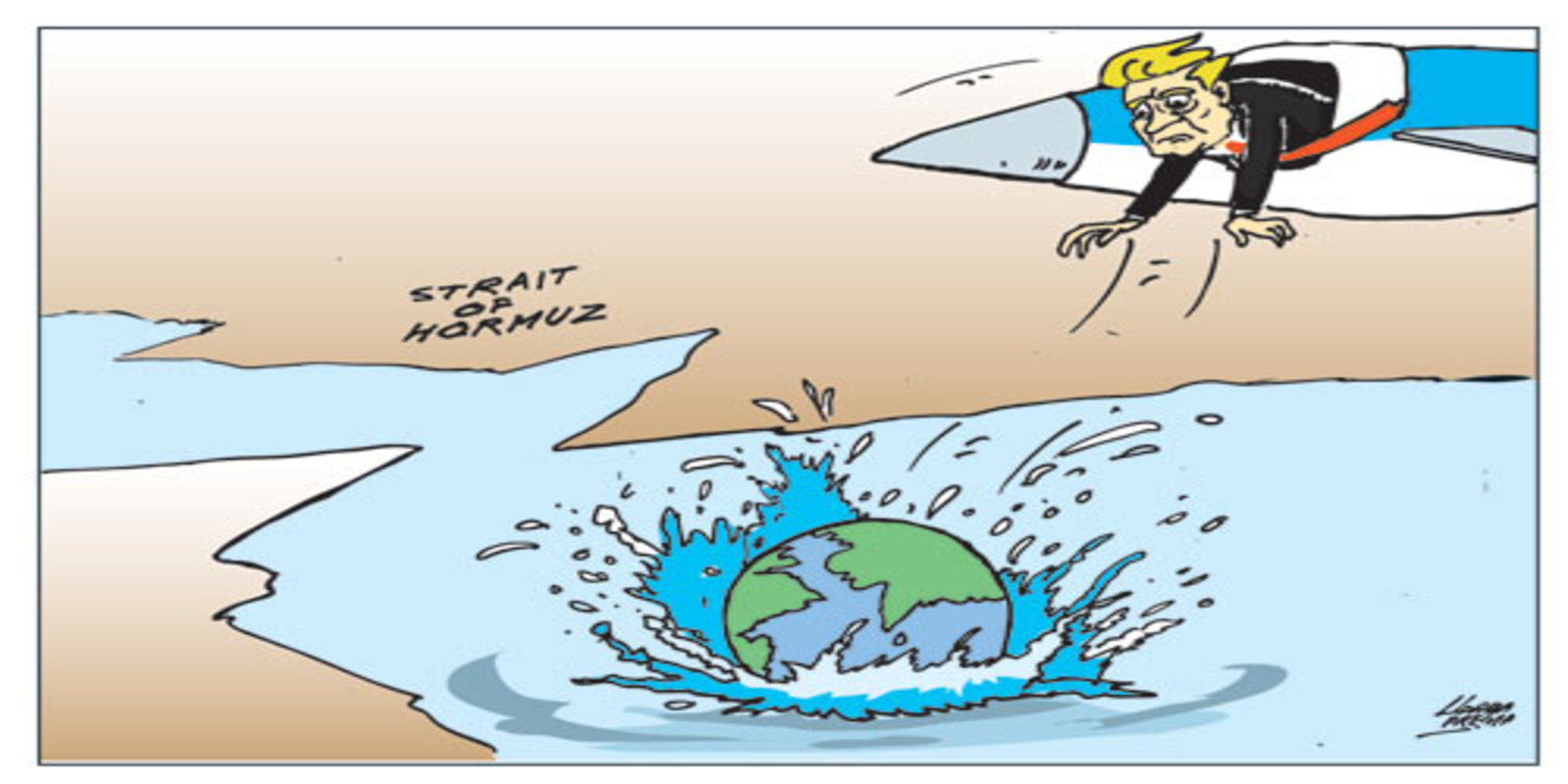
Even as US and Israeli bombs and missiles were raining down on Iran, and the latter’s own missiles and drones were causing havoc across many countries in the region housing US bases and military assets, many of those connected to the government did not seem worried initially that the conflict could have a serious impact on Sri Lanka. Ceylon Petroleum Corporation (CPC) Chairman Janaka Rajakaruna confidently told the media soon after the war began that Sri Lanka’s fuel supplies remained secure given that the majority of refined fuel was purchased from India and Singapore. The most anyone in the government could do with regard to the fuel issue till last Sunday was to make public appeals to people to use fuel sparingly. Addressing the Cabinet media briefing on March 10, Cabinet spokesman Nalinda Jayatissa dismissed the need to implement the QR system – the second time he had done so – arguing that while the system had helped reduce fuel queues, it had not been successful in limiting fuel usage, yet he had to change his stance by the end of the week.
The rollout of the QR system was chaotic to say the least. Motorists began rushing to fuel stations from early Sunday morning after hearing that the QR system had been implemented, leading to the formation of massive queues similar to the ones seen during the buildup to the war. The QR system was also plagued by problems from the start. Those who still possessed the same vehicle as they did when the system was first tried out had relatively few issues since they could use their old QR codes. But those who had bought new vehicles since the lifting of vehicle import restrictions and those who had sold their old vehicles found it extremely difficult to register their new vehicles and obtain fresh QR codes (see detailed story on our news pages). It took several days to resolve these issues. The long queues, meanwhile, persisted.
Those queues only disappeared after the CPC introduced an ‘odd-even’ licence plate system whereby fuel quotas issued through the QR system were distributed based on the last digit of the vehicle number plate. By Friday, authorities seemed to have finally managed to bring the situation under control. Police and armed forces personnel, however, continue to be deployed at fuel stations to ensure law and order.
Some in the opposition had argued that the QR system should have been introduced as soon as large queues formed at fuel stations during the first two days of the war but insist it was the NPP government’s own ego that made it hesitant to take immediate action. They argued that the NPP did not wish to revert to a system that it had repeatedly criticised when in the opposition and was only forced to do so once it realised that the situation was no longer sustainable. Meanwhile, old videos of NPP leaders attacking both the QR system and the odd-even number plate system to pump fuel on alternate dates resurfaced on social media this week.
The Janatha Vimukthi Peramuna (JVP) General Secretary Tilvin Silva, however, conceded at a television interview this week when asked about the government doing exactly what they criticised while in opposition that when a party is in government, they must act differently from when they were in opposition. He said so without batting an eyelid.
Economic crisis
With no signs of the war in West Asia ending anytime soon, the government has also been forced to temporarily move to a four-day work week, with Wednesday being declared a public holiday. More measures to conserve fuel and energy may have to be taken if the war continues into the foreseeable future.
The war couldn’t have come at a worse time for Sri Lanka’s economy, which was showing visible signs of a rebound when Cyclone Ditwah tore a path of destruction through large swathes of the country last November, causing over USD 4.1 billion in direct damage, according to World Bank estimates. Now, the country is facing more challenges from yet another event that is beyond its control. In fairness to President Dissanayake and the NPP, they have been in a desperately unenviable position over the past months.

U.S. Special Envoy for South and Central Asia Sergio Gor visited the Colombo Port on Friday
This is not to say the government is blameless. It has been accused of failing to heed warnings regarding the possibility of the formation of a cyclone in the days leading up to Ditwah and has been criticised for being slow to respond to the disaster when it happened. Since the cyclone, there has also been much criticism over shortcomings in the reconstruction process, as well as allegations of political interference by NPP activists in the process of awarding compensation to victims. In terms of the current crisis, as noted above, public statements at the beginning of the war indicate that those in the government had misjudged just how badly the crisis could affect Sri Lanka.
A former senior Finance Ministry official said that the country would face a multi-pronged crisis due to the ongoing conflict, and quick and meaningful measures must be taken so that the public would not have to bear the repercussions from the fallout of the war.
“Even if the war ends today, the time for the world economy to recover will be four to five months. The longer it drags on, the more impact it will have on Sri Lanka,” he said.
The official said the Finance Ministry must take the initiative in renegotiating the fiscal targets set by the International Monetary Fund (IMF) and see what subsidies can be given to the public as the cost of living and economic burdens pile up on them.
He said that where tourism is concerned, the government must look at alternative countries to attract tourists while also looking for new export markets outside the conflict area.
An IMF team will be visiting Sri Lanka from March 26 to April 9 to hold discussions on the combined fifth and sixth reviews of Sri Lanka’s reform programme supported by the IMF’s Extended Fund Facility (EEF), the agency’s Mission Chief Evan Papageorgiou said in a statement on Thursday. Whether the government will be able to use this visit to float the idea of renegotiating its fiscal targets in light of the current conflict situation remains to be seen.
If the fuel crisis is bad enough, the country’s energy problems have been worsened due to the bungled coal tender that is now threatening to drag it into yet another electricity crisis. The Sunday Times reported earlier this month that a report by the Public Utilities Commission of Sri Lanka (PUCSL), the power sector regulator, warned of a “potential capacity shortage risk” in April, June and July due to the Lakvijaya coal power plant in Norochcholai using low-grade coal supplied by India’s Trident Chemphar Ltd. The report pointed out that there was a real risk of such a shortage given that Units 1 and 2 of the Lakvijaya Power Station (LVPS), as well as two other power plants, are scheduled to undergo maintenance at different points from April till July. If the generation capacity of LVPS needs to be further reduced to maintain a stable and safe operation level, the risk of generation capacity shortage is further increased, the report said, hinting that power cuts may become inevitable in such a situation.

No-confidence motion
Opposition MPs have blamed Energy Minister Kumara Jayakody over the crisis and have demanded that he step down from his position. On Thursday, a No-Confidence Motion (NCM) against Minister Jayakody signed by 36 opposition parliamentarians was handed over to Speaker Jagath Wickramaratne. MPs who have signed the motion include those from the SJB, New Democratic Front, Sri Lanka Podujana Peramuna (SLPP), Sarvajana Balaya and the Sri Lanka Muslim Congress. The text of the NCM against the energy minister was published on Friday as an addendum to the Parliament’s Order Book (see box story for the NCM’s contents). The House is set to debate the NCM on April 10.
Before Parliament gets to Minister Jayakody’s NCM, he will face further trials when he appears before the Colombo High Court next Friday (27), where the Commission to Investigate Allegations of Bribery or Corruption (CIABOC) is set to serve indictments on him over corruption allegations. He is accused of committing financial irregularity whilst he was serving as the procurement manager of the Lanka Fertiliser Company in 2014. Mr Jayakody is to be charged with causing a loss of more than Rs 8.8 million to the state through his alleged actions of allowing a contracted private company to make undue financial profits.
While the government has backed Minister Jayakody so far, it remains to be seen whether this backing will be extended to him if the Ceylon Electricity Board (CEB) has to go for scheduled power cuts in the near future owing to the use of low-grade coal at the Lakvijaya coal power plant, as those in the opposition and some power sector experts warn.
Opposition Leader Sajith Premadasa claimed in Parliament on Friday that the Lakvijaya plant had failed to generate the required power output in recent days owing to the use of the low-grade coal. He alleged that the plant had been generating below the required power output since March 12. The plant had produced 176MW less than the required output on March 18 and 165MW less on March 19, he told the House. Not only is the plant producing less than the required amount of power, but the continued usage of low-grade coal threatens to cause both severe environmental damage and health problems for those living close to the plant, Mr Premadasa alleged.
The Lakvijaya plant is producing about 165MW less than the required amount of power on average since it began using low-grade coal, former Minister Patali Champika Ranawaka claimed. The shortfall has to be made up through thermal power plants using diesel, he noted. This costs about Rs 40 more per unit. Ultimately, it is the supplier of low-grade coal who will be making undue profits from this fiasco, he added. He too stressed the burning of low-grade coal will worsen environmental pollution around Lakvijeya. “We are now starting to see the level of pollution in the Puttalam area (where the power plant is located) when looking out of high-rise buildings in Colombo, but the issue doesn’t seem to concern the President much. There is also a delay in the company delivering on coal shipments. If this trend continues, there will be no other alternative than to go for scheduled power cuts after April 20,” he warned.
Mr Ranawaka also accused the government of not doing enough to move forward on green energy projects such as wind and solar over the past 18 months. This has resulted in the CEB having to use a lot of hydropower, a difficult situation given the prevailing dry weather conditions. The effects of such mismanagement in the power sector are starting to be felt, claimed the former Power and Energy Minister. “We are already seeing some unannounced power cuts lasting one to two hours in remote areas. These aren’t being implemented in Colombo or other big urban centres just yet because they know people will protest.”
In trying to minimise damage from one problem, the government is creating several more, he said. “Diesel stocks are being used up to power thermal power plants. They are also now trying to go for emergency purchases of coal, but this will only serve to provide more profit for racketeers,” he warned, adding that the power sector under the NPP government is now “in the hands of racketeers”.
Airbus corruption case
As the CIABOC prepares to serve indictments on Energy Minister Jayakody, which would be the first time it is taking legal action against a member of the NPP government, the Commission has found itself facing some unwelcome headlines and serious questions over its own integrity regarding the investigation into former SriLankan Airlines CEO Kapila Chandrasena. He was arrested on March 12 by the CIABOC over the controversial 2013 Airbus deal of the national carrier.
The CIABOC on Thursday told the Colombo Magistrate’s Court that under questioning, Mr Chandrasena had admitted that Rs 60 million in funds allegedly received as bribes from the Airbus aircraft deal had been handed over to former President Mahinda Rajapaksa in three instalments of Rs 20 million each, while a further Rs 20 million had been handed over to former Civil Aviation Minister Priyankara Jayaratne.
Mr Chandrasena, however, submitted a sworn affidavit through his lawyers to court, claiming that his earlier statement to the CIABOC had been extracted under threats and intimidation. He also accused senior CIABOC officials, including its Director General Ranga Dissanayake, of threatening him to implicate members of the Rajapaksa family over the Airbus deal.
Writing a lengthy post on X, SLPP’s Namal Rajapaksa took aim at the CIABOC’s alleged intimidation of Mr Chandrasena, stating that the allegations “strike at the very foundation of Sri Lanka’s institutional integrity.” He added that if substantiated, the allegations “do not merely concern the rights of an individual under investigation; they represent a far more dangerous erosion of the rule of law. The independence of institutions such as CIABOC is not a procedural luxury; it is the cornerstone of democratic governance. Any perception that such a body is being weaponised for political ends risks irreparable damage to public confidence.”
The allegations against CIABOC officials are serious and must be subjected to an independent, transparent, and credible investigation, Mr Rajapaksa said in his post. “Anything less would only deepen public scepticism and further erode trust in already fragile institutions.”
While President Dissanayake has to balance the growing domestic issues brought on by the ongoing conflict in West Asia, on the international front too, he has been trying to walk a tightrope while carrying the heavy weight called ‘neutrality’ on his back.
From the start of the conflict, the President has underscored the government’s foreign policy neutrality. It’s not a new policy. Sri Lanka has for long advocated a non-aligned foreign policy but not always practised it. Where the current government is concerned too, despite the much-touted neutrality, it’s clear that the country has been drawn into the US orbit. It is not something that happened after the president’s election or the NPP’s win at the general election in 2024. Before the elections, too, the US was courting the JVP, and once in power, the government was rushed into signing a Memorandum of Understanding (MOU) formalising the defence partnership between the Montana National Guard, the US Coast Guard District 13, and the Sri Lanka Armed Forces under the Department of War’s State Partnership Programme (SPP).
Since then, the US has been generously gifting military hardware, including four US Coast Guard cutters, to the Sri Lanka Navy, while the US has also begun transferring a total of 10 TH-57 Sea Ranger helicopters to the Sri Lanka Air Force. The shipment is expected to arrive in Sri Lanka on May 24.
It cannot be a coincidence that Admiral Steve Koehler, Commander of the US Pacific Fleet, was visiting Sri Lanka from February 19 to 21, just days before the US and Israel launched attacks on Iran. For Admiral Koehlar, who heads the largest naval fleet command in the world, it was the second visit since the NPP took power, the first being in December 2024, barely three months after President Dissanayake was elected.
This week, the US Special Envoy for South and Central Asia, Sergio Gor, was in Sri Lanka for high-level engagements focused on advancing cooperation in the Indian Ocean region. He first called on President Dissanayake at the Presidential Secretariat on Thursday. This was their second meeting. Ambassador Sergio Gor, who is also the US envoy to India, called on the President when the President was in New Delhi in February attending the AI Impact Summit there.
It was during the special envoy’s stay in Colombo that the President chose to drop a diplomatic bombshell in Parliament by announcing that his government had turned down a request from the United States to land two military aircraft at the Mattala International Airport while at the same time refusing a request from Iran for three of their navy ships to visit Sri Lanka on March 9 and 13. Subsequently, a US submarine torpedoed and sank one of the three Iranian vessels, IRIS Dena, in Sri Lanka’s Exclusive Economic Zone, killing around 100 Iranian sailors. Thirty-two sailors were rescued by the Sri Lanka Navy and Air Force.
“Two aircraft from the United States requested permission to remain at Mattala International Airport on the 4th and 8th. It was also stated that eight anti-ship missiles were mounted on these aircraft. Some have argued that Sri Lanka has entered into a defence agreement with the United States and therefore cannot avoid becoming a party to the conflict. This is incorrect. There is no provision within that agreement that relates to our position in such a war or obliges us to take part in it,” the President told Parliament.
When the President addressed a select group of journalists on March 5, he announced details relating to the Iranian ships—details that were relayed to the Ministry of Foreign Affairs on February 26 for the three ships to visit Sri Lanka. The President said that the US made the request for their aircraft to land at Mattala the same evening. It is unclear as to why the request made by one country was made public earlier and the other two weeks later. So far there has been no comment from the US side on their request made to Sri Lanka.
Meanwhile, the US embassy in Colombo, in a press release announcing Special Envoy Gor’s visit, said he would meet with senior leaders to reaffirm the importance of the US-Sri Lanka relationship and strengthen cooperation in key sectors. “Special Envoy Gor’s meetings will further support US efforts to safeguard vital sea lanes and secure ports, reinforce mutually beneficial trade and commercial ties, and advance a free, open, and prosperous Indo-Pacific for the benefit of both our peoples,” the press release said.
That the US is taking special interest not only in the Sri Lankan military but also in its civilian facilities was highlighted when Mr Gor decided to undertake a visit to the Colombo Port to watch its operations. He was accompanied by Sri Lanka Port Authority Chairman Parakrama Dissanayke. After his firsthand experience of watching how the Colombo Port operates, Mr Gor took to his X account and said, “It’s clear how this critical hub connects South Asia to global markets—and why maritime security here matters. That’s why the US–Sri Lanka partnership is helping advance secure and transparent trade, support ongoing efforts to improve port efficiency, and protect the integrity of supply chains that have a direct impact on the bottom line for US manufacturers and consumers.”
He also joined Sri Lanka Navy Chief of Staff Rear Admiral Damian Fernando aboard SLNS Gajabahu, a former USCG cutter now in the service of the Sri Lanka Navy. The vessel, he said, symbolises the strength of the longstanding maritime partnership between the two countries.
The catchwords for the US in relations with Sri Lanka have been maritime security and regional stability, but as events of the past few weeks have shown, US actions have caused more instability in the region and drawn Sri Lanka into a situation that it would rather not be in.
On Friday, Iran fired two ballistic missiles at the US-British Diego Garcia military base in the Indian Ocean. Diego Garcia is less than 2000 kilometres to the south of Sri Lanka. This expansion of the sphere of war should be worrying for the Sri Lankan government as well as other countries in the region. This would certainly add to government woes as its struggles with being neutral to a conflict that is splitting the world into many camps.
Video Addition - ENB

ஒத்தவை:
சென்ற வாரம் இலங்கை-சண்டே ரைம்ஸ்